DD
MM
YYYY

PAGES

DD
MM
YYYY

spot_img

PAGES

Home Blog Page 6093

The Sustainable Development Goals: How Development Actors Could Put People in the Driver’s Seat

0

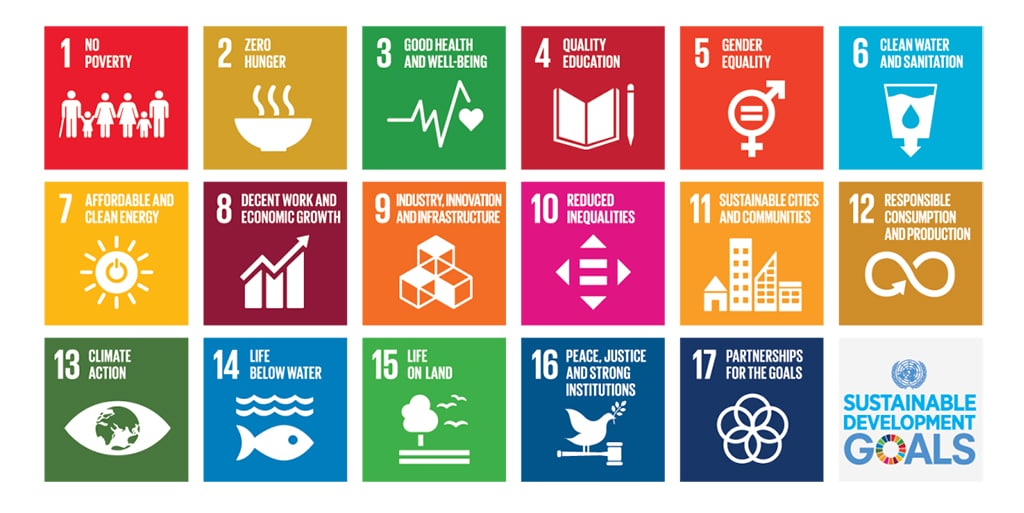
There is just a decade left for countries of the world to attain sustainable development goals. These are 17 in all, yet they capture most of the problems bedevilling the world. So much still needs to be done to fast track a development infrastructure that leaves no one behind. Every day, the statistics are frighteningly staggering. 615 million people are suffering from water stress with 2 million others displaced across the globe by extreme weather. 1 million important plants and animal species are being lost in seconds. In 2019 alone, 80 million people were forcibly displaced by war while almost 1 billion of the world’s population is starving. The stats keep rolling and urgent steps need to be taken to tackle these problems globally.

However, in doing this, the people for which the development solutions are meant    should not be left behind. People driven development interventions should be the focus of development workers. Otherwise, a development effort could go awry. Here is a story of development interventions that went south.

An Awful Development Intervention Story

There was a community where development intervention was undertaken by a development agency. According to their survey, access to water supply was considered as the major need of the community. This was due to their observation that the community children usually trek miles to get water.

In a bid to alleviate this perceived challenge of the community, the agency erected a borehole for the community and expected it to solve the challenge of travelling a long distance to get water. However, to their surprise, the community members detested the borehole, refused to fetch water from it and the children continued to trek miles to get their water.

The development agency was apparently surprised by this reaction. This was not acceptable to the agency so they decided to enquire about the issue. Below was what they found out.
Majority of the houses in the community are a single room apartment. Consequently, the father, mother and children sleep in the same room. This sleeping arrangement somehow impedes the father and mother from having sex in the night. In a bid to satisfy their sexual desires, children are usually sent on the long journey of getting water early in the morning. This period allows their parents to have sex and helps the community children to socialise better. Hence, the adults in the community considered the borehole project as a threat to their sexual need because the children will return early from getting water from the borehole and might discover the age long secret.

In order to prevent this, the community head openly placed a curse on the borehole thereby prohibiting people from fetching water from it.

There are lessons to be learnt from this funny but real story. One, so much resources were wasted constructing what the development interventionists felt the community needed. There was a mismatch between an observed need and the real need of the community. Perhaps, the community was not carried along in the process of looking for the problems, planning the solutions to the problem and in the implementation of the solution.

One of the key hurdles to the attainment of the SDGs in Nigeria is lack of awareness and information about the goals. When people are not aware, no one should expect them to key into the achievement of the goals. A study conducted in a city in the Southwest in 2019 indicated that low awareness of the global goals. How would the goals be achieved when no one knows about them?

It is also apparent that there is no concerted and coordinated efforts to ensure the global goals are achieved as the target year counts down. In Nigeria, the governments both at the national and sub national levels have different scattered plans to achieve the global goals. The highest political mechanism put in place to attain the global goals across the nation is the appointment of special assistants or special advisers in charge of the SDGs. There is a need for a coordinated national, sub national and local government strategies to drive the global goals to attainment.

Finally, educational institutions are the best channels through which the opportunities inherent in the attainment of the goals could be passed across the length and breadth of Nigeria. Courses on SDGs should be factored into the curriculum of the educational systems from primary, post primary to tertiary institutions. This would ensure the percolation of the ideals, ideas and opportunities inherent in the SDGs.

In all of these, the people must be carried along. They must be in the driver’s seat of their own development. Community ownership of development issues and collective efforts towards addressing these gaps are the solutions to a development plan that leaves no one behind.

Mobile Edge Computing (MEC) – Meeting The Latency Requirements for 5G networks

0

In a recent article, I wrote about the use of multiple frequency bands to achieve a careful combination of coverage and capacity, to achieve connectivity over large geographic areas, faster speeds, exponential and intelligent connectivity, ultra high bandwidth, etc, in 5G networks.

Besides the above promises, 5G networks also hope to achieve a low latency of less than or equal to 1ms; this is critical for applications like immersive entertainment, remote/robotic surgery, autonomous cars etc., where a delay could have damning consequences.

Latency here refers to delay, and is primarily governed by physical laws. Using the speed of light (3×10⁸ m/s), light or electromagnetic (em) waves would travel over a distance of 300m in 1µs. this means for a content to be delivered in 1ms, the content should be located within a distance of 300km. Through careful research, GSMA estimates that the content should be 1km away from real communication networks, in order to achieve a latency of 1ms. In essence, a low latency gives the users the perception of infinite capacity.

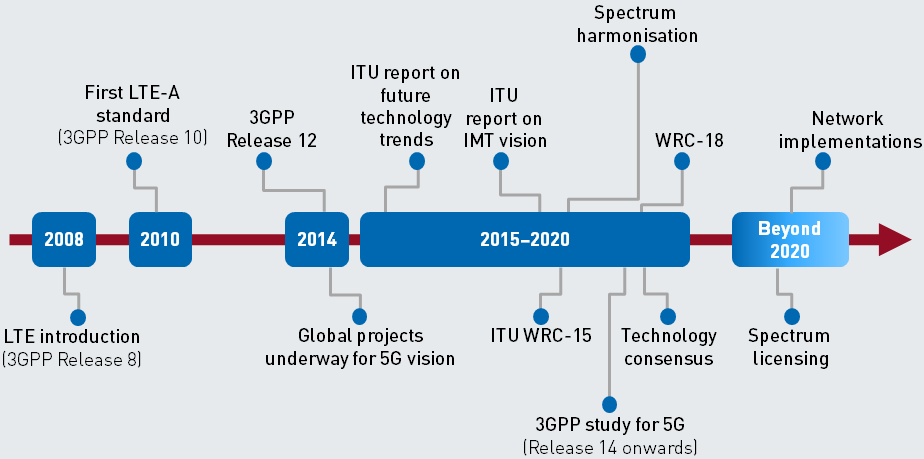
Timeline towards 5G [Source: Analysys Mason, 2014]
Edge computing, the distribution of computing and communication resources closer to the edge of the network or user, has been proposed for use in 5G networks, to help address the low latency requirements. Interestingly, this is an area that has been dominated by the cloud computing providers like Google, Microsoft, amazon etc. The use of edge computing in 5G networks has also been seen as a market opportunity for telcos looking to diversify their offerings beyond connectivity but they know they would face an uphill battle from the cloud computing operators.

Interestingly, it seems this would be a partnership opportunity rather than a competition, contrary to industry speculations. This is because the cloud computing operators, no doubt own the cloud platforms, but are also actively looking for ways to deploy closer to the user by integrating into IoT devices, supporting private and hybrid cloud deployments etc., in order to diversify their offerings beyond public cloud offerings.

Telcos, on the other hand, have various physical locations, to their advantage, where the edge computing resources could be deployed. They also know that they would benefit greatly from partnering with cloud computing operators to provide a distributed computing environment within their markets. Furthermore, they could equally largely benefit from specific applications, mandated by local laws to store and host data locally. Besides, this would significantly reduce the required investment (and expertise) needed to benefit from this market, should telcos decide to venture on their own.

Though, it looks like both parties (telcos and cloud computing operators) would benefit from partnerships, rather than competition, telcos however need to have a clear long term strategy when formalising such partnership arrangements and constantly stay ahead of the trends within the industry. This is because the cloud computing operators are known to be very innovative in meeting new and future customer demands and have proven to be very agile and flexible in the delivery of their services. Telcos, on the other hand, are known for being generally slow to react to varying customer demands. Only time will tell how this would eventually play out.

The Unity in Our Stories | Harvard Reflection Paper

1

I couldn’t contain my joy that evening when the acceptance email from James Brockman dropped. “Dear Temidayo, Congratulations on your acceptance to Harvard’s Public Narrative Program…”. I have always wanted an education from Harvard, not just because it is outstanding, but the prestige that comes with studying at Harvard.

My excitement, however, relapsed when I read the course manual and saw the number of hours required to commit to the course — 5 hours of class time weekly, excluding the time required to read 120 pages of weekly texts and complete tons of assignments. How on earth will I cope with 2 full-time jobs and other study commitments? — was the first thought that flooded my mind. I got a glimpse of hope when I realized I wasn’t alone. There are over 100 of us from literally every part of the world that will also sacrifice their time and resources to study this course. People like Guadulupe, who is taking this course and still serving as a US Marine Corps, or Gerald, Paul and Shalini who will have to stay awake all night to join the classes from Australia. “If they can do it, then I can”.

I finally consoled myself. Few weeks into the course I have realized that everyone has a story to tell, and all our stories matter. In just 6 weeks, my head is full of stories from people from distinct races, cultures and backgrounds. I have laughed and cried listening to these beautiful and heartwarming stories from over 100 people. Storytelling can be stunningly unifying; the stories we have shared have thus far created a sense of unity among us. In my section, we have created a community where we share our vulnerabilities, our struggles, and our wins — with no holds barred. Tyron Lannister, the famous character from Game of Thrones, was right when he said — “What unites people? Armies? Gold? Flags? Stories. There’s nothing in the world more powerful than a good story. Nothing can stop it. No one can defeat it.”

I have always had a thing for storytelling. I remember as a kid, my favorite things were the stacks of old newspapers in a corner of my father’s room. Every day after school, I would pick the newspapers and read till my eyes turn red. My dad’s collections dated as far back as 20 years before I was born. My Dad also ensured we always watch the local 9pm network news. As soon as the clock ticks 9, I would leave everything I was doing and run to the living room. I paid rapt attention to every item from the news, wrote unfamiliar words in my notepad and then looked them up in my small Longman learners’ dictionary. My dad believed news listening and writing are essential to developing literacy and comprehension skills. Those experiences formed my love for words as I learnt to paint pictures with words. I would memorize the entire pages of a newspaper and form them into pictures in my head. Those moments taught me the power of stories.

Recently, I have been doing a lot of thinking about what makes unique storytellers and realized that they are often history lovers. They grow up listening to or reading a lot of historical knowledge — of their background, their ancestry, and their antecedents. Just like my father would sit us down in our small living room in Ilorin to tell us stories and made sure we read and listened to the news; skilled storytellers are often students of history — taught by parents, guardians, or teachers.

Sadly, history education is fast eroding in many Nigerian schools. I felt a personal disappointment when the Nigerian House of Representatives threw out a bill seeking to make history a core learning subject in the nation’s primary and secondary schools. While thinking about this, I realized that many young people will be denied the privilege of learning about stories like the Nigeria Civil War which ended about 50 years ago and claimed the lives of more than a million people and left a scar on the nation’s history, or how human and environmental rights activist and storyteller Ken Saro-Wiwa was hanged with eight others by the Nigerian military government for daring to demand for the rights of his people, or about the Aba Women’s Riot of 1929 when women rebelled against economic and socio-political oppressions in Igboland.

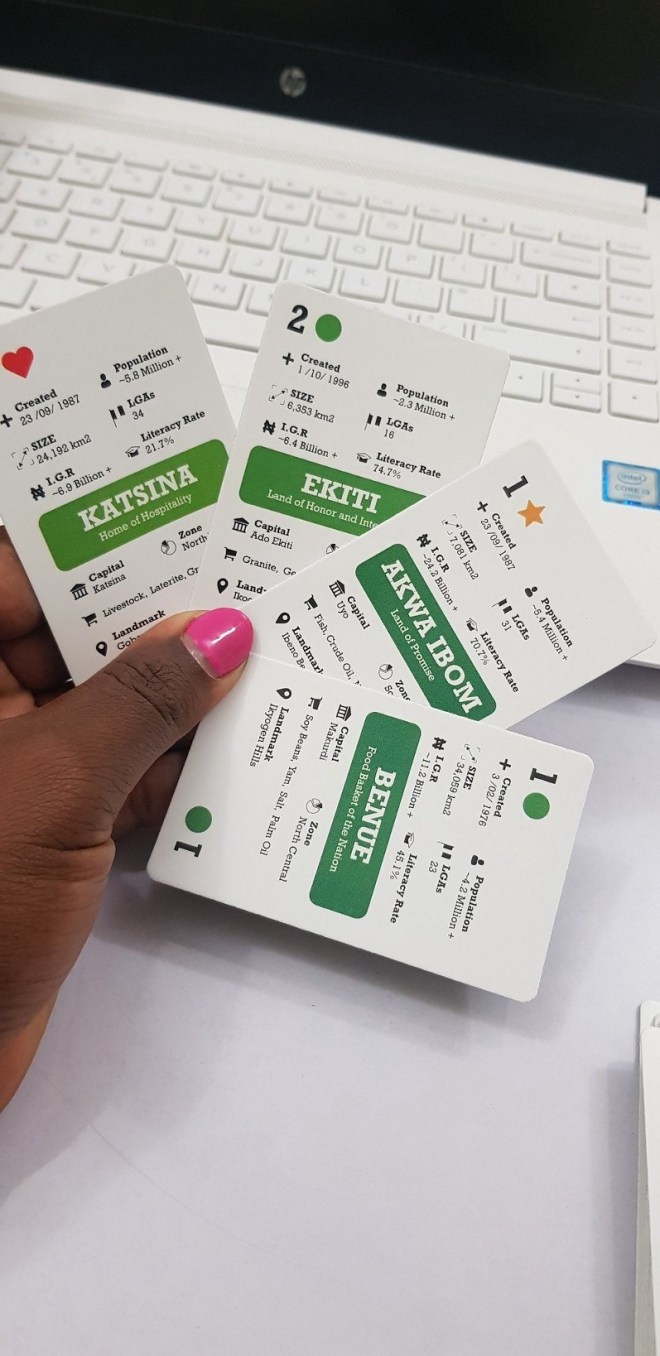
This urgency led me to team up with two of my friends to create a card game to encourage learning of historical knowledge of my country, Nigeria. The game — Naija Champ is helping Nigerians; especially young people learn more about the history and stories of Nigeria, while engaging in a healthy, entertaining competitive sport. With Naija Champ, players can understand historical facts about every Nigerian state/province. The game has 5 unique play styles — Presidential Debate, Presidential Election, Nation Builder, Naija Deck and Super Computer. Presidential Election, for instance, encourages players to compete for who will be president. Each player (presidential candidate) is asked to give a 30-seconds campaign of what they would do when they become president.

In our own little way, we can support the return of history and storytelling back in our schools by promoting and supporting creative ideas like Naija Champ, helping to tell the Nigerian story in a fun way. If you don’t, we stand to lose a generation of young people who do not know about their history. Well, you may think, ‘I am not a Nigerian, why should I care’? By supporting Naija Champ, you are not only supporting the dreams of a fellow course mate, who wants to produce talented storytellers like you and I in this Harvard class, but also helping young Nigerian children to reflect and consider lessons that can be learnt from the Nigeria civil war that killed over 1 million people and has had a significant impact on their generation.

You, me, us- we can create the future we want by developing historical knowledge and critical thinking, encouraging cultural diversity and empowering the younger generation. Join me to make Naija Champ available in all Nigerian schools. With just $10, you can donate one Naija Champ card to a school. Oh, what difference this will make! Visit paystack.com/pay/naijachamp today to make your donations.

Dayo Ibitoye

Harvard Kennedy School

Public Narrative —Smell Like Teamwork Section

Reflection paper #4 — Story of Self, Us, and Now


My 2018 Prediction of Stripe Acquiring Paystack, and the $301 Billion Nigeria Prize

1
Paystack founders

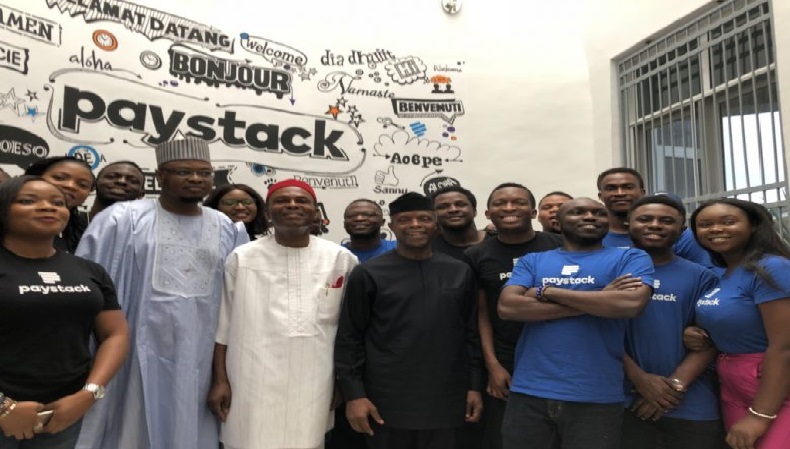
Ladies and gentlemen, a member just shared a post I wrote in 2018, predicting that Stripe would acquire Paystack. Here is the piece: ”My Lord, what are you doing? Payment. Payment. Payment. Yes, I have mashed the words of Lord Polonius and Hamlet in Shakespeare’s Hamlet for the state of payment startup in Africa. Today, it is Lagos-based Paystack which added $8 million, bringing its total to $10 million. Visa, Stripe (hello, future acquisition) and Tencent are some of the backers”.  People, many things are evident. Congratulations to Paystack again.

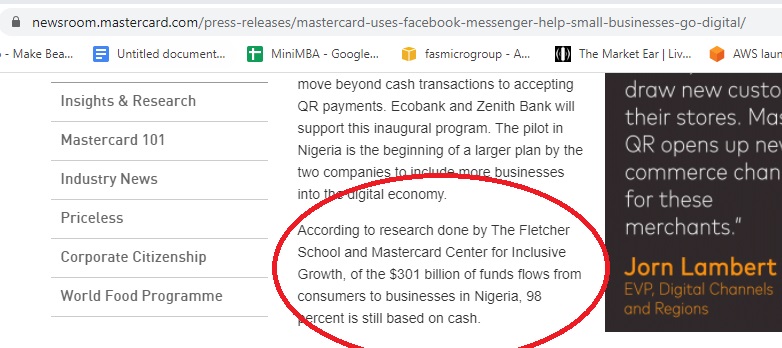
The $200 million deal is huge and hopefully, with Stripe, more friction can be reduced in the payment sector. The opportunities are massive because the challenge of digitizing that $301 billion remains. According to Mastercard and the Fletcher School, only 2% was already digitized in the “$301 billion of funds flow from consumers to businesses in Nigeria” as at February 2018. I do think, just about 5% might have been peeled off now. So, the castle remains. If you scale the mission of Paystack to Africa, you have $trillions of opportunities.

According to research done by The Fletcher School and Mastercard, of the $301 billion of funds flow from consumers to businesses in Nigeria, 98 percent is still based on cash.

As we celebrate Paystack one thing is evident: the best technology startups today are API-based startups. They deliver better multiples across most domains. Largely, these are massively scaling companies which deliver their services via application programming interfaces (API). They are winning and they are business models to pay special attention right now. Paystack is an API-based company.

Simply: a high-growth company that delivers its main service via an application programming interface, or API.

APIs help services communicate with other apps, allowing them to execute tasks or request information quickly and easily. These services are sometimes highly valuable because they can offer something complex and difficult, easily and simply.

If you are looking for inspiration on a technology mission, consider building an API-based company. It is the hottest thing in the world of tech right now.

Paystack Is The Most Successful Nigerian Tech Startup on Large Value Creation for Investors

An Oil Industry Veteran and Marine Captain To Teach During Tekedia Career Week

0

He belongs to that group where seconds matter in commerce. He ran  the extremely important Shell Bonny Oil and Gas Terminal which is a very critical asset for the Nigeria people. Being trusted to keep that terminal pumping crude oil is a testament of excellence.  From running Shell’s marine fleet to relocating to work in Viva Energy Australia, Captain Ola Olubowale understands career.

Captain Olubowale  has prepared a course on career planning for Tekedia Career Week (Nov 2-7 2020). This career week is not designed for finding jobs. Rather, it is structured to TRANSFORM workers,  professionals, founders & entrepreneurs into business leaders and champions of innovation in their companies.

All past and current Tekedia Mini-MBA members, including those who have registered for Edition 4 (Feb 8 – May 3, 2021) attend free. We have 13 courses, videos, cases, etc, on how we can plan our careers during this time of disruption.

Join Captain and get new perspectives on how to reach the top.