I couldn’t contain my joy that evening when the acceptance email from James Brockman dropped. “Dear Temidayo, Congratulations on your acceptance to Harvard’s Public Narrative Program…”. I have always wanted an education from Harvard, not just because it is outstanding, but the prestige that comes with studying at Harvard.
My excitement, however, relapsed when I read the course manual and saw the number of hours required to commit to the course — 5 hours of class time weekly, excluding the time required to read 120 pages of weekly texts and complete tons of assignments. How on earth will I cope with 2 full-time jobs and other study commitments? — was the first thought that flooded my mind. I got a glimpse of hope when I realized I wasn’t alone. There are over 100 of us from literally every part of the world that will also sacrifice their time and resources to study this course. People like Guadulupe, who is taking this course and still serving as a US Marine Corps, or Gerald, Paul and Shalini who will have to stay awake all night to join the classes from Australia. “If they can do it, then I can”.
I finally consoled myself. Few weeks into the course I have realized that everyone has a story to tell, and all our stories matter. In just 6 weeks, my head is full of stories from people from distinct races, cultures and backgrounds. I have laughed and cried listening to these beautiful and heartwarming stories from over 100 people. Storytelling can be stunningly unifying; the stories we have shared have thus far created a sense of unity among us. In my section, we have created a community where we share our vulnerabilities, our struggles, and our wins — with no holds barred. Tyron Lannister, the famous character from Game of Thrones, was right when he said — “What unites people? Armies? Gold? Flags? Stories. There’s nothing in the world more powerful than a good story. Nothing can stop it. No one can defeat it.”
I have always had a thing for storytelling. I remember as a kid, my favorite things were the stacks of old newspapers in a corner of my father’s room. Every day after school, I would pick the newspapers and read till my eyes turn red. My dad’s collections dated as far back as 20 years before I was born. My Dad also ensured we always watch the local 9pm network news. As soon as the clock ticks 9, I would leave everything I was doing and run to the living room. I paid rapt attention to every item from the news, wrote unfamiliar words in my notepad and then looked them up in my small Longman learners’ dictionary. My dad believed news listening and writing are essential to developing literacy and comprehension skills. Those experiences formed my love for words as I learnt to paint pictures with words. I would memorize the entire pages of a newspaper and form them into pictures in my head. Those moments taught me the power of stories.
Recently, I have been doing a lot of thinking about what makes unique storytellers and realized that they are often history lovers. They grow up listening to or reading a lot of historical knowledge — of their background, their ancestry, and their antecedents. Just like my father would sit us down in our small living room in Ilorin to tell us stories and made sure we read and listened to the news; skilled storytellers are often students of history — taught by parents, guardians, or teachers.
Sadly, history education is fast eroding in many Nigerian schools. I felt a personal disappointment when the Nigerian House of Representatives threw out a bill seeking to make history a core learning subject in the nation’s primary and secondary schools. While thinking about this, I realized that many young people will be denied the privilege of learning about stories like the Nigeria Civil War which ended about 50 years ago and claimed the lives of more than a million people and left a scar on the nation’s history, or how human and environmental rights activist and storyteller Ken Saro-Wiwa was hanged with eight others by the Nigerian military government for daring to demand for the rights of his people, or about the Aba Women’s Riot of 1929 when women rebelled against economic and socio-political oppressions in Igboland.
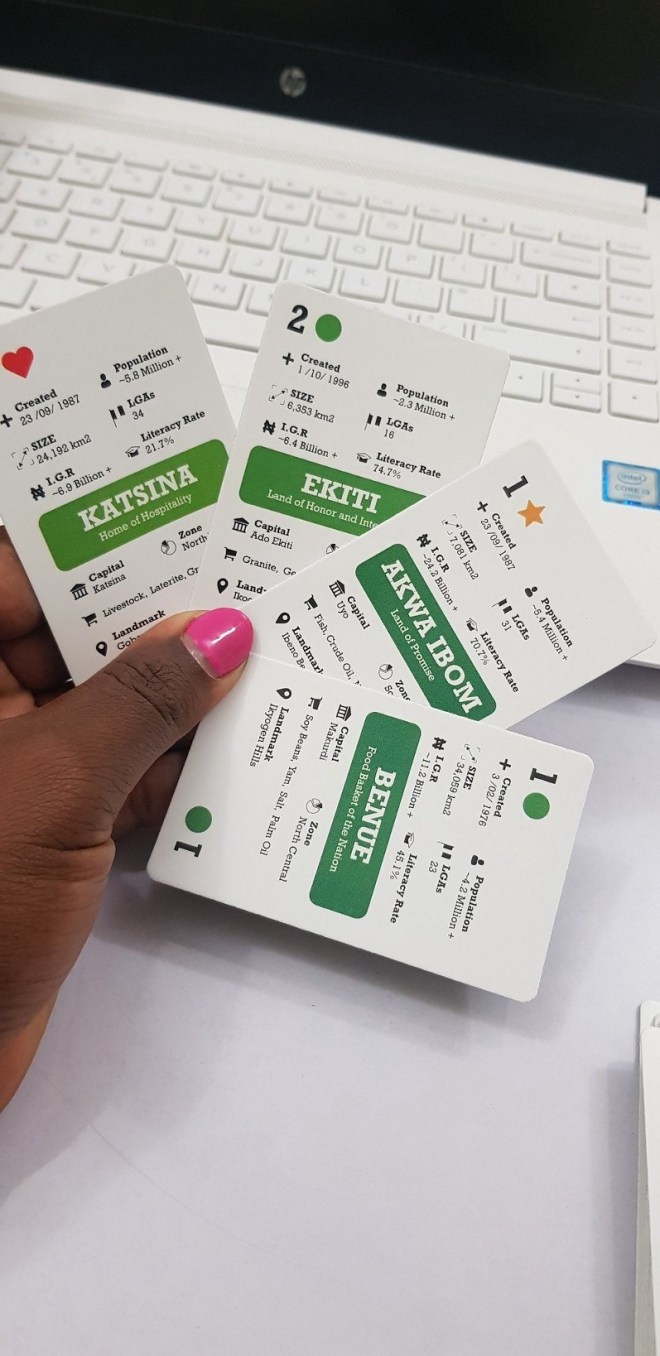
This urgency led me to team up with two of my friends to create a card game to encourage learning of historical knowledge of my country, Nigeria. The game — Naija Champ is helping Nigerians; especially young people learn more about the history and stories of Nigeria, while engaging in a healthy, entertaining competitive sport. With Naija Champ, players can understand historical facts about every Nigerian state/province. The game has 5 unique play styles — Presidential Debate, Presidential Election, Nation Builder, Naija Deck and Super Computer. Presidential Election, for instance, encourages players to compete for who will be president. Each player (presidential candidate) is asked to give a 30-seconds campaign of what they would do when they become president.

In our own little way, we can support the return of history and storytelling back in our schools by promoting and supporting creative ideas like Naija Champ, helping to tell the Nigerian story in a fun way. If you don’t, we stand to lose a generation of young people who do not know about their history. Well, you may think, ‘I am not a Nigerian, why should I care’? By supporting Naija Champ, you are not only supporting the dreams of a fellow course mate, who wants to produce talented storytellers like you and I in this Harvard class, but also helping young Nigerian children to reflect and consider lessons that can be learnt from the Nigeria civil war that killed over 1 million people and has had a significant impact on their generation.
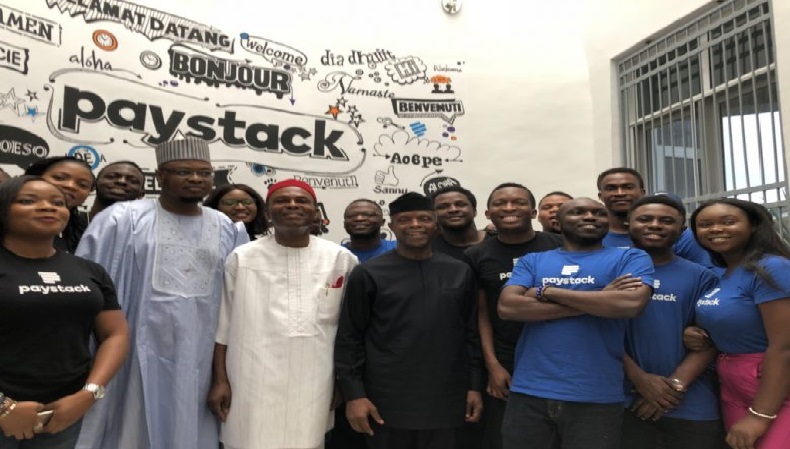
You, me, us- we can create the future we want by developing historical knowledge and critical thinking, encouraging cultural diversity and empowering the younger generation. Join me to make Naija Champ available in all Nigerian schools. With just $10, you can donate one Naija Champ card to a school. Oh, what difference this will make! Visit paystack.com/pay/naijachamp today to make your donations.
Dayo Ibitoye
Harvard Kennedy School
Public Narrative —Smell Like Teamwork Section
Reflection paper #4 — Story of Self, Us, and Now