DD
MM
YYYY

PAGES

DD
MM
YYYY

spot_img

PAGES

Home Blog Page 6097

Getaround Raises $140m in Series E As Short-distance Travels Rebound

0

As state economies open, allowing more short-distance travels, Getaround has a plan to catch up with the demand. The Silicon Valley car rental startup announced it has raised $140 million in a Series E deal, to bring its total venture funding to $600 million.

The funding was led by PeopleFund, followed by new investors including Reid Hoffman and Mark Pincus’ Reinvent Capital, AmRest founder Henry McGovern, pennant Investors and VectolQ partners Steve Girsky, Mary Chan and Jualia Steyn also deploying capital. Old investors backing the deal are SoftBank Vision Fund, Menlo Ventures etc.

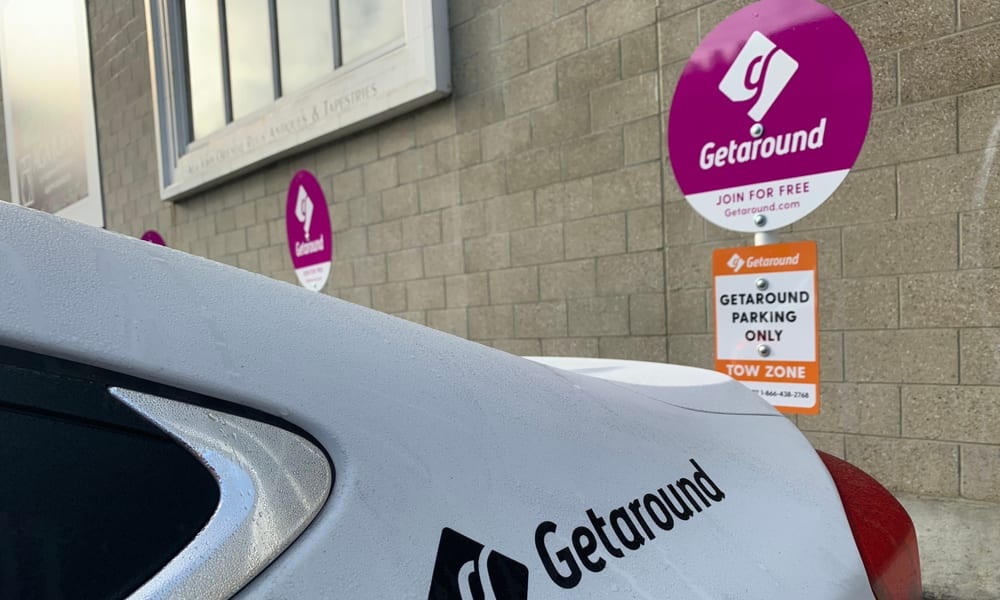
Getaround is a car rental company that allows customers to instantly rent cars through its app. The startup is available in more than 100 cities and is rapidly expanding.

The new fund is a sign of rebound after the company was hardly hit by COVID-19 pandemic, which forced it to downsize and lay off 150 employees.

But while the pandemic which hampered other rental businesses was mainly to blame, Getaround CEO Sam Zaid said the company’s troubles were compounded by struggles within SoftBank, which did a $300 million Series D round in the company in mid-2018.

Zaid told TechCrunch that although SoftBank was having its own troubles, the Japanese conglomerate has been quite helpful.

“SoftBank has been an extremely supportive partner to Getaround at every critical stage of our journey this year including in January and through COVID,” he said.

A shift in the story came following the lifting of lockdowns that allows people to embark on inter-state trips. Many chose car rentals over flights for fear of contracting the virus. Getaround saw an opportunity to turn around its business as demand for car rentals grew.

The company’s services are offered based on contactless access to passenger cars, an appealing strategy that drew many commuters to the company. There was a rapid increase in demand for Getaround cars as local joints open and people looking for a way out of the lockdowns’ boredom jump on it.

Zaid said that by July 1, Getaround rehired all of its furloughed workers. He said Getaround has witnessed worldwide revenue more than double from its pre-COVID baseline, and gross margins continue to improve.

The company explained that the fund raised in the summer will be used to help the business invest in car technology, bring on new partners and reach global profitability.

Getaround now has more than six million customers worldwide and hopes to add to the numbers as coronavirus continues to spike in Europe.

The company also announced four new executives following the new deal. There are: Dan Kim, head of North American business. He formerly was the head of Airbnb plus and head of global sales and delivery at Tesla; Laura Onopchenko, CFO. She is the former CFO of NerdWallet. Vice president of people and culture, Tia Gordon who worked as the director of people at Google; and vice president of customer experience, Ruth Yankoupe, who held the same position at OYO.

Getaround’s revamp came surprising to many, given that, at the same period the company was working its way out of the strains of COVID-19, Hertz, a giant in the car rental business was declaring bankruptcy.

On May 22, Hertz filed for bankruptcy protection, following the combination of nearly $19 billion of debt and some 700,000 idle rental cars brought by the pandemic that forced its business to shut down.

Hertz’ ordeal was a spotlight on the woes of the travel industry in the wake of the pandemic. Airline companies were not spared as many of them took the same route to declare bankruptcy even after governments’ bailouts. Ridesharing companies like Uber, Lyft and DoorDash are still struggling to record revenues even after the lockdowns were lifted, because many riders are still scared of making person-to-person contact with drivers.

With its rental strategy void of person-to-person contact, Getaround fixed the fear friction and grew an alarming customer-base that attracted more investors amidst the health chaos.

Stripe Acquires Nigeria’s Paystack for More than $200 Million

3

Stripe acquires Nigeria’s Paystack for more than $200 Million. When Stripe invested in Paystack a few years ago, many noted that it was certainly a way to understand the market. I did speak and exchanged emails with the co-founder of Stripe, John Collison, during that time. Now, Stripe has understood well enough, and now wants to buy-out the whole company, creating multi-millionaires in Nigeria overnight.

Nigeria, this is a good news because across the nation, a new club has just been formed: those with extra money to support emerging companies. To Paystack boys, well done. Both have served Nigeria and Africa in great ways.

Now, Flutterwave needs to step up its game as Stripe has just landed in Lagos!

Stripe is acquiring Paystack, a startup out of Lagos, Nigeria that, like Stripe, provides a quick way to integrate payments services into an online or offline transaction by way of an API. (We and others have referred to it in the past as “the Stripe of Africa.”)

Paystack currently has around 60,000 customers, including small businesses, larger corporates, fintechs, educational institutions, and online betting companies, and the plan will be for it to continue operating independently, the companies said.

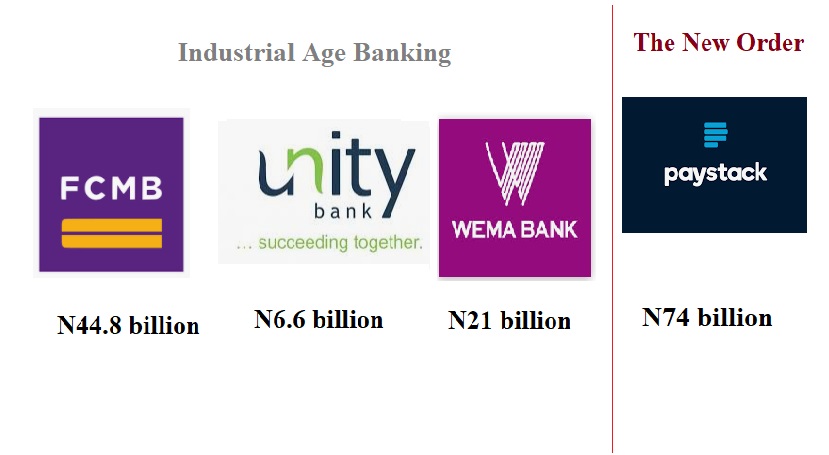
Just like that, Paystack is worth more than Unity Bank, FCMB Group Plc and Wema Bank combined. Wema Bank began life in the 1940s. Just looking at its market cap, it is evident that ALAT, its digital bank, has struggled as it has not delivered multiples which are evident. FCMB Group Plc has many entities besides the bank, FCMB Bank.

But via an API, Paystack has created more value than all of them combined. That is the power of operating at the edges of the smiling curve, instead of the center. Paystack operates at the edges and has unlocked multiples.


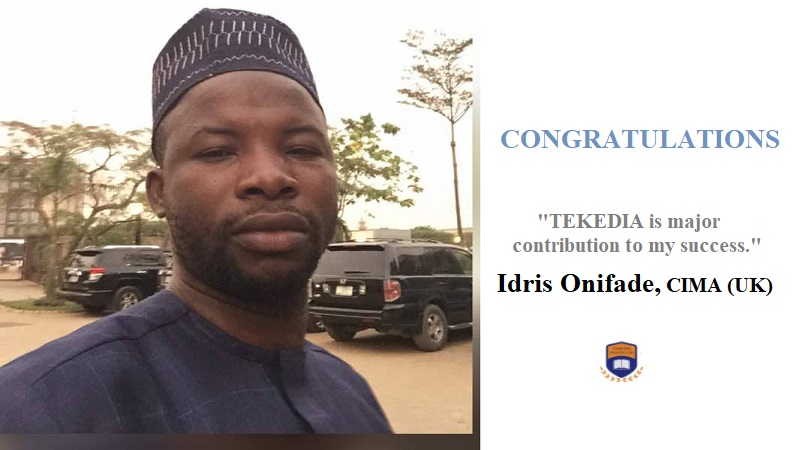
Congratulations Idris Onifade Who Just Passed His CIMA (UK)

0

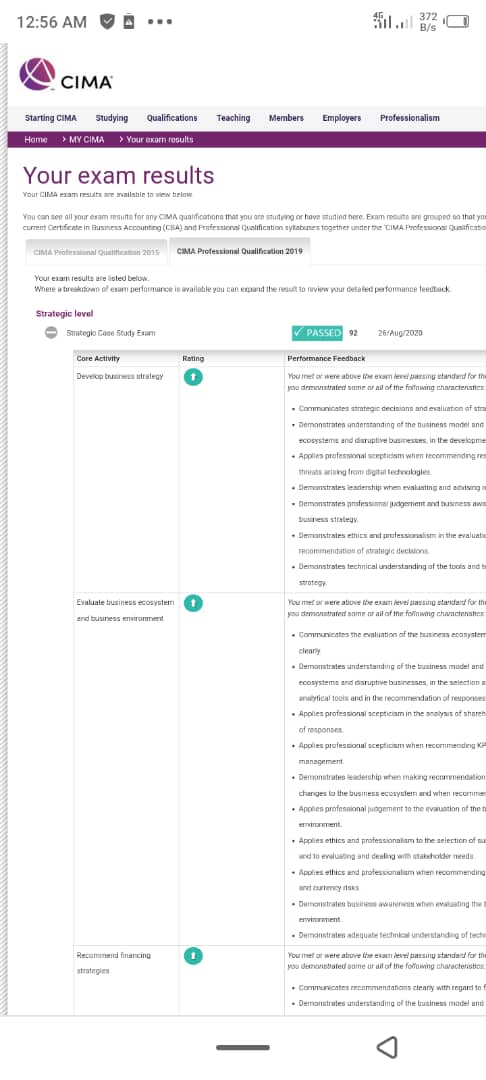
He failed the exam twice (62%, 78%) and just passed on the third attempt with 92% by relying solely on Tekedia Mini-MBA. The Chartered Institute of Management Accountants (CIMA) is a UK based professional body offering training and qualification in management accountancy and related subjects.  Idris Onifade credits attending Tekedia Mini-MBA as the deal: “I enrolled for Tekedia mini-MBA, and I continued studying on my own. Our lectures on Change management, cyber security, block chain were very useful. Fortunately for me, my question was on cybercrime, internal control and block chain as God will help me. I also listen to the lectures on the same topics overnight for the exam.” 

I just passed my CIMA (UK) final paper after 3 attempt. I wrote this exam in my first attempt I failed with 62 marks while the pass mark is 80, I knew I understand the theories and model very well because I received lectures from a Dubai based Australian tutor, I decided to attempt it second time without a lecture but got good reading materials from a friend in Ghana, guess what, I failed again with 78 marks. Then I knew my major problem is application of the theories and my next attempt would be new syllabus. I enrolled for Tekedia mini-MBA, and I continued studying on my own. Our lectures on Change management, cyber security, block chain was very useful, fortunately for me my question was on cybercrime, internal control and block chain as God will help me I also listen to the lectures on the same topics overnight to the exam.

In a nutshell TEKEDIA is major contribution to my success.

Thank Prof Ekekwe

I passed with 92 marks

Honestly it worth celebrating, the exam that I should have spend 400k but I ended up spending over 750k

Tekedia 50k made it possible

– Idris Onifade

Tekedia has 48 Faculty, from Shell to MTN, Flutterwave to Coca Cola, Infoprive to Queen’s University, and beyond. There is no professional exam, our lectures cannot help you. Idris joins many who have used Tekedia Mini-MBA to ace exams.

Largely, our practical focus on management training made it possible for them to pass these exams. Congratulation Idris Onifade & our members.

Register for 4th Edition of Tekedia Mini-MBA which Begins Feb 8, 2021

0

Early registration for the next edition of Tekedia Mini-MBA has since started. We invite you to register and join one of the amazing management programs in continental Africa. We are LIVE on Zoom three times a week discussing the latest business and innovation topics. With a dedicated learning portal, innovation collaboration app, and expanded syllabus, handled by business leaders across critical sectors, the 4th edition would be the best yet.

More so, we are developing concept notes, investment briefs and business cases as part of Tekedia Library for our community. Yes, you will have access to materials which will help you to advance your firm and your career. (If you have developed concept notes or business cases, short and focused, please get in touch).

Tekedia offers an innovation management 12-week program, optimized for business execution and growth, with digital operational overlay. It runs 100% online. The theme is Innovation, Growth & Digital Execution – Techniques for Building Category-King Companies. All contents are self-paced, recorded and archived which means participants do not have to be at any scheduled time to consume contents.

It is a sector- and firm-agnostic management program comprising videos, flash cases, challenge assignments, labs, written materials, webinars, etc by a global faculty coordinated by Prof Ndubuisi Ekekwe.

Learn more here, and register and get our two ebooks immediately; many payment options included.

Code Program
MINI Tekedia Mini-MBA costs US$140 (N50,000 naira) per person.
MINR Add extra (optional) $30 or N10,000 if you want us to review and provide feedback on your labs.
MINF Annual Package (includes 3 editions of MINI and optional 2 certificate courses) – $280 or N100,000.

Verizon’s 5G ‘Nationwide’ and the Challenge of Speed

0

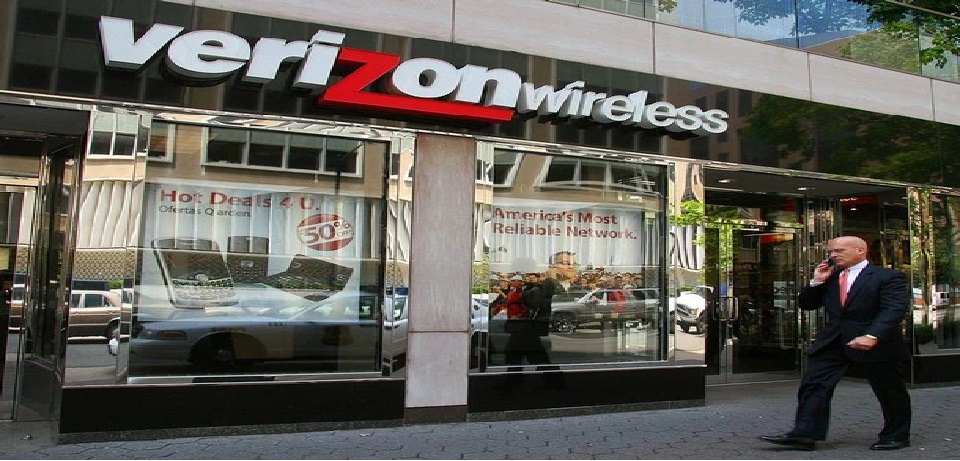
Verizon leaped to the 5G stardom with the announcement that it is expanding 5G ‘nationwide’ wireless with short-range millimeter-wave. The service covers 55 American cities and boasts to be the fastest in the world.

Existing 5G networks in US cities are reportedly slower than 4G, dampening the interest of potential users and putting China and some other countries ahead of the US in 5G roll out.

The news of Verizon’s roll out of the 5G nationwide network comes in the week when Apple launched the iPhone 12 Pro and iPhone 12 Pro Max 5G enabled phones. Verizon’s CEO Hans Vestberg boasted of the speed at the Apple event: “You can be assured there’s no faster 5G on Earth,” he said.

Tests conducted by PCmag shows that Verizon’s UWB 5g system – also known as high-band or nationwide 5G has shown spectacular speeds of sometimes over 2Gbps, though with little coverage. And the test it conducted in 26 cities back in the summer showed 4 percent of Verizon’s UWB 5G due to its short range.

According to the test, Verizon’s nationwide 5G will have the opposite problem. By sharing existing 4G channels with 4G devices, Dynamic Spectrum Sharing (DSS), provides 5G at 4G speeds.

Focusing on the speeding and performance of 5G UWB, Verizon has been expanding coverage in the past few months.

“Every single market that we’ve deployed has had a material increased in the number of nodes that are providing 5G UWB service,” said Adam Koeppe, Verizon’s SVP of network planning.

As many cities in the US get coverage, Verizon reflects on the struggles of 2019 that kept the speed of its 5G network slow. Koeppe said Verizon has been able to cover more places due to the availability of equipment that weren’t there.

“In 2019, one of the limitations we had in our deployment was the amount of equipment we could get from our infrastructure providers. We don’t have the limitation, so we’re able to launch significantly more nodes from the start,” he said.

Although there is significant improvement in coverage, challenges remain. Each UWB node still has the same problems there have been for the past year, though-great speed, but range of only about 800 feet and an inability to easily penetrate buildings and walls. Koeppe explained that Verizon is doing field work with repeaters and in-building panels to cover hard-to-get areas, and the first repeaters will start extending coverage later this year, but in-building panels will come in early 2021.

However, PCmag noted that speed in some cities is only as fast as 4G. The “nationwide” network covers 200 million people, and Verizon has been able to turn parts of its 850MHz (band n5) spectrum over to 5G when 4G customers aren’t using it.

The test indicated that users shouldn’t expect much better speeds than on 4G, because both the 4G and 5G networks share the same broad lanes. For 5G to shine, it needs big broad lanes to itself.

Another challenge comes with C-band, a swathe of midband spectrum that FCC will auction off in December. PCmag noted also that there is a question for future proofing, whether any of the newly launched 5G phones will support the C-band. Most of Verizon’s network is using 4G channels for 5G, which means, the network performance will basically be 4G.