DD
MM
YYYY

PAGES

DD
MM
YYYY

spot_img

PAGES

Home Blog Page 61

AI Agents Put Cloud Software on the Spot: Navigating Disruption and Opportunity in 2026

0

Cloud software stocks are navigating a precarious moment, one where technological optimism collides with market skepticism. The early months of 2026 have seen the sector slide further into a downturn, continuing a trend from 2025.

The WisdomTree Cloud Computing Fund has fallen more than 8% this year, while marquee software names like Salesforce, Adobe, and ServiceNow are each down more than 14%. Yet beneath the surface of declining share prices lies a broader narrative: the cloud software industry is facing a structural challenge as generative AI and enterprise AI agents begin to reshape the rules of business.

The crux of the market’s unease is a shift in the value proposition of software itself. For years, enterprise tools thrived on automating repetitive tasks, centralizing data, and providing subscription-based access to specialized workflows. Now, AI agents are emerging with the capability to perform many of these functions without requiring a suite of individual software licenses. Anthropic’s recent launch of Cowork, an AI agent designed to execute complex enterprise tasks, crystallized investor fears that traditional software may soon be bypassed entirely.

“Companies that have spent decades building workflow and collaboration solutions are now facing a fundamental question: can they integrate AI at a pace that keeps them relevant?” said a senior private equity investor who requested anonymity. “Those that can’t may need capital, partnerships, or strategic exits, which is why we’re expecting a wave of consolidation.”

Private equity firms, already long-term buyers of cloud software, see opportunity in the selloff. Orlando Bravo of Thoma Bravo, whose firm has a storied record in enterprise acquisitions, described the current market as a “rare buying window,” particularly for companies that are developing AI agents to complement existing software infrastructure rather than compete solely on their own.

“We’re actively looking at companies that have a platform advantage and are embedding AI in ways that customers actually use,” he said in Davos.

However, the reality is uneven. Analysts such as Jackson Ader of KeyBanc have flagged specific vulnerabilities in the sector. Companies with single-purpose, seat-based applications—Monday.com, Asana, Sprout Social—are particularly exposed. Unlike established ERP or CRM platforms, these firms lack a core system of record and do not operate a multi-product ecosystem, leaving them open to displacement by AI-driven alternatives. Their steep share declines reflect investor doubts over long-term survivability.

Even established, diversified software giants are feeling pressure. Salesforce CEO Marc Benioff told CNBC that the company’s latest quarter was “the best we’ve ever had,” highlighting strong cash flow and broad adoption. Yet market enthusiasm has not followed, underscoring a new investor mindset: financial performance alone is no longer sufficient. In the current environment, companies must demonstrate AI leadership.

Benioff summarized it succinctly, saying: “If you don’t produce a large language model, you’re out of fashion.”

ServiceNow’s response illustrates the dual path available to incumbents: embrace AI aggressively or risk irrelevance. The company announced a partnership with OpenAI to deploy enterprise AI agents, signaling a proactive approach to automation. Yet the market initially punished ServiceNow’s stock, reflecting the deep skepticism about the pace and effectiveness of AI integration.

Smaller companies and niche players face an even sharper reckoning. HubSpot, Atlassian, and Braze have all lost more than 20% of their market value in January alone. Analysts warn that, absent a clear AI strategy, these firms may face investor pressure to explore mergers, sales, or recapitalization. RBC Capital Markets’ Rishi Jaluria suggested that deals without a compelling AI component are unlikely to excite investors, highlighting the way AI is now central to valuation narratives.

Underlying the turmoil is a broader industry tension: the speed of AI adoption versus customer readiness. Companies must not only develop AI-enhanced products but also convince customers to trust and pay for these tools. As Jaluria notes, the pivotal question is how quickly AI agents can move from narrow automation—such as summarizing tasks or generating code—to orchestrating complex enterprise workflows that currently underpin the business models of software vendors.

The coming months will be critical. Earnings season will provide a clearer window into which companies are effectively integrating AI and which are lagging. Investors will be scrutinizing product roadmaps, customer adoption, and real-world agent performance. Firms that demonstrate tangible AI-driven efficiency or productivity gains are likely to emerge stronger, while others may find themselves on the auction block.

In essence, cloud software is at an inflection point. Generative AI and enterprise agents are no longer theoretical threats—they are immediate, market-shaping forces. The sector’s next chapter is expected to reward bold innovation, deep integration, and an ability to convert AI capabilities into real business outcomes. Those who fail to adapt risk being sidelined.
Alphabet’s Waymo Launches Pay Service In Miami, Tightening Lead in US Robotaxi Market

0

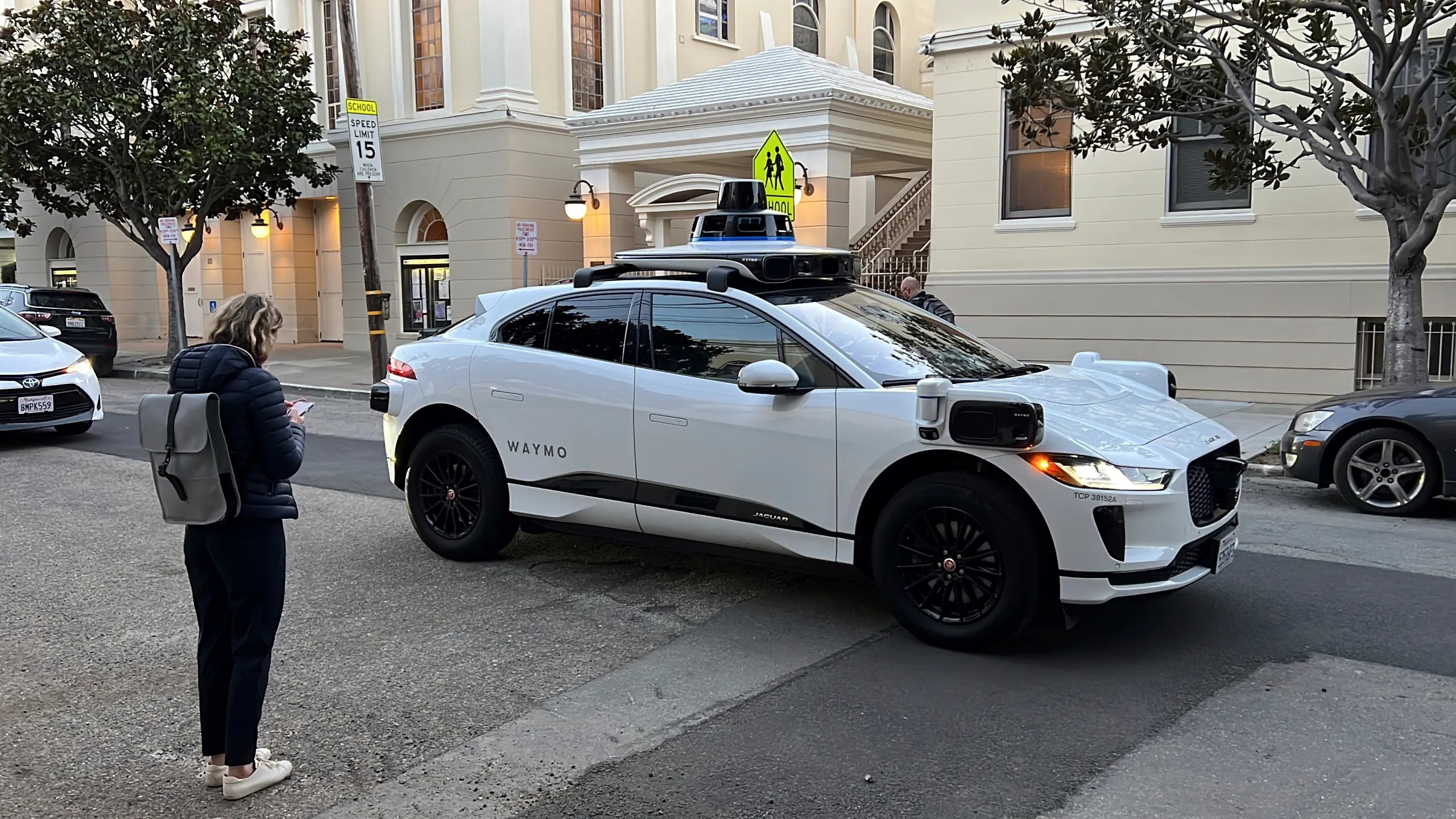
Alphabet’s Waymo has opened its robotaxi service to paying riders in Miami, marking another decisive step in what is shaping up to be a critical year for the company’s U.S. expansion and its bid to entrench itself as the dominant player in autonomous ride-hailing.

The launch makes Miami the sixth U.S. market where Waymo operates a fully driverless, revenue-generating service, extending a lead that rivals have so far struggled to close. While competitors such as Tesla and Amazon-owned Zoox continue to test, pilot, or promise future rollouts, Waymo is steadily converting years of experimentation into operational scale.

To start, the service will cover a roughly 60-square-mile zone spanning Miami’s Design District, Wynwood, Brickell, and Coral Gables, areas that combine dense urban traffic, nightlife, tourism, and affluent residential pockets. The geography matters because these neighborhoods offer high ride demand, complex driving environments, and a steady stream of visitors, allowing the company to showcase its technology under real-world conditions while tapping into a lucrative customer base.

Waymo said it began testing its autonomous vehicles in Miami in early 2025, using the city’s mix of aggressive driving patterns, heavy rain, and unpredictable congestion as part of its training ground. The company plans to extend service to Miami International Airport, a move that could significantly boost ride volumes and visibility, though it has not provided a timeline.

According to Waymo, nearly 10,000 Miami residents have already signed up to try the service, with access being rolled out gradually. Riders can hail robotaxis using Waymo’s app, mirroring the experience the company has refined in other cities.

Behind the scenes, Waymo is relying on mobility firm Moove to handle fleet operations in Miami, including charging, cleaning, and vehicle maintenance. The partnership reflects Waymo’s push to separate the autonomous driving stack from the logistical grind of running a large vehicle fleet, a challenge that has weighed heavily on many mobility startups.

The Miami debut also comes at a delicate moment for the company. Waymo has faced public scrutiny over the behavior of its vehicles, particularly after a series of incidents in San Francisco last month, where robotaxis contributed to gridlock during severe storms and widespread power outages. Those episodes reignited concerns about how autonomous systems respond to edge cases such as extreme weather and infrastructure failures.

Waymo said it has since refined its systems to better handle such scenarios, and the Miami rollout will serve as another test of those improvements, especially given South Florida’s intense rainstorms and hurricane season.

By the end of 2025, Waymo had commercial robotaxi operations in Austin, Atlanta, Los Angeles, Phoenix, and the San Francisco Bay Area. Miami now anchors the company’s push into the Southeast and sets the stage for a much broader rollout planned for 2026.

The company has said it intends to expand to a long list of U.S. cities, including Dallas, Denver, Detroit, Houston, Las Vegas, Orlando, San Antonio, San Diego, Washington, and Nashville. It is also testing vehicles in New York, Tokyo, and London, and has indicated it will launch its first overseas commercial service this year, signaling growing confidence in its technology and regulatory playbook.

Waymo’s scale is no longer theoretical. In December, the company said it had crossed 450,000 paid rides per week and served a total of 14 million trips in 2025. Those figures, while still small compared to traditional ride-hailing giants, underscore how far Waymo has moved beyond pilot programs.

Investors are paying attention. Waymo is reportedly in talks to raise $15 billion in new funding, a round that would underscore both the capital intensity of autonomous driving and the belief that Waymo is best positioned to turn autonomy into a sustainable business.

Competition remains fierce, though unevenly distributed. In Asia, Waymo faces strong rivals such as Baidu-owned Apollo Go and WeRide, which have advanced rapidly with support from local governments and dense urban deployments. In North America, Tesla, Zoox, and startups like May Mobility and Nuro are still racing to match Waymo’s combination of technical maturity, regulatory approvals, and real-world usage.

The Miami launch highlights a broader strategic reality: as rivals lag or focus on future promises, Waymo is using 2026 to lock in riders, normalize driverless transport, and build brand familiarity city by city. That early foothold could prove difficult to dislodge, even as competition eventually heats up.

Miami is not just another dot on the map for Waymo. It is part of a calculated effort to turn years of costly development into durable market presence, before the rest of the autonomous driving field fully arrives.

OpenAI Quietly Revives Robotics Ambitions with Secret Lab Focused on Humanoid Development

0

In the shadow of its blockbuster language models, OpenAI is quietly charting a course toward physical intelligence, reviving its robotics program with a secretive lab that could bridge the gap between digital AI and tangible, human-like machines, according to people with knowledge of the matter who spoke to Business Insider.

This resurgence, emerging after a five-year hiatus, positions the company at the forefront of embodied AI—a field where software brains meet hardware bodies to navigate and manipulate the real world. Insiders describe the effort as a foundational step toward artificial general intelligence (AGI) that operates beyond screens, potentially transforming everything from household chores to industrial labor.

The initiative represents a strategic pivot for OpenAI, which disbanded its original robotics team in 2020 to concentrate on generative AI breakthroughs like ChatGPT. That early project, unveiled in 2019, featured a robotic hand trained via reinforcement learning to solve a Rubik’s Cube one-handed—a feat that demonstrated dexterity but highlighted data and compute limitations.

“We chose to refocus the team on other projects,” a spokesperson said at the time, citing challenges in scaling physical AI.

Fast-forward to 2025, and the company has reassembled a dedicated robotics unit, hiring over a dozen engineers specializing in humanoid systems and filing trademarks for “user-programmable humanoid robots” with communication and learning capabilities.

Launched in February 2025, the San Francisco lab—co-located with the finance team—has expanded rapidly, now employing around 100 data collectors working in three shifts across dozens of workstations. The core work involves teleoperating Franka robotic arms using affordable, 3D-printed GELLO controllers, a technology inspired by a 2023 UC Berkeley study on scalable teleoperation.

These controllers mimic the robot’s kinematics, allowing human operators to demonstrate tasks with precision while cameras capture both sides for training data. Progress has accelerated: Initial exercises involved simple actions like placing a rubber duck in a cup, evolving to household duties such as toasting bread or folding laundry.

Performance metrics emphasize “good hours” of functional data, with recent months seeing doubled collection rates amid calls for greater efficiency. A humanoid robot prototype, likened to an “iRobot-like” design, is on display but largely inactive, underscoring the lab’s arm-focused strategy over full-body integration—for now.

Plans include a second facility in Richmond, California, with job postings for robotics operators already circulating. This data-centric approach addresses a perennial robotics bottleneck: acquiring vast, high-quality datasets for training.

“Everyone is fighting for a way to develop large data sets,” said Jonathan Aitken, a robotics expert at the University of Sheffield.

GELLO’s low-cost design offers advantages over motion-capture suits or VR systems used by rivals, enabling more direct human-to-robot motion translation. One Berkeley researcher from the GELLO study joined OpenAI in August 2024 to contribute to “Building the Robot Brain.”

OpenAI’s hardware ambitions extend beyond the lab. Last week, the company issued a Request for Proposals (RFP) seeking U.S.-based manufacturers for consumer devices, robotics components like motors and actuators, and cloud infrastructure—aiming to foster domestic supply chains amid geopolitical tensions.

The RFP, open through June 2026, aligns with broader efforts to scale production, though timelines and budgets remain undisclosed.

The revival draws on OpenAI’s investments in external ventures. Partnerships include 1X Technologies (backed since 2023), which develops home-focused humanoids like EVE and NEO, with preorders open for 2026 shipments. A 2024 collaboration with Figure AI—to integrate AI models into humanoids—ended in February 2025 as Figure advanced in-house capabilities, including pilots at BMW plants.

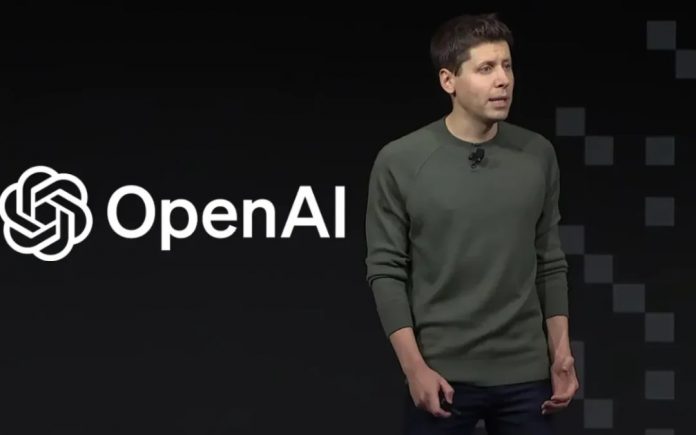
OpenAI also supports Physical Intelligence, focusing on versatile manipulation software. CEO Sam Altman’s vision frames this as inevitable: Last year, he predicted the “humanoid robots moment” was approaching, emphasizing AI’s need for physical embodiment to achieve AGI.

Internal discussions, per reports, explore humanoid development as a path to “AG-level intelligence in dynamic, real-world settings.” Job listings seek experts in sensor suites, actuators, and large-scale manufacturing, hinting at ambitions beyond research.

Yet OpenAI faces stiff competition in a booming sector. Tesla’s Optimus, with 50-actuator hands and 2026 production targets, leads in dexterity demos.  Figure’s 02 model, backed by $700 million from Microsoft and Nvidia, plans 5,000 units in 2025, scaling to tens of thousands by 2026. Chinese firms like Unitree (R1 humanoid) and EngineAI showcase acrobatic prototypes, while Agility’s Digit operates in warehouses.

However, market projections are staggering: Morgan Stanley forecasts 1 billion humanoids by 2050, generating a $5 trillion market, with 302 million in China alone, while Bank of America anticipates 10 million annual shipments by 2035.

But there are challenges: Oregon State’s Alan Fern notes that scaling arm data to full humanoids is “something that hasn’t been proven out yet.” Safety, ethics, and job displacement loom large, with experts warning of workforce disruptions.

OpenAI’s integration of its language models with physical hardware—potentially enabling robots to interpret commands and learn from interactions— is expected to blur the line between virtual and real. With pilots in homes and factories accelerating, 2026 could mark the dawn of widespread embodied AI, driven by OpenAI’s methodical resurgence.

Jensen Huang Sees AI Boom Fueling Six-Figure Trade Jobs as Automation Pressures Office Work

0

Nvidia CEO Jensen Huang has offered a counter-narrative to the growing anxiety around artificial intelligence and job losses, arguing that the AI boom is set to create a wave of high-paying jobs far from traditional office settings.

Speaking at the World Economic Forum in Davos on Wednesday, Huang said the global rush to build AI infrastructure is already driving demand — and wages — for skilled trades, with salaries reaching into six figures for those helping to construct and maintain what he described as “AI factories.”

At the heart of Huang’s argument is scale. The global race to deploy artificial intelligence is no longer only about algorithms and software models. It is about factories, power systems, cooling plants, fiber networks, and specialized facilities that can house and operate vast amounts of computing equipment. Huang described this moment as the largest infrastructure buildout ever undertaken, measured not only in dollars but in geographic reach and industrial complexity.

That buildout, he said, is already changing who benefits from the AI economy. Chip fabrication plants, data centers, and so-called AI factories require armies of electricians, plumbers, steelworkers, construction crews, and network technicians. These are roles that cannot be easily automated and cannot be filled overnight. As demand surges faster than supply, wages are rising sharply.

Huang told the Davos audience that salaries in some of these trades are nearly doubling, pushing total compensation into six-figure territory for workers involved in building and maintaining AI infrastructure. The implication is that while AI threatens to compress pay and reduce headcount in parts of the white-collar economy, it is creating scarcity — and pricing power — for skilled manual labor.

That view adds an important layer to a week dominated by warnings. Consulting firm Challenger, Gray & Christmas has linked nearly 55,000 U.S. layoffs in 2025 to AI adoption, with companies such as Amazon, Salesforce, Accenture, and Lufthansa pointing to automation and efficiency drives. IMF managing director Kristalina Georgieva captured the prevailing mood when she said AI is hitting the labor market “like a tsunami,” leaving governments and companies unprepared.

Huang does not deny the disruption. Instead, he is arguing that the focus has been too narrow. The AI economy, in his telling, is not a purely digital phenomenon. It is an industrial one, tied to energy systems, land use, supply chains, and construction capacity. Every new model trained and deployed increases demand for physical assets that must be built, installed, and serviced by people.

That argument finds support in Microsoft research released in 2025, which examined how often workers rely on AI tools to complete their tasks. Analyzing about 200,000 Bing Copilot conversations, Microsoft found that roles involving physical work with people or machines showed the lowest reliance on AI assistance. Jobs ranging from painters and plasterers to ship engineers and healthcare support workers were among the least exposed to automation pressure.

In practical terms, that means AI is not flattening the labor market evenly. It is accelerating a long-running divergence. Office roles built around routine information processing are becoming easier to automate or augment, while hands-on technical work tied to complex physical systems is becoming more valuable.

European policymakers at Davos acknowledged the implications. Roxana Mînzatu, the European Commission’s executive vice president for social rights and skills, said the semiconductor industry alone is searching for tens of thousands of vocationally trained workers. Her comments underline a growing concern across Europe and North America: the bottleneck in the AI era may not be software talent, but electricians, technicians, and engineers who can physically deliver projects.

The energy dimension adds another layer of pressure. AI infrastructure is energy-hungry, and regions with high power costs or limited grid capacity face constraints on how quickly they can build. That reality links Huang’s labor optimism to a broader policy challenge. Training workers is only part of the equation. Governments must also expand energy supply, streamline permitting, and modernize grids if they want to capture the industrial upside of AI.

There are social implications as well. For years, political leaders have encouraged university education as the primary path to economic security, even as tuition costs rose and returns became less certain. In the United States, the annual cost of attending a four-year public college increased by about 30% between 2011 and 2023, according to CNBC Make It calculations. Over that period, enrollment fell by roughly 2 million students.

At the same time, skilled trades have gained appeal, particularly among younger workers. Data from the Department of Labor and payroll firm Gusto show that Gen Z now accounts for a growing share of new hires in trade roles, outpacing their representation in the overall workforce. For many, the appeal is straightforward: lower training costs, faster entry into paid work, and wages that now rival or exceed many graduate-level office jobs.

Huang’s message taps directly into that shift. “You don’t need to have a PhD in computer science to make a great living,” he said, framing AI as a force that could rebalance opportunity rather than concentrate it further.

Still, the transition is not frictionless. Scaling vocational training fast enough to meet demand will test education systems that have spent decades prioritizing academic pathways. Labor shortages could delay projects, inflate costs, and slow the rollout of AI infrastructure. And while trade jobs may be safer from automation, they are not immune to economic cycles or policy shocks.

Even so, Huang’s intervention in Davos reframed the AI debate in a way that many executives and policymakers have avoided. The question is no longer only how many jobs AI will eliminate, but which kinds of work it will elevate. If the AI race continues at its current pace, the winners may include not just chip designers and software engineers, but the people wiring, cooling, and powering the factories that make the technology possible.

U.S. Treasury Yields Held In A Narrow Range As Investors Digest Economic Data

0

U.S. Treasury yields held in a narrow range on Thursday, as investors parsed a steady flow of economic data while keeping one eye on an increasingly complex mix of trade signals, geopolitics, and political developments in Washington.

The benchmark 10-year Treasury yield edged higher by just over one basis point to 4.265%, a move that signaled caution rather than conviction. The 30-year yield was largely unchanged at 4.873%, while the policy-sensitive 2-year note climbed by more than a basis point to 3.61%. The muted shifts pointed to a market struggling to reconcile strong domestic fundamentals with rising uncertainty around policy direction.

Early trading leaned slightly bearish for bonds after new labor market data reinforced the view that the U.S. economy remains on a firm footing. Initial jobless claims for the week ended January 17 fell to 200,000, below the 208,000 forecast by economists surveyed by Dow Jones. Claims were marginally higher than the prior week after an upward revision, but the broader trend continues to show limited stress in the labor market.

For bond investors, the implication was straightforward: an economy still generating jobs at a solid pace reduces the urgency for aggressive interest-rate cuts. Chris Rupkey, chief economist at FWDBONDS, said the data fit a pattern of economic growth running well above 3%, with labor indicators pointing to a potentially strong January employment report.

In his view, the resilience of growth and hiring suggests that the economy is performing well without additional intervention. That assessment matters for Treasuries, as expectations around Federal Reserve policy remain one of the dominant drivers of yields, particularly at the front end of the curve.

Later in the session, attention shifted to inflation, where the Commerce Department reported that both headline and core personal consumption expenditures price index readings for November matched expectations. The PCE index is closely followed by Federal Reserve officials, and the absence of any upside surprise helped calm fears that inflation pressures were re-emerging after months of gradual easing.

Still, the data did little to move yields decisively. Investors appear increasingly sensitive not just to economic releases, but to how those figures interact with political signals coming from the White House and the Federal Reserve.

One such signal came from President Donald Trump, who said in an interview with CNBC at the World Economic Forum in Davos that he may have already selected his nominee to replace Jerome Powell as Fed chair. Trump said the shortlist had narrowed sharply, suggesting that a final decision was effectively settled in his mind, though he declined to identify the candidate.

The comment injected an additional layer of uncertainty into markets. Even though Powell’s term still has time remaining, early speculation about the next Fed chair raises questions about the future policy stance of the central bank, particularly at a moment when investors are debating how long rates will remain elevated.

That uncertainty is compounded by scrutiny surrounding Powell himself. The Fed chair recently said he was under investigation by the Department of Justice in connection with the $2.5 billion renovation of the Federal Reserve’s headquarters in Washington. While the issue has not altered policy operations, it has added political noise at a time when markets are highly sensitive to any hint of instability at the central bank.

Geopolitical developments also played a role in shaping sentiment. Trump said he had reached what he described as a “concept of a deal” on Greenland, following earlier remarks that he would not pursue control of the Danish territory through military means. In a subsequent post on Truth Social, he said tariffs announced last week on eight European countries opposing a U.S. takeover would not take effect.

The decision eased immediate trade-related anxiety that had weighed on markets earlier in the week. Tariff threats had contributed to sharp swings across equities, currencies, and bonds, with Treasuries initially benefiting from a flight to safety. Thursday’s pause in escalation removed one source of pressure, leaving yields to drift rather than trend.

The combination of firm economic data, steady inflation readings, and shifting political signals left the Treasury market in a holding pattern. Shorter-dated yields continued to show sensitivity to labor strength and Fed policy expectations, while longer-dated yields suggested investors remain uncertain about the long-term path of growth, inflation, and fiscal policy.

Currently, the bond market appears to be waiting for a clearer catalyst. A stronger-than-expected jobs report could push yields higher by reinforcing the case for rates to stay elevated. On the other hand, renewed trade tensions or sharper political uncertainty could revive demand for safe-haven assets. Until one of those forces asserts itself, Treasury yields look set to remain range-bound, even as the list of risks facing investors continues to grow.