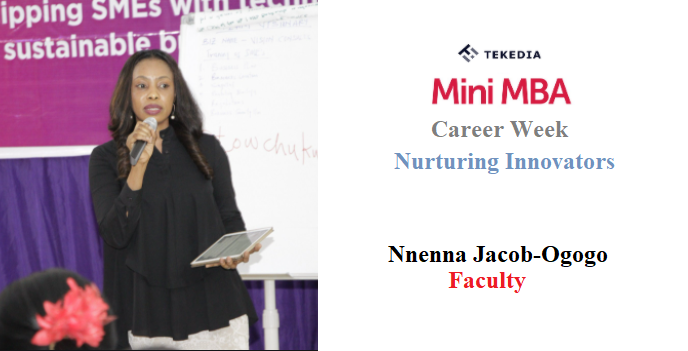
She is an alumnus of the prestigious University of Middlesex Business School where she bagged a Masters degree in Human Resource Management. She also earned another master’s degree in International Law and Diplomacy from the amazing University of Lagos. She has worked in leading banking institutions in Nigeria, and today, is the Founder of Impactherbusiness. Nnenna Jacob-Ogogo, a Tekedia Mini-MBA Faculty, will teach during Tekedia Career Week (Nov 2-7, 2020).
This career week is not designed for finding jobs. Rather, it is structured to TRANSFORM workers, founders & entrepreneurs into business leaders and champions of innovation in their companies.
All past and current Tekedia Mini-MBA members, including those who have registered for Edition 4 (Feb 8 – May 3, 2021) attend free. We have 13 courses, videos, cases, etc on how we can plan our careers during this time of disruption.
As coronavirus induced spikes hit the global economy, the oil industry is one of the hardest hit sectors due to lockdowns and closure of commercial activities around the world. Following the resultant plunge in the oil market, oil companies have been looking for a way out the strain.
Shell, Eni, British Petroleum (BP) and now Saudi Aramco are preparing not only to embrace the horror, but also for a future without fossil oil. Reuters reported, citing sources, that the second most valuable company in the world plans to boost its production capacity so it can pump as much of Saudi Arabia’s vast oil reserves when demand picks up before a shift to cleaner energy makes crude worthless.
In a clear attempt to make the best of oil before it becomes outdated, Aramco plans to undermine the interest of other companies by producing and selling more even when the price seems unprofitable. Part of the plan means that the oil giant will raise its production capacity from 12 million to 13 million barrels per day, a bargaining threat it has used earlier in March, during the disagreement with Russia on oil production cuts.
The sources said the state-run oil giant is also revising ambitious downstream expansion plans and now aims to grab assets in established projects in key markets such as India and China.
Though the move seems like a contradiction to Saudi Crown Prince Mohammed bin Salman’s Vision 2030 plan to diversify the West Asia kingdom’s means of revenue from oil, it is actually a strategy. The Vision 2030 plan needs a lot of money to become a reality. And presently, Aramco’s oil is the only source of the kingdom’s revenue, which means, the Prince needs to use what he has to get what he wants. This also means Aramco will continue to run oil deals until Saudi Arabia is fully established as a diversified economy.
Consulting Services As a visionary player in the Oil and Gas sector we understand the role of quality procurement services
“The crown prince said he will diversify but he didn’t say he will kill the oil industry. As long as it can make more money why not? Take the money and invest it somewhere else.
“Let’s agree that given the global economic situation, full diversification won’t happen by 2030. To completely wean a giant economy like Saudi off oil, it will require at least 50 years more. So as long as oil is with us, make more money out of it if you can,” one of the sources told Reuters.
BP and Shell have taken on different strategies which include downsizing workforce and developing business models for cleaner energy.
“We are undergoing a strategic review of the organization, which intends to ensure we are set up to thrive throughout the energy transition and be a simpler organization, which is also cost competitive. We are looking at a range of options and scenarios at this time, which are being carefully evaluated,” a spokeswoman for Shell said in a statement.
Shell is exploring ways to reduce spending on oil and gas production by 30% to 40% for its upstream sector, its largest division. For the downstream sector, the company plans to cut 45,000 service stations, the biggest in the world, from its network. This will mean limiting its oil production to a few key places that include Nigeria, Gulf of Mexico and the North Sea.
BP and Eni had already taken similar steps, cutting jobs and shutting down operations to build new low-carbon businesses in the next decade in preparation for the era of cleaner energy.
While Aramco has taken a different route, it is also focusing on pumping cleaner fuel. Analysts and sources said the company is working on cutting greenhouse gas emissions to give a better chance to compete as environmental concerns push governments to tighten carbon regulations.
With 10.1 kg of carbon dioxide (CO2) for each barrel produced (CO2e/boe), Aramco boasts of oil production with the lowest carbon intensity, and plans on bringing it further low by the end of the year.
“Our priorities are to sustain our low carbon intensity and low cost of production, while delivering the energy supplies the world needs. Aramco is researching ways to reduce emissions through technology, such as making engines more efficient, better fuel formulations, carbon capture and sequestration, and turning CO2 and hydrocarbons into useful products,” the company said.
The strategy is geared towards securing a large share of the market in the future when oil demands return. Having taken care of carbon emissions concern to the barest level, Aramco’s 13 million barrels per day will put it in a position to have the lion’s share of the market, ahead of other OPEC members including Russia.
“There is always going to be space for oil and the lowest carbon emitter will win. OPEC market power will return, especially for those who can produce oil in the cleanest way possible, and Saudi Aramco fits that bill,” Amrita Sen, co-founder of the think-tank, Energy Aspects said.
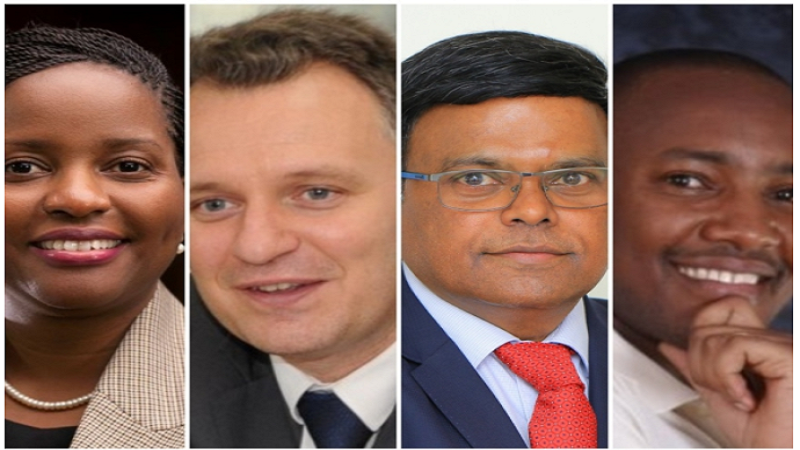
There is a huge pain in Uganda. Yes, hackers broke into Pegasus, a mobile money integrator for banks, telcos, etc,stealing millions of dollars from Airtel, MTN, Stanbic Bank, etc in Uganda: “In a joint statement …, Anne Juuko, Wim Vanhelleputte, and VG Somasekhar, the CEOs of Stanbic Bank Uganda, MTN Uganda, and Airtel Uganda respectively, admitted there was an “incident”, but did not give details.” Yes, it is always the weakest link, and typically comes from the flanks. You had sealed and hardened your systems, but are your partners in compliance and protected?
Here, the banks and the telcos did not know the mayhem would come from an integrator. If you do not know where to start on how to deal with this type of problem, I refer you to portfolio company, Infoprive, which secures most startups, banks, airlines, etc in Africa and middle east.
Unidentified hackers broke into the systems of Pegasus Technologies, a company that integrates mobile money transactions between telcos, banks, and other local, regional, and international money transfer services, making off with a yet to be known sum, but said to be in billions of Shillings.
The most affected firms are the leading telcos, Airtel and MTN Uganda, as well as Stanbic Bank, Uganda’s largest bank that also backs up most of the mobile money transactions.
In a joint statement released on October 5, 2020, Anne Juuko, Wim Vanhelleputte, and VG Somasekhar, the CEOs of Stanbic Bank Uganda, MTN Uganda, and Airtel Uganda respectively, admitted there was an “incident”, but did not give details.
“Stanbic Bank Uganda, MTN Uganda and Airtel Uganda inform the public and their customers that on Saturday, October 3, a third-party service provider experienced a system incident which impacted Bank to Mobile Money transactions. All Bank to Mobile Money/Wallet services have since been temporarily suspended,” the trio said.
“This system incident has had no impact on any balances on both Bank and Mobile Money accounts. Our technical teams are analysing the incident and will restore services as soon as possible.
“We apologise to all customers for any inconvenience that this has caused and reiterate our commitment to delivering seamless banking and mobile money services,” they added.
Ronald Azairwe, Managing Director Pegasus Technologies Limited, could neither deny nor confirm the incident.
Zenvus Yield has updated its algorithms. We now process data on the fly. It is a monster mathematical model which is super amazing. We are now shipping this version to partners in development mode, via licensing. With that you can integrate our technology in your product. For end users, we are here to support you.
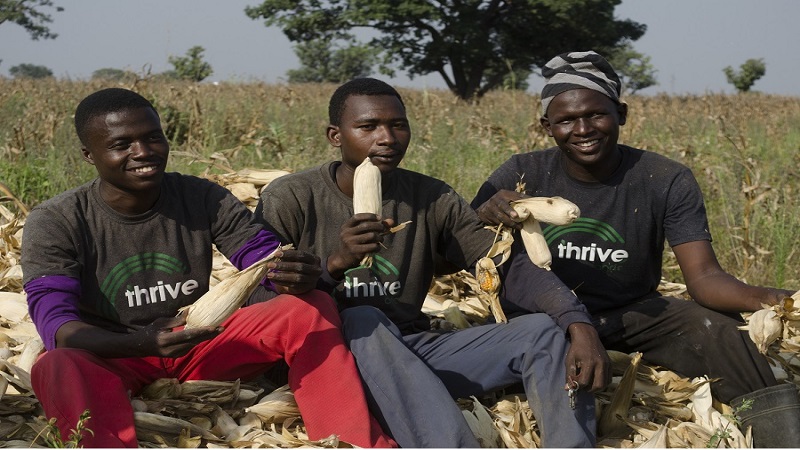
Thrive Agric defaulted on its crowd-sourced investment commitments, creating the typical scenario which the Securities & Exchange Commission (SEC) Nigeria has been warning people for years. People had invested with promises of fixed percentage returns. But when Covid-19 came, Thrive Agric went into extended coma as farming systems froze. Unfortunately for the startup, the investors were promised an amount, and they rightly expected to be paid.
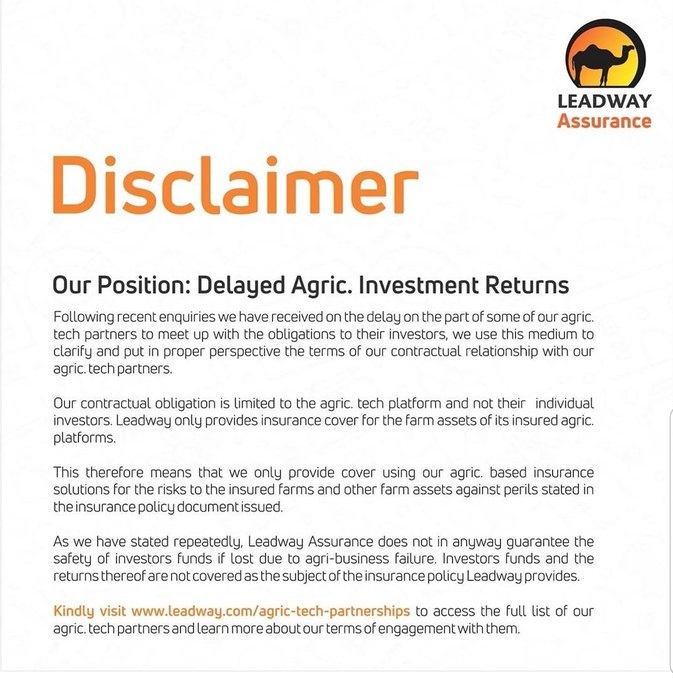
To cause more pain for the investors, Thrive Agric insurer, Leadway Assurance, just put out a statement, informing the world that it only insured the farms, not the individual deposit’s money. That complicates the whole system.
Expect the SEC to draw the hammer here and fines could fly. Unless Thrive Agric could raise money, and pay these investors, it could be in real troubles as the loop has been broken. Yes, not many people would be open to invest new resources, bringing the business model into paralysis.
That said, as individual investors, we need to understand the risks in these investments. Agriculture is a tough business and when someone is promising high returns, you need to understand the risks. The fact is this, running business operations in Nigeria at the moment is expensive. So, margins may not just be there for high payouts, no matter the promises on paper. Of course, that is not to say that people should not be paid as put on contracts.
Largely, this is a case study why government is not stupid when they put these regulations which many of us hate. Government wants to protect your N1 million and you are angry you cannot be allowed to get your “guaranteed N200k” yearly returns on your own money. Now, a bad thing has happened, and everyone is asking the government for help.