On October 1st 1960, Nigeria joined the league of other nations who had broken free from the colonial rule of the British government. Behind the scene of the ceremonial event marking the glorious freedom were individuals whose prodigy and charisma propelled the unwilling masters to yield to the quest for independence.
60 years after, Nigeria has seen more characters in its political space, whose action or inaction contributed in shaping the destiny of a country that has become an interesting territory in world’s map. Here are 60 Nigerians among many others, who contributed in shaping the destiny of the country.
1 Dr. Nnamdi Benjamin Azikiwe
He is described as the founder of modern Nigerian nationalism. Born November 16, 1904, Zik was the Governor-General of Nigeria after independence, from 1960-1963. He became the first president of Nigeria’s first republic from 1963-1966, when he was ousted through a coup.
But his charisma also became notable in pan-Africanism and political activism. Azikiwe founded the University of Nigeria in 1955 that has produced thousands of professionals across all sectors in Nigeria. He subsequently set nationalistic legacy that became a reference in modern Nigeria.
2. Abubakar Tafawa Balewa
He was the first Prime Minister of Nigeria, who advocated for the rights of the Northern people. Balewa supported the North’s decision to back out of South’s quest for independence, based on the objection that the North needs more time to catch up with the South on many fronts.
His political prowess birthed the Jam’iyyar Mutanen Arewa, which means in English, Northern People’s Congress (NPC). In 1952, Balewa was appointed the Minister of Transport, an office which marked his entry into government. During his time as Transport Minister, he transformed both Marine and Railway departments to corporations and developed the designs for the Niger Bridge and Kainji Dam.
3. Sir Ahmadu Bello
He was a prominent figure in Nigeria before 1960, who held prestigious positions in politics, religion and tradition of the Northern people. Sir Ahmadu Bello was the leader of the Northern People’s Congress (NPC), Sardauna of Sokoto and the first and only Nigeria’s Premier from 1954 to 1966.
He was dominant in national politics until he was assassinated through a military coup led by Major Chukwuma Nzeogwu. His death among others, stirred the killing of Igbos in Northern Nigeria and consequently resulted in the civil war.
4. Obafemi Awolowo
He was a nationalist who led the fight for Nigeria’s independence from the Western region. Awolowo was revered for his policies including free education for Western Nigeria. He was the first Premier of Western Region and later became federal commissioner for finance and the vice chairman of Federal Executive Council during the civil war.
Awolowo was responsible for many of the decisions made by Nigerian government during the war. He was notably frontal about the welfare of Yoruba race, an attribute that earned him the leader of Yorubas title. However, his critics said he introduced tribal politics to Nigeria based on his belief and fight for true federalism.
5. Johnson Aguiyi Ironsi
He was Nigeria’s first military head of state, who made an opportunistic move to the seat of leadership following the 1966 coup. But Ironsi’s time in power was short-lived as he was removed by a counter coup in July of 1966, and was consequently killed. He reportedly introduced the federal allocation system currently being used in Nigeria for revenue administration.
6.Yakubu Gowon
After the death of Aguiyi Ironsi, Yakubu Gowon was Chosen as head of state who later led the Nigeria side during the civil war. He was particularly famous for reneging on Aburi Accord, an agreement he reached in Ghana with leaders of other regions and the Supreme Military Council in Nigeria that was supposed to allow each region to exert self-rule and manage their resources. Gowon also broke up the regions, creating 12 states from each in an effort to disintegrate the Eastern Region and separate non-Igbo tribes from the Igbo dominated region.
After the war, the Igbos who owned bank accounts were given 20 pounds each to start life regardless of how much their individually owned prior to the war. The decision was in contrast with his No Victor No vanquished policy that was aimed toward rehabilitation, reconstruction and reconciliation. It was believed to have resulted in crimes, fraud and subsequent corruption that characterized his time as head of State, and consequently set the trajectory of what is obtainable in modern Nigeria.
7.Chukwuemeka Odumegwu Ojukwu
He was the governor of Eastern Region in the period of the 1966 coup and its subsequent crisis. Ojukwu declared the Eastern Region sovereign state of Biafra following the federal government’s failure to implement the Aburi Accord, and the killing of Igbos in Northern Nigeria. His decision consequently resulted in Gowon’s declaration of the 30 month civil war that tore the Eastern part of the country to shreds.
He surrendered in January 9, 1970, and fled the country. While Ojukwu remains a hero to his people, his decision to separate the Eastern Region from Nigeria triggered the most tumultuous and gruesome event the country has ever had. Up till this day, the Igbos are yet to regain the level of political freedom they had prior to 1966.
8. Murtala Mohamed
He ruled Nigeria from 1975 to 1976 as head of state. Mohamed who served as 2nd infantry commander during the civil war had many alleged misconduct to his name including the breach of rules of engagement that resulted in the notorious Asaba massacre.
However, in his days as the head of state, he was seen as a determined game changer who puts national interest first. The phrases “fellow Nigerians” and “with immediate effect” were part of his coup d’état’s speech, and they have since then became part of Nigeria’s political and everyday phrases.
Mohamed made the decision to move the Federal Capital Territory from Lagos to a territory location of about 8,000 square kilometers in the central part of the country, due to the congestion in Lagos. In July 3 1973, he announced Abuja as the Nigeria’s new capital territory.
9. Olusegun Obasanjo
He played a major role in the civil war, fighting on the Nigerian sided and was the one who accepted Biafra’s surrender. As part of triumvirate, Obasanjo was appointed the head of state by the Supreme Military Council following the death of Murtala Mohamed. He was the head of state from 1976-1979 and introduced developmental policies including free education and the creation of Nigerian Labour Congress.
Obasanjo ensured Nigeria’s transition from military rule to democracy by handing over to a civilian, Shehu Shagari. He was the first Nigerian to serve as military head of state and democratically elected president. After being imprisoned for being critical of military dictator, Gen. Sani Abacha, Obasanjo was released in 1999 to win the presidential election. He took drastic steps to fight corruption, creating the anti-graft agency, the Economic and Financial Crimes Commission (EFCC). He also got the Paris Club to forgive Nigeria its enormous debt.
10. Shehu Shagari
He was the first democratically elected president of Nigeria whose government ushered in the Second Republic. Shagari was known for reforms that included the building of Kaduna refinery, the construction of additional steel and three rolling mills at Ajaokuta and large scale farming.
However, he reduced the share of oil royalties and rents to state of origin from 30 to 2%.
11. Alex Ekwueme
Besides being the first executive vice president of Nigeria, Ekwueme pioneered town planning and architecture. He presided over the Architects Registration Council of Nigeria. He owned the first indigenous architecture firm (Ekwueme Associates) in Nigeria.
12. Muhammadu Buhari
He took power by force in December 31, 1983, overthrowing the democratic elected government of Shehu Shagari. What followed were unprecedented draconian rules that cut across many aspects of Nigerians life. Among the many authoritarian rules of Buhari was Decree Number 2 that prohibited strike, protests and any sort of dissent. It also gave security agents the power to arrest and detain anyone deemed a security threat to the state.
Decree Number 4 was considered the most oppressive among all, as it totally prohibited the freedom of expression, recommending up to two years jail term for journalists or individuals who made offensive report/statement against the government.
Buhari also ordered the closure of Nigeria’s land borders in attempt to encourage local production. His emergence as a democratically elected president in 2015 ushered in repetition of some of the rules that characterized his time as head of State. Border closure and what his critics describe as a new version of the Decree Number 4.
- Tunde Idiagbo
He was the second in command to Buhari, who ruthlessly executed his government’s orders. Idiagbo was in charge of Nigeria’s foreign policy and security matters from 1984 to 1985, during that time, he implemented the border closure, expulsion of illegal immigrants and foreign policies.
14. Umaru Dikko
He was a prominent figure in Nigeria’s polity as far back as 1967. Dikko was the secretary of the committee set up by General Hassan Katsina to unite the North after the 1966 coup, in preparation for vindictive attack on the Igbos. He was the transport minister during Shagari’s second republic and subsequently played other political roles such as leading United Nigeria Congress party during Sani Abacha’s regime, and in the fourth Republic, he formed the United Democratic Party.
15. Michael Okpara
He was the first Premier of Eastern Region and strong advocate of agriculture revolution as key to Nigeria’s development. Okpara spearheaded education and medical development in the Eastern Region.
16. Alvan IKoku
Ikoku was an educationist who fought colonial masters to implement basic education policies. Through the Nigerian Union of Teachers (NUT), Ikoku promoted many policies that included Education Bill of Rights for primary school education to be free for six years nationwide in Nigeria. His recommendations were accepted during the education reforms of the 1976 Federal Military Government. Ikoku served on several government’s education bodies and remains one of the greatest icons of Nigeria’s educational development.
17. Herbert Macaulay
He was Nigeria’s first nationalist whose opposition to the activities of the colonial masters came in many fronts. Macaulay’s political activism started before the 20th century through criticism and defensive actions. In 1923, he formed Nigeria’s first political party, Nigerian National Democratic Party (NNDP). He also founded the Nigerian Daily News, a platform he used to write critical opinions about the British Government. He cofounded the National Council of Nigeria and the Cameroons (NCNC) in 1944.
18. Festus Okotie-Eboh
Okotie-Eboh served as a finance minister under Sir Abubakar Tafawa Balewa. He was elected the National Treasurer of the NCNC in 1954, and later became a leader of the Federal Parliamentary Party. In 1951, he was elected into the Western Region House of Assembly.
19. Ibrahim Babangida
Nicknamed Maradonna, Babangida was the most controversial head of state Nigeria has ever had. He was said to be responsible for the death of Journalist, Dele Giwa, who died of letter bomb. In 1993, he annulled the presidential election that M.K.O Abiola won, which resulted in unrest throughout the country.
His rule from 1985-1993 was characterized by rights abuses, executions, fraud and corruption. In fact, Babaginda’s administration is said to be the most corrupt in the history of Nigeria, and was the bedrock of Nigeria’s corruption culture.
However, he did remarkable things that include the building of 3rd Mainland Bridge, creating of 11 more states in Nigeria, creating of the State Security Service (SSS), creating of National Intelligence Agency (NIA), creating of Defense Intelligence Agency (DIA) and the Federal Road Safety Corp (FRSC) etc.
20. Moshood K.O. Abiola
He was said to be the winner of 1993 presidential election described by international observers as the fairest election Nigeria has ever had. However, the election was annulled by Babangida, resulting in crisis throughout the country. Since his death, Abiola has been honored in so many ways, including posthumous presidential recognition and the recognition of June 12, the day he won the election, as democracy day in Nigeria, replacing May 29. Abiola is seen as a martyr and a pioneer of Nigeria’s modern democracy.
21.Nwafor Orizu
Orizu was Nigeria’s second Senate President upon independence, during the First Republic. He became the acting President of Nigeria from 1965 until the January 1966 coup. He was among those who formed the NCNC, after winning a seat into the Eastern House of Assembly as an independent candidate.
22. Oladipo Diya
He was the chief of staff in 1993 and vice chairman of the Provision Ruling Council in 1994. Diya served as the de-facto vice president during Abacha’s regime until 1997 when he was arrested and sentenced to death for plotting a coup in 2017. His death sentence was commuted by Abdulsalami Abubakar, after the death of Abacha.
23. Aminu Kano
Kano used his father’s Islamic influence to confront the highhandedness of the leaders of Northern Nigeria of his time. He advocated Egalitarianism and gained the support of the common people (the talakawas) in the north. He joined Northern Elements Progressive Union (NEPU) as a platform to push his equality ideas. Kano was an ardent supporter of Zik’s nationalistic politics, aligning himself with NCNC.
24. Gani Fawehinmi
Being a lawyer, he took interest in the plights of the oppressed. Fawehinmi break in human right activism came when he took on case against Andrew Obeya, the Secretary to the government of Benue-Plateau State, who was accused by a factory worker, Bala Ashe, of sleeping with his wife.
Fawehinmi took on the case pro bono and defied intense pressure from the government to drop it. Though Obeya was forced to resign, Gani was detained for nine months. He consequently became famous and established a trajectory that would earn him honors later in life through that case.
Fawehinmi became a voice to the voiceless, getting imprisoned and sacrificing his own interest in the fight for justice. In 2001, he formed the National Conscience Party, a platform he used to vie for the office of the president, which still remains a political party in Nigeria. In 2008, Fawehinmi rejected the Order of the Federal Republic (OFR) honor from Nigeria’s government, in protest of poor leadership and injustice in Nigeria. He is remembered with many honors as a pacesetter in human right defense and fight for good leadership in Nigeria.
25. Dele Giwa
The cofounder of Newswatch Magazine became a sad story following his untimely death by a letter bomb. Newswatch helped ushered in investigative journalism in Nigeria. Sadly Dele Giwa died when it’s still young. A lot of theories followed his death, until this day; no one knows for sure why he died.
However, the closest theories suggested he died defending what he believes in – uncensored journalism. He had stood up against the regime of Ibrahim Babginda, and refused to drop a report indicting his wife, Maryam Babaginda for drug trafficking. Dele Giwa is seen today in Nigeria’s media space as someone who paid the ultimate price for investigating reporting.
26. Fela Anikulapo-Kuti
“One of Africa’s most challenging and charismatic music performers,” that’s how Fela was described. He was not just famous for music; he was also famous for activism. Fela was a thorn in the flesh of Nigerian governments of his days, harshly criticizing the military heads and their practices. Apart from using his songs, he ran column series throughout the 70s and 80s under the title “Chief Priest Say,” which criticized governments, defying media censorship of those days.
As a result of his activism and outspokenness against Nigerian governments, Fela was repeatedly imprisoned. But he was one of the most recognized musicians in Africa. He pioneered Afro-music and promoted African culture with it. He left a legacy that many Nigerian musicians are associating with. Since his death in 1997, Fela has always been remembered in an annual event called Felabration.
27. Wole Soyinka
He was a literary icon who used pen to shape the thinking of many. As a result of his work, Soyinka became the first Sub-Sahara African to win the Nobel Prize in literature. Apart from literature, he was a vocal critic of successive governments in Nigeria. During the 1993-98 Abacha regime, Soyinka escaped from Nigeria as the government sought to kill him. Abacha sentenced him to death in absentia.
During the Nigerian civil war in 1967, Soyinka was arrested and sent to two years in prison as he sought to the war and unite the warring sides. For his attempts to make peace, the Nigeria government accused him of being a traitor. He is famous for founding the Pyrates Confraternity in 1952, at the University of Ibadan. Today Soyinka is remembered by series of events and foundations, including Wole Soyinka Annual Lecture Series and Wole Soyinka Center for Investigative Journalism.
28. Chukwuma Nzeogwu
He was at the fore front of the first coup in Nigeria that overthrew Nigeria’s first republic and eventually led to the civil war, and consequently ushered in 13 year-stretch of military rule in Nigeria. Nzeogwu’s actions were seen by many as revolutionary even though it resulted in the death of prominent Nigerian leaders.
29. Bukar Sukar Dimka
A renown coupist who was part of the counter coup of July 1966, and subsequently led the February 1976 botched coup that killed the then Head of State, Gen. Murtala Mohammed.
30. Chinua Achebe
He was a Nigerian literary icon who promoted Nigerian tradition with his works. Achebe’s first book, Things Fall Apart, is the most celebrated literary work of African origin. He thus provided a “blueprint” for African writers of succeeding generations. Achebe is described as the “father of modern African writing” and “Africa’s greatest storyteller.”
Apart from literature, Achebe played major roles in politics. He served as an ambassador for Biafra during the Nigerian civil war, and joined politics after the war, though his time in political corridors was short-lived due to his inability to cope with the overwhelming corrupt practices obtainable then. Achebe rejected twice, Nigeria’s government attempt to confer on him the honor; Commander of the Federal Republic, in protest to poor leadership in the country.
31. Mary Nzimiro
She was a businesswoman, a politician and women rights activist who thrived in an era when political ground was uncommon for women. Nzimiro was appointed principal representative for the United Africa Company (UAC), in 1948, for Eastern Nigeria. At the same time she was holding other businesses in the east, ranging from textile to cosmetics. By early 1950s, Nzimiro was among the richest people in West Africa.
Politically, she was a prominent member of the NCNC, the influential political party where she became a member of its executive committee in 1957. In 1962, Nzimiro became the vice-president of the NCNC Eastern Women’s Association. Her political influence paved way for women participation in Nigeria’s politics. During the war, she mobilized and led Igbo women in support of Biafra.
32. Obi Asika
He is an entertainment entrepreneur who laid foundation for the success of Nigerian entertainment industry, and paved the way for many Nigerian artists. Asika is the founder and CEO of Storm 360- an indigenous music label which fostered many Nigerian entertainers.
Apart from Storm 360, he founded other creative and communication companies such as Dragon Africa and Outsource Media that have produced much reality TV shows like the Big Brother Naija, the Apprentice Africa etc. and have shaped the future of many Nigerians.
Asika’s Storm 360 produced music talents such as Banky W etc., who ushered in modern Nigerian music. Today, the Nigerian music landscape is multi-million dollar industry with an international reputation to reckon with. Asika is the first overseas person to join the African Advisory Committee of the Smithsonian’s National Museum of African Art in Washington DC, a position he was appointed into in 2014.
33. Abdulsalami Abubakar
He succeeded General Sani Abacha and played major role in Nigeria’s second transition to democracy. During his time as Head of State, from June 9, 1998 – 29 May 1999, Abubakar amended Nigeria’s 1979 constitution, formed the current Independent Electoral Commission (INEC) and conducted elections for various offices of government.
He stunned critics in May 29, 1999, who believed he would hold on to power, when he handed over to the democratically elected president, Olusegun Obasanjo. However, Abubakar was criticized for his role in the annulment of 1993 presidential election that prevented M.K.O Abiola from becoming Nigeria’s president.
34. Kudirat Abiola
She was a pro-democracy activist who fearlessly supported her husband, M.K.O Abiola’s political ambition. She was murdered during Abacha’s regime as she was seen as a threat to the powers. At death, Kudirat was celebrated as a heroine who set political pace for Nigerian women and a symbol of Nigeria’s struggle for democracy.
35. Dora Akunyili
She was a Nigerian pharmacist who served as the Director-General of National Agency for Food and Drug in Administration and Control (NAFDAC), from 2001 to 2008. At that time, fake drugs was one the biggest menaces in Nigeria, being responsible for the death of many. Akunyili fearlessly fought powerful peddlers of fake drugs in Nigeria, and eliminated the practice to bare minimum.
Until her death, she’s one of the most decorated Nigerians, amassing 900 awards, including Time Magazine’s 2006 “One of the eighteen heroes of our time” award.
36. Jaja Wachuku
Wachuku was a Nigerian pan-Africanist, politician, diplomat and humanitarian who served in several capacities in the Nigerian political space. He was the first
Speaker of the Nigerian House of Representatives, the first Nigerian Ambassador and Permanent Representative to the United Nations, and the First Nigerian Minister for Foreign Affairs.
He also served as the Minister of Aviation from 1965 to January 1966, and introduced many changes to the Nigeria’s aviation industry. It was during his tenure that the Aviation Training Center was built in Zaria.
Following his return to Nigeria in 1947 from Dublin, Wachuku joined Azikiwe in NCNC and started a pro-independence movement. In 2010, Former President Goodluck Jonathan honored Wachuku with a posthumous special Golden Jubilee Independence Anniversary Award for his outstanding contribution to the development of Nigeria. Subsequently, in 2014, he was posthumously honored as a hero of the Struggle for Nigeria’s Independence and a pioneer political leader.
37. Ozumba Mbadiwe
After his return to Nigeria from the United States, he joined the NCNC and started pushing a nationalistic
movement. Mbadiwe served in various capacities during Nigeria’s first republic. He was Central Minister of Lands, Survey and Natural Resources, Central Minister of Communication and Aviation, and Minister for Commerce from 1955-1957. Mbadiwe set up The Daily Telegraph, a newspaper means he used to promote his political interest and nationalistic agenda.
38. Ernest Shonekan
He was a Nigerian lawyer, businessman and the Chairman of the conglomerate, United African Company of Nigeria, the largest in the Sub-Sahara under the control of an African. Then he joined politics and eventually was appointed interim president by Babangida. Though his time in the office was short (January 2 1993 to August 1993), and full of trouble, Shonekan tried to change things.
He released political prisoners detained by his
predecessor, introduced a bill to repeal three draconian decrees of Babangida’s government and tried to get debt cancellation for Nigeria. While he was at it, amidst the crisis that emanated from the annulled election, his government was overthrown by Sani Abacha through the palace coup.
39. Mrs. Funmilayo Ransome-Kuti
Apart from being a women’s rights activist, she was also a lawyer, an educator, a nationalist and suffragist. In her early adult life, Mrs. Ransome-Kuti spearheaded preschool education for women of low income class. She set up Abeokuta Women’s Union for the interest of women’s rights, including the better representation of women in local governing bodies, and halting unfair tax practices against market women.
She became popular when she mobilized and led over 10,000 women in protest that forced the abdication of Alake, a cruel Yoruba monarch, in 1949.
She consequently became part of Nigeria’s independent movement, a founding member of NCNC and a member of international peace and women’s right movements. Mrs. Ransome-kuti was the only woman in the company of NCNC’s delegation, who took protest to London in 1947 over proposed constitution.
She received the Lenin Peace Prize and Member of Order of the Niger (MON). Her activism led to universal adult suffrage of 1960 among other things. Mrs. Ransome-Kuti died in 1978 following injuries she sustained after military invasion of her son, Fela’s home.
40. Joseph Wayas
Wayas served as Nigeria’s third Senate president during the Second Republic – 1979-1983. He was also the deputy chairman of the 1994/95 National Constitutional Conference Commission that oversaw National Conference. Wayas was a preacher of true federalism and a founding member of All People’s Party.
41. Philip Effiong
Effiong was second in command to Ojukwu during the Nigeria’s civil war, who eventually became Biafra’s acting Head of State toward the end of the war. He announced the end of the Biafran surrender in Dodan Barracks Lagos, an announcement that put an end to the civil war.
42.Clement Isong
He was appointed as the governor of the Central Bank of Nigeria (CBN) in August 1967. Throughout the war period, Isong was on the Nigerian side heading the Central Bank. He managed Nigeria’s monetary policies, avoided running up unstoppable debts. He held the office until 1975, when he retired and joined politics. Isong was the first elected civilian governor of Cross River State. He has the Commander of the Federal Republic of Nigeria (CFR) honor and features on the 1000 naira note.
43. Justice Taslim Elias
He was a Nigerian jurist who played a huge role in the modernization of the constitution. The two-time Attorney General actively represented Nigeria in matters of international relations and laws, and was appointed into key positions in many international organizations.
Elias was the first African to be elected the president of the International Court of Justice at the Hague in 1982. Following his effort in drafting Nigeria’s independence constitution, he was appointed Attorney General in 1960, a position he held until the 1966 coup usurped the First Republic.
He was reinstated later that year, and served from then until 1972 when he became the Chief Justice of the Supreme Court. Elias was a recipient of 1979 Nigerian National Merit Award, among many other honors, for his contribution for the development of Nigeria.
44. Mohammed Bello
Bello was also a Nigerian jurist who served as the Chief Justice of Nigeria from 1987 to 1995. Bello stood firm against the excesses of the military government, protecting the court and the public. He was the first Chief Justice of Nigeria from the north.
Bellow however, viewed the military government as legitimate, a situation that drew criticism from his colleagues who viewed him as a military apologist. He was awarded Grand Commander of the Order of Niger (GCON) among other honors for his role in Nigeria’s development.
45. Louis Mbanefo
Mbanefo is another Nigerian with a towering intellect in law, whose charisma solved problems beyond the shores of Nigeria. He became the Chief Justice of the Eastern Region in 1961.
Following the outbreak of the civil war, he was appointed the Chief Justice of Biafra and Ambassador Plenipotentiary. Mbanefo led the course of peace negotiations with Nigeria. He worked with Philip Effiong to negotiate and sign a peace deal that ended the suffering of Biafrans.
46. Humphrey Nwosu
Nwosu was appointed chairman of the National Electoral Commission by Ibrahim Babangida, an office he held from 1989 to 1993. He oversaw the annulled 1993 presidential election, introducing the open ballot system. However, he failed to announce all the results of the elections which would have shown Abiola as the clear winner, following military order to that effect. Nwosu’s inaction is seen as the enabler of the annulment of the 1993 election.
47. Theophilus Danjuma
Danjuma was the Chief of Army Staff from July 1975 to
October 1979. In 1966, he participated in the counter-coup that killed Aguiyi Ironsi and overthrew his government. Danjuma played a big role in the civil war, fighting on the Nigerian side as a lieutenant colonel. He remarkably led the battalion that freed Jaja Wachuku, who had been locked up by Ojukwu, from detention.
In 1976, he was instrumental in foiling Dimka’s coup. Since his retirement from the military in 1979, Danjuma has played major roles in government, including serving as the Minister of Defense in 1999.
48. Tunde Ogbeha
He was a lieutenant colonel in Nigerian military who participated in two coups that removed Shehu shagari and Muhammadu Buhari from office. Following Babangida’s ascension to power, Ogbeha became prominent in government. He was appointed military governor of Akwa Ibom state in 1987 and in 1988, the governor of defunct Bendel State. He was instrumental in the creation of Kogi State.
49. Adekunle Fajuyi
Fajuyi was the first military governor of the Western Region, who earned honors in the military, including British Empire Medal and the military cross. He was assassinated alongside Aguiyi Ironsi in the 1966 counter-coup.
50. Ndubuisi Kanu
He was a member of Murtala Muhammed’s cabinet who was later appointed by the Military Supreme Council in 1976, as Imo State governor, and Lagos State governor in 1977. During his time as the Imo state governor, Real Admiral Kanu launched massive town planning projects in Owerri, including building of many roads. He also expanded the number of Local Government Areas to 21 and established the Imo Broadcasting Service.
Following his retirement from military service, Kanu became active in pro-democracy activism, advocating true federalism. He became a chieftain of National Democratic Coalition (NADECO). He played a leading role in agitation for the actualization of the annulled June 12 presidential election.
51. Bola Ige
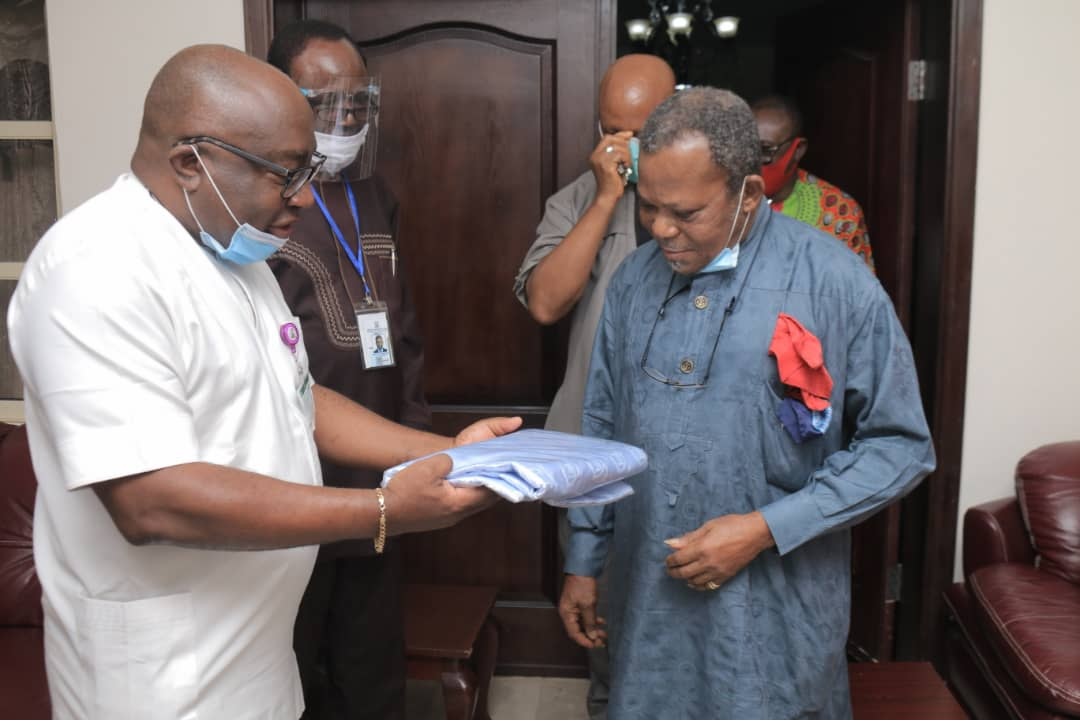
Ige was a Nigerian lawyer who served as the Minister of
Justice and Attorney-General from 2000 to 2001. He became Oyo governor during the Second Republic from
1979 to 1983. He was a founding member of Yoruba Socio-cultural group, Afenifere. Ige was a fierce advocate against Sharia law. But he failed to improve National Electric Power Authority (NEPA) in 1999, when he was appointed minister of power and mine by Obasanjo’s administration.
52. Ladoke Akintola
Akintola was a Nigerian lawyer who together with Awolowo, formed the Action Group (AG), the pan-Yoruba political party headed by Awolowo. Akintola became the deputy, and served as the Party’s leader of opposition in the Nigerian House of Representatives.
He subsequently served as the Federal Minister of Health, and of Communications and Aviation. As a pan-Yoruba ideologist, Akintola opposed the AG’s socialism ideology preferring to be conservative. He served as a premier in 1963/1965. In 1962, he helped in establishing the University of Ife, later renamed Obafemi Awolowo University.
53. Bode Thomas
During the colonial era, Thomas pushed for regional-based politics. He was credited as the first prominent Nigerian member of the political elite to make such a case from colonial masters. He was prominent in the tribal politics of Odua’s people, and was the first Nigerian Minister of Transportation. Thomas also served as the Minister of Works.
54. Ken Saro-wiwa
He was a Nigerian media professional and environmental activist who led campaign against hazardous effects of oil activities in the Niger-Delta. Saro-Wiwa led a non-violent campaign under the Movement for the Survival of the Ogoni People (MOSOP), in protest to Nigeria’s government’s inaction concerning the environmental degradation caused by oil spillage.
Following his campaign against the military government, Saro-Wiwa was convicted and hung in 1995, by Abacha’s regime. After his death, activism and campaigns against Nigerian government over the Niger-Delta oil continues, following his courageous example. In 1996, the Center for Constitutional Rights (RCCR), Earth Rights International (ERI) and other human rights organizations filed a lawsuit against Royal Dutch Shell for its atrocities in Nigeria. The court ruled against Shell.
55. Michael Ibru
The birth of Ibru Organization in 1956 was the beginning of the Ibru conglomerate that included frozen food venture among other businesses. In 1957, Ibru started the importation of ice fish in collaboration with friends, even though local fishing business was booming then. Nigerians frowned at it, calling it “mortuary fish.”
Ibru persuaded the Nigerian public to buy ice fish, and in a short time, he was establishing depots in every state of the country. Frozen food has since then become a lucrative business in Nigeria, and ice fish is now everyday food in Nigeria. Ibru Organization thus, metamorphosed to a multi-billion conglomerate, employing thousands of Nigerians.
56. Anthony Anenih
Anenih was a Nigerian politician who played integral roles in the emergence of governments in Nigeria, through party politics. From 1981 to 1983, he was the chairman of the National Party of Nigeria (NPN), and helped Samuel Ogbemudia to become governor. From 1992 to 1993, he was the National Chairman of the Social Democratic Party and helped M.K.O Abiola in his failed presidential bid. He was a member of the 1994 constitutional conference.
57. Samuel Ogbemudia
He was a military officer who served as a governor of the Midwest from 1967-1975, and played major role during the counter coup of 1966 and subsequently the civil war. Ogbemudia liberated the Mid-western Region from the Biafran army. As a populist, he led many reconstruction projects after the war that touched many sectors.
Ogbemudia was among the founding members of the University of Benin Teaching Hospital (UBTH) among other things that include the National Museum in Benin. In October 1983, he was elected governor of Bendel State. Ogbemudia played major roles in many Nigerian governments, especially the military. He was among the founding members of Peoples Democratic Party (PDP) When Nigeria returned to democracy in 1999.
58. Ambrose Alli
He was a Nigerian politician who was elected the first civilian of Bendel State. During his time in office, Alli tried to change things including education. He built many schools including Bendel State University which was later divided following the creation of Delta State and was renamed Ambrose Alli University Ekpoma, and Delta State University Abraka. He introduced free education and established over 600 new secondary schools and colleges of education and polytechnic.
Alli established teachers training colleges to ensure adequate teaching staff in the newly established schools. His developmental achievements are regarded as the greatest Edo State has ever had.
59. Ben Nwabueze
Prof. Nwabueze is Nigeria’s first academic Senior Advocate of Nigeria (SAN), a teacher, an administrator and a former Minister of Education and Youth Development. Being a strong advocate of the Igbo cause, he cofounded the pan-Igbo socio-cultural Group, Ohaneze NdiIgbo.
He has played major academic roles leading to reforms in Nigeria’s education sector. As a constitutional lawyer, Nwabueze has helped in shaping Nigeria’s constitution and the entire legal system.
60. Akanu Ibiam
Before the war, he was the governor of the Eastern Region. As the war broke out, he became actively engaged in obtaining supplies for the Biafran side using his church contacts. He was one of the six presidents of the World Council of Churches (WCC).
After the war, Ibiam travelled to different parts of the world, including Canada, seeking relief supplies for Biafra. He returned his knighthood in protest of British government’s support to the Nigerian side. He founded the Bible Society of Nigeria and Christian Medical Fellowship.