DD
MM
YYYY

PAGES

DD
MM
YYYY

spot_img

PAGES

Home Blog Page 6131

The Urgency of Fixing Nigeria’s Manufacturing Sector As Index Falls

1
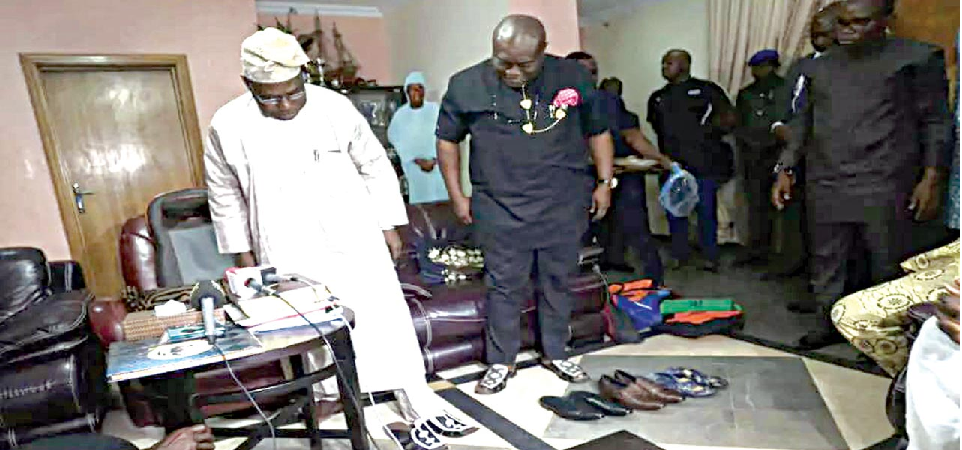
Aba shoes sector would grow with partnerships [source: technomy]

We hail our digital companies but the fact remains that most would not create enough jobs without strong physical components. In the late 1970s,  General Motors used close to one million workers to serve about 300k customers. Today, Facebook uses just sub-40k workers to serve more than 4 billion customers. Apple uses about the same number, but Foxconn which Apple relies upon on the physical elements of its business has excess of one million in its payroll.

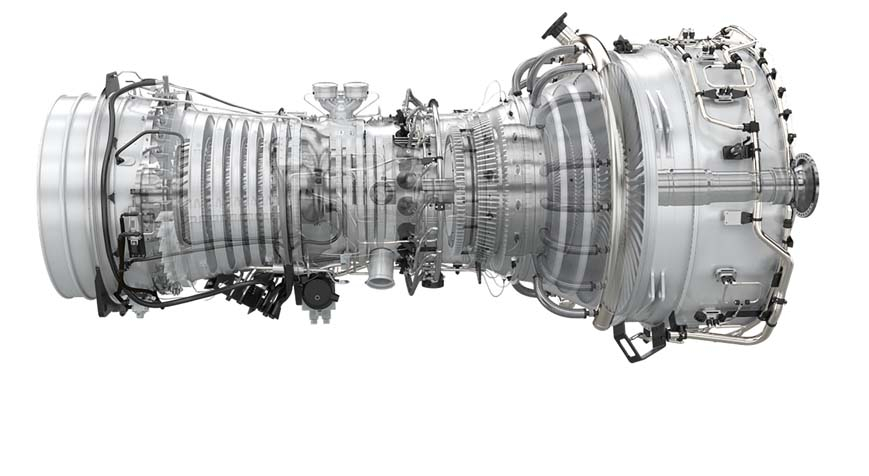
That brings me to the big news that Nigeria’s manufacturing sector is further contracting. Besides  the impact of Covid-19, the sector has been struggling for years. The border closure did not help the very small manufactures who focused on the niche markets in the western and central African regions. Covid-19 only exacerbated a trajectory that has been ongoing for years. Of course we do know the big elephant in the room: electricity  – the weakest link in Nigeria’s manufacturing sector.

The Manufacturing Purchasing Managers’ Index (PMI) in September stood at 46.9 index points, indicating a contraction in the Nigerian manufacturing sector for the fifth month.

This was disclosed by the Central Bank of Nigeria (CBN) in its September PMI report released on Wednesday.

According to the report, four out of the 14 sub-sectors surveyed reported expansion (above the 50 per cent threshold) in September.

It listed the expansion order as electrical equipment; transportation equipment; cement and nonmetallic mineral products.

So, the point is this: Nigeria needs jobs and most of those jobs are not going to come from our digital startups. Rather, the old industrial players would be expected to provide many assists as in the game of football. Aba shoe sub-sector needs to be fixed just as many clusters across the nation.

Aba could be great and has the sparks of genius to compete with Italy and Spain in the leather industry. I have offered some clear strategies to redesign the sector. Establish a vehicle that will galvanize the different shoe making entities into brands. Each brand will push for higher quality through better tools and training and advocate more collaboration among players. A requirement that a brand buys from the entities will be established. It will be similar to a merchant buying farm outputs from farmers even as the merchant has provided seeds to the farmers at planting season. Through strategic advertising and marketing, Aba will reach its promise.

Nigeria needs to work!
Fixing Aba Shoe And Leather Industry

The Challenge Ahead in Nigeria with Labour’s Planned Protest

2

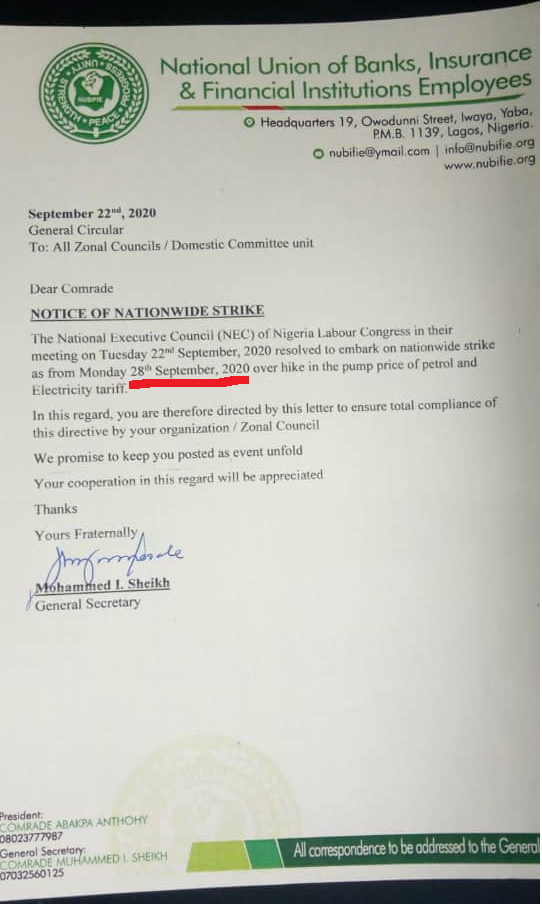
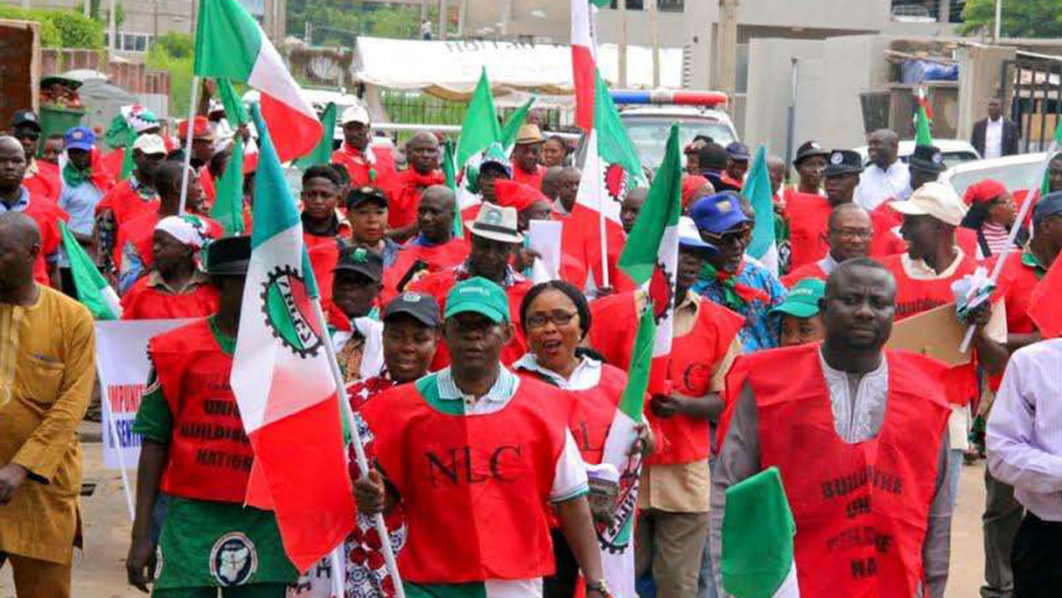
It is a very big concern and this one could set Nigeria back by at least five years. How do we get Nigeria Labour Congress (NLC) and Trade Union Congress of Nigeria (TUC) to reconsider the imminent strikes? Yes, barring any rapprochement, Labour plans to begin a nationwide strike on Monday to protest against Federal Government ordered hike in prices of petrol and electricity tariffs. The TUC had noted that it would join the protest. To make this more challenging, NLC does not want to meet to negotiate more (of course, it has been doing that for ages with no results).

Nigerian labor and trade organizations have been mobilizing its members and the entire labor and trade ecosystem in Nigeria, for a nationwide strike action aimed at forcing the federal government to reverse the recently increased petroleum pump price and electricity tariff.

The Nigeria Labour Congress (NLC), on Tuesday announced the decision of its Central Working Committee (CWC), to commence a nationwide indefinite strike and mass protest from September 28, after it was approved by its National Executive Council (NEC).

First, I support NLC because if you look at data, Nigerian workers are getting poorer seasonally due to rising inflation, currency deterioration, etc, which are worsening faster than pay increments. Yet, the root causes of these paralyses are what Labour is protesting against. If we remove fuel subsidy (killing the institutionalized corruption along), Labour will benefit. More so, if we get electricity to the point where pricing is at parity and evidently reflective, investors will come to fix our electricity supply industry.

Indeed, we need to get Labour to understand that the government’s call on prices of petrol and electricity is necessary to structurally improve Nigeria. We have been trying subsidies on electricity and petrol since 1960, with nothing to show. Labour needs to allow this new experiment for at least two years.

Notwithstanding, President Buhari needs to improve his gameplan. He needs to learn that Nigeria is not a military barrack. Though he never likes to speak to the media, he could have carried these men and women along, and provided them opportunities to communicate to their constituencies. He likes to create artificial crises when there should be none. Consultation and collaboration would have managed this tension. His government will not recover if these strikes go ahead as the nation is already struggling across many domains.

But the issue now is how to get Labour to abandon this strike. What should Nigeria do now since the option of reversing these tariffs makes no sense?

Comment on LinkedInf Feed

Prof from the labour position, they are not against the deregulation and price hike but what do govt have on the table to cushion the hardship? Is there a plan to make refineries work to reduce or stop importation of fuel? Has Govt cut down on the cost of governance? Govt didn’t do the needful.

My Response: Absolutely – that is where I blamed Buhari for his style of not getting people together on a table to talk. He may have some ideas but he never communicates. Without that communication, you create a vacuum. I still think we need weekly briefing in Aso Rock

Taxation of Digital Activities in Nigeria: A Panacea for Generating Revenue

0

The importance of Technology in the 21st century cannot be overemphasized. The whole world has now become a global village through Information Communication Technology. Our traditional methods of doing many things are now digitalized. Today, we have Digital Currency such as Bitcoin, online markets such as Jumia where buying and selling take place without physical presence, banking transactions are not excluded from digitalization as you can now bank safely on your mobile phone from the comfort of your bed room. All it requires is to have an Android phone and Data to experience the above, hence the need for our various Revenue laws to be in tandem with the current situations.

The Economy of many countries of the world has become Digital Economy and Nigeria is not left out. In 2018, the Nigerian Investment Promotion Commission put it that Nigerian digital economy is expected to generate $88 billion and create three million jobs by the end of 2021[i].

However, it was practically impossible for Nigeria to tax the enormous income that the digital economy was generating, hence the enactment of Finance Act 2019 which amended various tax laws in Nigeria. This has brought the country into group of countries with taxation of digital activities.

Formerly, the general rule under the Nigerian tax laws for taxing income of foreign companies in a given jurisdiction is by establishing that the entity has a taxable presence or has a permanent establishment (PE) in Nigeria. This is based on the provision of the section 13 of the Companies Income Tax Act, 2007.

It has been aptly argued from some quarters, that  the above position is not in tune with the current advancement in Digital Activities and that the reality remains that in Digital Economy, companies can make money without a significant physical presence, and, no significant means or very little tax for the government. It can be humbly submitted that a lot of revenue would be lost without taxing the digital economy.

In view of the challenges faced by the Tax Authorities in taxing foreign enterprises without Permanent Establishment in Nigeria, the Finance Act 2019 amended various sections of the Companies Income Tax Act 2007 to wit: Foreign companies with Significant Economic Presence ( SEP). SEP is a principle initiated by Organisation for Economic Cooperation and Development (OECD) to finding last solution to this tax solution known as Base Erosion and Profit Shifting (BEPS) a form of corporate tax planning strategy used by multinationals to shift profits from higher – tax jurisdiction to lower- tax jurisdictions, thus eroding the tax base of the higher- tax jurisdiction and it is a form of tax avoidance which thrives on the gaps and mismatch between different tax system.

Furthermore, Value Added Tax Act has equally been amended by the Finance Act, 2019 in section 46 to widening the scope of Value Added Tax to include intangible goods such as digital products and services rendered online to persons in Nigeria irrespective of the resident status of the service provider. FIRS Circular on the Implementation of the Value Added Tax Provisions in the Finance Act 2019 issued out on the 29th April 2020 has clarifies the definition of goods and services in the Act. As it relates to goods, the Circular provides that VAT is chargeable on goods which include property (tangible or intangible)…while in relation to services, the Circular indicates that VAT is chargeable on services:..is rendered remotely, online, or by other virtual means to Nigerian residents of persons in Nigeria. The Circular equally made it mandatory for Non Residents Companies to register for VAT.

Also, Stamp Duties Act has been amended by the Finance Act in section 89 to include payment of Stamp duties on Electronic Documents. To this writer, this is in tune with the provision of Evidence Act, 2011 on admissibility of Electronic in court.

CONCLUSION

The taxation of Digital Activities in Nigeria through the enactment of Finance Act, 2019 is a right step taken in the right time. Revenue generation for the government has increased tremendously and this would the government the leeway to provide social amenities for the betterment of the citizens.


[i] Ogochukwu Isiadinso and Emmanuel Omoju, ‘’Nigerian: Taxation of Nigeria’s Digital Economy: Challenges and Prospects” Mondaq(30 May 2019)< www.mondaq.com/nigeria/tax-authorities/810276/taxation-of-nigeria39s-digital-economy-challenges-and-prospects >  accessed  Tuesday, September 22, 2020.

ii International Collaboration to End Tax  Avoidance< www.oecd.org/tax/beps/>

iii OLANIWUN AJAYI  MAY 2020|NEWS LETTER. FIRS CIRCULAR ON THE IMPLEMENTATION OF THE VALUE ADDED TAX PROVISIONS IN THE FINANCE ACT 2O19. Available at www.olaniwunajayi.net

Timothy Olamide writes from the Faculty of Law and can be reached via olaniyitimothyolamide@gmail.com

Junior vacancy in Nigeria – Project Management – Power Start-up.

0

A LinkedIn contact reached out to me about a vacancy. She is looking for a position in Nigeria to work in a start-up project in the ‘Power’ sector and asked me if I could recommend anyone. I thought it might be a good idea to share the opportunity with my Tekedia and my LinkedIn communities.

The position title is ‘Project Coordinator’ though the recruiter stresses that this is a ‘junior’ role.

The client has existing operations in UK, Egypt and South Africa.

The candidate needs to have Minimum 5 years experience in Nigeria in the Power Industry with Power Plant/Power Generation. Also knowledge of Project Management

I have no information on remuneration beyond a comment from the recruiter that:  ‘Whatever the candidate is earning right now, they will offer a better pay’.

I cannot provide any additional information and will not be servicing any comments added to this contribution/post. Anybody curious to find out more should reach out to the recruiter directly .through the link below.

Thanks John

https://www.linkedin.com/in/padmini-tiwari-01ba2aa2/


Application Link for the Federal Govt of Nigeria’s N75 Billion MSME Survival Fund

92

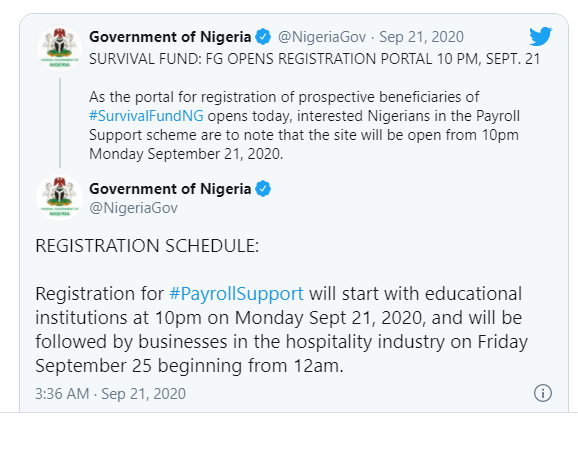
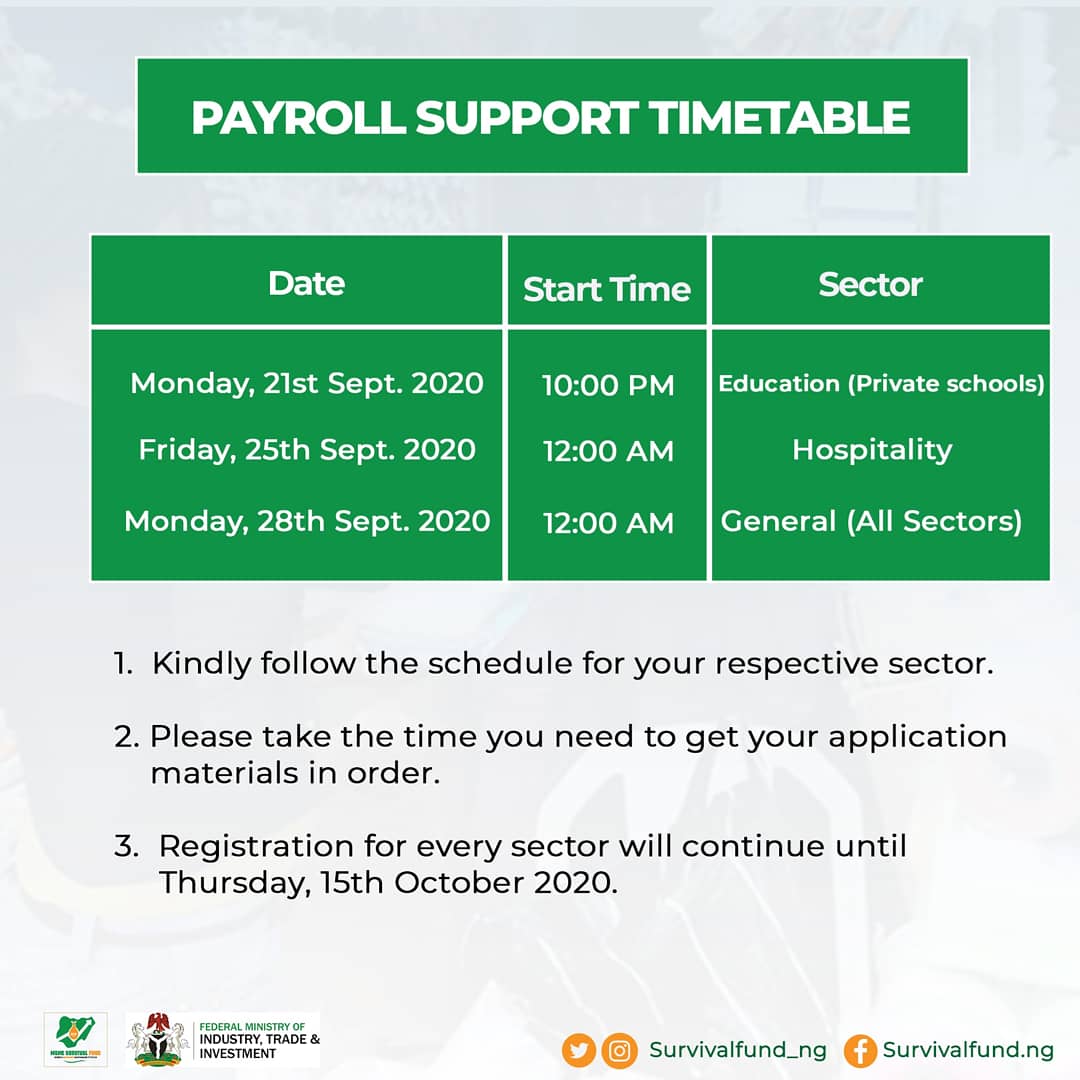
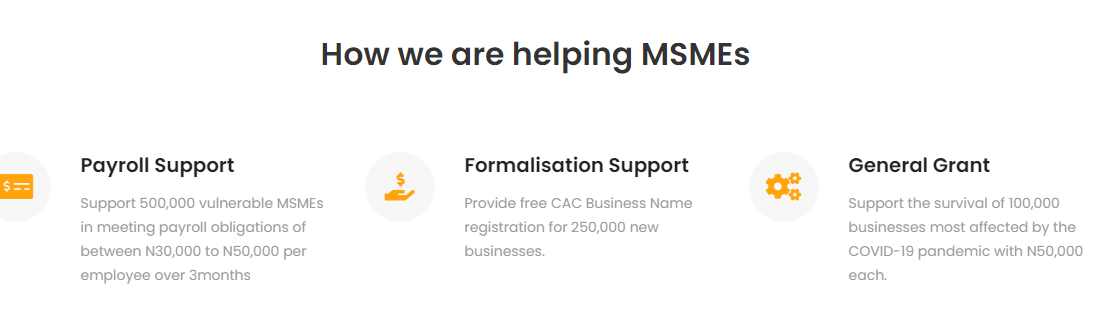
The Federal Government of Nigeria has released instructions on how to access the N75 billion Micro, Small and Medium Enterprises (MSME) Survival Fund. The program took effect from September 21, 2020. This fund is part of the N2.3 trillion stimulus package of the Nigerian Economic Sustainability Plan.

Here is the link; please apply. It is your money and do not wait. Part of this is structured as a grant which means you may not have to pay for it (that can change though).  Also check this link.

Good luck. If you are attending Tekedia Mini-MBA, we will get an expert to provide guidance on this next week.