DD
MM
YYYY

PAGES

DD
MM
YYYY

spot_img

PAGES

Home Blog Page 6144

Society as the Breeder of Terrorism

0

I stumbled upon the story of Theodore Kaczynski, aka The Unabomber, the lone wolf that terrorised America for 17 years. As I read his story from different sources, I couldn’t help wondering what went wrong. Ted was notorious for mailing home-made bombs to random unsuspecting victims and eluded the authority for almost two decades until luck ran out of him. In fact, if not for his elder brother that “snitched” on him, maybe he would have still been reigning till date. The only thing The Unabomber wanted was for technological development to be stopped. He believed that technology is destroying the world and the only way he could call attention to his message was by killing and maiming with technology. What an irony.

But what is spectacular about The Unabomber was that he is a PhD holder. In fact, Ted is a product of Harvard University, where he obtained his degree in Mathematics. After earning his PhD from University of Michigan, he became an instructor with the University of California, Berkeley. But barely two years after starting this promising job, he resigned for unknown reasons, went into the woods, and lived as a hermit in a small cabin he constructed by himself. It was in this cabin that had no electricity, water, telephone, or any basic amenity, that The Unabomber began to terrorise the world.

Thinking about this promising young man deciding to leave a promising life for a terror-filled one will make a lot of us wonder if he was crazy. But from what the psychologist that tested him during his trials said, Ted had a sound mind. Nobody can actually tell what went wrong, but it is suspected that an experiment he was subjected to while in Harvard must have triggered something that turned him into a radical. But then, he was not the only student that was used for this experiment. So why was he the only person that became a terrorist?

References to his background showed that he grew up in a community composed of people from different races. There is nothing odd about that except that each race lived in their “colonies” kind of. Ted was said to be very brilliant and so he did not mix up properly with his peers in his neighbourhood (he was the nerd that must be bullied). But then, other isolated youngsters did not turn into terrorists as well.

The essence of pointing out all these is that the true causes of terrorism are yet unknown. Most of us believed that it was poverty. For instance, I have heard a lot of people saying that the reason Boko Haram recruits people in Nigeria is because of the economic situation of the country. After reading up The Unabomber story, I changed that ideology. There is a lot more to terrorism than poverty.

The only thing I can still point an accusing finger on as the cause of terrorism is the society. Radicals are not born; they are made. Some people may have reservations about a particular thing but it takes his personal experiences to become a radical. At the same time, it takes an extreme experience to become a terrorist. Sometimes terrorists are bred from information they were fed by others. I can bet you that the reason we have more of religious terrorism than any other one in Nigeria is because religious leaders twist what they tell their followers and push them into radicalism. This has nothing to do with poverty; neither does it have anything to do with education. Remember that The Unabomber was an ex lecturer in Mathematics.

I am not saying that the economic condition of the country is not a contributory factor, but its effect is minor. People are obviously not recruited by terrorists because they are poor, as we were meant to believe. They were recruited because they have been radicalised. What causes this extremism in them is the only thing we need to find out. Until it is known and uprooted, I am afraid we are heading nowhere.
The BIG Moment for Nigerian Banks

0

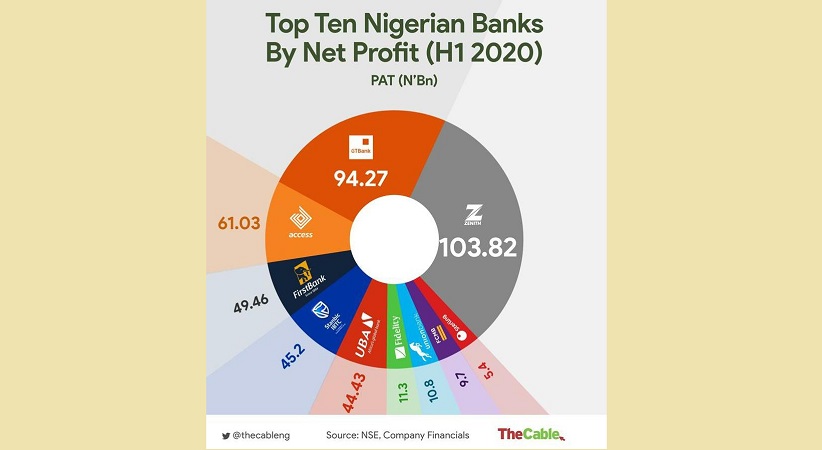
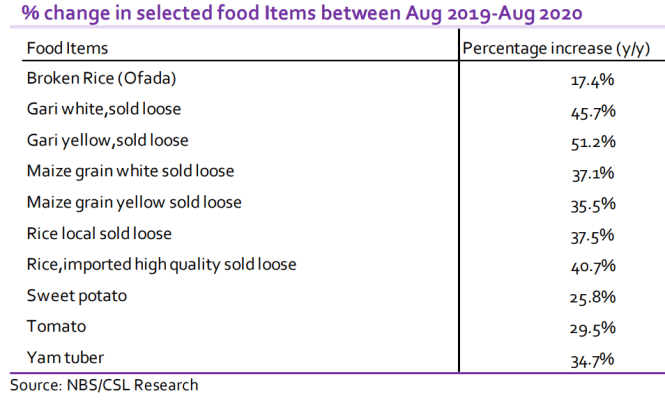
The table below is the state of Nigerian kitchen tables and possibly why CBN updated its lending rate today. What goes behind this table is the real Nigeria with kids going to bed hungry. My prediction is that Nigeria is entering recession as I do not feel strategic repositioning anywhere. Because the government does not have cash to re-ignite the economy, the game plan makes it inconsequential. 

Interesting, only the banks can save the economy. Why? They look better than the government to lead NOW. If the Bankers Committee decide to drop close to N400 billion profit after tax they made in HI 2020 and inject half of it, they could re-stimulate the economy and recoup the investments later. Of course, these banks are “humans”. If they do not feel loved, via policies, they will not fight for the nation with their monies.

Open your survival playbook – the economy is not healthy.

The Central Bank of Nigeria (CBN)’s 11.5% Lending Rate

1
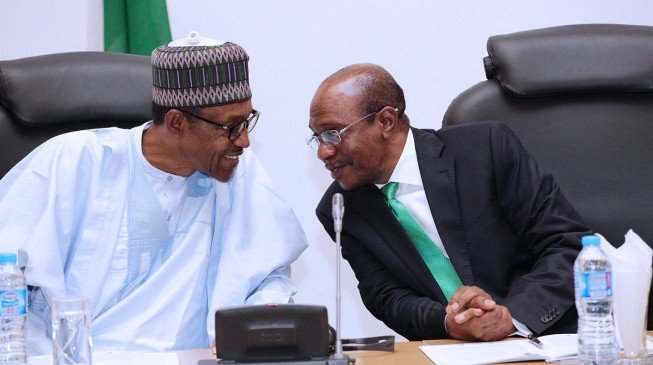
President and CBN boss

How do you engineer price stability while supporting the recovery of output growth. In secondary school, our economics teachers explained the impact of inflation on the prices of basic commodities. But if you elevate that conversation, you would see that lending rate and inflation are the two most consequential factors Nigeria’s central bank has to deal with right now. In this plot below, you can see how prices of basic food items have gone up. So, if you reduce lending rate, triggering excess supply of money in the economy, there would be more inflationary pull on those prices.

So, what do you do? You raise lending rates. But doing that would prevent companies which need “cheap” money to invest and drive production. Cheap money comes partly from cheaper lending rates. If you push rates high, to manage inflation, you can stifle output growth. If that is sustained, your economy can contract! Yes, recession.

Cheaper rates result in cheaper credits, and cheaper credits improve aggregate demand (your bank can lend to you easily), stimulate production (manufacturers get lower interest rate loans), reduce unemployment (because factories are open), and support the recovery of output growth (with money in consumer purses and factories producing).

With all said, this is what I expect banks to be lending at right now:

  • Lending rate from CBN: 11.5%
  • Cost of deposit insurance (NDIC, etc): 0.5%
  • Expenses: 2%
  • Margin: 3%
  • So, expect your bank’s minimum loan rate to be at least 17%

Of course, there are other sources of capital which can make it possible for banks to lend sub-17%. Typically, funds from DFIs can make that possible but those coming from CBN will be at least 17%.

The Central Bank of Nigeria (CBN) Monetary Policy Committee (MPC), on Tuesday, resolved to tweak its controlling lending rate while retaining its liquidity ratio and cash reserve requirement, to make more money available for lending to critical sectors as the economy braces for a looming recession in the third quarter.

At the end of its September meeting, the MPC said the majority of its members voted to reduce the monetary policy rate (MPR) by 100 basis points, from 12.5 per cent to 11.5 per cent, while adjusting its symmetric corridor around the MPR from +200 and -500 basis points to +100 and -700 basis points.

Also, the committee decided to retain the cash reserve requirement (CRR) at 27.5 per cent and liquidity ratio at 30 per cent.

An Option for Nigeria on The Nigerian Film Corporation Privatization

1

This is a partial call: Nigeria wants to privatize the Nigerian Film Corporation (NFC). Yes, sell it off; I do not think we need it. But if the nation does that, Nigeria cannot empower a private company to regulate the film industry. So, the nation cannot have it both ways: it either finds money to fund NFC OR it privatizes it and forgets about regulating the sector. 

But because not regulating the industry is very dangerous, I will propose an idea: turn NFC into a public-benefit company (think of a farmers cooperative) where all the stakeholders in the film guilds co-own it. In other words, you allow the practitioners to self-regulate with one small department in the Ministry of Information overseeing everything.

In the NFC board, have representatives from film guilds, religious leaders, civil societies and the government. Funding the NFC will come from a special fee on all new films. With that, NFC will do its work and the government will not spend kobo funding bureaucracy.

The Nigerian government has said it is planning to reform the Nigerian Film Corporation (NFC) through commercialisation so it can address its teething challenges and reposition it for improved performance.

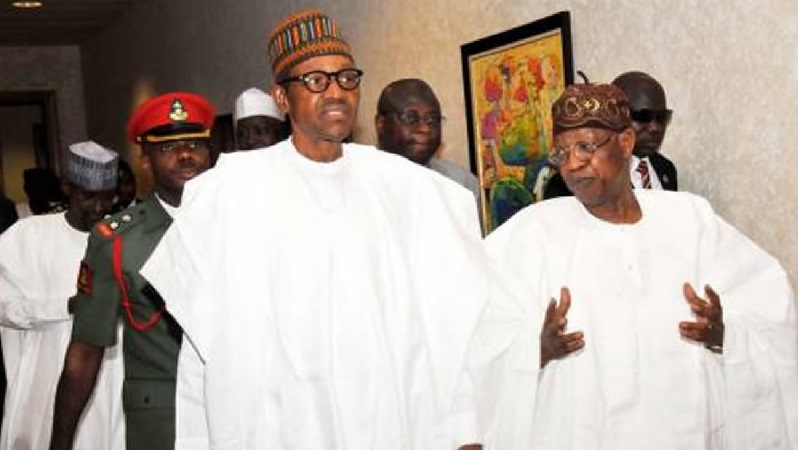
The minister of information and culture, Lai Mohammed, said this on Monday while inaugurating the steering committee on the commercialisation of the NFC.

Mr Mohammed said the commission, which is expected to regulate and organise professional practice in the film industry, is facing numerous challenges, which include its inability to engage in commercial film production and its limited operational functions such as leveraging on the private sector-led growth of the industry.

Another challenge of the agency is its civil service structure that “comes with bureaucratic limitations, budgetary constraints and operational inefficiency.”

He said in order to address these challenges and reposition the NFC for improved performance, the federal government had engaged the services of a business development consultant to conduct due diligence on the corporation and the sector and recommend a strategy that is suitable for its reform and commercialisation.

The World’s Quest for Cleaner Energy Spells Doom for Nigeria’s Oil Economy

0

A gloom future awaits the oil economy as climate change induced environmental concerns spur the world to seek cleaner energy. From factories to transportation to households, the push for replacement of fossil fuel has never been so momentous.

European aerospace giant Airbus announced Monday, the details of three hydrogen-fueled concept planes that could be launched by the year 2035. It’s a hydrogen-based energy design named ZEROe, meaning zero-emission.

Hydrogen is popular in land transportation and has powered a lot of vehicles. As more companies adopt the technology, the aviation industry is beginning to see it as a way out of carbon-emission controversy.

“I strongly believe that the use of hydrogen – both in synthetic fuels and as a primary power source for commercial aircraft – has the potential to significantly reduce aviation’s climate impact,” said Airbus CEO Guillaume Faury.

However, the push for zero-emission vehicles isn’t limited to hydrogen powered engines. Alstom, another Europe-based firm developed the Coradia iLint, a train that converts oxygen and hydrogen into electricity using fuel-cell technology.

The number of low or zero-emission planes is increasing, and new technologies are ushering in other alternatives too. In June, the UK tested its first commercial-scale electric flight, a battery-powered plane. In May, a Cessna 208B Grand Caravan aircraft with a 750-horsepower all-electric motor completed its maiden flight, taking off from Washington.

There is also the Solar Impulse 2, a sun-powered aircraft that circumnavigated the earth in 2016.

As the aviation industry pushes to improve its zero-emission technology, the automobile industry is recording strides that project a near future of little or no combustible vehicles. Deloitte Insights reported that the combined annual sales of battery electric vehicles and plug-in hybrid electric vehicles tipped over the two-million-vehicle mark for the first time in 2019.

There has been remarkable progress in support of electric vehicles from governments, industries and consumers since the past 10 years. Despite the short term impact of COVID-19 on the EV market, there is a progressive pattern of growth that is expected to be sustained throughout the year as more countries and consumers choose electric vehicles.

The progress is noted in the regional growth of the electric vehicles (EV) industry worldwide before COVID ushered in the unprecedented economic downturn that plummeted economies globally.

Deloitte reported that sales of EVs grew by 15% in 2019 compared to 2018, driven by the growth of BEVs in Europe (+93%), China (+17%) and other regions (+22%). While the record seems little, it’s quite significant to the 2030 EV goal as many countries and companies sign up.

On the other hand, industries and homes are becoming more welcoming to solar and hydrogen powered electricity, a situation which also has a significant bearing on oil demand.

Against this backdrop, oil companies are beginning to downsize their operational cost and to build new low-carbon businesses.

Reuters reported that Shell is exploring ways to reduce spending on oil and gas production by 30% to 40% for its upstream sector, its largest division. For the downstream sector, the company plans to cut 45,000 service stations, the biggest in the world, from its network. This will mean limiting its oil production to a few key places that include Nigeria, Gulf of Mexico and the North Sea.

Earlier in the year, Shells’ European rivals BP and Eni announced their plans to reduce focus on oil production and develop low-carbon businesses.

These developments and moves call for concern for oil producing economies like Nigeria. The oil rich West African country has been severely hit by the drop in oil prices due to the pandemic. Nigeria’s GDP is about 90% dependent on oil export, a situation that puts its destiny in the hands of oil buyers.

India is one of Nigeria’s oil biggest importers but the South Asian country is stricken with environmental pollution menace emanating from vehicle emission and industrial waste. And as part of Indian government’s efforts to curtail the pollution, it has joined the 2030 EV goal, aiming to make the country 100% electric vehicle nation 30 years from now.

This, like every other step the world has taken toward cleaner energy spells doom for Nigeria’s oil-based economy. The Africa’ biggest oil producer has recorded little gain in its effort to diversify its economy. Though President Muhammadu Buhari’s administration has been advocating agriculture as a way out, it seems more like re-echoing an age old mantra as infrastructural deficiencies and poor farming mechanisms stand in the way of progress.

The plunge in oil prices forced the Nigerian government to slash its oil benchmark from $57 to $30bp and cut 20% of the capital budget. Against this backdrop, the country is borrowing to fund its infrastructural projects and recurrent expenditure, which depicts more financial troubles for the coming years.

While transition to cleaner energy is a discussion for future generations in Nigeria, energy economics experts have called on the government to shift focus from oil and consider technology among other choices to avoid the looming doom.

“We need to get our economics right and have a judicious balance between politics and economics in order to transform our country. Politics should no longer outweigh economics and technological considerations.

“We need to look away from oil as a revenue generator but as value addition to the development of Nigeria. Countries have done it. Our federal constitution is about sharing and not producing. We should rework our constitution to bake the cake and not share the cake.

“Take a holistic view of our production, example in agriculture. Add value to agriculture and not the way it is talked about now,” former president of Nigerian Association of Energy Economics, NAEE, Prof. Akin Iwayemi said.