DD
MM
YYYY

PAGES

DD
MM
YYYY

spot_img

PAGES

Home Blog Page 6146

Ericsson to Buy Wireless Networking Firm, Cradlepoint for $1.1b As It Pushes to Offer Cheaper 5G Services

0

Ericsson has reached an agreement to buy Cradlepoint, a U.S.-based wireless networking company in a $1.1 billion deal, the company announced on Friday. Cradlepoint which sells wireless routers and subscription-based wireless networking service will become a subsidiary of Ericsson, Reuter reported.

The Swedish telecom giant is seeking to expand its 5G potential by establishing its technology to access tools that can connect devices using Internet of Things (IoT) over 5G network.

Ericsson’s finance chief Carl Mellander told Reuters that the company hopes to provide income opportunities for its customers through the deal.

“We think this will give our customers a chance to generate new income sources within the enterprise segment,” he said.

Ericsson’s intention is to use B2B model to sell Cradlepoints products to its mobile operator customers who will in turn sell to their business clients. As part of its expansion plan, Ericsson will push to take the products to other countries in North America, taking Cradlepoint’s focus off the United States. But it plans to keep Cradlepoint as a standalone business having its own sales team.

“Where we have struggled in the past is when we have started to integrate on the sales side. That’s when you lose track of all your go-to-market channels and customer interactions,” said Ericsson CEO Borje Ekholm.

The deal is expected to close before the end of this year, and will dent Ericsson’s operating margins by about 1% in 2021 and 2022. But the company expects operating cash flow in 2022 as the takeover starts yielding revenue.

“The acquisition is expensive, but the price tag is tolerable given high underlying growth rates and Ericsson’s potential for revenue expansion in the enterprise market,” said Societe General analyst Aleksander Peterc.

Filling Huawei’s role in 5G deployment comes with a huge financial responsibility. Sweden’s Ericsson and Finland’s Nokia are expected to fill the roles as more countries part ways with the Chinese telecom giant. The two European companies are looking for ways to mitigate the cost.

So far, Ericsson has 109 commercial 5G agreements, 59 publicly announced 5G contracts and 61 live 5G networks. The telecom giant has been using innovative technique, Ericsson’s Spectrum Sharing, which enables an easy and fast way to introduce 5G in low band. It removes the need for challenging spectrum reframing projects and cuts the cost of deployment.

“To manage both 5G and 4G, our 5G Core is designed to support both systems in one common software platform. Built using cloud native technology it reduces complexity while keeping operating expenses low,” the company said.

Ericsson’s partnership values involve standalone operations that are aimed at increasing revenue generation, a model it has applied in the Cradlepoint deal. The company’s 5G Core architecture combined with the Services Automation helps to facilitate increasing revenues in new market segments, enabling a wider partner ecosystem for services innovation.

The cost effective technique also means switching between 4G and 5G without increasing the network infrastructure energy consumption.

“And when your network is ready for the next step, you can fast-track to 5G standalone while securing zero-interruptions when switching between 4G and 5G, 6x faster access to higher data rates and significant savings in network infra-structure,” the company explained.

The model gives room for building a smart 5G deployment that enables operators to realize energy savings by preparing the network with technology solutions that use energy-saving software, building 5G with precision and operating site infrastructure intelligently, Ericsson said.

Huawei has the cheapest 5G network infrastructure that puts a challenge on Nokia and Ericsson to lower the cost of their 5G deployment, as many countries seek their services following the disengagement of the Chinese company.

The dismantling of Huawei’s 5G infrastructure in the UK is expected to up the cost of its 5G roll out to 7 billion pounds. With governments around the world already at the mercy of COVID-19 pandemic, Ericsson and Nokia are looking for strategies that will replicate the cost standard set by Huawei.

Let’s Go Naija where we can. Innoson Motors for Naija.

0

Here are the major brands of Innoson Motors with their 2020 price guidance. The full company contacts are also provided below. The fact is this: Innoson Motors can recalibrate Nigeria’s forex paralysis and provide One Oasis for a deep seaport in Ibom, Akwa Ibom. In other words, with Innoson exports, any (export traffic) risk for private investors in Ibom would be mitigated.

Then add Dangote Petrochemicals and Refinery, the Nigerian economy can come back roaring. The price model of Innoson Motors works well for West Africa and Central Africa, and you are looking at a huge market. Sierra Leone just placed an order of $4.7 million for vehicles. The brand is taking off.

Let’s Go Naija where we can. Innoson Motors for Naija.

(I do this post every six months to support this man who does what personally I will not encourage anyone to venture into. There are many reasons why you think he will fail. But yet, he keeps rising)

Innoson Vehicle Motors – Brand Photos with Prices

Digital Divide in Education – The Covid-19 Reality

0

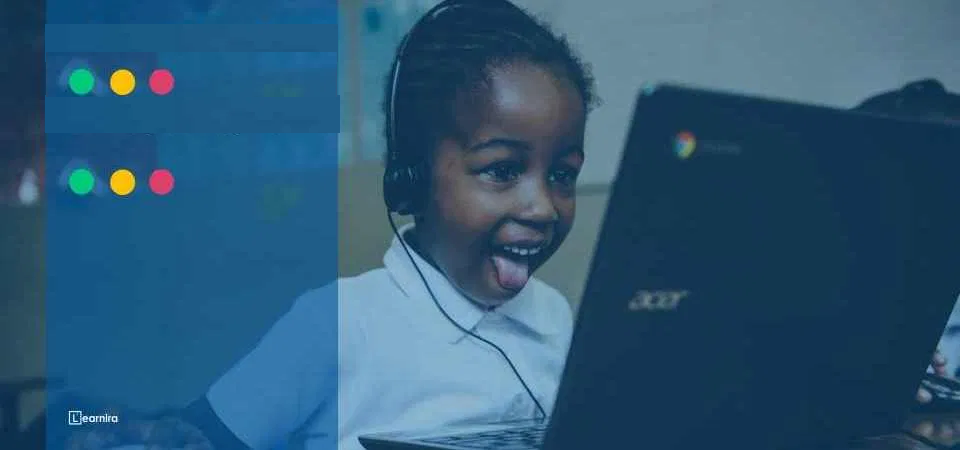
Information technology has transformed learning. Visual classrooms, learning apps, learning accountability platforms, access to mentorship, these are few ways amidst many through which technology has revolutionized education. To those who have access to the technological services required to deliver this it is indeed life transforming. When the coin is flipped, to those without access to the services, nothing has changed. In fact, to this group, the introduction of information technology created another hurdle to overcome to seeing their dreams come into fulfilment. There is a new stratification of information. It is those who have information that rule the world. Quality education cannot be achieved in the absence of equity. When we assume the opposite we have to redefine the meaning of the word quality.

Digital divide in education refers to the gap that exists between students who have good access to technology and those who do not. Between the two divides, students write the same exam, compete for the same jobs and see it out in life under the same conditions. The contributing factors to this can largely be categorized into geographical or socio-economic. When considered in detail the socio-economic factors are the most potent. The upper socio-economic class have capital to access the necessary technological services needed for learning thereby have access to the best information which leads to better learning while the lower socio-economic class are stuck. The irony is that jobs are not stratified. The upper and lower socio-economic class students are expected to compete equally.

The digital divide in education pre-exists the pandemic even though the pandemic has widened the gap. For a country like Nigeria it means more students are out of learning. Before the pandemic, a UNICEF report states that 10.5 million of Nigerians aged 5-14 years are not in school with only 61% of 6 to 11-year-olds regularly attending primary school even though primary education is officially free and compulsory. In the north of the country, there’s only a net attendance rate of 53 percent. When Nigeria recorded her first COVID-19 case in February, it took only nearly a month after to see schools shut down. The Federal Ministry of Education announced the temporary shut down of schools in the country on March 19 which took effect from March 23. Nigeria was not the only country to take this move, more than 190 countries closed schools from the lowest to the highest levels in the race to curb the surging pandemic that accounted for about 1.5 billion students staying at home.

The closure of schools has had its ripple effects. While staying at home meant end of learning for some students, learning has continued for some. According to estimates by UNESCO Institute for Statistics and the International Telecommunication Union, almost half of the world’s students face hindrances to online learning. Globally, about 826 million – 50 per cent – do not have access to a household computer, while 43 per cent – about 706 million – do not have access to the internet at home. In sub-Saharan Africa, 89 per cent of learners do not have access to household computers and 82 per cent lack Internet access. Mobile phones seem to have a lot to offer in learning but about 56 million learners worldwide live without access to mobile networks, with almost half living in sub-Saharan Africa.

Most schools have switched to online learning since then but the question remains – what is the effort to see that learning continues regardless of where you live or who you are? The longer schools stay closed, the wider the information gap created. Students without digital access have had nothing to gain from the clamour and campaign for online learning, they have only fallen behind in the pyramid of learning. There are kids in various villages who are caught in the web of both geographical and socio-economic barriers to accessing technological services. This does not point only to those in the rural areas, there are students in the urban centres who cannot afford the services due to socio-economic factors. Taking the just concluded WASSCE as a case study, students without digital access have been home without learning and wrote the same exam with their colleagues who have been learning for months. It is only a matter of when the results come out that the effects of this stratification will come to light.

Some have proposed using traditional media for learning, but the question is how much can be delivered through these platforms? What about the epileptic power supply? As schools gradually reopens, the students are not returning the same way they left. Some are returning better and brighter while some have lots of work to do. The gap created during the pandemic may stretch for forever. While efforts are being put into ensuring good health delivery across countries we should not forget the damages the pandemic has done to education. And as we prepare the world for the next pandemic, we should prepare to respond to the educational damages associated with it.

If access to education is a right of everyone, the current pandemic has revealed there is still work to be done. Bridging the digital divide has to be a priority for every stakeholder in the educational sector. As we brace up to be well positioned to respond to the next pandemic we must make preparations to equip every student to be able to learn from home. There is no quality education in the absence of equity.

Nicholas Aderinto is a young Nigerian who believes in the transforming power of written words in creating lasting changes in the society.

The Lesson from a Nigerian Village On How US Can Manage Its Bushfire Problems

0

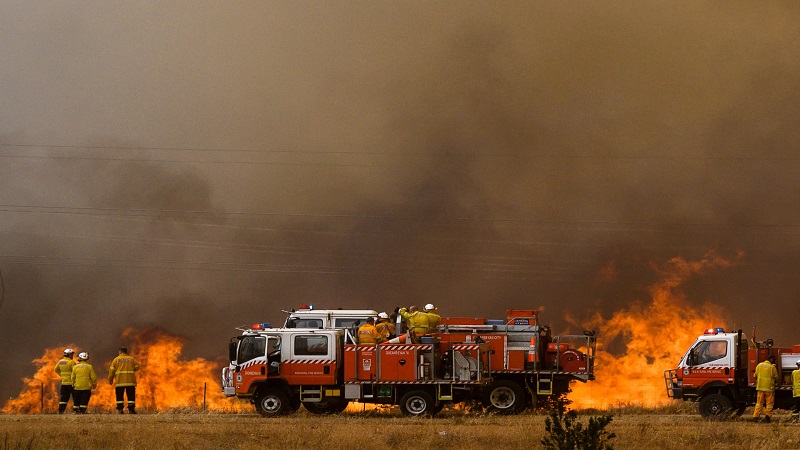
There is something I believe the United States can learn from my Nigerian village: we manage bushfire better. Yes, over the last few years, bushfire has become an epidemic in the western part of the United States. There is hardly any year bushfire does not find ways to distort communities in Oregon, California and other nearby states. I think it is time the U.S. tries something new because its frameworks are not working. I recommend my village as a case study.

In Ovim, Abia state, forest management was NEVER done to prevent bushfire as most experts try to achieve in the U.S. Rather, what villagers do is simple: execute seasonal controlled burns with well orchestrated forest thinning processes which naturally come during farmland fallow cycles. So, during farming rotation, fires are set on farmlands, and they do all to control the spread by creating cut-out paths.

Typically, the village town crier goes around alerting communities the day the fire would be set, and men would be on alert after a path has been defined for the fire cut-out. As the fire burns, they monitor the path and if things get out of hand, they quickly create new paths to cut off the fire.

This is something the U.S. needs to consider. Yes, while we blame global warming and other factors for the increasing bushfires, forest management could be revamped. In most parts of Eastern Nigeria, seasonal bush burning (typically every 4-6 years, tracking fallow cycles) has kept uncontrolled bushfires been under control. The United States should consider that framework in its forest management. 

Apple to Open Online Store in India

0

Apple announced on Friday it will launch its first online store in India on September 23, marking its major step to expand in the South Asian country.

Recent conflict between China and India appears to have opened opportunities for non-Chinese smartphone companies to expand their market share in India.

The Indian smartphone market is dominated by Chinese companies like Xiaomi and Oppo that have used affordable prices to win over Indian consumers.

Before now, the California-based company has used third party vendors and ecommerce operators such Amazon and Walmart to sell its products in India.

Apple accounts for only one percent of all smartphones shipment to the huge Indian market, far behind Chinese companies and South Korea’s Samsung.

Therefore, the world’s most valuable company selects September 23, which coincides with India’s holiday season to unveil its online store in the country.

Apple plans to offer more than sales through the retail platform. The company said other services on the online store will include personalizing some devices, including iPads, with engravings, and assistance will be offered in English and Hindi to allow customers to personalize their device according to their preferences. The website will also allow customers to configure Mac laptops according to their needs.

India has become a top choice destination for tech companies following Prime Minister Narendra Modi’s digital economy campaign.

However, Apple’s decision to open an online store will cause disruption in India’s online retail ecosystem, particularly for brick-and-mortar retailers. The pandemic and e-tailers already have a serious bearing on them.

In May, Samsung and Facebook partnered to train over 200,000 brick and mortar stores selling its phones to use social media for sales and marketing.

While there has been an increase in online activities including smartphones sales in India, the cost of devices has become a major challenge. As part of its strategy, Samsung initiated installment-payment for its customers and incentive schemes designed to attract more consumers to its base, including offering students discounts on some devices.

Apple doesn’t seem to be ready to lower the cost of iPhones or introduce other incentives to woo consumers. Its objective seems to be about opening an online store where its customers can purchase its devices in India. So the smartphone competition will be among players who have devices for the majority poor Indians.

However, market experts believe that Samsung stand more chance to gain the market with its strategy.

“Samsung is India’s No. 2 smartphone brand after Apple by image. So a phone priced between 6,000 rupees to 15,000 rupees from Samsung is very well placed today to capture market share from Chinese rivals,” said brand strategist Harish Bijoor.

The cheapest iPhone in India costs about 31,500 rupees, while the cheapest Xiaomi is around 7,500 rupees. So the smartphone market competition is between Samsung and Chinese companies, and by extension, Jio Reliance that has partnered with Google to produce affordable smartphones en masse for poor Indians.

Apple assembles some of its smartphone models, including the iPhone 11, at Taiwanese contract manufacturers Foxconn and Wistron’s plants in south India. Foxconn plans to invest $1 billion to expand the plant.

While Samsung has a mega mobile phone manufacturing plant in New Delhi, where it tests new devices and assembles them for export.