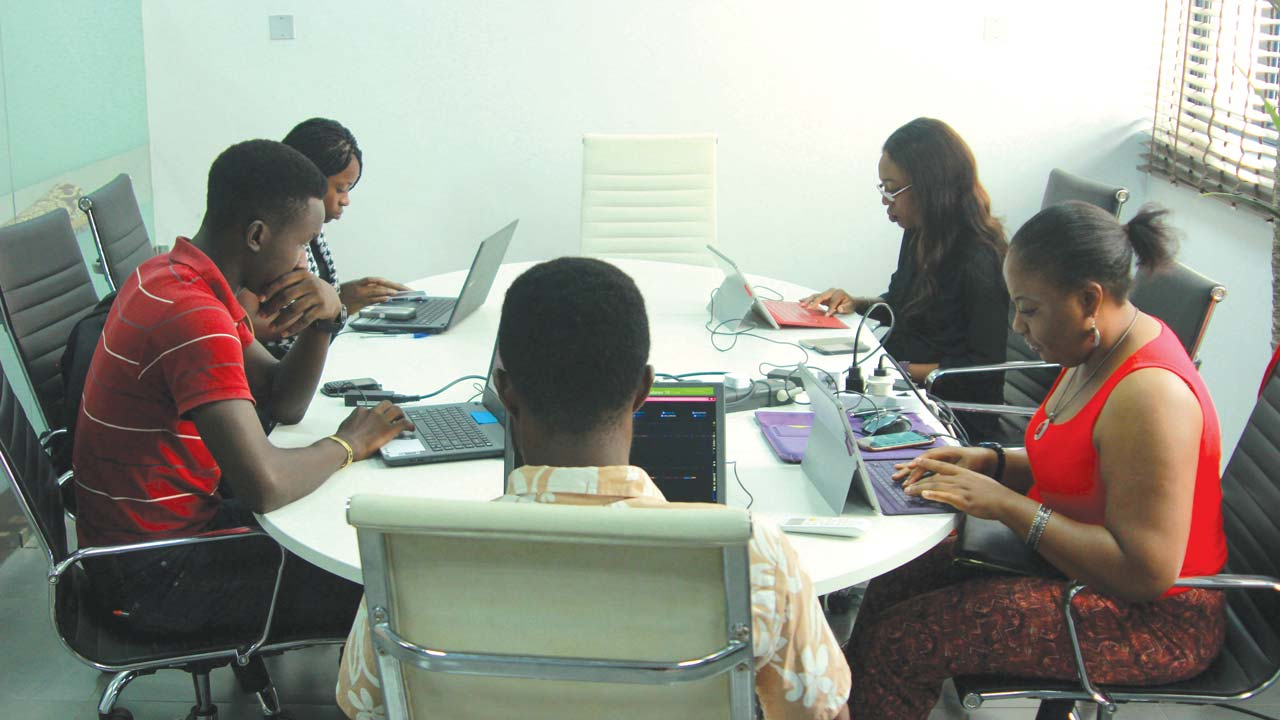
The concept of “workplace” is a compound word, which comprises two variables; “work” – denoting an activity and “place” – representing a location. Against this backdrop, denoting this concept clearly and accurately remains the absolute prerequisite for effective understanding of the successive analysis. In the future, “work” will no longer be a place we go, but an activity that we do. Consonant with this view, work is, and always has been, one of the most defining features of our lives (Gratton, 2010). Gone are the days when the vast majority of employees made the daily commute to a corporate office, sharing a communal space on a regular basis. Even though the future of work is unclear, organizations that study possible futures, share knowledge and inspire co-operative learning are the ones likely to survive the test of time (Van der Merwe & Verwey, 2007). Thanks to globalization; working 8am to 5pm has been most employees’ reality for many years. But now those same workers — who used to arrive early or stay late at the office to get all their work done — are pushing the boundaries of where, when, and how they work (The New Workplace Reality, n.d.).
Throughout the history of business, employees had to adjust to managers, and managers had to adjust to organizations. In the future, this will be reversed with managers and organizations adapting to employees (Morgan, 2014). The import of this is that, for an organization to flourish and prosper in this 21th century, it must rethink and challenge all it knows about work. For instance, according to the Census Bureau (The New Workplace Reality, n.d.), an average remote worker is more likely to spend part of their time in the office and the rest of it juggling work and home life. Against this backdrop, two noteworthy findings from Gallup survey 2017 reveals that not only are more employees working remotely than ever before, but they’re also doing so more often. The survey of over 15,000 American workers found that 43% have worked off-site at some point in the last year. The figure is even higher — up to 61% — in industries that are more conducive to working remotely, such as finance, real estate, IT, and media. The survey also found a shift in the amount of time employees spend working remotely: the number of employees working remotely less than one day a week dropped, while those who work remotely four to five days a week increased by about the same amount (The New Workplace Reality, n.d.). Needless to say, remote working is here to stay!
However, to be successful in this virtual environment, employees need the ability to take calls, answer email, and participate in meetings outside of “traditional” business hours and locations. They need to be able to reach their colleagues, partners, and clients regardless of where they are or what type of device they are using. And they insist on a form of work-life integration that boosts their productivity while minimizing any extra time spent in the corporate office. It is in the light of the foregoing that this essay is set to explore the human capital readiness for sustainable national growth. However, before getting into the real subject of discussion, a brief overview of the definitional problematic will be provided to increase the knowledge and operationalization of the concept of human capital and sustainable national growth.
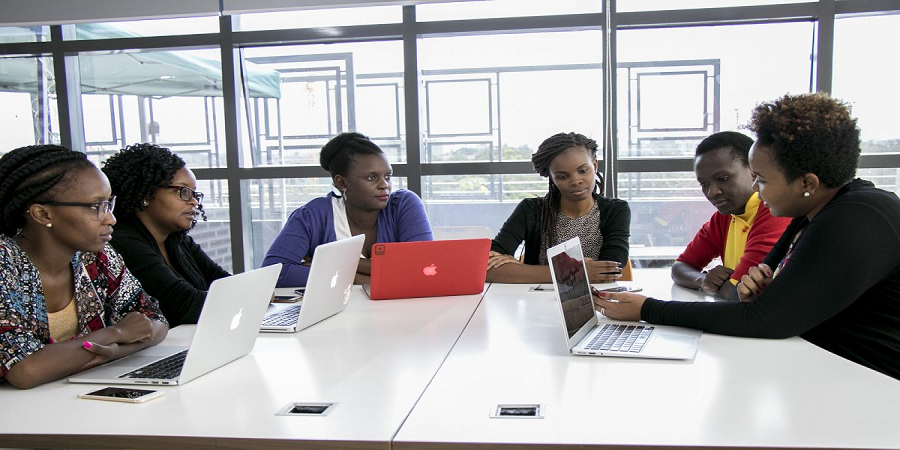
Human capital is getting wider attention with increasing globalization and also the saturation of the job market due to the recent downturn in the various economies of the world (Marimuthu, Arokiasamy & Ismail, 2009). Countries in the “global north” and countries in the “global south” put emphases on a more human capital development towards achieving a sustainable national growth by devoting necessary time and efforts. Consonant with this view, human capital development is one of the fundamental solutions to enter the international arena. The human capital explains the underlying stock of skills that the labor force possesses and is regarded as a resource or asset. The flow of these skills is forthcoming when the return to investment exceeds the cost (both direct and indirect) (Goldin, 2014). In the same vein, The Global Human Capital Report (GHCR) (2017) opines that “Human Capital” is the knowledge and skill people possess that enable them to create value for sustainable national growth. As a result of this, the governing class is required to create the conditions or society that allows people to have quality jobs that stimulate the economy as well as not harming the environment. Against this backdrop, sustainable national growth refers to meeting the needs of the present without compromising the ability of future generations to meet their needs (C. Okereke, Personal Communication, 2019). Of importance, however, is that sustainability proponents emphasize that population size should not become so great that it destroys the carrying capacity of the earth and its ability to support future generation. Thus, the environment is not a resource we inherited from our ancestor, but a resource we hold in trust for future generation (S. Okodudu, Personal Communication, 2019). Having understood the concept of human capital and sustainable national growth, the paper shall now proceed to delineate some of the ways human capital can engender sustainable national growth.
Before delving into the analysis proper, it is imperative to begin with an ancient Chinese proverb, by Fermin Diez.
“If you want one year of prosperity, grow wheat,
If you want ten years of prosperity, grow trees and,
If you want one hundred years of prosperity grow people” (Diez, 2014).
The foregoing Chinese proverb clearly indicates the relevance for an increasing human capital development in the workplace. The human capital encompasses the notion that there are investments in people – in education, training, health etc. – and that these investments increase an individual’s productivity. The term “human capital” is used today as if it were always part of our lingua franca. But it wasn’t. Not that long ago, even economists scoffed at the notion of “human capital.” As Theodore Schultz noted in his American Economic Association presidential address in 1961 many thought that free people were not to be equated with property and marketable assets (Schultz, 1961). To them, that implied slavery. But the concept of human capital goes back at least to Adam Smith. In his fourth definition of capital he noted: “The acquisition of … talents during … education, study, or apprenticeship, costs a real expense, which is capital in [a] person. Those talents [are] part of his fortune [and] likewise that of society” (Smith, 1776).

Nevertheless, the earliest formal use of the term “human capital” in economics is probably by Irving Fisher in 1897. It was later adopted by various writers but did not become a serious part of the economists’ lingua franca until the late 1950s when it was popularized by Jacob Mincer’s Journal of Political Economy article “Investment in Human Capital and Personal Income Distribution” (Goldin, 2014). In Gary Becker’s Human Capital: A Theoretical and Empirical Analysis, with Special Reference to Education, published in 1964 (and preceded by his 1962 Journal of Political Economy article, “Investment in Human Capital”), Becker notes that he hesitated to use the term “human capital” in the title of his book and employed a long subtitle to guard against criticism (Becker, 1962). Nevertheless, Schultz’s article (1961) demonstrates the importance of the concept of human capital in explaining various economic anomalies. Some are easy to figure out, such as why both migrants and students are disproportionately young persons. Some are more difficult, such as why the ratio of capital to income has decreased over time, what explains the growth “residual,” and why Europe recovered so rapidly after World War II. Some are even more difficult, such as why labor earnings have risen over time and why they did not for much of human history. As is clear from most of these issues, the study of human capital is inherently historical.
However, the Global Human Capital Index provides a holistic assessment of a country’s human capital across its population. As such, it enables effective comparisons across regions, generations and income groups. The methodology behind the rankings is intended to serve as a basis for time-series analysis that allows countries to track progress, relative to their own performance as well as that of others (GHCR, 2017). There are several distinctive aspects to the notion of human capital, as such, extrapolating from the Global Human Capital Report (GHCR) (2017), the Global Human Capital Index (GHCI) regards relevant skills as a dynamic asset people have and develop over time, not as innate talent that is fixed. This means people’s human capital in the form of relevant skills is likely to produce higher returns if invested optimally, starting early in life, and may also experience depreciation if not kept current and developed continuously. Also, the GHCI are based on the notion that it is neither through “cheap labor” nor through attracting a narrow set of the “best and the brightest” and winning a “war for talent” that countries can optimize their long-term human capital potential, but through building up deep, diverse and resilient talent pools and skills ecosystems in their economies that allow for inclusive participation in good quality, skilled jobs by the largest possible number of people. Furthermore, implicit in the above is an assumption by the GHCI of the intrinsic value of human productivity and creativity and a human-centric vision of the future of work that recognizes people’s knowledge, talents and skills as key drivers of a prosperous and inclusive economy. As such, maximizing human capital ought to be, and should remain, a top priority for business and policy leaders. The relevance of the essay is determined by transformation of the human capital into the key economic resource of development for sustainable national growth of the postindustrial society. Thereby, disclosing the content of evolution of the human capital as a scientific concept and phenomenon of the economic life. The necessity to maintain economic growth and improve its quality in globalization requires restructuring of the international and national economies that can provide them with greater stability and competitiveness. For this reason, one of the priority lines of the scientific research is the study of causes and consequences of structural changes, which cause transition to a postindustrial stage of development of society and knowledge economy (Perepelkin, Perepelkina & Morozova, 2016). In the same vein, the basis for successful implementation of such transformation can be comprehensive development of the human capital. At the same time, the intensification of its accumulation requires deeper understanding of the essence of the human capital on conceptual and practical level. The transition from the traditional economy, which is based on productive process, to the knowledge economy, which uses ideas and innovation as driving force, requires maximizing human potential. The objective of maintaining and increasing the standard of well-being depends on intellectual capabilities, multiplied during self-directed continuing education, on readiness of employees to use the accumulated potential in their professional activity and, for a sustainable national growth (Perpelkin et al., 2016). However, the main problem of the study of the human capital as a phenomenon of the economic life or as a catalyst for sustainable national growth is that on the one side there is the economy, creating external environment and conditions for its reproduction, and on the other side, the human capital with its inherent development motivation. The import of the foregoing is that the formation of the human capital occurs at the same time under the influence of external factors (investments, information, education, healthcare, and culture) and internal factors of self-development (unique capabilities, creative work, and self-education).
In consonant with the above analysis, Romer’s endogenous growth model will be espoused to x-ray the correlation between human capital and sustainable national growth. The central idea of the Romer model is that technological progress is at the heart of economic growth. As a result, this model acknowledges that a large portion of inventions is the result of purposeful research and development activities carried out in reaction to economic incentives. Thus, this changes the role for human capital, which enters into these models as a catalyst of technological progress rather than as an independent source for sustainable national growth. Nelson & Phelps (1966) was the first to contend that people’s educational attainment may have a significant influence on their ability to adapt to change and introduce new technologies. Accordingly, a higher level of human capital would speed up the process of technological diffusion in the economy. This would enable countries lagging behind the world technology frontier to catch up faster to the technological leader. However, in the model developed by Nelson & Phelps, the evolution of the best-practice level of technology is left exogenous, so that human capital only plays a role in helping countries narrow the gap to the technological frontier (Nelson & Phelps, 1966).
Romer has extended this concept beyond the adoption of existing technologies to the creation of new ones, starting from the observation that research and development activities require highly skilled labor as the single most important input (Romer, 1990). A major implication of this approach is that technological progress, and thus sustainable national growth, depends on the stock of human capital (as opposed to its accumulation). In Romer’s model, the economy has three sectors: a final-goods sector, an intermediate goods sector, and a research sector (Romer, 1990). The research sector uses human capital and the existing stock of knowledge to produce designs for new capital goods, which are sold to the intermediate-goods sector. The latter uses the designs and the economy’s savings to produce intermediate capital goods, which are combined in the final-goods sector with labor and human capital to produce final output. The disaggregation of capital into typologies of intermediate inputs which have additively separable effects on output is the distinctive feature of Romer’s production technology (Schutt, 2003). As can be seen from the above analysis, the number of different intermediate capital goods in the economy depends on the stock of knowledge. The crux of Romer’s model is that a rise in the stock of human capital will permanently speed up sustainable national growth. Whereby, a rate effect requires an increase in the rate of accumulation of human capital.
Conclusively, the human capital is a key factor for growth, development and competitiveness. This link works through multiple pathways at the individual, firm and national level. Learning and working provide people with livelihoods, an opportunity to contribute to their societies and, often, meaning and identity. Workers’ skills lead to productivity and innovation in companies. At the national level, equality of opportunity in education and employment contribute to a sustainable national growth and positive social and political outcomes (GHCR, 2017). That notwithstanding, by “human capital” we mean not individuals themselves but the knowledge and skills they possess that enable them to create value in the workplace for sustainable national growth (Angrist, Patrinos & Schlotter, 2013). This requires investment both on the side of individuals and by public and private stakeholders across people’s lifetimes. The essay thus treats human capital as a dynamic rather than fixed concept. It recognizes that human capital is not defined solely through formal education and skilling but can be enhanced over time – growing through use and depreciating through lack of use.
REFERENCES
Angrist, N., Patrinos, H. A., & Schlotter, M. (2013). An expansion of a global data set on educational quality: a focus on achievement in developing countries. The World Bank.
Becker, G. S. (1962). Investment in human capital: A theoretical analysis. Journal of political economy, 70(5, Part 2), 9-49.
Diez, F. (2014). Human Capital Management in Asia: The War for Talent Continues in This High-Growth Region. In A. Manuti and P. Davide de Palma (Eds.), Why Human Capital Is Important for Organizations (pp. 137-150). Palgrave Macmillan, London.
Goldin, C. (2014). Human capital. In C. Diebolt and M. Haupert (Eds.), Handbook of cliometrics, 1-27.
Gratton, L. (2010). The future of work. Business Strategy Review, 21(3), 16-23.
Marimuthu, M., Arokiasamy, L., & Ismail, M. (2009). Human capital development and its impact on firm performance: Evidence from developmental economics. Journal of international social research, 2(8).
Morgan, J. (2014). The future of work: Attract new talent, build better leaders, and create a competitive organization. New York, NY: John Wiley & Sons.
Nelson, R. R., & Phelps, E. S. (1966). Investment in humans, technological diffusion, and economic growth. The American economic review, 56(1/2), 69-75.
Perepelkin, V. A., Perepelkina, E. V., & Morozova, E. S. (2016). Evolution of the Concept of “Human Capital” in Economic Science. International Journal of Environmental and Science Education, 11(15), 7649-7658.
Romer, P. M. (1990). Endogenous technological change. Journal of political Economy, 98(5, Part 2), S71-S102.
Schultz, T. W. (1961). Investment in human capital. The American economic review, 51 1-17.
Schutt, F. (2003). The importance of human capital for economic growth. Inst. für Weltwirtschaft und Internationales Management.
Smith, A. (1776). An Inquiry into the Nature and Causes of the Wealth of Nations. New York: Oxford University Press, Vol. II. Retrieved on 26th September, 2019 from http://www.ibiblio.org/ml/libri/s/SmithA_WealthNations_p.pdf.
The Global Human Capital: Preparing people for the future of work. (2017). Retrieved on 26th September, 2019 from http://www3.weforum.org/docs/WEF_Global_Human_Capital_Report_2017.pdf
The New Workplace Reality. (n.d.). Retrieved on 26th September, 2019 from https://www.tpx.com/wp-content/uploads/2017/09/The-New-Workplace-Reality.pdf
Van der Merwe, L., & Verwey, A. (2007). Leadership meta-competencies for the future world of work. SA Journal of Human Resource Management, 5(2), 33-41.
Like this:
Like Loading...