DD
MM
YYYY

PAGES

DD
MM
YYYY

spot_img

PAGES

Home Blog Page 6159

SPECIAL REPORT: The Place of Nigeria on 2021 Ease of Doing Business Ranking Induced by CAMA Act 2020’s New Provisions

2

On March 10, 2020, the Senate passed the Companies and Allied Matters Act (Repeal and Re-enactment) Bill. The Bill became Act on the 7th August, 2020, when President Muhammadu Buhari signed it into law. From the public analysts to economists and business managers, the passage into law is a welcome development.

Despite seeing it as a good omen for the economic development and growth, especially industries with a large number of small and medium businesses, some analysts still believe that some of the new provisions against effective and efficient operations of non-governmental organisations. However, this piece is not about x-raying the views of the supporters of the new provisions and those who against the provisions. It aims at interrogating the moderating roles of the provisions in the country’s possible place on 2021 Ease of Doing Business.

Provisions that Aid Ease of Doing Business

  1. Provision of single-member/shareholder companies
  2. Restriction on multiple directorships in public companies
  3. Appointment of Company Secretary now optional
  4. A Director can’t hold the office of a Chairman, CEO
  5. Procurement of Common seal not mandatory
  6. Concept of Limited Liability Partnership and Limited Partnership
  7. Virtual AGMs
  8. SMEs exempted from appointing auditors
  9. Enhancement of Minority Shareholder Protection and Engagement
  10. Business Rescue provisions for Insolvent Companies
  11. Disclosure of persons with significant control in companies
  12. Merger of Incorporated Trustees
  13. Reduction of Filing Fees for Registration of Charges
  14. Provision for electronic filing, electronic share transfer and e-meetings for private companies

Our Data and Measures

The CAMA Act 2020 and Nigeria’s position on Ease of Doing Business in 2019 and 2020 were our data sources. The first CAMA Act was enacted in 1990. Then, it was believed that the provisions and sections were enough for the country to have a better business environment and making businesses thrive without significant frictions. In spite of this, public analysts and business owners intensified campaigns against some of the provisions, most importantly provisions that contradicted sections and provisions stated in the Nigerian Code of Corporate Governance.

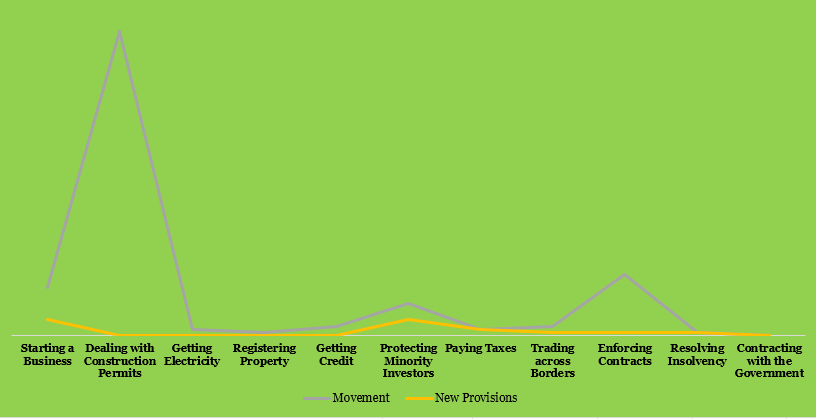
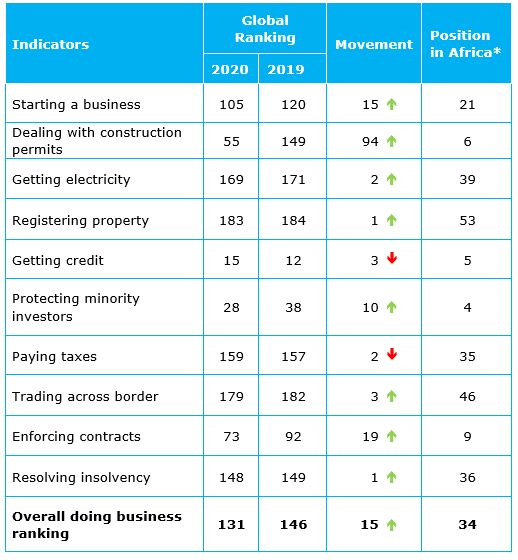
In 2020, Nigeria was ranked 131 on the World Bank’s Doing Business 2020 Index. According to the Index, the country moved up 15 places from its 2019 spot [see Exhibit 1]. Based on the rank, the agency concluded that the country is one of the most improved economies in the world for running a business. The improvement, according to the agency, happened after reforms carried out by the Federal Government.

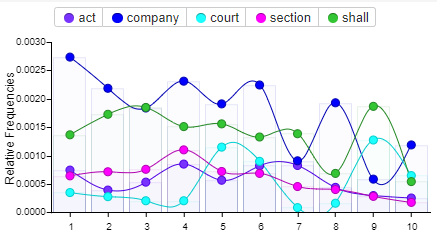
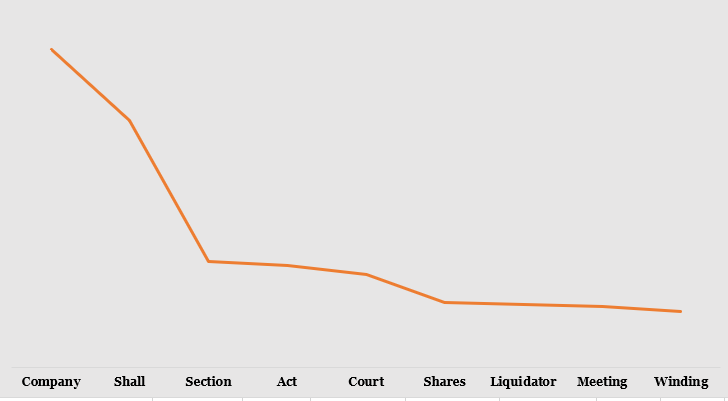
The total number of words and most frequently used words were the specific data extracted from the CAMA Act 2020. Exploratory analysis of the data shows that 207,386 words were used for stating sections and provisions in the new Act. Analysis also reveals that company (3696), shall (2863), section (1228), act (1183), court (1085), person (816), shares (767), liquidator (731), meeting (712) and winding (653) were the most frequently used words. Relatively, analysis shows that the new Act was structured towards making companies/businesses strong legally [see Exhibit 2].

Exhibit 1: Movement in Nigeria’s rankings
Source: Deloitte, 2020

Exhibit 2: Trends in CAMA Act 2020

Source: CAMA Act 2020; Infoprations Analysis, 2020

Moderating Roles of New Provisions on Ease of Doing Business

Since public affairs analysts and business managers believe that the new provisions will enhance the business environment. In this regard, our analyst examines the influence of the provisions on the country’s positions in 2019 and 2020 using extrapolation analysis [using previous data to advance future knowledge and insights].

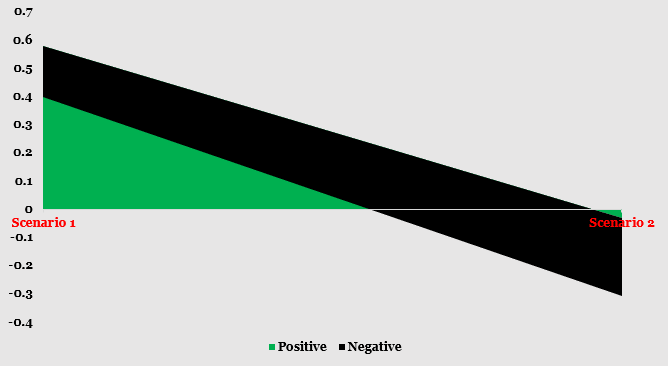
Analysis indicates that if Nigeria has added the new provisions before the World Bank released its 2019 and 2020 Ease of Doing Business ranks, the provisions could have ensured 31.6% connection with moving up on the ranking ladder [first connection scenario]. From the second connection scenario, analysis shows that the provisions should have brought the country down by 10%.

These results indicate there are positive and negative consequences of the provisions on the rankings. With these results, our analyst notes the negative consequence could have emerged due to lack of political will and enabling legal and corporate framework to implement the new provisions effectively.

To understand the possible place of the country on 2021 Ease of Doing Business Ranking, our analyst constructed two scenarios using a polarity approach [since connections have established positive and negative impacts of the provisions] [see Exhibit 5]. In the first scenario within the positive consequence [S1-PC], analysis indicates that the ranking would increase by 57.9%, while it would be reduced by 18.3% [S1-PN]. In the second scenario within the positive consequence, mixed insights emerged as the expected positive consequence turned negative. Our analysis shows that the new provisions would reduce the ranking by 3%, while the expected negative consequence would be 27.9%.

Exhibit 3: Word Adequacy Ratio Trends
Source: CAMA Act 2020; Infoprations Analysis, 2020
Source: World Bank Ease of Doing Business 2019-2020; CAMA Act 2020; Infoprations Analysis, 2020

Exhibit 5: Possible Effects of New Provisions on Nigeria’s 2021 Ease of Doing Business
Source: World Bank Ease of Doing Business 2019-2020; CAMA Act 2020; Infoprations Analysis, 2020

A Change Management Business Case: Culture in A Retail Bank After Acquisition of a Fintech

0

“A large retail bank – one of the biggest and oldest companies in the industry, recently acquired a fintech startup in a bid to leap ahead of the digital curve and maintain its competitive edge. The acquired fintech was founded seven years ago by two young engineering graduates, who created an online payments solution that quickly gained traction to become the go-to app for middle-class millennials in the region…. ”  was a business case question developed by our Faculty, Omowunmi Adenuga-Taiwo.

For Lab #1, question 2, we have the permission of Adanma Ekekwe* (no relation to Ndubuisi Ekekwe) to share her Lab assignment. In Tekedia Mini-MBA, our Faculty work with our members, providing critical feedback to them as they work on Challenge Assignments and Labs. Labs are like extended business cases.

Most of our members after their Challenge Assignments and Labs have been promoted in their offices. Some have also used the documents to raise capital.

*no relation to Ndubuisi Ekekwe

The Epic Games’ Poor Game On Apple!

3

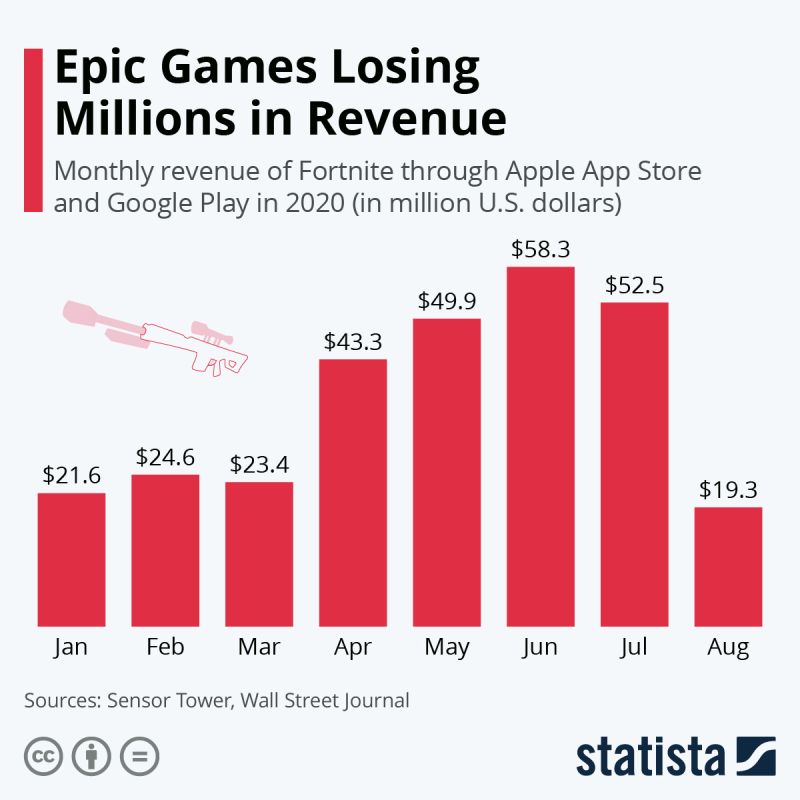
Epic Games is a great venture but its management has scored a major own-goal, going against Apple which taxes all apps developers 30% for the privilege of having them in its App Store. Epic Games wanted a special highway, for Apple to waive or reduce that tax. Good people, it is costing that company big time: it lost $30 million in August as it wages a battle against Apple and Google.

Personally, I do think that Epic Games is making a very big mistake. You do not fight this type of battle alone. This is not a lifesaving drug or food: it is just a game. The implication is that politicians and celebrities will not even care. So, the capacity to amplify the heat on Apple is not directly there because NOT playing games is not that a big deal. As Apple countersues, Epic Games will see why own- goals are bad: they set you back:  “Although Epic portrays itself as a modern corporate Robin Hood, in reality it is a multi-billion dollar enterprise that simply wants to pay nothing for the tremendous value it derives from the App Store”, Apple noted in its filing.

Apple has hit back at Epic Games in its ongoing battle with the gaming company, filing a countersuit Tuesday alleging the company breached its contract with Apple and asking to be awarded punitive damages. The dispute began when Fortnite launched an update that allowed users to pay for in-game content without Apple receiving a cut. The tech giant retaliated by removing the game from its app store; Epic Games sued Apple later that day, and two weeks later, Apple suspended its developer account. Epic has until Sept. 18 to respond to Apple’s countersuit. (LinkedIn)

Epic Games is making a really poor game in this battle with Apple. The fact that other game makers have not joined it should have sent a clear signal by now. According to Epic, its video game has lost 60% of its daily active users since Apple booted the game from its App Store.

Since Apple confrontation with Epic Games kicked into high gear, the game maker has seen its Apple-based users plunge, Epic said in a legal filing on Friday.

Daily active users of Epic’s blockbuster battle-royale game Fortnite on Apple’s iOS operating system have declined by more than 60% since the tech giant removed the game from the Apple App Store, Epic said in the filing. More than 60% of Fortnite users on iOS access Fortnite only on Apple devices, the video-game company said.

Consumers are visitors, Customers are neighbors. But FANS of all

1

Consumers are visitors, Customers are neighbors. Make your consumers become customers. The greatest companies go beyond having neighbors – they engineer FANS out of customers. When customers are fans, great moments arise and glory awaits.

Go beyond Needs and Expectations of customers to Perceptions  of customers. Create and MAKE Fans of all for that brand.

Join Fundraising from DFIs, Governments & Grants – Tekedia Live, Sept 10

0

She knows where all the grant funds are located! And she is coming to Tekedia Live to provide tips and guidance. Tekedia Institute will host our Faculty, Victoria Madedor, of Bank of Industry ITC tomorrow (Thursday) at 11am Lagos. Interestingly, the money people of Venture Capital and Private Equity asked us to reach out to BOI because “there is so much grant money in Nigeria”. Our Faculty is developing a course on Fundraising from DFIs, Governments, Grants, etc for our next edition.

We saw a bit of granting when WeForGood noted that it has millions to support innovators. Last year, it gave out $250k to innovators, the CEO TEA (Temitayo Ade-Peters) noted on Live today. (Tekedia is a knowledge partner training all the innovators).  We have also seen what Shecluded is doing. And the amazing vision of Ingressive for Good through Sean Burrowes and Maya Horgan Famodu on capacity building.

Join Live. Zoom link already in the Board. Others, join via YouTube here.