
DD
MM
YYYY

PAGES

DD
MM
YYYY

spot_img

PAGES

Home Blog Page 6171

Steps To Create An Effective AI Application

0
AI would anchor many areas of legal practice (souce: law)

AI or artificial intelligence is the simulation of human-like intelligence processes and decision making done by machines, especially computer systems. These processes include learning, reasoning, and self-correction. Some of the applications of AI include expert systems, speech recognition, and machine vision. Developing an artificial intelligence application can be a difficult task, often requiring a team of software engineers carefully working in tandem. Here are the four key steps to create an effective AI Application:

  1. Problem-solution fit

Reaching a problem-solution fit means that you have already built an MVP (minimum viable product), you have found your early adopters (people to use your MVP), you have managed to solve a problem that your early adopters have, and you have managed to charge enough for your solution so that users are happy.

  1. Data-gathering / AI building Game

This will be your first generation of AI. At this point, you will still have to give some human inputs to your AI application so it can learn and adapt. Train your model and as it receives more data and learns your human inputs, your results will start getting more accurate.

  1. Product Build

After you have a working AI, it is time to make it more accessible for your user base. Package your AI into a product, so it is as simple as opening an application and getting the required information. This means designing a user interface and have a unique selling point when compared to the other similar applications.

  1. Develop Ways for Improving AI

Once your final AI Application has launched, you will start getting lots of information. Much of this information will be completely new, hence you need a way to make sense of it and use it to further improve your application and it’s AI accuracy. Figure out where to store this new information, retrain AI whenever necessary, and test how the new versions of your AI application perform when directly compared to its older versions.
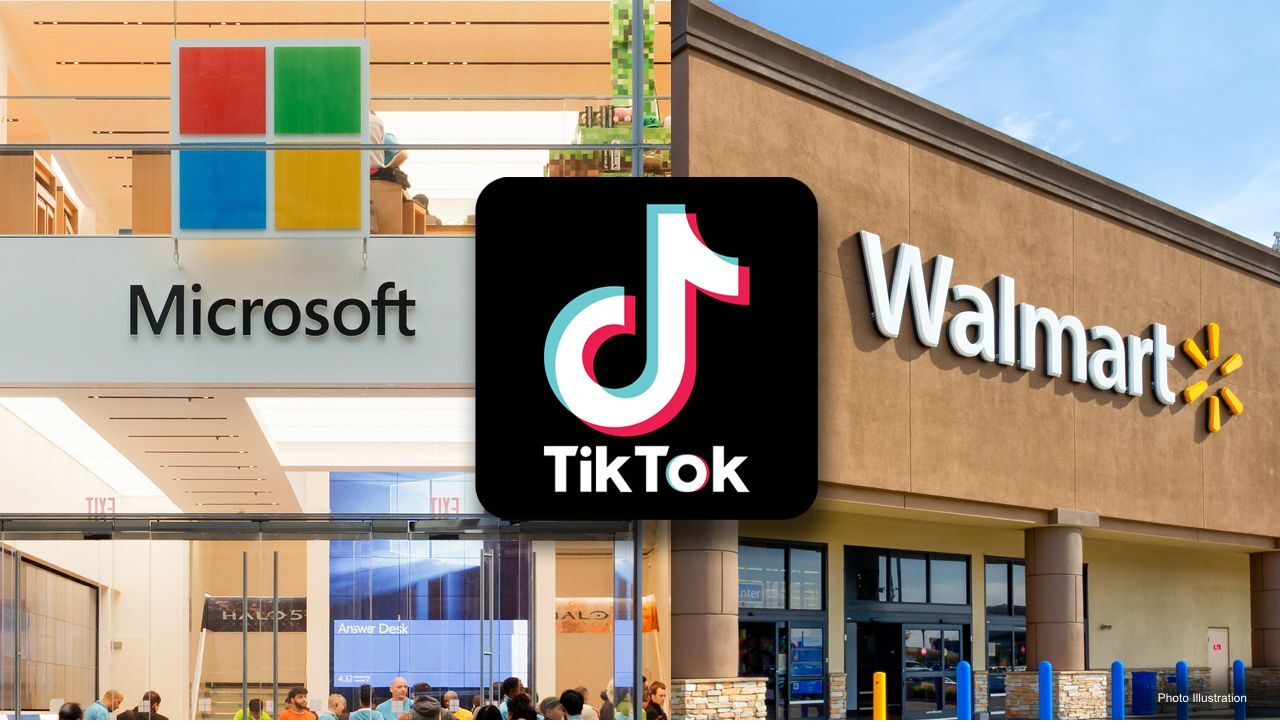
How TikTok Makes Walmart A Better Competitor Against Amazon

1

If you want to win in the 21st century digital economy, you must control or influence demand, not supply. In the industrial age economy, power went to gatekeepers of supply. Today, the empire builders are those that control demand. This is possible because digital supply is unbounded and unconstrained, making it largely not a factor.

If Walmart buys TikTok, it will get demand (users) – about 100 million Americans. Those users can be monetized over time. The reason why Facebook can wake up and enter into shopping, payment, etc is because it controls demand. TikTok will give Walmart demand which is very important in 21st century digital commerce. The most important feature in Facebook is this: people. Walmart needs an ecosystem where there are people, irrespective of whatever it wants to sell. TikTok offers a roadmap to that – and that explains why this move should not be confusing as we watch the world’s largest retailer enter a heated fray for a short video app. It needs those users to battle Amazon which is already a natural app for shoppers with its own demand!

TikTok recently said more than 100 million Americans use TikTok monthly. That’s 100 million more people who would be exposed to Walmart’s products and those of third-party sellers with which it works.

Walmart’s online business, which generated $24.5 billion last year, accounted for about 5% of its overall sales. Joe Feldman, analyst at investment banking firm Telsey Advisory Group, said Walmart’s online revenue is expected to increase to $35 billion this year.

TikTok’s owner is already pushing for more e-commerce on TikTok and Douyin, the Chinese version of TikTok. Walmart could continue that effort in addition to marketing its products on the service.

With the help of tech giant Microsoft, Walmart could also become a major force in online ad sales by selling ad inventory on TikTok. Walmart already sells ads on Walmart.com.

Capture Value Even As You Deliver Value To Customers

1

Your purpose is to deliver value to customers. But it is also important that while doing that, you capture value for yourself. Companies which fail to capture value die. It is not just enough to disrupt the sector; you must capture value during the redesign. In that playbook, can you point out where value will come, for the business, even as you deliver value to your customers?

All types of business events are in danger of their revenue streams of tickets, sponsorships, memberships, and other types of fees being eroded. This is happening as the world gets used to digital formats and alternatives emerge to physical networking, matchmaking, and other tasks we get out of these events.

[…]

Zoom is the Napster of the event industry, the ease with which you can put on good-enough virtual events with a global audience, almost for free, much to the undercutting of the underlying economics of the physical events world. All types of business event — conferences, trade shows, conventions — are in danger of their revenues streams of tickets, sponsorships, memberships, and other types of fees being eroded as the world gets used to digital formats and alternatives emerge to physical networking, matchmaking and other tasks we get out of these events.

Billions of dollars have been sucked out of the industry this year as it is completely shut, and virtual is making up only a tiny fraction of that.


Read this Harvard Business Review article where I explained this construct.

NTA’s Profitless Startimes Deal, MultiChoice (DStv, GOtv) Profits, iROKOtv’s Pause

5

Nigeria’s national TV broadcaster, Nigerian Television Authority (NTA), entered a deal with China’s originated Startimes, a PayTV company, in 2008, under a special profit sharing model where Startimes keeps 70% and NTA gets 30%. Remember, it is profit-sharing, not revenue sharing. The implication is this: Startimes can operate in Nigeria for 100 years and structurally decides not to record any profit if it wants to keep expanding and growing. With NTA not involved in backend operations, Startimes has many ways on how it spends its budgets. So, since 2010 when the service got into full force, Nigeria has not received a dime. Of course, Startimes benefits from the brand equity that it is working with a national broadcaster, helping it amass many customers in the fledgling satellite television business. Startimes offers services which are low cost.

The DG ran into trouble at yesterday’s sitting when he told the committee members that not a single dime has been realised from the joint operational venture it entered into with Startimes in 2008.

Mohammed said: “As an executive director in NTA in 2009, not a single kobo was made from the joint venture with Startimes, the same situation I met in 2016 when I returned as the DG.

“In fact, on assumption of office as the director general, that was the first question I asked, upon which records of non- profitability was presented by the NTA subsidiary outfit running it. The non-profitability status of the venture remains till today.”

My estimate is that PayTV has a market cap of $700 million pre-Covid-19 and will continue to grow in the nation. Startimes has the lion’s share in terms of absolute numbers of subscribers. MultiChoice, however, commands the bulk of the industry profit, powered mainly by its exclusivity on the highly premium European football. The low-price of Startimes offering has not brought much revenue and that affected its ability to find profits in the market. The profit-less state of Startimes/NTA joint venture remains debatable though.

Relying on the audited report of the Auditor-General of the Federation, the Senate through its Joint Committee on Finance and National Planning revealed that the NTA/Star times JV made a whopping $36.1 million (about N11 billion) in 2018; contrary to earlier claims by NTA that the business had yielded no profit in almost 12 years.

Consequently, the Senate accused NTA/Star Times of coming up with incoherent financial records to show that it spent a total of N19 billion; leaving a shortfall of N8 billion in 2018 to justify earlier claims that the business had yielded nothing.

According to the Chairman of the Senate Committee, Solomon Olamilekan said the reason NTA officials kept the account to the JV in dollar form was them to easily ship the profits outside of Nigeria in connivance with some Nigerian officials.

According to Startimes management, PayTV is capital intensive and that the firm has ploughed back all gross earnings to grow the business. So far, PayTV or variants did not work for Startimes/NTA partnership. iROKOtv has also struggled, pausing any plan to look for growth in the African market. But somehow, MultiChoice, owners of DStv and GOtv, seems to be doing well. If you check, it has better pricing power due to superior product mix. If it loses that power, it will fall into the profitless mess. That explains why the new industry code should worry DStv.

iROKOtv Gives Up on Nigeria and Africa!

What Is Your Free-Range Chicken Strategy?

0
free range chicken

In business we like to talk of disruption. Disruption is a word that is used in any strategy document. To grow, you have to disrupt the incumbents by setting a new basis of competition which will help you to take market share from them. The digital camera innovators disrupted companies like Kodak who built their businesses on thin film photography.

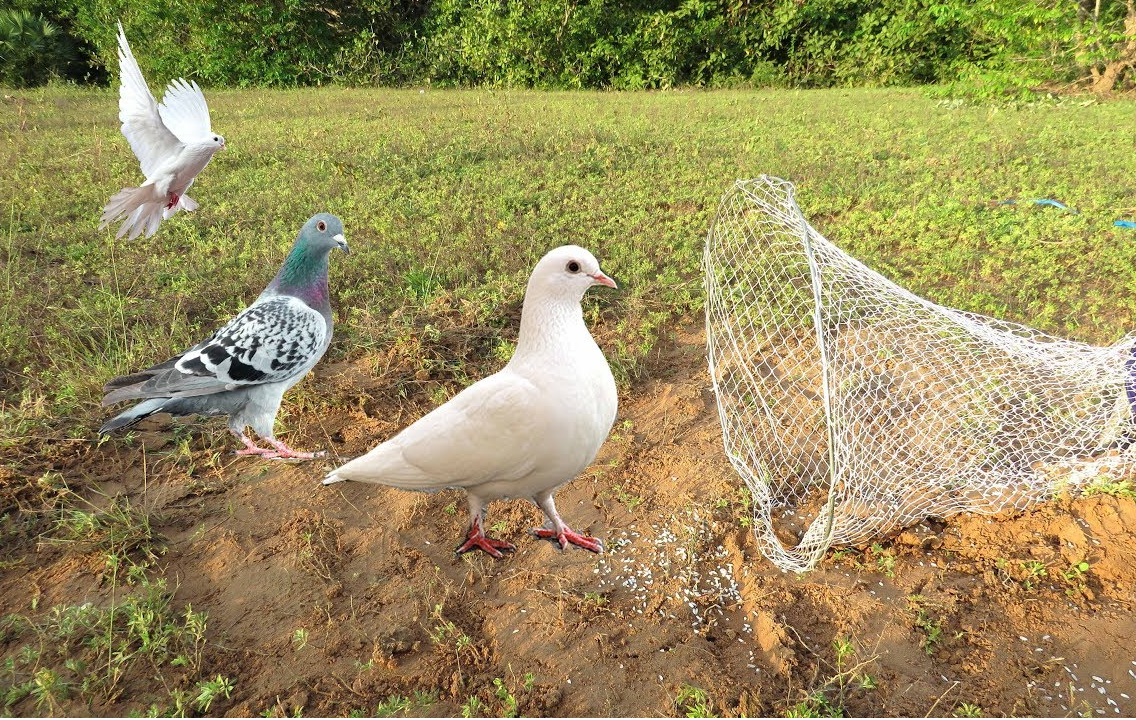
Yet, it is not always necessary for a company to disrupt for it to grow. To explain that disruption is not always required for growth, I will use free-range chickens, found in most African villages, to create an analogy. A free-range chicken “is a bird that is allowed constant access to the outdoors, with plenty of fresh vegetation, sunshine and room to exercise”.

This bird does not compete for your time. Unlike dogs and cats, you practically do not invest so much time on free-range chickens. In the morning, they leave the house and in the evening, they return. They feed for themselves!

In business, we can be like chickens. That means we can find new markets and opportunities that may not have to compete with the present ones.

What is your free-range chicken strategy? Learn more on this post.

https://www.tekedia.com/non-disruptive-growth-the-free-range-chicken-analogy/