DD
MM
YYYY

PAGES

DD
MM
YYYY

spot_img

PAGES

Home Blog Page 6183

China Developing Gitee As an Open Source Alternative to Microsoft’s GitHub Amid US Tech Tension

1

As the Trump’s administration toughens up on China and its technology industry, the South Asian country is warily preparing to save itself from further Huawei-like situations. The next phase of US attack will likely be on the open source software and China doesn’t want to be caught unprepared.

For years, China has relied on Microsoft-owned GitHub for open source software. GitHub is the largest open source software in the world, powering most of the online activities of different platforms; from Netflix films to Instagram photos.

In China, tech companies and developers have confidently used GitHub until the US shut Huawei out of its technology supply chain. Huawei depended on US chips for its telecom technology, but Trump ordered US semiconductor companies to stop supplying it with chips, and that is consequently threatening to cripple the Chinese tech giant.

To prevent future occurrence, China is building on Gitee, an open source software company run by Open Source China (OSChina). SCMP reported that the Ministry of Industry and Information Technology (MIIT) chose the 7-year old firm in July, to construct an independent, open-source code hosting platform for China.

The concern that the United States’ government will at a point in the near the future, order American GitHub to halt business with Chinese companies has prompted China to activate a plan B.

“Borderless collaboration is one key characteristic of open source, however the geopolitical friction is forcing China to consider alternatives for sustainable tech-driven innovation,” said Charlie Dai, analyst at research firm Forrester.

In July last year, the Chinese tech industry started to express fear that the US may exercise its export control rules on GitHub and throw off Chinese developers depending on it. The export control rule says that content developed on GitHub needs to comply with US export laws, including the Export Administration Regulations (EAR).

China’s developer community became alarmed on noticing GitHub’s export rules because the EAR regulations were used to restrict export to Huawei.

Liu Chen, director of operations for OSChina said GitHub’s fate depends on how far US export sanctions on China goes.

“Whether China’s GitHub users will be affected depends largely on the strength and scope of US export sanctions against China, which we cannot determine,” he said.

GitHub allows free access to open source projects globally, with 40 million users and 44 million projects. SCMP reported that in a survey among 950 global IT leaders, conducted by enterprise open source software company Red Hat, 95 percent said open source was strategically important to them.

Therefore, cutting off China’s access to GitHub will be devastating to millions of developers. GitHub already restricts Iran and North Korea from accessing its platform, a development China may have seen as an example of what it is afraid of.

But GitHub said last year, in an effort to allay the fears, that “the provision of software services over the internet, such as the code collaboration in repositories on GitHub.com, is not subject to US export control mandates.”

However, the explanation did little to calm the nerves of Chinese developers. Gitee has been serving as an alternative to some five million users, hosting 10 million projects. But while Gitee has recorded a considerable inflow of people, it still faces the challenge of upgrading the quality of its repositories to be in par with GitHub.

GitHub has been a darling to millions of users due to the quality of repositories. Dai said that “most of the leading open source projects, spanning all technology domains, such as cloud-native, AI, IoT and blockchain, are hosted on GitHub.”

Nevertheless, China is not giving up on its quest to develop Gitee to curtail the impact a sudden US export restriction will have on its tech ecosystem. The company is planning to use the help of other 10 Chinese organizations including Huawei as backup to government’s support.

Notwithstanding, GitHub is planning to expand in China as it hosts a large number of its users. The South Asian country is the second largest source of GitHub contributors and users. SCMP said the number of GitHub users increased to 37 percent last year, indicating that most Chinese developers still see it as the best.
African MSME Challenges: Barbershops & Car Wash Businesses in Nigeria

3

The reason for this post is simple. Society looks up to higher education institutions to their future. Universities in particular, should, as public institutions in most cases (although there are numerous private universities and alternative providers of higher education) and predominantly registered charities in most parts of the developed world, demonstrate local impact to their host communities.

Following two recent conference presentations taking this reality on board (reality/ realism being an operative word here), on barbershops and/ or hairdressers, my explorations have now moved on to other equally important services provided by micro, small and medium enterprises (MSMEs) such as the car wash business.

In the case of the UK for instance, the Carwash business has experienced precarious times despite the unsung role that they play in raising the aesthetics of our four-wheel friends.

Indeed, even car dealerships and car rental companies rely extensively on the services of these MSMEs to enhance their value propositions.

Who would be happy to rent or purchase a dirty looking car? The same goes for car owners.

Would you be comfortable driving a car covered in mud and bird poo?

Talking about cleanliness and its therapeutic effects, the current pandemic has highlighted the need to use a face covering and wash our hands. So why not our cars?

This takes me back to the realism I mentioned previously. This conceptual study takes, as its methodological stance, the concept of critical realism and pragmatism following in the tradition of seminal studies by Roy Bhaskar and Andrew Sayer especially.

“Critical realism first of all makes the ontological assumption that there is a reality but that it is usually difficult to apprehend. It distinguishes between the real world, the actual events that are created by the real world and the empirical events which we can actually capture and record.” (Easton, 2010).


In their exploration of ritualistic behaviour, Rook and Levy in a 1983 study discussed the term as a mote of conceptualizing and analysing consumer behaviour. With specific focus on personal grooming rituals, thematic stories were collected from a cross section of young adults, using projective techniques and relying on theories of psychosocial development and ritualization of behaviour, to illustrate variations in grooming product symbolisms at different social class levels.

“A major factor discouraging the symbolic interpretation of products, brands, and companies is the widespread reluctance to teal with the less tangible realms of explanation of human behaviour […] Such inhibition has tended toward narrowly-conceived, static, and ultimately unrealistic portrayals of human behaviour and motivation.”

Reference to the phrase “un(realistic) portrayals” warrants highlighting especially in the framing of any study based on realism – not the least barbershops and independent car wash businesses.

Now to the BIG question – what do barbershops and the Carwash have in common? My contention is not far fetched – they are both rituals in consumer behaviour parlance. In the case of the former, keeping trim and looking crisp is all part of the person branding proposition. As for the latter, a clean ride is first of all judged by its outward look – shiny, polished and devoid of the lingering stale smell.

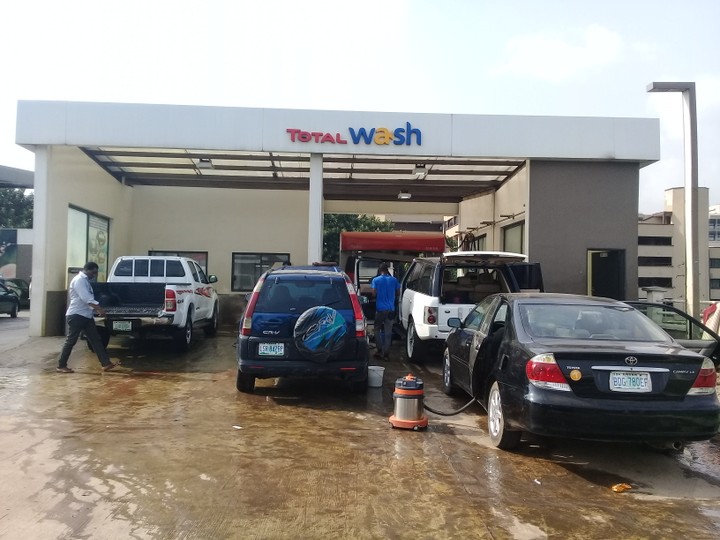
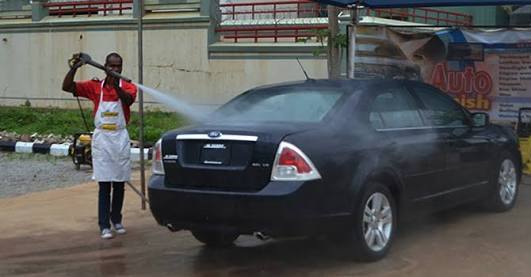
Moreover, both businesses present a source of income for those engaged in their provision. For example, a 2019 TVC News briefing highlighted, “Car wash business as a legitimate source of income for Nigerians.” Indeed, there seems to be a price for every market segment as a range of price points are available depending on the type of wash required, size of vehicle and perhaps even location and sophistication of the finishing.

However, there are challenges ranging from finding the right location to securing funding to scale up operations for a business that has the potential to create jobs for the country’s teeming youth population. My research in this area is still in its embryonic phase, so more from me at a later stage, as I seek to draw upon other African communities and contexts.

Alibaba’s Ant Group (Alipay) – There Is Nothing Ant-like In These Numbers

1

There is nothing ant-like in these numbers. Yes, Alibaba’s affiliate fintech company, Ant Group (of Alipay), does generate more payment volume than Visa & Mastercard combined! Ant does $18 trillion while the American giants bring in $16 trillion. Ant operates primarily in China while Visa and Mastercard run around the world!

Started as Alipay in 2004, Ant Group has transformed from a digital payments company for Alibaba to an aggregator of financial services. Today, the group’s lending, wealth management, and insurance offerings count for 63% of its revenue. In the first half of this year, a further shift in revenue generation saw the credit business surpassing payments for the first time ever. […]

Ant’s prospectus, for its dual listing in Shanghai and Hong Kong, states that “we call ourselves Ant because we believe that small is beautiful, small is powerful”, but if the company can keep this pace up, it will be marching on to a valuation more closely resembling an army of unicorns as opposed to anything reminiscent of its name. (source: Fintech Collective newsletter)

Here is how Fintech Collective explained what is happening:

Today, Ant is aiming for a valuation of $200b to $300b in a dual-listing in Hong Kong and Shanghai, although meetings with investors are still ongoing. It still dominates mobile payments in China, but instead of competing with the financial sector, it has become a digital supermarket of others’ offerings, letting users buy on credit, invest in mutual funds, and find insurance through established players. It has even changed its name, from Ant Financial to Ant Group, to emphasize that it is a tech, rather than a financial services, company.

Ant’s evolution into the Alibaba of finance has been fueled by a desire to claw back customers who began using WeChat more as it broadened out from a messaging service to an online platform for services of all sorts — including mobile payments. More than 90% of Alipay’s 1b users now access the app for more than just payments.

Once people were using Alipay to stash their cash and pay for online purchases, Ant could begin offering them other kinds of services through the app, including personal loans and insurance policies. Alipay says it has 900m users in China.

The Dangote’s Nigerian Project

1

“Nigeria will soon become the biggest and only urea exporter in sub-Saharan Africa for the first time,.. And we are not only exporting, we are exporting big time. ” – Aliko Dangote.

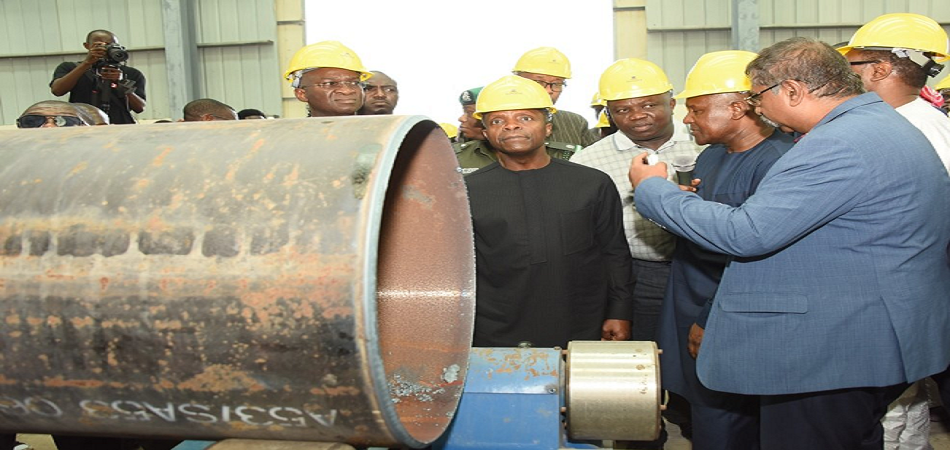
By far, the most important industrialization project in Nigeria today is the Dangote Refinery project. At least in the short- and mid-term horizons, the impacts could be catalytic and consequential. It is a perfect playbook of playing upstream, driven by accumulated capabilities. The Dangote Refinery is the Nigerian Project because the government has none, and we can all go with it. It is a big call: US$15 billion is massive and could change the destinies of people, at scale.

But this is reshaping, just like most BIG Nigerian projects. After a webinar this week, this refinery project is now coming live in 2021. Recall, it was billed for a 2016 launch, then 2019 and now 2021! Some think 2023 …This project has to work. “Still, the project has been hit by delays with the initial opening date having been projected to be 2016, then 2019. Edwin said in a webinar on Thursday that the start of operations will now be pushed back to late 2021 due to the coronavirus. Citac says the facility is unlikely to start before 2023″, writes Bloomberg. While there are concerns, the Dangote Refinery, at least in the short term, is a promise.

The Dangote Refinery is “entering a very competitive market at a time when refining margins are being squeezed by the collapse in oil prices. In July, profit margins for refineries were at their lowest since 2010 and Patrick Pouyanne, the chairman of Total SA, described them as “absolutely catastrophic. To be successful, the refinery will also need to displace the cartels that have dominated Nigeria’s fuel-import business for more than two decades, a source of wealth for the politically connected and motivation for the continuing dysfunction of domestic refineries,” notes Bloomberg.

While this is a “Nigerian project”, the execution cannot be like Nigerian projects (think Ajaokua steel, Second Nigeria Bridge, etc). Mr. Dangote must make this project work, it cannot be delayed further!