DD
MM
YYYY

PAGES

DD
MM
YYYY

spot_img

PAGES

Home Blog Page 6187

Taiwan Announces Ban on Tencent and iQiyi Streaming Services

0

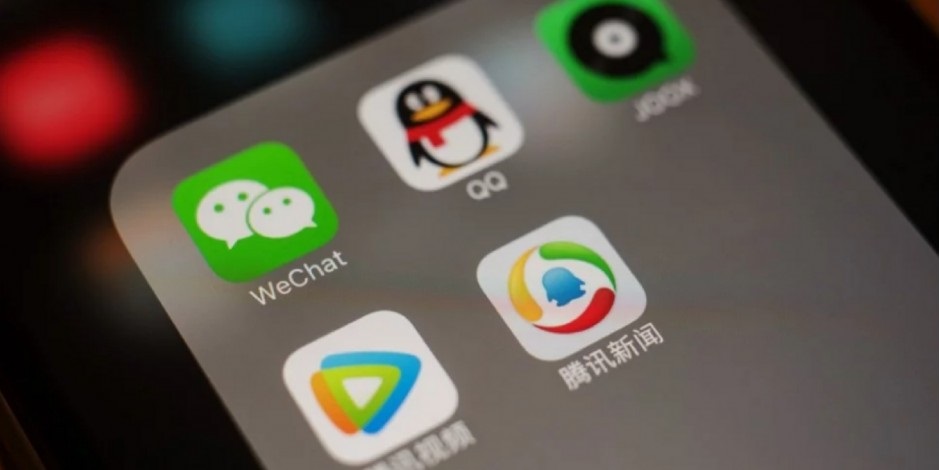
Taiwan has become the latest country to move against Chinese tech companies. The democratic island is moving to ban iQiyi and Tencent from operating streaming video services on its soil.

A government notice published online Tuesday announced new rules of Taiwan’s National Communications Commission that prohibit Taiwanese individuals and companies from providing services to mainland Chinese streaming operators and distributing their content.

The notice said that Tencent video and iQiyi have been operating illegally in Taiwan by partnering with local broadcasters and distributors to provide their video content through streaming services.

CNN Business reported that the Commission’s decision is provisional pending a 14-day public comment period, while the rule will become effective September 3.

Taiwan has been unwittingly caught up in the US-China tech conflict, and has been bending to Washington. Taiwanese Semiconductor Manufacturing Company (TSMC), were among chipmakers prohibited by the United States from supplying chips to Chinese telecom giant Huawei.

Being a small island of 24 million people, Taiwan’s move to ban Tencent and iQiyi appears not like a threat to the companies. But Beijing sees the move as a rebellion as it has always considered Taiwan as part of its territory.

Tencent and iQiyi have become popular among Taiwanese people. The apps have over time won millions of users among Mandarin speakers, recording 114 million and 105 million in video service subscription respectively.

The decision to ban Tencent and iQiyi marks the first frontal action by Taipei against Chinese companies. China has been desperately trying to withstand US pressure through the help of other Asian countries, but sees its efforts yielding little result.

Last week, the United States Secretary of Health and Human Services Alex Azar paid a historic visit to Taiwan to convey President Trump’s support for the small island.

Since the bloody 1949 civil war separated Taiwan from mainland China, the democratic island has been gearing toward total independence from China. The emergence of Tsai Ing-wen as president following the 2016 election has plunged the relationship between Beijing and Taipei into further deterioration, as she is perceived by China as pro-independence.

The US sanctions are forcing Taiwan to further alienate itself from Beijing, a development China is obviously not happy about, and has been pushing to minimize US influence on Taiwan.

Earlier in the month, Chinese hackers were accused of pillaging Taiwan’s semiconductor industry. Under a campaign called Operation Skeleton Key, Beijing reportedly stole source code, software development kitts, chips designs etc. It appears that part of China’s strategy to reduce US influence on Taiwan includes stealing the semiconductor technology, which has been the mainstay of current Taipei’s relationship with Washington.

China depends on the United States for chips, as it has been struggling to develop a semiconductor industry that would serve the needs of its tech companies. As the US hammer hits harder on Huawei and other Chinese companies, its survival lies mainly on China’s ability to manufacture enough chips. It will not only help the Chinese tech industry, but will also cut the American leverage power over other countries that depend on its software and technology to manufacture chips.

The United States is apparently succeeding in getting more countries on its side as the conflict escalates to involve more Chinese apps. Asian countries are particularly rallying behind the US. India was the first to announce its decision to ban TikTok and other Chinese apps before Taiwan jumped the same terrain. Lawmakers from the Japanese ruling party have been pushing the parliament to take decisive action on Chinese apps.

Trump had last week added WeChat to the list of Chinese apps posing a security threat to the United States, and ordered that its US operations be sold to an American company within 90 days. On Tuesday, he announced further restrictions on Huawei that are aimed at stopping it from using third party chips built with US software.

Though the major companies at the center of the conflict; Huawei, TikTok and WeChat have denied any involvement with the Chinese government, their stance has done nothing to quell the sanctions, and it’s fast escalating.

Tekedia Live – Capital Markets, Investing and Fundraising; 7pm WAT Today

0

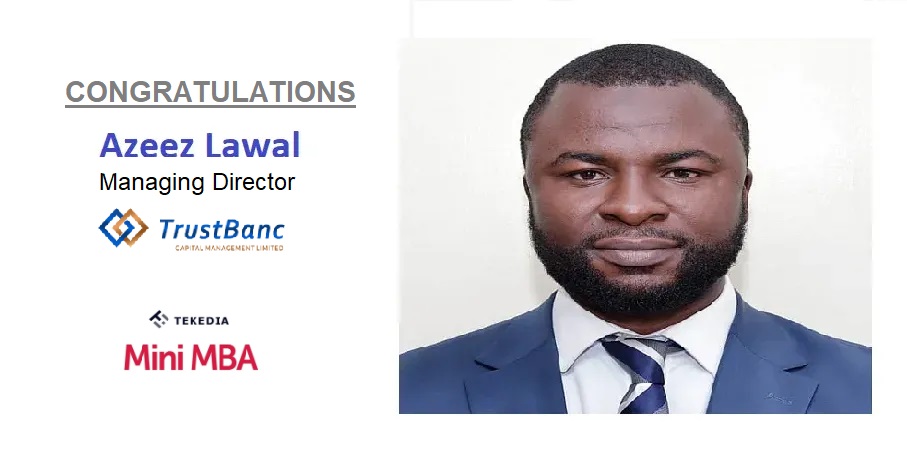
Tekedia Mini-MBA Faculty,  Azeez Lawal, the MD of TrustBanc Capital will lead a live session on Capital Markets, Investing and fundraising at 7pm Lagos time today. Edition 2 members, access the link via Week 9 board while others, connect via YouTube Live at Live. (Edition 3 members, Tekedia Live begins this Saturday; see your Week 2 Board for link and time. I will anchor that.)

Meanwhile, members who need domains and hosting, reach out to Admin. The Institute just acquired some bulk hosting plans to support members who need help to take their ideas online; it is massively discounted.

Tekedia Institute Congratulates Azeez Lawal, Managing Director of TrustBanc Capital

6

Good People, join us at Tekedia Institute to congratulate one of our Faculty Members, Azeez Lawal, who has risen to the position of the Managing Director of TrustBanc Capital. He remains the Chief Financial Officer (CFO) of the TrustBanc Group. Mr. Lawal is a zen-master on capital markets, and has helped hundreds of people through his lectures on our platform. We celebrate this ascension which we just got to know, and wish to (belatedly) congratulate him and TrustBanc Group.


2020: The Most Innovative Nigerian Oldest University, Not University of Ibadan

0

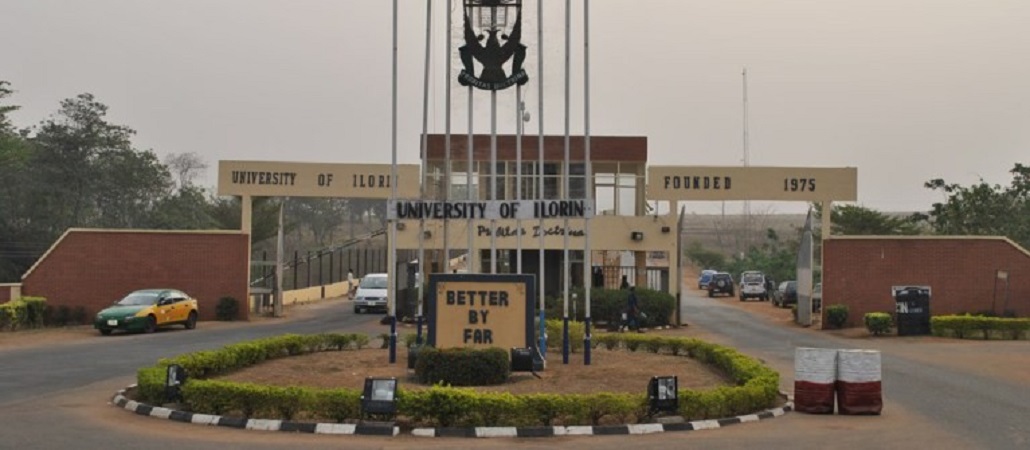
In continuation of our analysis of varied needs and issues in the Nigerian Universities, we have found that the University of Ilorin has been ranked as the most innovative University in the world and Africa than the University of Ibadan. In the previous analysis, we documented that the Nigerian oldest universities have few institutional publications for the years of their establishment.

According to Scimago, an organisation that ranks universities, industries and other components of countries in the world, the University of Ilorin edges the Nigeria’s oldest University, University of Ibadan, out in terms of innovative knowledge development and distribution, scientific publication outputs cited in patents. The organisation also hints, based on its methodology, that the University of Ilorin is ahead of the University of Ibadan due to its strength in number of patent applications (simple families) and percentage of the scientific publication output cited in patents.

Explicating the sources of data used for the rankings, Scimago notes that “the source of information used for the indicators for innovation is PATSTAT database. The EPO’s PATSTAT has become a point of reference in the field of patent intelligence and statistics. It helps you perform sophisticated statistical analyses of bibliographical and legal event patent data.” Our check reveals that the University of Ilorin was established in 1975 with the strategic intents of providing world-class environment for learning, research and community service, and be an international center of excellence in learning, research, probity and service to humanity.

The ranking shows that the University of Ibadan is the second most innovative University in Nigeria within the oldest university parameter [see Exhibit 1]. With its 8th position, the University of Benin followed the University of Ibadan. Obafemi Awolowo University is in the third position while Ahmadu Bello University occupies fourth position [see Exhibit 1]. In terms of research factors, the University of Ibadan is better than the University of Ilorin [see Exhibit 2].  Collective contribution analysis shows that the 9 Universities only placed Nigeria in 50th position in the world when one considers research factors and 40th position in Africa. Analysis also reveals that the Universities’ academic staff, on average, published in 297 Scopus journals.

Exhibit 1: Innovation Positions of the Universities

Source: Scimago Institutions Rankings, 2020; Infoprations Analysis, 2020

Exhibit 2: Research Output of the Universities

Source: Scimago Institutions Rankings, 2020; Infoprations Analysis, 2020

The Malian Mutineers and the Power of Protests

0

The president of Mali, Ibrahim Boubacar Keita, resigned this week after he was detained by military officers. Mali has been rattled by mass protests against corruption and escalating insecurity in the country. Since 2012, militants have made Mali largely ungovernable. This resignation mirrors Sudan’s  Omar al-Bashir who lost power over bread after mass protests. Sure, the style was different. The mutineers, going with the name the “National Committee for the Salvation of the People,” have called on Mali’s civil society and political movements to come together towards creating an ecosystem for a political transition. 

Meanwhile, Nigeria, the superpower in the region, has rejected the coup and has requested an immediate restoration of democratic system. Of course, for months now, Nigeria has been unable to stop the protests in Mali through its emissaries, coordinated by former President Goodluck Jonathan. So, we will be watching if Malians return to work after the boys left the barracks for the presidential villa.

The Nigerian government has called for the immediate and unconditional restoration of constitutional order in Mali following the coup that ousted President Ibrahim Boubacar Keita.

The Minister of Foreign Affairs, Geoffrey Onyeama, made the call on behalf of the Nigerian government via his verified Twitter handle @GeoffreyOnyeama on Wednesday.

Mr Onyeama said Nigeria also welcomed the urgent activation of the ECOWAS Standby Force.

“The Nigerian government unequivocally condemns the coup d’état that took place in Mali on Tuesday and demands the immediate and unconditional restoration of constitutional order.

‘We welcome the urgent activation of the ECOWAS Standby Force,” Mr Onyeama said.

No one knows tomorrow for Mali. But it is evident that protests can bring change. I am not sure these soldiers would have done what they did without the citizens marching on the streets. Yet, it is not yet uhuru as counting on soldiers could be an optical illusion. But here, with the government and the main opposition party severely lost on power tussles, these soldiers could provide an umbrella for a new chapter. The key would be to task them to finish this transition process in months.