DD
MM
YYYY

PAGES

DD
MM
YYYY

spot_img

PAGES

Home Blog Page 6190

Micro financing, A Tool for Poverty Alleviation in Nigeria

0

Microfinance in Nigeria is a project with dual missions, Financial Sustainability and Social Responsibility.

Financial sustainability mission resolves to ensure that Microfinance Institutions are profitable for going concern. The Social Responsibility mission is to ensure that growth of the target clients is progressive and also ensure the products and services improve the lives and financial status of the targets customers.

Unfortunately, not so many Microfinance Banks focus on the Social Responsibility mission any longer; they have neglected the fact that solving problems is a process into financial sustainability.

The Central Bank of Nigeria (CBN) on the other hand has the responsibility to reduce poverty to a minimal level and has set up Microfinance and its Operational Guidelines as a tool to achieve this mandate.

Not long ago, CBN also put up NIRSAL (Nigeria Incentive-based Risk-sharing System for Agricultural Lending) MFB to help achieve the execution of some lending schemes targeting the financially under-served population. As much as there were some shortcomings reported; many achievements have also been recorded.

Obviously, the emergence of Fintechs is also playing huge roles in the strategies to help CBN achieve its goals regarding financial inclusion and poverty alleviation which were unconsciously ignored or overlooked by many Microfinance Institutions.

It is certain that CBN will continue to adjust strategies until the set goals are achieved.

Today, many Microfinance practitioners have opined that CBN has neglected the Microfinance sub-sector or that CBN is not giving adequate support in terms of funding as expected.

There is a need to understand that CBN has mandates and would go to any length to ensure the mandates are achieved.

There is no amount of advocacy that will force the CBN to disburse funds into an individual’s owned Microfinance banks for any of the Federal Government initiated lending Scheme for accountability sake.

The idea of going through a “Central Microfinance bank” owned by the CBN seems to be a better approach to be able to effectively monitor the progress of the lending Schemes.

A major area I would like the CBN to review is how to involve all other Microfinance Banks in the various lending schemes through NIRSAL MFB.

My opinion is that all willing MFBs should be recognized as aggregators for the lending schemes where participating MFBs can apply on behalf of the borrowers digitally while disbursement goes directly to the borrowers’ accounts and the concerned MFB’s account is credited with an agreed aggregator’s fees.

The current digital loan processes of NIRSAL MFB can be expanded and reviewed to take care of all the risk that could be thought of in this proposed arrangement.

With this, more people from different locations across the country will have access to the lending schemes at NIRSAL MFB and also, Microfinance Institutions will be engaged and not feel neglected in the national lending schemes.

It is a fact that with the present procedures of the lending schemes to different economic sectors at NIRSAL MFB, many eligible targeted clients may never access the funds and the current beneficiaries will always devise several means to continue to benefit from the schemes directly and indirectly.
The Data of Nations: Data World War Intensifies as Taiwan Bans Tencent, iQiyi Streaming

2

Since Adam Smith wrote the Wealth of Nations, and the subsequent deepening of  the constructs of comparative advantages of nations and division of labour in firms, we have not seen the scale of dislocation we are experiencing in global markets. One American company called Apple is worth about $2 trillion, capturing an unbelievable amount of value in a new digital economy. The redesign is asymmetric in nature, and lopsided, with just a few emerging national winners with many other nations getting only marginal benefits.

Simply, we are in a new age where the flow of information in unbounded and unconstrained pipes – called the internet – is triggering a new dawn in the architecture of national economies. The old age of warfare, anchored on atoms, with projectiles moving faster than the speed of sound, will fade quickly for one where the control of bytes will win the castles. 

So, if the control of the bytes (yes, data) gives the edge on protecting the castles, the implication is that surviving and thriving will be centered on building moats around data. Indeed, the Data of Nations will be the new Wealth of Nations.

America knows it as we enter a new cambrian moment, to be powered by 5G. Taiwan is getting into the midst as it bans Tencent and iQiyi streaming services. India had already drawn the first blood when it killed TikTok.

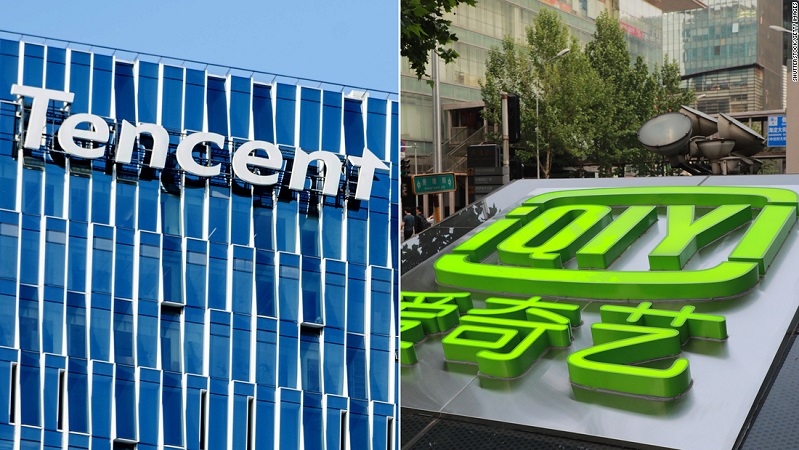
Taiwan has become the latest country to move against Chinese tech companies. The democratic island is moving to ban iQiyi and Tencent from operating streaming video services on its soil.

A government notice published online Tuesday announced new rules of Taiwan’s National Communications Commission that prohibit Taiwanese individuals and companies from providing services to mainland Chinese streaming operators and distributing their content.

The notice said that Tencent video and iQiyi have been operating illegally in Taiwan by partnering with local broadcasters and distributors to provide their video content through streaming services.

It comes down to one thing: lose control of data, lose your wealth. My expectation is that by 2030, Taiwan will ban Facebook, Instagram, etc as it looks for how to balance its budget. Why? Its national resources are in the data hosted in the servers of those firms. That is the future of humanity and the reason why a ferocious battle awaits for the soul of the world. The modern national soul is found in that data of nations

William Shakespeare put it this way in the mouth of Hamlet: “words, words, words” when Lord Polonius asked him, “What do you read, my lord?”.  You are free to replace that with “data, data, data”.

Taiwan Announces Ban on Tencent and iQiyi Streaming Services

Taiwan Announces Ban on Tencent and iQiyi Streaming Services

0

Taiwan has become the latest country to move against Chinese tech companies. The democratic island is moving to ban iQiyi and Tencent from operating streaming video services on its soil.

A government notice published online Tuesday announced new rules of Taiwan’s National Communications Commission that prohibit Taiwanese individuals and companies from providing services to mainland Chinese streaming operators and distributing their content.

The notice said that Tencent video and iQiyi have been operating illegally in Taiwan by partnering with local broadcasters and distributors to provide their video content through streaming services.

CNN Business reported that the Commission’s decision is provisional pending a 14-day public comment period, while the rule will become effective September 3.

Taiwan has been unwittingly caught up in the US-China tech conflict, and has been bending to Washington. Taiwanese Semiconductor Manufacturing Company (TSMC), were among chipmakers prohibited by the United States from supplying chips to Chinese telecom giant Huawei.

Being a small island of 24 million people, Taiwan’s move to ban Tencent and iQiyi appears not like a threat to the companies. But Beijing sees the move as a rebellion as it has always considered Taiwan as part of its territory.

Tencent and iQiyi have become popular among Taiwanese people. The apps have over time won millions of users among Mandarin speakers, recording 114 million and 105 million in video service subscription respectively.

The decision to ban Tencent and iQiyi marks the first frontal action by Taipei against Chinese companies. China has been desperately trying to withstand US pressure through the help of other Asian countries, but sees its efforts yielding little result.

Last week, the United States Secretary of Health and Human Services Alex Azar paid a historic visit to Taiwan to convey President Trump’s support for the small island.

Since the bloody 1949 civil war separated Taiwan from mainland China, the democratic island has been gearing toward total independence from China. The emergence of Tsai Ing-wen as president following the 2016 election has plunged the relationship between Beijing and Taipei into further deterioration, as she is perceived by China as pro-independence.

The US sanctions are forcing Taiwan to further alienate itself from Beijing, a development China is obviously not happy about, and has been pushing to minimize US influence on Taiwan.

Earlier in the month, Chinese hackers were accused of pillaging Taiwan’s semiconductor industry. Under a campaign called Operation Skeleton Key, Beijing reportedly stole source code, software development kitts, chips designs etc. It appears that part of China’s strategy to reduce US influence on Taiwan includes stealing the semiconductor technology, which has been the mainstay of current Taipei’s relationship with Washington.

China depends on the United States for chips, as it has been struggling to develop a semiconductor industry that would serve the needs of its tech companies. As the US hammer hits harder on Huawei and other Chinese companies, its survival lies mainly on China’s ability to manufacture enough chips. It will not only help the Chinese tech industry, but will also cut the American leverage power over other countries that depend on its software and technology to manufacture chips.

The United States is apparently succeeding in getting more countries on its side as the conflict escalates to involve more Chinese apps. Asian countries are particularly rallying behind the US. India was the first to announce its decision to ban TikTok and other Chinese apps before Taiwan jumped the same terrain. Lawmakers from the Japanese ruling party have been pushing the parliament to take decisive action on Chinese apps.

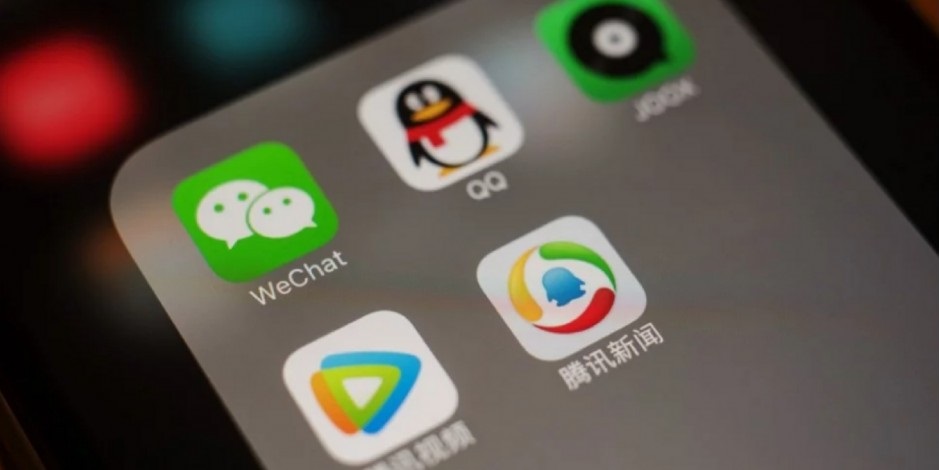
Trump had last week added WeChat to the list of Chinese apps posing a security threat to the United States, and ordered that its US operations be sold to an American company within 90 days. On Tuesday, he announced further restrictions on Huawei that are aimed at stopping it from using third party chips built with US software.

Though the major companies at the center of the conflict; Huawei, TikTok and WeChat have denied any involvement with the Chinese government, their stance has done nothing to quell the sanctions, and it’s fast escalating.

Tekedia Live – Capital Markets, Investing and Fundraising; 7pm WAT Today

0

Tekedia Mini-MBA Faculty,  Azeez Lawal, the MD of TrustBanc Capital will lead a live session on Capital Markets, Investing and fundraising at 7pm Lagos time today. Edition 2 members, access the link via Week 9 board while others, connect via YouTube Live at Live. (Edition 3 members, Tekedia Live begins this Saturday; see your Week 2 Board for link and time. I will anchor that.)

Meanwhile, members who need domains and hosting, reach out to Admin. The Institute just acquired some bulk hosting plans to support members who need help to take their ideas online; it is massively discounted.

Tekedia Institute Congratulates Azeez Lawal, Managing Director of TrustBanc Capital

6

Good People, join us at Tekedia Institute to congratulate one of our Faculty Members, Azeez Lawal, who has risen to the position of the Managing Director of TrustBanc Capital. He remains the Chief Financial Officer (CFO) of the TrustBanc Group. Mr. Lawal is a zen-master on capital markets, and has helped hundreds of people through his lectures on our platform. We celebrate this ascension which we just got to know, and wish to (belatedly) congratulate him and TrustBanc Group.