DD
MM
YYYY

PAGES

DD
MM
YYYY

spot_img

PAGES

Home Blog Page 6191

Attention Please? Listen to the (Campus) Radio

0

Following my December 2019 post on London-based Nigerian radio Djs my attention turns to an overlooked force majeure – community or campus radios.

Community radio stations (CRS) are by nature, resource-constrained entities, but nonetheless still trending and especially so within university campuses worldwide. However, there seems to be limited knowledge on how different social media applications are appropriated by CRS to support their sustainability (both financially and socially). 

https://www.youtube.com/watch?v=6aM3r3Mpl_w

Don Williams – Listen to the Radio 1982

In our working paper, my co-author, Professor Patient Rambe, at the Central University of Technology South Africa and I propose that CRS are an under researched players in the entrepreneurial ecosystem, and especially so in the context of university campuses. We posit that they present a veritable tool for not just public relations activities, but also for community wellbeing and entertainment. 

However, the reality remains that these radio stations  are vulnerable due to financial constraints. Drawing upon in-depth interviews with management and staff across two campus-based CRS in the Free State Province in South Africa, we seek to highlight what social media broadcasting tools are frequently employed, how these tools are appropriated, and the implications of such appropriation and deployment for the financial and social sustainability of the multiple stakeholders (staff, students and society) within this ecosystem. 

Our South Africa study also resonates with other institutions we are linked to, such as Bloomsbury Institute London and the Nnamdi Azikiwe University, Awka Nigeria.

Indeed, Bloomsbury Institute in London has recognised the importance of the Campus radio especially in these Covid19 crisis times.

Bloomsbury Radio – Bloomsbury Institute

Likewise, UNIZIK FM 94.1 campus community radio owned by Nnamdi Azikiwe University, Awka but housed in the Department of Mass Communication with the workforce drawn from all sectors of the University Community. Licensed by the National Broadcasting Commission in February 2007 it commenced test transmission in April the following year as a nonprofit organization. 

What better time than this for Universities and education providers to leverage their community via radio across all digital platforms. This is irrespective of whether it is for information, entertainment or other forms of engagement.

The radio is back – listen to the (campus) radio!

Registration for Tekedia Mini-MBA Edition 3

0

Tekedia offers an innovation management 4-month program, optimized for business execution and growth, with digital operational overlay. It runs 100% online. The theme is Innovation, Growth & Digital Execution – Techniques for Building Category-King Companies. All contents are self-paced, recorded and archived which means participants do not have to be at any scheduled time to consume contents.

If you register, you get two free ebooks:  “Africa’s Sankofa Innovation” and “The Dangote System: Techniques for Building Conglomerates” along with a free Facyber.com cybersecurity certificate course.  To register, click the program page.

We will organize a make-up video class for those joining late.

Lagos Reverses and Updates Ride Hailing Service Charge and Licensing Policies

0

Nigerians complained and we joined: neither increase license fees on ride hailing companies like Uber and Bolt, nor impose a 10% service charge on them, in Lagos.

Yes, Lagos will now collect 10% service tax on Uber, Bolt and all e-taxis. That is for Lagos. This new 10% does not substitute current fees and taxes!

More so, “the law now mandates operators to acquire a provisional license at N10 million (about US$26,000) per 1,000 vehicles or less; N25 million (US$65,000) for a fleet above 1,000 and renew annually at N5 million and N10 million respectively“, TC Daily summarizes.

The government of Lagos has responded with some improvements.

Lagos State government on Friday reversed the 10 per cent service charge it planned to impose on every trip made through e-hailing platforms like Uber and Bolt.

The Commissioner for Transport, Dr Frederic Oladeinde, said the state government has reached an agreement with operators to now charge N20 per trip instead of 20 per cent of the charges for each trip. He stated that the N20 per trip charges would be housed under the Road Improvement Fund.

Oladeinde also revealed that the state has approved 20 per cent reduction in the operating and renewal license fees, aside drivers completing their documentation within the next 90 days, adding that commencement date for the implementation of the regulations on the operators has been postponed by a week to August 27, 2020.

The Lagos’ 10% Service Tax on Uber, Bolt, etc with up to N25 Million License Fee

India to Shut Huawei and ZTE Out from Its 5G Roll Out

1

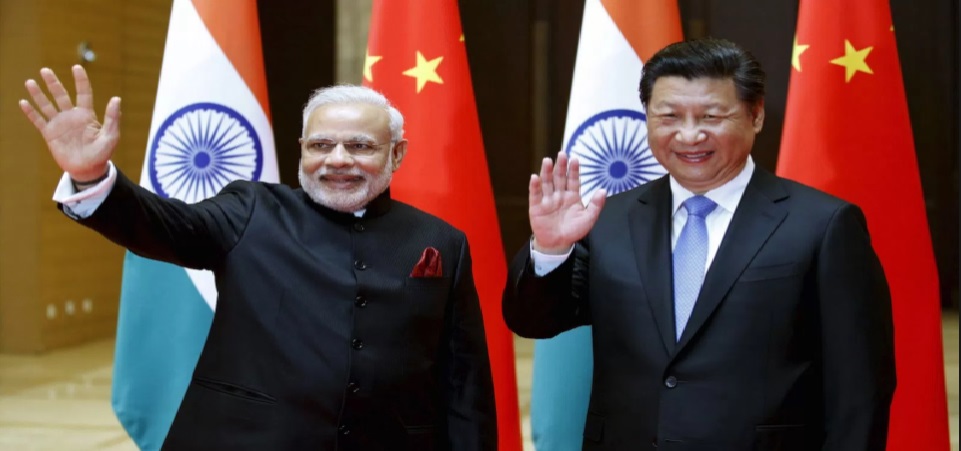
India is set to shut out Huawei and ZTE in its 5G roll, signifying escalation of deadly conflict between her and China, which took place in the Himalayan border in May.

Bloomberg reported that India will apply investment rules amended on July 23 that cite national security concerns to restrict bidders from nations it shares land borders with to keep out the companies, according to people familiar with the matter.

The Ministry of Communications will instead return to discussions with private companies, including Reliance Jio Infocomm, Bharti Airtel and Vodafone on approvals for 5G trials. The discussions were halted by COVID-19 lockdowns earlier in the year.

India thus, joins other countries led by the United States, including Australia, Canada and the United Kingdom in rejecting the 5G technology of Huawei and ZTE owing to their tie with the Chinese government.

The ban is expected to be announced in the next few weeks after the approval of Prime Minister, Narendra Modi, according to the sources.

The relationship between China and India soured after the border conflict in early May claimed the lives of about 20 Indian soldiers. India took its retaliation on companies of Chinese origin operating in its territory. TikTok was the first to be banned along with many other apps, and the South Asian giant is widening the scope of its retaliatory actions.

The growing apathy toward Chinese companies in India has offered Indian companies the opportunity to take over their own market. Reliance Jio is set to delve into 5G roll out following owner Mukesh Ambani’s announcement on July 15, that he plans using an in-house developed technology to roll out 5G technology for his Jio Infocomm.

Ambani is counting on his conglomerate to cut the cost of 5G roll out. He said its carrier would not need to spend much to switch to the new system. Amidst calls by the US on its allies to shun Huawei, India is building on the dispute between it and China to promote its own.

Modi has embarked on a ‘made in India’ campaign and the rest of the tech world is running to be part of it. A new wave of interest in India, which is evidenced by the surge in the number of big tech companies investing in the country, sheds light on the changing tide.

Last month, Google invested $4.5 billion for a 7.73% in Reliance Jio, following its $10 billion digital investment in India. Facebook already has a $5.7 billion stake in the telecom giant.

Samsung is on a mission to retake its lead in the Indian market with a new strategy that hangs mainly on offering affordable devices. And that means Xiaomi and Oppo, the leading Chinese brands in India will have to face fierce competition as consumers find Samsung more reliable.

Since June, Samsung has launched seven new smartphones, three of them cost $133,63 (less than 10,000 rupees), including its cheapest Android offering at $75.

But India’s anti-China sentiment comes with a huge price. Telecom companies are expected to invest $4 billion in 5G infrastructure set up, and at a time when India is struggling to contain the ravages of COVID-19, it’s a high price to pay.

Sydney-based analyst at International Data Corp. Nikhill Batra said telecom infrastructure is becoming more of a national security issue, and India has challenges that will compound the infrastructure deficiencies of the industry.

“Telecom Infrastructure has become part of national security assets and nations are looking at controlling and regulating them just like they do power and water. But the Indian market is already battling infrastructure and regulatory problems. The network equipment market is a small one. So India’s challenges will compound from such a decision,” Bartra said.

Vodafone, Bharti Airtel and state-owned companies have had difficulties providing reliable networks with their 4G technology, 5G network therefore seems like an adventure above their scope. Moreover, India has relied heavily on Chinese equipment for its networks, so funding it with equipment from other countries will likely double the cost.

Head of research at SBICAP Securities, Rajiv Sharma said shutting ZTE and Huawei out could increase the cost of 5G roll out by at least 35 percent.

Tekedia Edition 3 Members – Webinar At 7pm Lagos Time

0

Please be informed of Tekedia Live today. We’d like to put you to speed on how best to utilize the social platform and how best to navigate your learning platforms. We will also discuss the Tekedia Live video (optional) session which begins next week. We apologize for the short notice.

Subject : A welcome session for Edition 3 participants

Link : https://zoom.us/j/99880014518

Saturday 15th of August, 2020
Time: 7pm WAT