DD
MM
YYYY

PAGES

DD
MM
YYYY

spot_img

PAGES

Home Blog Page 62

Passion Inspires, Talent Pays: A Roadmap for Young Graduates

0

Question: Sir, could you reconcile passion and talent, and how both shape financial success for young graduates?

My Response:
I have a deep passion for football, but absolutely no talent for it. I love sports, but I am not good at any of them. In secondary school, I competed in long jump and the 100m race, and I consistently came last. After a few humiliating outings, I made a simple but life-changing decision: perhaps it was wiser to invest more effort in Mathematics, Integrated Science, and the subjects where my natural ability was clear.

To this day, I can say that choosing talent over passion helped me thrive. Passion is emotionally exciting, but it does not automatically translate into financial success. What puts money in your pocket is the talent you possess, or the skill you have deliberately mastered. Passion becomes powerful only when it rests on a foundation of ability. Otherwise, it could decimate a path to financial stability.

Good People, if your passion aligns with your talent, that is a divine blessing. Indeed, blessed are the very few whose talents are entwined with their passions! But where that is not self-evident, follow this order: discover your talent (your innate strength), nurture it through discipline and learning, and with time, mastery will transform it into passion.

Indeed, when you become good at something, it becomes a passion. As a person, I write for liberation, not to be read since I can write even if no one is reading. Those days in secondary school, I could lock myself in a room and give a lecture on Mechanics simply because it was fun.

Talent, when released through dedication and mastery, fuels confidence, competence, and eventually, deep enjoyment. But if you begin with passion that lacks talent, frustration, especially financial frustration, is almost guaranteed.

People often say, “Follow your passion and money will follow you.” That is incomplete advice. If your passion cannot earn you income, then you have built your life on an emotional high without economic grounding. That is very dangerous. Passion does not pay bills. Talent or skill does!

So, identify what you do exceptionally well. Develop it relentlessly. That path is more likely to offer financial stability because excellence attracts compensation. Passion without talent leads to disappointment. But when passion and talent converge, you win twice, joy and prosperity at the same time. Good luck.

Tekedia Mini-MBA begins on Feb 9, and I invite you to join our Personal Economy Series, where we explore how individuals can build and grow their own personal economies, not only scale corporate balance sheets or national GDP.

EU–Mercosur Seal Historic Trade Pact After 25 Years, Redrawing Global Trade Lines

0

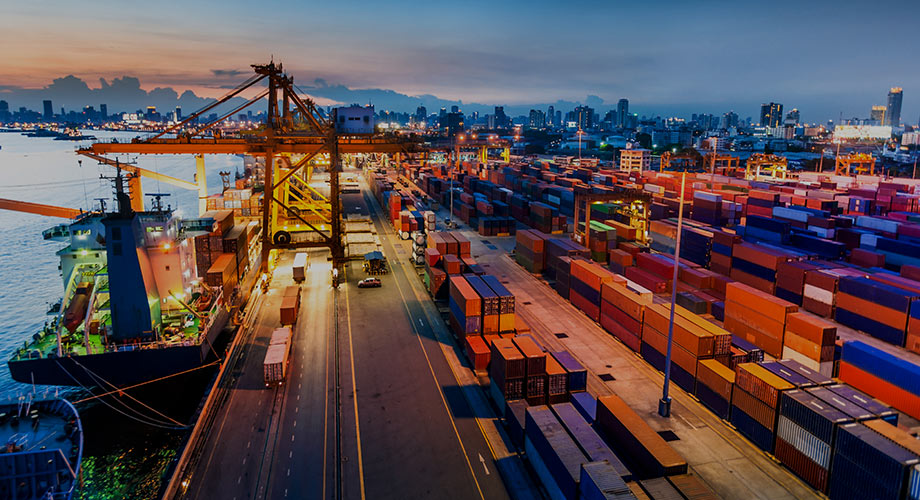
The European Union and the South American trade bloc Mercosur have finally crossed a diplomatic threshold that had resisted compromise for a quarter of a century, signing a sweeping free trade agreement that now stands as Europe’s largest-ever external trade pact by market size.

Yet even as officials celebrated the breakthrough in Asunción, Paraguay, the deal’s future remains uncertain, caught between geopolitical urgency and domestic resistance on both sides of the Atlantic.

The agreement, signed on Saturday by European Commission President Ursula von der Leyen, European Council President Antonio Costa, and leaders from Argentina, Paraguay, and Uruguay, is the culmination of negotiations that began in 1999 and stalled repeatedly over agricultural protection, environmental safeguards, and shifting political winds. Brazilian President Luiz Inácio Lula da Silva, whose return to office helped revive talks, was represented by his foreign minister but had earlier thrown his full weight behind the pact.

If ratified, the deal would bind together two economic blocs representing about 700 million people and formalize trade ties that reached €111 billion in 2024. European exports to Mercosur are dominated by machinery, chemicals, and transport equipment, while South America’s exports lean heavily on agricultural goods, minerals, wood pulp, and paper. Supporters say tariff reductions and regulatory cooperation could unlock billions of euros in additional trade and investment over time.

The agreement is about more than commerce for Brussels. It lands at a moment when the global trade system is under strain, tariffs are once again being wielded as geopolitical weapons, and Europe is seeking to hedge against overreliance on a narrow set of partners. Von der Leyen cast the pact as a strategic statement as much as an economic one, arguing that Europe was choosing openness and long-term partnerships at a time when protectionism is gaining ground elsewhere.

“This agreement sends a very strong message to the world,” she said at the signing ceremony. “We choose fair trade over tariffs. We choose a productive, long-term partnership over isolation.”

That message was sharpened by events unfolding far from Asunción. Just hours before the ceremony, President Donald Trump threatened to impose escalating tariffs on eight European countries unless the United States is allowed to purchase Greenland, reinforcing European concerns about the volatility of transatlantic trade relations. EU officials privately say the Mercosur pact is part of a broader effort to diversify economic alliances and strengthen Europe’s strategic autonomy.

Antonio Costa echoed that view, describing the agreement as a milestone in strengthening economic security without abandoning core values. He argued that deeper ties with Mercosur would help both regions navigate a world marked by geopolitical shocks, trade fragmentation, and rising uncertainty.

Still, the celebratory tone masks significant political challenges ahead. The agreement must now pass through the European Parliament and be ratified by the national legislatures of Argentina, Brazil, Paraguay, and Uruguay.

In Europe, opposition from farming lobbies and environmental groups remains intense. Farmers fear that cheaper South American beef, poultry, and other agricultural products could undercut domestic producers already grappling with high costs and strict environmental rules. Environmental organizations warn that expanded agricultural exports could accelerate deforestation in the Amazon and other sensitive ecosystems, despite sustainability clauses built into the deal.

These concerns have already shaped the pact’s long gestation and are likely to dominate ratification debates. Several EU governments that backed the deal last week have signaled that they will push for strict enforcement of environmental commitments and safeguard mechanisms to protect sensitive sectors. Failure to reassure skeptical lawmakers could still derail the agreement in national parliaments.

In South America, the calculus is different but no less complex. For Brazil, Argentina, and their neighbors, the deal offers preferential access to one of the world’s largest consumer markets at a time when global growth is slowing, and competition for investment is intensifying. Lula has framed the agreement as central to Brazil’s strategy of expanding and diversifying export markets, reducing dependence on any single partner, and attracting foreign capital.

Brazil’s government said the pact was emblematic of Lula’s broader push to reposition the country as a key player in global trade, noting parallel negotiations with the United Arab Emirates, Canada, and Vietnam, as well as efforts to expand a tariff-preference agreement with India. Mercosur officials, however, have acknowledged unease over the EU’s regulatory standards, which some fear could limit industrial development or impose compliance costs on exporters.

Beyond economics, the agreement carries geopolitical weight. It reinforces South America’s ties with Europe at a moment when China has become a dominant trade partner for much of the region and the United States is adopting a more transactional approach to trade. For Europe, closer links with Mercosur could help secure access to critical raw materials and agricultural supplies while opening new markets for European manufacturers.

However, analysts believe that the pact’s ultimate entry into force will depend on how convincingly leaders can address fears at home while selling the promise of long-term gains.

Kuda Announces Expansion Plan to Tanzania And Canada Amid Global Rollout

0

Kuda Bank, a Nigerian microfinance bank that offers convenient, fee-free digital banking services, has announced plans to expand to Tanzania and Canada, as part of a global rollout. This also follows after a successful 2025.

The company’s CEO, Babs Ogundeyi, announced the expansion in a new year’s message to customers, while assuring them of more reliable services.

Part of his message reads,

Behind the scenes, the Kuda Technologies team tested and refined our remittance product in preparation for public launches in countries like Canada and Tanzania, where we are licensed to operate.  Last year’s progress has set us to do more for you in 2026, so you should look forward to more reliable services, more responsive support, and more rewards for using Kuda consistently”.

The expansion marks a significant shift for Kuda as it evolves from a Nigerian digital bank into a broader financial platform, serving regional and diaspora customers. Also, the decision to enter Tanzania and Canada represents a calculated and forward-looking move that aligns with broader trends in global remittances and the evolving needs of Africa’s diaspora.

Kuda Bank’s Standout Year in 2025

In 2025, Kuda Bank marked a series of significant milestones that underscored its growing influence in Africa’s fintech landscape. Building on its early investments in digital innovation and customer-centric products, Kuda strengthened its market position by driving transaction volumes, enhancing customer engagement, and advancing its service offerings.

Kuda in Numbers 2025

  • N29 Trillion+ worth of transactions made.
  • Over N656 billion saved.
  • More than N125 billion worth of overdraft used.
  • N2 billion+ worth of free transfers given.
  • Over 1 billion transactions made.
  • N797.6 million+ worth of interest paid on savings.
  • More than 154.9 million bills paid.

Kuda’s performance in 2025 reflects more than just numerical achievements; it illustrates a fintech that is maturing strategically, diversifying its offerings, and strengthening its foothold across both retail and business segments.

Founded in 2019 by CEO Babs Ogundeyi and CTO Musty Mustapha, Kuda Bank began as a digital-first challenger aiming to reinvent banking for African consumers with a mobile-only platform that removes many traditional fees and barriers.

From modest beginnings with around 300,000 users in late 2020, Kuda quickly expanded its user base by offering free digital banking services tailored to everyday needs. It processed a dramatic increase in transaction volume, from $5.2 million to over $2 billion in one month in early 2021, underscoring the rapid adoption of its platform.

In the years following its launch, Kuda’s customer numbers surged. It hit 2 million users by late 2021, then climbed to 3 million in early 2022 and 4 million by mid-2022. By June 2023, Kuda had surpassed 6 million customers in Nigeria, reflecting strong organic growth as financial services increasingly moved into digital channels.

Kuda also expanded beyond Nigeria. It launched services in the United Kingdom in 2022, setting the stage for broader international reach, and continued building its technology stack around cross-border payments and multi-currency capabilities.

By 2025, Kuda’s growth was measurable not just in users but in transaction scale and product depth. Its journey from a lean startup to a multi-million-customer fintech reflects strategic product development, significant venture capital backing, and consistent user adoption across retail and business segments.

Notably, the bank’s recent planned expansion into Tanzania and Canada signals a new chapter in its evolution from a Nigerian digital bank to a global, platform-driven financial brand.

SOL Holders Are Flipping $200 Into Ozak AI After ROI Charts Show It Could Exceed Solana’s Gains

0

Ozak AI ($OZ) is steadily gaining traction as a compelling alternative for crypto investors considering exit from established large-caps like SOL. Positioned as an AI-powered, DePIN-backed infrastructure project with tokenized growth potential, Ozak AI offers a contrasting value proposition blending predictive AI, decentralized infrastructure, and future-focused utility rather than relying solely on historical network effects.

Phase-7 Presale Data: Attractive Entry While Market Shifts

Ozak AI is currently in Phase-7 of its presale, with the $OZ token priced at $0.014. As of the latest verified update, 1.097 billion $OZ tokens have been sold, raising a total of $5.75 million in funds. This positions the project near the $6 million funding mark, a significant milestone given the broader market slowdown. With a planned $1.00 listing target, the valuation gap between the presale price and public listing remains substantial, offering early investors a potentially high-reward entry point before wider exposure.

Ozak AI’s Core Features: Infrastructure, Utility, and Real Use-Case Focus

Ozak AI differentiates itself through a robust feature set. Its AI-powered infrastructure delivers predictive automation, real-time analytics, and intelligent optimization enabling more sophisticated data-driven operations than typical static analytics frameworks. The DePIN design ensures decentralized physical infrastructure, allowing scalable compute and data processing without reliance on centralized servers, thus supporting resilience, cost efficiency, and distributed performance.

Moreover, Ozak AI supports cross-chain functionality, meaning its predictive and analytics capabilities can span multiple blockchain ecosystems rather than being restricted to a single chain. The $OZ token utility encompasses staking, governance, ecosystem expansion, and reward mechanisms embedding value directly into network activity instead of just speculative trading. On top of that, Ozak AI has undergone independent audits to ensure security and transparency, strengthening confidence in its presale contract integrity.

Partnerships & Ecosystem Expansion Strengthen Long-Term Potential

Ozak AI isn’t just relying on white-papers. It has actively forged strategic partnerships to expand real-world functionality. Through collaboration with Hive Intel (HIVE), the project gains access to multi-chain data APIs including wallet behavior analytics, DeFi flows, NFT and token movement metrics boosting the precision and breadth of its predictive models. Via Weblume, Ozak AI’s real-time signals become accessible for creators and developers through no-code Web3 dashboards and dApps, reducing barriers to adoption. Its tie-up with Meganet, a decentralized bandwidth and infrastructure network, aligns AI-driven computation with decentralized physical resources, enabling efficient and distributed analytics deployment.

Solana Snapshot: Established Position But Limited Near-Term Upside

At the same time, Solana (SOL) remains one of the largest and most widely used smart-contract blockchains in 2026, with a current price around $138–$140 USD per SOL, a market cap in the ballpark of $77–$80 billion, and 24-hour trading volumes in the multi-billion dollar range.

However, despite Solana’s established infrastructure, its potential for a dramatic price surge appears limited compared to early-stage projects. SOL’s recent price action shows modest volatility, and while its ecosystem remains robust, the “low hanging fruit” of growth may already be priced in making outsized returns harder to replicate.

Why Some SOL Holders Are Converting Gains Into Ozak AI Presale Stakes

Given the numbers, a typical investor flipping $200 worth of SOL (acquired earlier in the year) into Ozak AI presale allocation now stands to gain far more asymmetric upside. With Ozak AI’s token priced at a fraction of a dollar and listing target many times higher, even small investments can yield outsized returns if the ecosystem delivers as planned. For risk-tolerant investors, Ozak AI represents a high-upside complement to established assets, balancing stability from large-cap tokens with potential exponential growth from early-stage infrastructure plays.

Conclusion: Ozak AI Might Gravitate Capital Away From Saturated Large-Caps Like Solana

As market dynamics shift and yield-chasing behavior returns, many SOL holders are evaluating whether long-term gains lie in established chains or in next-generation AI + DePIN ecosystems. Ozak AI’s compelling presale metrics, infrastructure-first approach, real-world partnerships, and token utility position it as a strong candidate for those seeking high upside without retail-cycle dependance. For investors comfortable with the inherent risks of early-stage tokens, Ozak AI may well emerge as the project that redefines early returns potentially exceeding what Solana could offer in the foreseeable future.


For more information about Ozak AI, visit the links below:

Website: https://ozak.ai/

Twitter/X: https://x.com/OzakAGI

Telegram: https://t.me/OzakAGI

Crypto Momentum Is Weak, Yet Ozak AI Rockets Forward — Investors Say It’s Becoming the Sector’s Strongest Outlier

0

The major cryptocurrencies are having difficulty regaining their momentum, and the cryptocurrency market is bearish. One project is rising, indicating a positive trend in the cryptocurrency market, while the majority of cryptocurrencies are slowing down and declining. During the bear market, Ozak AI, an early-stage token in its presale phase, is displaying enormous presale funding. Ozak AI’s presale is growing more quickly than before, making it one of the year’s top emerging AI-based tokens despite the market’s general weakness. Ozak AI has strong presale momentum and advanced AI utility, making it one of the strongest AI-based tokens of the year, according to analysts. There are many AI tokens on the market that are based just on hype, but Ozak AI is not among them.

Presale Momentum: The Clearest Sign Ozak AI Is Breaking Away From the Market Trend

Ozak AI’s Presale Phase is one of the most talked-about Crypto events in the market. The Token has raised over $5.73 million, nearing the $6 million milestone. Over 1.095 billion OZ tokens have been sold so far. Even in the bearish market, the early-stage token is gaining massive momentum, and this massive pre-sale funding is very rare to see nowadays in the market. Currently, the token is priced at $0.014 in its 7th pre-sale phase. The token has grown 14x from the initial launch phase, which was launched at $0.001. Pre-sale growth shows how the token is gaining massive growth momentum in a short period of time, making the token one of the top emerging AI-based tokens. While the overall market is down, Ozak AI is experiencing massive growth potential, showing how investors are entering the early age of the Ozak AI token rather than staying in stable cryptocurrencies.

AI Is the Only Sector Still Growing, And Ozak AI Is at the Center of It

The AI adoption is accelerating across every major Blockchain. AI-based tokens are showing positive momentum in the bearish markets. Ozak AI is leading the list, as it is backed by the Strong Advanced AI utility, not just the hype. The Ozak AI’s core technology combines cutting-edge predictive models, real-time data streaming, and a decentralized infrastructure (DePIN) into one powerful ecosystem. While most of the AI tokens run on centralized servers, Ozak AI’s Advanced AI technology has the Decentralized Infrastructure (DePIN), which is a 3-layer decentralized network comprising the AI layer, Data Layer, and OSN Layer. The Data Layer is an IPFS-based encrypted storage for secure financial data and OSN layer nodes that bring in real-time on-chain and off-chain data. The AI layer runs AI calculations on GPUs for predicting prices. This makes Ozak AI censorship-resistant, faster during heavy loads, more secure, and fully decentralized. This makes Ozak AI censorship-resistant, more secure, Fully Decentralized, and faster during high loads.

Strategic Partnerships Strengthen Ozak AI’s Position

Collaborating with Gremory AI and IQ Wiki, Ozak AI proves that it is making its ecosystem stronger. Partnering with IQ Wiki, which is one of the biggest blockchain encyclopedias, brings every project detail from the auditing to its technology and tokenomics details. Partnering with Gremory AI, which is a Solana liquidity engine, helps to relocate liquidity across DLMM pools like Metera before the market prediction is done by the Ozak AI.

Market Momentum Is Weak, But Ozak AI Is Showing the Opposite Trend

The major altcoins and Bitcoin are struggling under the macro pressure. Liquidity is thinning, and fear levels are increasing in the market. But Ozak AI is showing the exact opposite, providing the massive Presale success, Whale accumulation increases, More buyers entering despite the poor market conditions, rapid Presale Sellouts, Real AI utility, and increasing community growth, showing Ozak AI is emerging as the strong outlier of 2026.

Conclusion: When the Market Weakens, True Outliers Emerge and Ozak AI Is One of Them

While Ozak AI is moving in the opposite direction and indicating positive momentum, the majority of cryptocurrencies follow market trends. The Ozak AI is one of the strongest outliers of 2026 because of its tremendous Presale momentum, Real AI utility, strategic partnerships, enormous ROI potential, and strength even during market weakness. The early investors who participated in the presale phase would profit greatly if the token keeps up its momentum.


For more information about Ozak AI, visit the links below:

Website: https://ozak.ai/

Twitter/X: https://x.com/OzakAGI

Telegram: https://t.me/OzakAGI