DD
MM
YYYY

PAGES

DD
MM
YYYY

spot_img

PAGES

Home Blog Page 6202

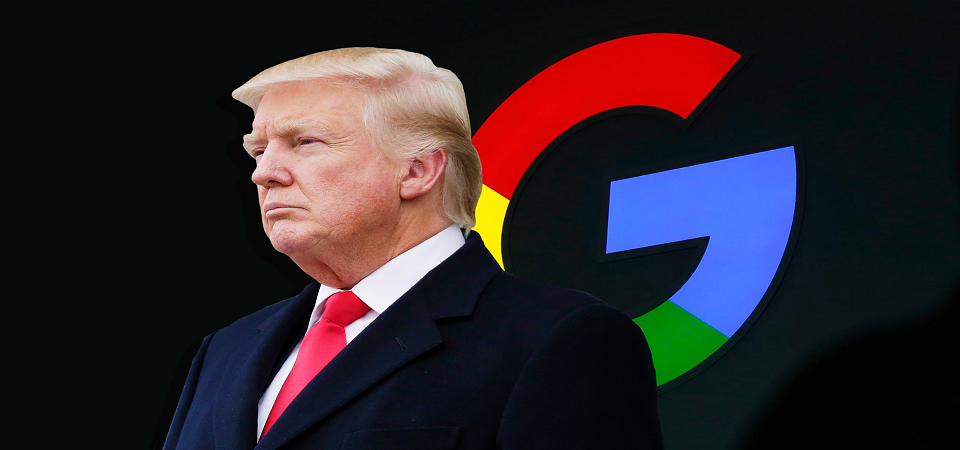
The Trump’s Unintentional Attack on Google Android

4

This is how Nnamdi Odumody captured it on LinkedIn on President Trump’s upcoming ban of TikTok and Wechat in the U.S.

The recent Executive Order by President Donald Trump to ban the parent company of TikTok(Bytedance) and WeChat (TenCent) operations in the United States of America will create a perfect opportunity for Huawei to execute it’s Double Play Strategy playbook. With it’s Hongmei Operating System, it could witness a migration of Chinese owned apps if Beijing decides to retaliate with a ban on Google’s Android Operating System operations in China. Google will be the biggest loser as Chinese applications provide more than 25 percent of it’s Playstore revenues.

Besides the Play Store revenue for Google in China, the biggest risk is this: Chinese hardware makers can abandon Android and adopt Huawei’s Harmony OS for their phones. Harmony has been developed to overcome Trump’s ban of Huawei’s access to U.S. technologies including Android. In my non data-backed estimate, more than 60% of Android smartphones sold in the developing world are assembled in China even if the logos do not carry Chinese brands. So, if companies like Tecno, Oppo, Mi and more decide to abandon Android, Google will have stress in its business model.

Of course, nothing significant changed as Huawei remains banned. Today, Huawei has a mobile OS – HarmonyOS – and now ready to take on Android.  This competitive challenge will happen in phases. Yes, the speculation is over: Android has a real competitor in the developing world. Simply, if other Chinese phone makers like Tecno, Oppo and Mi band together into HarmonyOS, Android may be an endangered species in Africa. I expect them to make that call!

Yes, Google does not make a significant volume of Android hardware, unlike Apple which has exclusivity of the hardware which runs on its proprietary software, iOS. Simply, Google works with many partners for the hardware – the smartphones, smartwatches and tablets. So, if the Chinese phone makers revolt, expect the Android business model to crack not just in the developing world but also in the developed world where Android phones assembled in China are used.

The deal is this: the Chinese government does not even need to retaliate to the new ban. With Tencent included now after ByteDance, joining Huawei and ZTE, they may decide that now is the time to make the switch. So, in the near future, expect your Tecno, Infinix, Oppo, Mi, etc phones to be running on Harmony!
The First Data World War Begins

2

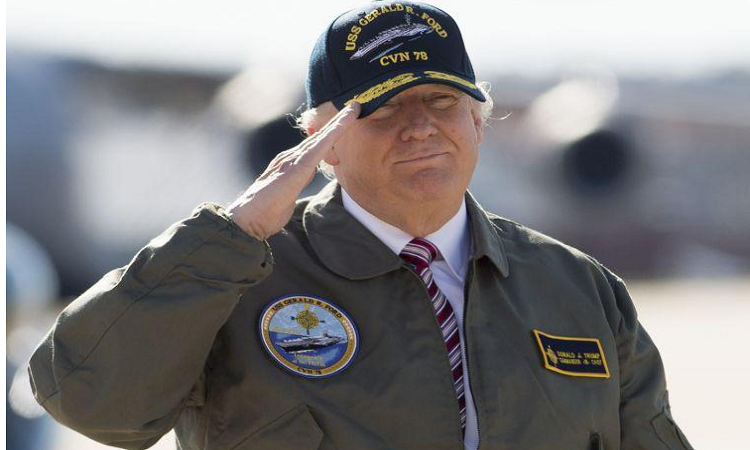
President Trump has fired the first data bullet to China: “ban TikTok and Wechat from operating in the US in 45 days if they are not sold by their Chinese parent companies”. This is not a small playbook from the U.S. The stake here is huge for most companies including African companies Tencent has invested in. Because most African tech-startups are incorporated in the US, this ban will keep their legal units busy. To avoid causing issues for these firms, let me not mention them, but Tencent has funded and supported most startups in Africa, including Nigeria.

President Trump has signed an executive order to ban U.S. transactions with ByteDance, the parent company of TikTok, as well as WeChat owner Tencent. The move was issued under the International Emergency Economic Powers Act and comes into effect in 45 days, following growing tensions with China over security concerns. Microsoft (LinkedIn’s parent company) is currently in talks to acquire the U.S. operations of video-sharing app TikTok, which has up to 80 million active monthly users in America (LinkedIn)

With this ban, it is all-level assaults as two great nations battle for the soul of the 21st century. In the last ten centuries, China has ruled in at least six, economically. But the U.S. is the economic leader now and doing all to keep it that way. When Alibaba Group’s Ant Financial could not get MoneyGram, I knew quickly that the U.S. was going to battle on data. Here we are: the first world data warfare.

Humans are the same, the only difference is the economic opportunity which shapes behaviour to a large extent. Since the pandemic began, crime has risen in most parts of the developed world as people do crazy things to survive. Fighting for data becomes the path to that future survival. 

China is ferociously competitive and the U.S. is going for collateral damage to defend its castle. No one is safe and there would be many unintended consequences. MTN Group is selling assets in the Middle East as it works partly to avoid this indirect tension.

How would China respond? Ban Microsoft Windows or Apple iPhone? Not really because those would be own-goals to China. For every Windows sold, China makes money because the machines which power Windows are largely assembled in China for Dell, HP, Lenovo and others. Of course, despite the latest re-localization, China remains the lab for assembling Apple products. I think China will just chill – it has met an unpredictable American leader that cannot be modeled by any communist party algorithm. That would be wisdom because any nonsense move, Trump can delist all Chinese companies in Wall Street!

Meanwhile, it is party time for Facebook with this assault on TikTok. The founder has crossed $100 billion in wealth. The Reels does not need to be great; it simply needs to be ok. With other Instagram features, many will stick with it as not many would like to have many apps in their phones. Instagram brings a unification in this space and having many features in one app saves time and helps many people.

Instagram is taking on TikTok with the global launch of short-form video rival Reels. It debuted in 50 countries, including the U.S., on Wednesday, and Facebook is offering lucrative incentives to popular TikTok creators to woo them over to Reels. The new rivalry is unfolding as TikTok faces an uncertain future in the U.S., though Microsoft (LinkedIn’s parent company) is in talks to acquire U.S. operations. TikTok’s CEO accepted the challenge from Instagram by saying “bring it on.”

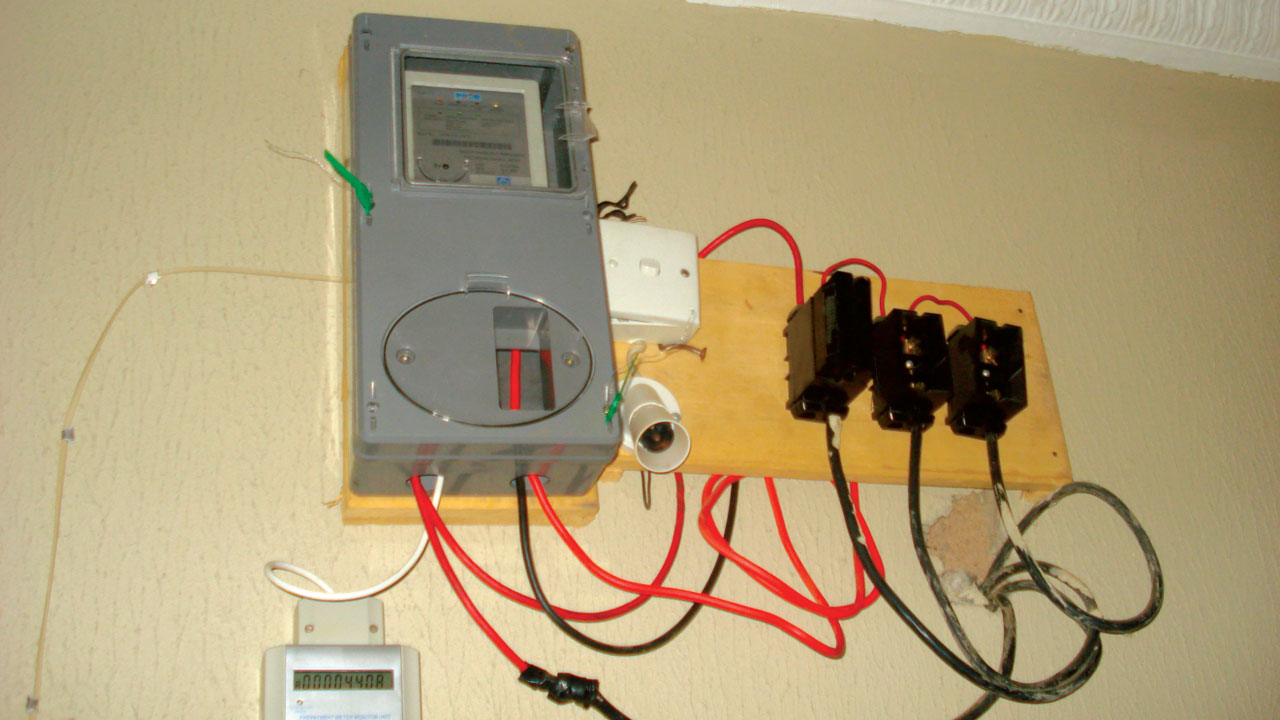
Lagos Launches N7m Smart Meter Hackathon to Provide Locally-made Meters for Electricity Consumers in the State

0

The Lagos State Government on Thursday launched a smart prepaid meter initiative aimed at curtailing the high number of unmetered electricity consumers in the State. In a virtual conference, the state governor, Babajide Sanwo-Olu, and the Honorable Minister of State, Federal Ministry of Power, Goddy Jedy-Agba unveiled the initiative.

The initiative tagged “The Lagos Smart Meter Hackathon 2020” is backed by Eko Innovation Center, and was reckoned as part of the state government’s efforts to improve access to electricity.

Sanwo-Olu said the success of the scheme will increase the willingness of Nigerians to pay for electricity.

“This Lagos Smart Meter Initiative is an important way for the Lagos Government to demonstrate its commitment to improving electricity access and reliability for Lagosians. We believe that adequate metering of Lagosians and in turn Nigerians would increase willingness to pay for electricity, improve productivity, and more importantly, continue to improve the living conditions of our people,” he said.

The governor said the initiative is in tandem with the UN Sustainable Development Goal 7, which dwells on affordable energy for all by 2030.

The organizers used the opportunity to invite stakeholders, investors, technology experts and players in the energy sector to embrace the hackathon.

Sanwo-Olu said the initiative is open for public participation, including those with expertise in the software field. The organizers said the scheme is open for everyone who wants to contribute to the betterment of electricity supply in Lagos State, including teams developing from scratch or continuing existing projects.

Registration is free and prototype designs can be submitted as software or hardware. The organizers said there is N7 million prize to be won.

To boost people’s confidence in the initiative and encourage participation, Dora Ekeruche, Advisory Board Member, Eko Innovation Center said the idea will be executed transparently. She said experts in the tech and power industry will oversee the hackathon to ensure that participants are judged based on merit.

“Judges with knowledge and expertise within the power and tech ecosystem will review the entries and shortlist teams to proceed to the hackathon event,” she explained, adding that “final winners of the hackathon, in both the hardware and software, will win N7 million. They will also be a part of the co-creation phase with other experts, and then proceed to the production and testing stage before the full commercialization of the smart meter.”

The application submission window will close on August 28, 2020.

Metering has for years been a key issue in the power sector, creating monthly rift between distribution companies (DisCos) and consumers who are placed on estimated billing, particularly in Lagos.

Over 60 percent of electricity consumers are not metered in Nigeria, and Lagos has the highest share of unmetered customers. The situation has been blamed on many issues bordering on cost and availability of meters.

In June, the managing director of Mojec International Ltd, a local meter assembling outfit by phone, Chantel Abdul said the Nigerian Custom Services has been responsible for the scarcity of meters this time.

The Nigerian Custom Service imposed a 35 percent levy introduced by the government on imported meters and components used for meter production. The development led to the abandonment of meters and its components at the ports, as the clearing cost became exorbitant and deemed unaffordable for consumers who have been made to pay over N82, 000 for three-phase meters.

Players in the power sector believe that the government has been complicit in the scarcity of smart prepaid meters.

“If the government were serious about eliminating estimated billing, it will make an emergency proclamation removing duties on meter at least for a period of time,” said Lagos-based energy lawyer, Chuks Nwani.

While the federal government is yet to make a decision on the 35 percent import levy imposed on meters, the Lagos State government is seeking alternative through the hackathon, to provide locally made meters that will serve Lagosians and consequently, fill the gap.

The State Government and its partners are hoping that the initiative will reduce leakages in the power sector and improve last-mile electricity supply.

Trump Issues Executive Order Banning the US from Transactions With TikTok and WeChat in 45 Days.

0

President Trump on Thursday issued executive orders to ban TikTok and Wechat from operating in the US in 45 days if they are not sold by their Chinese parent companies.

Trump had on Monday changed his mind to ban the apps following a meeting with Microsoft’s CEO Satya Nadella and the persuasion of members of the Republican Party. Trump thus set September 15 deadline for the acquisition of TikTok from ByteDance, but his new order means the app would be banned if the deal fails.

Negotiation between Microsoft and ByteDance is still ongoing in a deal that Microsoft is expected to pay between $10 billion to $30 billion. Trump said the latest order is masterminded by his finding that “additional steps must be taken to deal with the national emergency with respect to the information and communications technology and services.”

The United States government’s concern had been centered on TikTok, until recently when attention was extended to WeChat.

Trump said the decision to include WeChat is because like TikTok, it captures vast swaths of information from its users which the Chinese Communist Party has access to.

He said for example, in March 29, “a researcher reportedly discovered a Chinese database containing billions of WeChat messages sent from users in not only China but also the United States, Taiwan, South Korea, and Australia.” And the app also censors content that the Chinese Communist Party deems politically sensitive.

WeChat, owned by Tencent offers financial transaction services to users and it is used by millions of people around the world, including the United States. The executive order aims at prohibiting such transactions in the US.

“The following actions shall be prohibited beginning 45 days after the date of this order, to the extent permitted under applicable law: any transaction that is related to WeChat by any person, or with respect to any property, subject to the jurisdiction of the United States, with Tencent Holdings Ltd,” the order said.

“45 days after the date of this order, the Secretary shall identify the transactions subject to subsection (a) of this section,” it added.

Trump justified the order citing threat to national security and made reference to India’s TikTok ban, quoting the country’s Ministry of Electronics and Information Technology which said that TikTok was “stealing and surreptitiously transmitting users’ data in an unauthorized manner to servers which have locations outside India.”

The United States government had on the same language of ‘national security threat’ banned the military and federal agencies from using TikTok, a trajectory the Joe Biden campaign has followed.

While TikTok appears to have a lifeline, WeChat doesn’t. Unlike TikTok that has been around the pressure for a while, thus making preparation for a possible acquisition, WeChat didn’t see it coming. Though there has been a lot of talk from the US policymakers about Chinese apps, the discussion has so much centered on TikTok.

The executive order may help Microsoft to negotiate a cheaper acquisition of TikTok, as the companies are hurrying to beat the deadline.

Trump is concerned that TikTok could be used to manipulate November presidential elections. The app was used in June to prank organizers of his Tulsa rally, where a group of youngsters made seat reservations but did not turn up, leaving the auditorium half empty and embarrassing him.

It is not clear what scope the ban will take as Trump said that part of the acquisition proceeds will go into the US treasury. However, analysts believe that the US’ move to ban the Chinese apps may usher in a new wave of conflict between the two economic powers.

“The executive orders represent a major escalation on the US side of the confrontation with China over the use of technology and mark the first time the US government has attempted to ban a software application running on millions of mobile phones within the US,” said analysts at political risk consultancy Eurasia Group.

The group noted that the implication of the ban may force Beijing to retaliate.

“The US actions against TikTok and WeChat could be a turning point in Beijing’s calculus around how to respond to the US policy actions that have now either impacted or threatened to impact all of China’s national tech champions,” the group said.

China has decried the move, saying that the US is unjustifiably attacking Chinese companies to “maintain monopoly” over them, and urged Trump to rescind his decision because “it goes against market principles and international trade rules.” It is not clear what measures China’s retaliation will take.

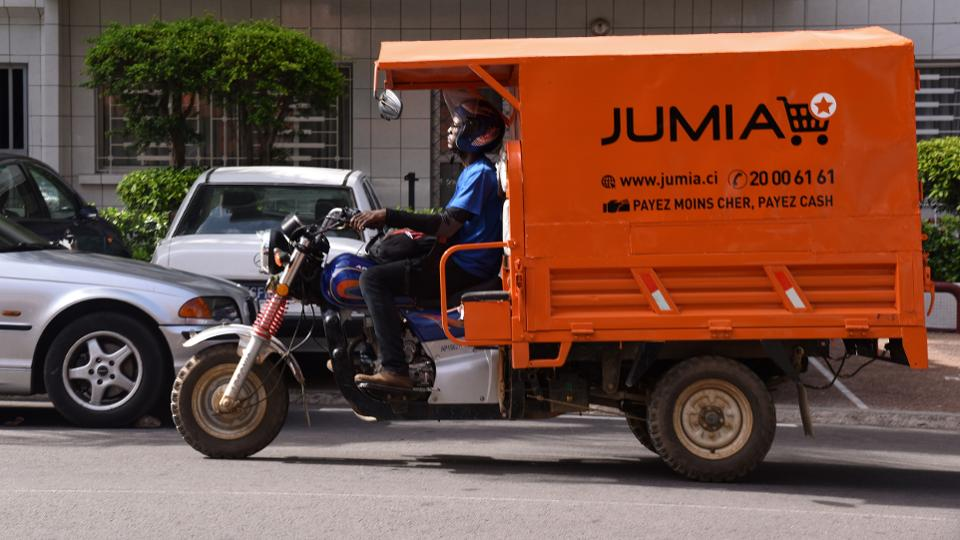
What Konga, Jumia, Jiji and other African E-commerce brands can learn from Shoprite Exit

0

A study has warned ecommerce platforms to pay more attention to the pain points of their customers so as not to lose them at critical times. The report titled “Exploring Key Issues Affecting African Mobile eCommerce Applications Using Sentiment and Thematic Analysis” and published in the IEEE Open Access Journal focused on the views of customers on the ecommerce platforms in selected African countries. 

Specifically, the multi-country study focused on Jiji Nigeria, Jumia, Jiji Kenya, Konga, Takealot, Kilimall and Jiji Uganda with an attempt to understand both the positive and negative sentiments that those who patronize them have for or against them. The study identified three pain points around business, legal and technological frameworks within which the ecommerce platforms operate. Analysis also indicated the preference points for the customers. An earlier report has identified price value and trust as significant influences on intention to purchase online.

On the customer’s positive perception, the report identified the ease of use, fast delivery, affordable products, convenience, cash on delivery and good aesthetics of the platforms and their products. Customers also enjoyed the discounts, fast delivery, user-friendliness of the applications and the speed with which some of these applications allow them to sell.

The report equally noted the pain points of the consumers of the ecommerce platforms to include delivery mistakes, issues on tracking their purchased items, poor product tracking culture, insufficient product information, poor customer service, unfriendly return policy and  Application crashes. Other negative issues include poor search algorithm, high shopping list, sudden cancellation of order without notice, poor quality of items bought, payment issues, non functioning product filter and too many notifications. The report made recommendations on how the platforms could address some of the major customer complaints in the study.

It would be recalled that Shoprite, a South African Mall Franchise, has been trending online for the wrong reasons. The company has been battling a complicated rumour surrounding its continued operations in Nigeria. Analysis has indicated that major sentiments do not favour the company staying in Nigeria despite more than a decade of operating in the country. Observations of comments and online disposition of Nigerians who are actually rooting for the exit of the shopping mall giant might not be divorced from pre-crisis unaddressed complaints they have about the company.

Analysts have queried the continuous negative reviews and lack of sympathy from Nigerians whose patronage Shoprite has enjoyed for 15 years. This may be due to poor public relations and inability to conduct consumer research that would have likely yielded some of the issues arising now.