DD
MM
YYYY

PAGES

DD
MM
YYYY

spot_img

PAGES

Home Blog Page 6202

Apple and Facebook Disagreements Are Escalating, One Issue at a Time

2

Facebook’s CEO Mark Zuckerberg has been vocally registering his dissatisfaction over the newly introduced changes Apple plans for its iOS 14 mobile operating system. The iOS 14 will prevent apps from tracking users using their unique device identifier without their explicit permission.

The advertising industry assigns a unique code to each device called Identification for Advertisers (IDFA). Advertisers use IDFAs to determine if their ads are effective, especially when the ad has been served in multiple places.

Facebook has been using IDFA to personalize ads in third-party apps, and Zuckerberg said the change in iOS 14 will halve his social media platform’s earnings.

“We expect these changes will disproportionately affect Audience Network given its heavy dependence on app advertising. Like all ad network on iOS 14, advertiser ability to accurately target and measure their campaigns on Audience Network will be impacted, and as a result publishers should expect their ability to effectively monetize on Audience Network to decrease,” Facebook said in a post on Wednesday.

“While it’s difficult to quantify the impact to publishers and developers at this point with so many unknowns, in testing we’ve seen more than a 50% drop in Audience Network publisher revenue when personalization was removed from mobile app ad install campaigns.”

Facebook said the change may even cause more revenue loss than it is anticipating and worry that the change will have crippling effects on small businesses.

“We understand that iOS 14 will hurt many of our developers and publishers at an already difficult time for businesses. We work with more than 19,000 developers and publishers from around the globe and in 2019 we paid out billions of dollars. Many of these are small businesses that depend on ads to support their livelihood,” Facebook said.

At the launch of iOS 14 next month, Facebook will be required to ask for users’ permission before it could be allowed to harvest personal data for targeted ads. Alternative to this procedure will require setting up a completely new advertising account to run campaigns for iOS users.

This development has limited Facebook’s ability to collect users’ data on Apple smartphones, and will have a serious impact on its campaigns. Though it can cope as the change does stop the collection of data from millions on its platform, ad-buying small businesses depending on the IDFA wouldn’t.

Over the last few weeks, Facebook has been in squabbles with Apple on two other issues. Adding this to them, the two tech giants appear to be out for a full blown discord.

Apple has had a gaming app (Instant Games) Facebook launched earlier in August blocked because the game app was offering alternative stores with content that it cannot vet. Facebook launched the app without gameplay functionality, and it can be used to watch streams of other people playing games.

Facebook had teamed up with Microsoft to criticize Apple’s game policies, as it has affected many other game apps launched on the Apple store. Apple kicked video game Fortnite out of its store, when Epic Games, the game’s creator, added a feature that allows players to buy virtual currency using their own credit cards, which denies Apple the opportunity to take its 30% cut.

In another case, Apple refused to waive fees for Facebook on its paid Online Events feature. The Online Event feature is designed to allow small businesses and individuals to organize paid digital events that Facebook users can sign up for and sell tickets.

Mac rumors reported that Facebook had asked Apple to waive the 30 percent fee it charges from the in-app purchases for Online Events or allow Facebook process events payments using Facebook Pay. Apple turned the request down saying that it goes against its policy and App Store guidelines.

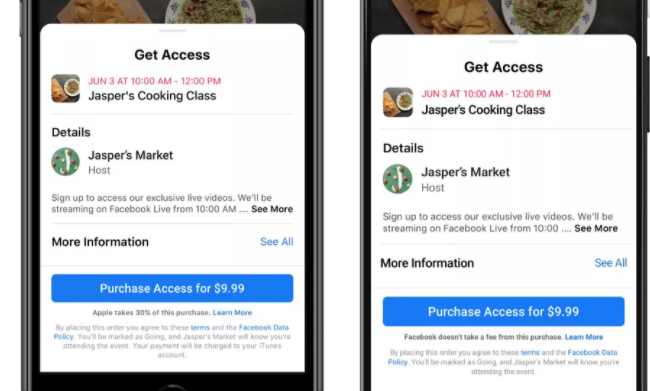
Nevertheless, the disagreement escalated when Facebook decided to add a note in the Online Events feature to notify users that “Apple takes 30% of this purchase.” Apple got infuriated and removed the note, saying it violated Apps Store policy that forbids apps from showing irrelevant information.

Following these incidents, Zuckerberg said Apple is becoming monopolistic and anti-competitive, and its practices are becoming harmful to customers.

“Apple has this unique stranglehold as a gatekeeper on what gets on phones. Zuckerberg told more than its 50,000 employees during a Q&A session. He added that California-based company’s app store “Cupertino blocks innovation, blocks competition and allows Apple to charge monopoly rents.”

Earlier in the month, Apple became the most valuable company in the world with a $2 trillion valuation. Interestingly, Apple and Facebook are among the companies indicted in antitrust investigations of US regulators. Their current disagreements and accusations may well help the investigators.

Turn Your Workers Into GREAT Innovators & Project Champions

0

Just a few minutes ago, Tekedia Institute created the 18th digital board. And that was to serve an amazing non-profit, WeForGood. We are working with banks, insurers, startup incubators, alumni associations and other institutions to nurture innovators and project champions. We focus on three core things: Innovation, Business Growth and (Digital) Execution.

And our program cuts across industrial sectors and market territories. Yes, we work with banks just as we work with an agro-processor. I want you to work with us: let us serve your Stars and make innovators & project champions out of them.

I prepared for this moment: taking time as a young man to earn 2 doctoral and 4 master’s degrees. My vision has been: walk into a classroom and demonstrate broad and in-depth knowledge. At Tekedia Institute, we TRANSFORM.

A brochure is available on request by email tekedia@fasmicro.com

The Apple’s Tax And The Facebook Stunt

3

Just a few months ago, Apple presented itself as a vanguard of user privacy. That is an easy call when you deal with proprietary software packaged in an exclusive hardware with no advertisement. If that is the case, you certainly do not need to mine users’ data. Tim Cook, Apple CEO, explained that Apple would not sell your data, throwing it to Facebook and Google which need users’ data in their business models. Google tried to explain that using users’ data to subsidize services, or make them free, unlike fashionista pricing, legendary in Apple, was fair game. 

But Apple did not care, attacking Facebook and Google on their business models. But things seem to be changing – welcome to a new world. Yes, Facebook is playing a stunt game, telling the iOS world that Apple is taking a 30% cut on all in-app purchases, thereby reducing their take-home pays. Without warning, Apple banned the update.

Facebook Inc on Thursday told Reuters that Apple Inc rejected its attempt to tell users the iPhone maker would take a 30% cut of sales in a new online events feature, forcing Facebook to remove the message to get the tool to users.

Facebook said that Apple cited an App Store rule that bars developers from showing “irrelevant” information to users.

“Now more than ever, we should have the option to help people understand where money they intend for small businesses actually goes. Unfortunately Apple rejected our transparency notice around their 30% tax but we are still working to make that information available inside the app experience,” Facebook said in a statement.

Largely, Facebook is intentionally piling pressure on Apple, sustaining the Epic Games’ battle to see Apple drop its 30% tax on in-app purchases. Facebook has a message to Apple: do not think because you do not run ads, and accordingly will not need user data the way we do, that you do not have your own problems. Yes, if Apple waives its 30% (which will be an own-goal, as in African football), all products on Apple Store, possibly, will see reduced costs.

Left and right: nothing is perfect. It is simply a question of season and time. Apple is learning one thing: even asking people to pay, without the option of giving their data for freebies, may not be perfect.

“I’m completely enjoying the #TekediaMiniMBA outstanding materials” – A Testimonial

0

Thank you Segla Segla MBB,PMP, MBA for the kind words on Tekedia Mini-MBA from Tekedia Institute. This is amazing  – and awesome. It goes to our faculty and all co-learners. Tekedia Mini-MBA is largely a community service I must note. Our mission is to co-learn, co-share and rise together. In today’s Tekedia Live with edition 3 members, a member asked a question on pricing and how to arrive at the optimal number. In my response, I brought up Bigi Cola, Lacasera and Coke to explain.

Quickly, a member wrote: “ I thought you live in the U.S. How come you know the prices of Bigi Cola, Lacasera and Coke per bottle” in Nigeria. I wrote back: “It is an honour that for all the programs in the world, you decided to join us. It is our responsibility to demonstrate that by being prepared, always”.

We will keep getting better. Thanks.

Source: LinkedIn

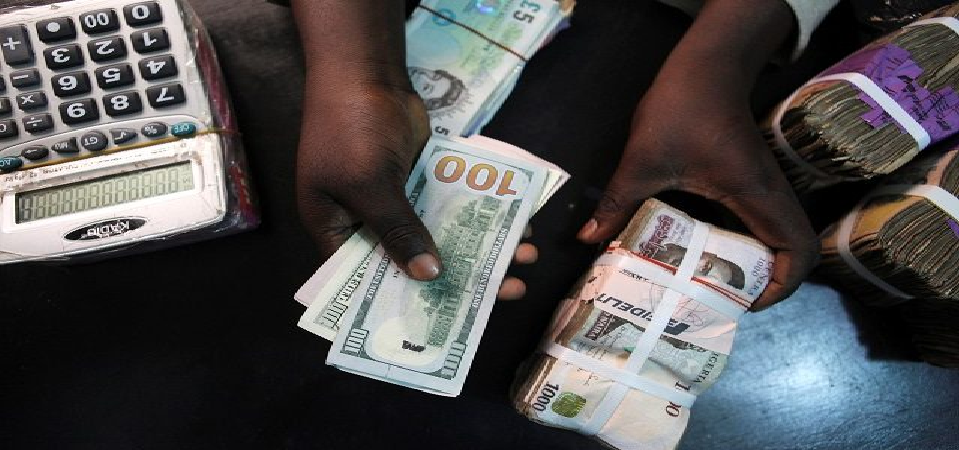
Central Bank of Nigeria Orders Bureau de Change to Sell Dollar at N386/$1

8
Nigeria Naira US Dollar

The Central Bank of Nigeria (CBN) said it will resume sales of forex to bureau de change (BDC) operators as Nigeria sets to lift restrictions on international flights.

The apex bank made the announcement via a circular signed by the director, Trade and Exchange Department, O.S Nnaji, which was shared with operators of BDC and the general public. The CBN said the exchange of currencies will happen on Mondays and Wednesdays.

“As part of efforts to enhance accessibility to foreign exchange particularly to travelers following the announcement of the limited resumption of international flights by the Honourable Minister of Aviation commencing with Abuja and Lagos, the CBN hereby wishes to inform the general public that gradual sales of foreign exchange to licensed BDC operators will commence with effect from August 31, 2020.

“Consequently, purchase of foreign exchange shall be on Mondays and Wednesdays in the first instance. The BDCs are to ensure that their accounts with the banks are duly funded with the equivalent Naira proceeds on Fridays and Tuesdays accordingly.

“Meanwhile, Authorized Dealers (banks) shall continue to sell foreign currencies for travel related invisible transactions to customers and non-customers over the counter upon presentation of relevant travel documents (passport, air ticket & visa),” the circular said.

It added that All Authorized Dealers and BDC Operators are hereby advised to ensure strict compliance with the provisions of extant regulations on the disbursement of foreign exchange cash to travellers as any case of infraction will be appropriately sanctioned.

As part of efforts to contain the economic strains and forex crisis emanating from COVID-19 pandemic, the Central Bank also ordered BDCs to sell dollar at N386.

“Please, be advised that the application exchange rate for the disbursement of proceeds of IMTOs for the period, Monday, August 31, to Friday, September 4, is as follows:

“IMTOs to banks N382/1USD; banks to CBN N383/USD; CBN to BDCs N384/1USD; BDCs to end users N386/$1; volume of sale for each market is USD 10,000 per BDC,” the circular added.

The central bank has been pushing monetary policies aimed at stopping Nigeria from falling into recession, and curtailing the impact of COVID-19 pandemic as the N2.3 trillion Economic Stimulus Plan appears meager to the challenges.

Nigeria’s Bureau of Statistics (NBS) reported that the GDP shrank 6.10% year-on-year in Q2 2020; setting the country up for recession if the economy records further decline. The report indicated a drop of 8.22% points compared to Q1 2020 which was 1.87% and Q2 2019, which was (2.12%).

The decline is as a result of the ravages of COVID-19 pandemic on the oil market, which is Nigeria’s GDP highest earner. NBS reported that the oil sector recorded 6.63% contraction, year-on-year in Q2 2020, a decrease of -13.80% points relative to the rate recorded in the corresponding quarter of 2019.

Consequently, the oil sector contributed a meager 8.93% to the total GDP of in the second quarter of 2020, five percent lower than what was recorded in same quarter the previous year.

The non-oil sector also shrank -6.05% in real terms in the reference period, marking its first decline in real non-oil GDP growth since Q3 2017. The report said the non-oil sector grew at -70.70% points lower compared to the rate recorded during the same quarter of 2019, and -7.60% points compared to the first quarter of 2020.

The rate of the decline indicates that Nigeria is on the verge of plunging into its worst recession in 4 decades. The International Monetary Fund (IMF) said in its June outlook that the Nigerian economy would witness a deeper contraction of 5.4%, two percent higher than the 3.4% it projected in April.

Increasing rate of job loss smiting the Nigerian labor market indicates the impact of the shrinking economy. The NBS labor statistics reported that unemployment rose 27.1% at the end of Q2 2020. The decline in unemployment was enhanced by the exodus of some companies from Nigeria. Naira devaluation exposed multinational companies operating in Nigeria to harsh realities, forcing them to leave Nigeria for countries with stable foreign exchange.

The IMF has urged Nigeria to maintain a unified forex to make its business environment attractive. In July, the apex bank devalued naira to N380/$1, in a bid to curtail the multiple exchange rates that have characterized Nigeria’s money market. But the BDCs were still selling at rates around N470/$1 due to dollar scarcity.