There is no doubt there have been counter and alternative arguments on who becomes the 13th Vice Chancellor of the University of Ibadan as the tenure of Professor Abel Idowu Olayinka ends this year. From the primary to the secondary stakeholders in the University Community and the city that hosts the institution, everyone wants his or her candidate to emerge as the new Vice Chancellor.
As the arguments rage on, our analyst examines leadership and research prowess of some contenders [in the context of grants won and participation in the researches supported by the grants]. For the analysis, several factors were considered in the measurement of the current and previous leadership positions of the contender, and grants they won locally and internationally. Within the grants, their participation as principal or co-investigators were also considered. Suffice to note that our interest in analysing their leadership positions and grants, including participation was inspired by a report which stated that Professor Abel Idowu Olayinka, the current Vice Chancellor, emerged due to his world class recognition and rich administrative experience.
Our Measures and Data
Apart from leveraging the report, we also considered some of the insights from the previous piece, which establishes the need for strong strategic leadership in the University. In our quest of understanding both the leadership and, grant attraction and participation, we formed two metrics. The first metrics entails some indices that measures current and previous leadership positions of the contenders. The second metrics encompasses indices that the categories of grants won by the contenders and their level of participation.
Current and Previous Leadership Metrics
- Led National Professional Association: Previously being President or Chair of national professional association(s)
- Leading National Professional Association: Currently heading national professional association(s) as President or Chair
- Led Global Professional Association: Previously being President or Chair of global professional association(s)
- Leading Global Professional Association: Currently heading global professional association(s) as President or Chair
- Led Internal Committee: Previously headed committee(s) in the University. This also represents being Hall Warden, Director of Units among other positions that were not related to being Head of Department.
- Leading Internal Committee: Currently heading committee(s) in the University. This also represents being Hall Warden, Director of Units among other positions that were not related to being Head of Department.
- Internal Examiner: This indicates contender who is examining postgraduate students, especially PhD candidates in the University.
- External Examiner: This indicates contender who is examining postgraduate students, especially PhD candidates outside the University [in Nigeria and outside the country]
- Deputy Vice Chancellor: Currently being Deputy Vice Chancellor or held the position previously.
- Dean/Provost/Chief Medical Director: Currently being Dean of Faculty, Postgraduate School or others or Chief Medical Director or held the position(s) previously.
- Head of Department: Currently heading a department or previously held the position.
Grants and Participation Metrics (GPM)
- Research Fellow: Currently participating or previously participated as a Research Scholar in a University/an Institute in Nigeria or outside the country
- Fellow: Honorary fellowship given by professional association(s)
- Local Grant: Grant(s) won by a contender within country [these include the University Senate Research Grant, TEFUND among others]
- International Grant: Grant(s) won by a contender outside the country [these include grants from international organisations such as UNICEF, WHO, UN among others]
- Principal Investigator: Led the research team after winning either local or international grant(s). When a contender is(was) a research fellow we coded his or her participation as being a principal investigator.
- Co-Investigator: Being second investigator to the principal investigator after winning either local or international grant(s). This also includes being a member of the research team.
To understand these indices empirically, we sourced data from the profiles and resumes of the contenders which are available on the University’s website and other personal sources of the contenders [available on the Internet]. We believed that as at the time of collecting the data, available data are what the contenders want to be available to the public. Therefore, our analysis does not cater for any information uploaded after August 7, 2020. This is premised on the fact that the contenders are monitored from the first day of announcing the position [VC seat] in the University. With this, it is expected of the contenders to know that their strategic information, capable of increasing their chances should be available to the public, considering public views and expectations about who emerges.
In the previous analysis, we focused on Professor Oyebode Adebowale of the Department of Chemistry, Faculty of Science; Professor Remi Raji-Oyelade of the Department of English, Faculty of Arts; Professor Adeyinka Abideen Aderinto of the Department of Sociology; Professor Oluyemisi Adefunke Bamgbose, SAN of the Department of Law, Faculty of Law; Professor Emiola Oluwabunmi Olapade-Olaopa of the College of Medicine; Professor Temitope Alonge of the University College Hospital (UCH) and Professor George Olusegun Ademowo of the Department of Pharmacology and Therapeutic, Faculty of Basic Medical Science.
In the current analysis, we expand the contenders with the addition of Professor Ayodeji Oluleye, Department of Industrial and Production Engineering, Faculty of Engineering; Professor Tal-hatu Kolapo Hamzat, a Professor of Neurological Physiotherapy, and Professor Kolawole Clement Olusegun Olaniran, Department of Teacher Education. These new entrants made it to the samples after analysis shows that they are also being seen as potential 13th Vice Chancellors of the University.
In the course of generating the needed data for the analysis, as stated earlier, getting data about some of the contenders was difficult despite deploying varied digital data collection tools. For instance, existing sources used for generation of data on Professor Kolawole C.O.O. and Professor Temitope O. Alonge including Professor Oluyemisi Adefunke Bamgbose were not detailed enough.
Beyond having interest in revealing the leadership and research ability in terms of grant(s) and participation in researches, sourced data on when each of the contenders became professor. This is imperative considering the fact that being a professor in the last 10 years is one of the factors for submitting application for the position. In this regard, we only found that Professors Adeyinka Abideen Aderinto and Tal-hatu Kolapo Hamzat became Professors in 2012 [effective from October 1, 2009], while Professor Kolawole C.O.O became Professor in 2012 [effective from October 1, 2008].
Emerging Insights
Exhibit 1: Individual Status on Current and Previous Leadership Metrics
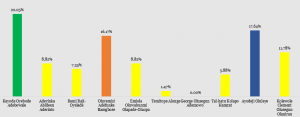
Exhibit 2: Individual Status on the Leadership Metrics
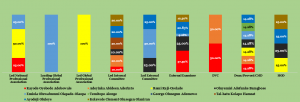
Exhibit 3: Place in Grants and Participation Metrics
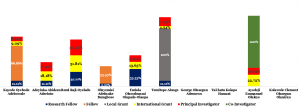
Possible Grants and Projectile of Attracting Funds
In terms of leadership positions, Professors Kolawole Oyebode Adebowale, Ayodeji Emmanuel Oluleye, Oluyemisi Adefunke Bamgbose, Kolawole Clement Olusegun Olaniran stood out. In the area of grants, Professor Remi-Raji Oyelade led other contenders. Professor Ayodeji Emmanuel Oluleye and Professor Adeyinka Abideen Aderinto followed him.
Analysis indicates that in terms of being Research Fellow, Professor Emiola Oluwabunmi Olapade-Olaopa and Professor Remi-Raji Oyelade held sway. They are followed by Professors Kayode Oyebode Adebowale, Adeyinka Abideen Aderinto and Temitope Alonge. Looking at the data, it emerges that Professor Remi-Raji Oyelade, Professor Adeyinka Abideen Aderinto and Professor Temitope Alonge have led research teams that exhausted the grants they won than other contenders. Professors George Olusegun Ademowo and Tal-hatu Kolapo Hamzat and Kolawole Clement Olusegun Olaniran were not captured in the Grants and Participation Metrics [see previous notes on data sources].
In monetary value, the total amount of the grants won by a majority of the contenders are not in the public domain. Efforts on getting the amount from the University’s website or annual report of the institution proved abortive as there are no indications to their accessibility on the website. However, examination of Professor Ayodeji Oluleye’s profile and resume reveals that his individual and collective grants generated $100,000 in 2001; £4,000 in 2009; $7,449,000 in 2009; and $500,000.
From the leadership positions to grants winning and participation in researches, it is obvious that the contenders are differed. Therefore, any candidate with superior leadership, capability and ability to innovate and align with current thinking in the global management of university would be better for the University.