DD
MM
YYYY

PAGES

DD
MM
YYYY

spot_img

PAGES

Home Blog Page 6216

If Nigeria Was a Country of 1,163 Tweets: This is How they Would See Shoprite Exit

0

Whether on physical or online sphere, Nigerians are one of the people in the world who usually express their feelings on issues and needs of national importance. Since the country returned to democratic system of governance in 1999, social and public analysts, including politicians have continued to discuss varied socioeconomic needs and challenges.

Topics of the Discourse

For some days now, the Nigerian society has been discussing the possible exit of Shoprite on different platforms. Our check reveals that the discussion remains intense on Twitter than Facebook. According to many sources, Twitter is a social networking community that enables people and organisations to interact, reflecting a diverse and rapidly growing global social networking community.

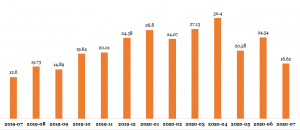
In his description of the Nigerian Twitter community, Jack Dorsey, co-founder and Chief Executive Officer, says “in recent years, there has been barely any social media platform contesting with Twitter in hosting Nigerian conversations — whether protests, rants or energising social movements.” Looking at the yearly percent increase in the number of Twitter users, our analyst believes that the Twitter CEO is right. From 12.6% in the use of the social networking site in July, 2019 to July, 2020, the Nigerian community is indeed growing.

Exhibit 1: Monthly Percent Increase/Decrease in Twitter Users
Source: StatCounter, 2020; Infoprations Analysis, 2020

Explicating the Discourse

Adding to the discourse through article publications on Tekedia, Professor Ndubuisi Ekekwe has made us understand why the company is leaving Nigeria. For instance, he credited the possible exit to the country’s currency weakness in the global economy not to the physical or online competitors but open markets. These factors are not quite different from what Nigerians in the Twitter community discussed between August 4, 2020 and August 5, 2020 (Time: 9:03am on August 4, 2020 to 9:49am on August 5, 2020).

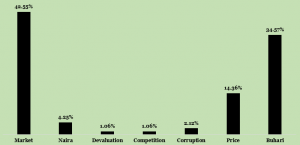
From a total of 1,163 tweets mined and analysed by our analyst, it emerged that within the market factor, Nigerians [including businesses] believed that the company’s failure to understand the Nigerian market dynamics adequately before entering is the main reason for the exit.  Tthey also pointed out the fact that most Nigerians, especially those at the bottom of the pyramid prefer buying goods at the open markets to going varied outlets of the company.

In their conversation, they did not spare the effects of high prices, currency devaluation and corruption. According to them, Shoprite’s price tag on majority of goods is outrageous considering what is obtainable in the open markets. For example, one of the members of the community hinted that it is out of the Nigerian context to set a price of N500 or N1000 for two or three corns that can be bought from the open markets at N100 or less than N200.

In our engagement with the Tweets, our analyst also found that the discussion was also on the dwindling place of the country’s currency in the global market and many years of corruption in public and private life that make some people at the upper-class income category having access to money freely. The accessibility, according to the people in the community, largely helped Shoprite in its early days in Nigeria.

Once again, the conversation on the exit afforded the studied 1,163 users opportunity of discussing leadership issues using different perspectives. Some of them believed that the leadership style and capability of President Muhammadu Buhari should be questioned while some were of the view that President Buhari’s stance on fighting against corruption could be attributed to the reduction in patronage and revenue of Shoprite across its outlets. According to our data, we found occurrence of discussion on open markets, Naira devaluation, competition, corruption, price and Buhari [linking to good and bad leadership] 376 times during the two days.

Exhibit 2: Topics of the Discourse
Source: Twitter, 2020; Infoprations Analysis, 2020

The Extracts

Price: @cchukudebelu Why shop in ShopRite when u can shop rightly at Igbudu market at reduced price

RT@LadiSpeaks: Local supermarkets Local supermarkets How many Nigerians can buy Shoprite? How many Nigerians are willing to take the risk? Maybe only 10 and all of them are in the APC so… Nobody cares

Naira Devaluation: RT @kinmoju: @OkporEmeka with the devaluation of the naira, imported items from SA which ShopRite sells will be too expensive compared with local alternatives thereby impacting their sales figures economy it bites seriously

Corruption: RT @oloye__: Everyone that goes to ShopRite is corrupt and benefited from the 16 years of corruption under PDP. Go to the kiosk on your street. We must kill corruption before it kills our indigenous businesses.

Market: RT @AyoBankole: Again, I have always said most investors overestimate the Nigerian market. Even most analysis on Shoprite exit are emphasizing on Nigeria being the most populous African country. We often forget that over 70% of us live in poverty. And only Lagos holds a real economic promise.

Buhari: RT @keljykz2: Nigeria has been destroyed by this man…Muhammadu ‘destroyer’ Buhari. Same as in 1986…Shoprite is leaving. Air peace is firing pilots and insecurity is at its peak. Keep hailing Mr. Destroyer in chief. Fabrizio/ Willian/ bbnaijalockdown/ the nun/ Martinez/ MUFC https://t.co/6iUxZxWbMb

RT @fattylincorn01: Even those thieves that went on a looting spree @Shoprite_NG are now blaming @MBuhari for @Shoprite_NG woes. SMH

Clustering, Networking and Interaction

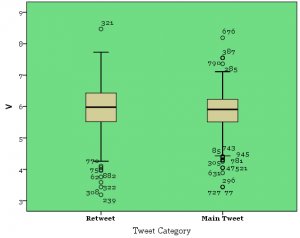
Beyond the topics of the discourse, our analyst explored classification and the kinds of network relationship and interaction that existed during the two days. From the analysis, we discovered that 696 citizens were in Cluster A [the cluster that vehemently pursued the topics in their conversation with others]. In the Cluster B [the less active group in terms of discussing the topics] had 467 citizens.

In our analysis, we discovered that people who fell to the Cluster A (Main Tweets) had influence over those who fell to Cluster B (Retweets) [see Exhibit 4]. In Cluster A, a citizen with the National Identity Number 676 had superior ability of interacting with others within the Cluster. Further analysis indicates this citizen retweeted @ekomiamiblog’s tweet, which says “ShopRite Denies Leaving Nigeria https://t.co/RG46QIhEAh Willian#bbnaijalockdown2020 Buhari Spar.

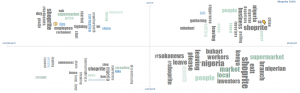
Exhibit 3: Dominant Words in the Community
Source: Twitter, 2020; Infoprations Analysis, 2020

Exhibit 4:  Citizens’ Categorisation in the Context of Ability to Interact
Source: Twitter, 2020; Infoprations Analysis, 2020

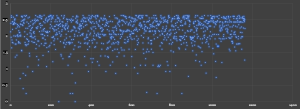
Exhibit 5: Distance among the Users based on Ability to Interact
Source: Twitter, 2020; Infoprations Analysis, 2020

Tekedia Mini-MBA (Aug 10 – Dec 3) Login Details Sent to Registered Members

0

Good People, if you signed up for Tekedia Mini-MBA (Aug 10 – Dec 3), you ought to have received your login details by now. Our team sent them this afternoon. I welcome everyone and hope to embark on this academic excursion which begins Aug 10 together.  If you have not joined, do so today here.

https://www.tekedia.com/mini-mba-3/


What 7UP, Coca Cola, Unilever Could Teach Shoprite On Investing in Nigeria

2

How do you invest in Nigeria when the currency is like a domino under the influence of the gravitational pull of balance of payment? We can learn from some brands which have done well for decades in Nigeria. Yes, we can learn many things from the playbooks of 7UP, Coca Cola and Unilever. 

In these companies, their “parent companies” do not directly take the risk of exchange rate fluctuation. They simply make sure their Nigerian operations are not directly captured in their books. Sure, there is history behind the “indigenization” of these brands in Nigeria, but the real deal remains: Coca Cola does not need to have a Nigeria entry line in its financials in the U.S. That is not necessary since Nigerian Bottling Company Plc (NBC) which is a franchise bottler for Coca Cola shields it, and takes all the exchange rate risks. 

And by taking those risks, NBC has more freedom to adjust pricing to compensate for any forex exposure. That exposure is that it has to buy whatever concentrate Coca Cola sells to it for bottling in Nigeria. So, in this relationship, a transaction takes place and Coca Cola in Atlanta USA books a sale whenever an order comes from Nigeria.  Unilever does the same. Seven Up Bottling Company does the same. (This is my assumption, not sure if that is what they do, but it seems likely though).

Ideally, Shoprite could have looked for a local partner, license its intellectual property or business trade secrets in retail, no matter what they are, and then focus on doing business in Nigeria, via that partner, where all transactions are captured as sales in its South African books. Of course that would be harder in retailing than in manufacturing where core intellectual properties exist. Largely, looking at all permutations, being a foreign retailer in Nigeria makes no sense as franchising framework would be extremely impossible since no core IP exists! So, without this mechanism, the forex exposure hits directly.

If you look at it, you need to “license” IPs to thrive in Nigeria.

Open Markets and Naira Devaluation Kill Shoprite Nigeria

Digital Board for Tekedia Mini-MBA Edition 3 (Aug 10 – Dec 3)

1

Dear Colleagues,

Greetings. On behalf of our faculty from around the world, I am honoured to welcome you to this page, for Tekedia Mini-MBA third edition. Beginning Aug 10, we will start a  journey to co-learn and co-share on the mechanics of markets, innovation, business operations, and growth. We will examine emerging business frameworks, models and technologies, across different domains and sectors, and how they are redesigning the ordinances of economic architectures, industrial systems and competitiveness. This knowledge excursion will last for four months. I expect it to deepen our capabilities and advance the companies we work for. Simply, we will innovate, not just invent, to fix market frictions in our sectors.

This table below will have active links, in successive weeks, for you to navigate to the specific contents. You will see weekly overviews, written materials, flash cases, labs, videos and challenge assignments. There is a section to ask questions and discuss the topics; you can always email.

Once again, welcome and thank you for joining us. If you have any questions, please email us at tekedia@fasmicro.com.

  • Prof. Ndubuisi Ekekwe
  • Tekedia Institute

Theme: Innovation, Growth & Digital Execution – Techniques for Building Category-King Companies

  • *Lecture link becomes active, 12 noon Lagos time, weekly.
  • **Tekedia Live (i.e. webinar) times are announced in weekly boards


Week Date Focus 
1 Aug 10 Click here for Link to Week 1 Session

Innovation & Growth

The Innovation and Growth of Firms – Prof Ndubuisi Ekekwe

Digital Transformation, Innovation & Strategy – Jude Ayoka, Manager, Access Bank Plc

Innovation Lessons: 5in5 (5 Firms in 5 Sectors) – Africa/Global – Aderinola Oloruntoye, Dean, Workforce Group

2 Aug 17 Click here for Link to Week 2 Session

Business Systems & Processes

Business Playbook, Manual and Execution – Prof Ndubuisi Ekekwe

Process Improvement and Operations Management – Rasheed T. Adebayo, Operations Manager, Schlumberger

Quality and Asset Management – Michael Odigie, Vice President Technical Services, Delek Logistics

3 Aug 24 Click here for Link to Week 3 Session

Business Model & Transformation

Modern Business Models and Growth  – Prof Ndubuisi Ekekwe

Effective Organizational Change Management – Omowunmi Adenuga-Taiwo (ex Strategy Consulting Manager Deloitte)

Sector Transformation: Ecommerce – Olufemi S. Aiki, Co-Founder, Foodlocker

4 Aug 31 Click here for Link to Week 4 Session

Exponential Technologies and Singularity

– Transdisciplinary Agora for Future Discussions, Inc (TAFFD), Georgia, USA.

Edward Hudgins, PhD
Chogwu Abdul, PhD
Gennady Stolyarov II
Brent Ellman

5 Sept 7  Click here for Link to Week 5 Session

New Technologies, Growth, Disruptive Innovation

–         Cybersecurity – Adetokunbo Omotosho, CEO, Infoprive

–          Blockchain – Franklin Peters, CEO, Bitfxt

–          AI &  Cloud – Wale Olokodana, Azure Business, Microsoft

–          Data Management, Big Data Analytics – Dr Adewole C. Ogunyadeka, esure Group Plc

6 Sept 14 Click here for link to Week 6 session

Finance, Investing, Fundraising

Investing and Fundraising – Victor Ndukauba, Deputy Managing Director, Afrinvest West Africa

Capital Market Operations – Azeez Lawal, CFO, TrustBanc Group

Personal Finance and Wealth Management – Japheth Jev, CIMA(UK), CGMA, ACA, Japheth Consulting

7 Sept 21 Click here for link to Week 7 session

Logistics & Supply Chain Management

Supply Chain Systems and Management – Ayodele Adenaike, COO, GIG Logistics

Outlook on Supply Chain Management – Luiz Paulo Silva Barreto, Graduate of MIT Supply Chain Management

Logistics – Samuel Akinniyi Ajiboyede, CEO, Zido Logistics

Lab #1 – Tekedia Institute

8 Sept 28 Click here for link to Week 8 session

Marketing, Sales Management & Business Objectives

Sales Management, Marketing and Growth – Moby Onuoha, Queen’s University

Stimulating New Markets Through Innovation And Perception Demand – Prof Ndubuisi Ekekwe

Execution – Business Objectives and Technologies, Nnamdi Onyebuchi, CEO, Weco Systems Group

9 Oct 5 Click here for link to Week 9 Session

Building Your Business Financial Models (templates included) – Michael Olafusi, Financial Analyst Fellow, Brightmore Capital; Lead Consultant, UrBizEdge

Edition Break

Career and Jobs During Pandemic – Captain Ola Olubawale, CEO, Seamate Australia

Career Planning Precious Ajoonu, Manager, Jobberman

10 Oct 12 Click here for link to Week 10 session

Leadership and Human Capital

Business Process and Leadership –  Prof. Ayodeji Oyebola, Saint Mary’s University of Minnesota

Human Resources Management .- Adora Ikwuemesi, Director Kendor Consulting

Leading and Managing Teams, Stakeholder Management with NICER Model  – Dr. Chisom Ezeocha, Project Delivery Manager, Shell

11 Oct 19 Click here for link to Week 11 session

Media & Branding

Media, Communications, and PR – Grace Akinosun, CEO, smepeaks

Branding and Advertising – Akachi Ngwu, Executive Director/COO, Luzo Digital Network & Media

Product Design and Packaging – Kemisola Oloriegbe, Manager, Nigerian Breweries Plc

12 Oct 26 Click here for link to Week 12 session

Sector Innovation and Focus: Case Studies

– Fintech – Olugbenga GB Agboola, CEO, Flutterwave

– EdTech – ‘Dimeji Falana, CEO, Edves

– Agtech –  Ndubuisi Ekekwe, Founder, Zenvus

– HealthTech – Enoh John, CEO, Lafiya TeleHealth

Lab #2 – Tekedia Institute

13 Nov 2 Connect for Career Week: Nov 2-7, 2020 here.
14 Nov 9 Click here for link to Week 14

Global Markets & Projects

 Supply Chain Management, Global Partnership & Contracting – Adebayo Adeleke, ex-Chief of Contracting and Deputy Chief, Business Operations Division, US Army

 Effective Project Management – Taiwo Abraham, Project Manager, Horizant

15 Nov 16 Click here for link to Week 15

Accounting & Auditing

Auditing, Forensics, Policies and Controls – Yusuf O. Sanni (ACA), Chief Internal Auditor, BUA Cement Plc

Accounting, Building Sustainable Enterprises – Ndubuisi Umunna (ACA), Head Finance Accounts & Admin, Royal Exchange

Effective Financial Planning and Management – Okpaise Kenneth, Financial Advisory Manager, AIICO Insurance Plc

16 Nov 23 Click here for link to Week 16

Law, Contracting & Globalization

Business & Commercial Law  – Chukwuemeka Mbah (LLB, BL, LLM) Law, Manager, Sherwin Williams

Contracting, Negotiation and IP – Jeff Chineme Maduka (LLB, BL, LLM), Snr Legal Manager, American Tower

17 Nov 30 Click here for link to Week 17

Sustainability & Risk Management

Disruptive Sustainability Innovation for Long Term Business Growth – Eustace Onuegbu, President, incsr.org

Sustainability Strategy and Social Innovation – Temitayo Ade-Peters, CEO, We For Good

Risk Management –  Akeem Rasaq, Head Of Risk Management, Chapel Hill Denham

Lab #3 – Tekedia Institute

Dec 3-5 Click here for Closure

Execution & Growth

Driving Profitable Growth, Marginal Cost, Scaling – Prof. Ndubuisi Ekekwe

Managerial Accounting, Business Decision Making and Growth – Idris Ayinde, ACA, CFA, KPMG UK

The Call to Execution (Summary) – Prof Ndubuisi Ekekwe

It’s Graduation Day – Prof Ndubuisi Ekekwe

Closure


A Call on the Lagos State Government to Probe the Distribution of Abule-Ado Gas Explosion Relief Materials and Funds

0

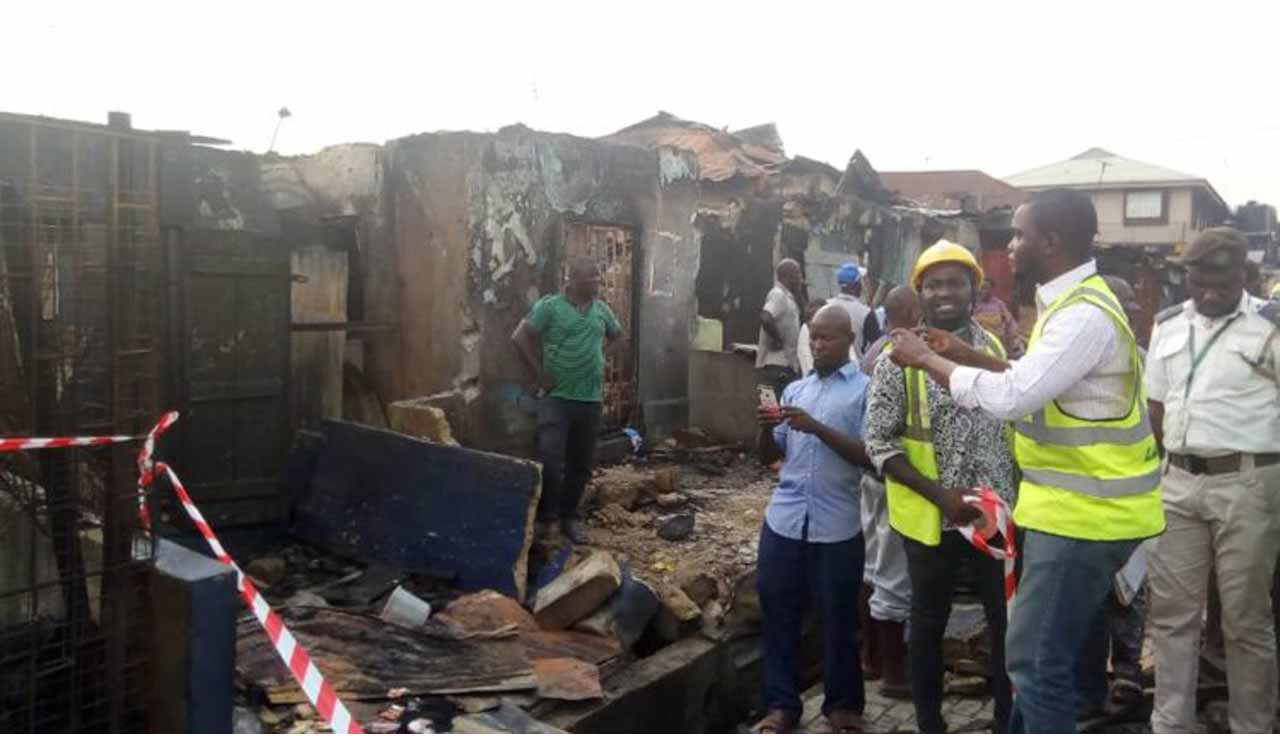
On Sunday 15th March, 2020, around 9am, an explosion rocked Lagos and caused a lot of disaster. This very explosion happened at Abule-Ado area, near Festac Town, Amuwo Odofin Local Government Area of Lagos State. It was caused by a leaking NNPC gas pipeline, through which enormous quantities of gas were escaping. However, NNPC claimed that the explosion was ignited by a truck that rammed into gas cylinders packed at a gas plant near the leakage. No one bothered to confirm whether the fire was truly caused by the truck but the issue still remained that NNPC did not fix the crack on the pipeline even though escaping gas until it kill lives and destroyed properties.

After this incident, the governor of Lagos State, Babajide Sanwo-Olu, visited the area to commiserate with the victims. He felt the impact of the accident on the victims and, in order to alleviate their pains, pledged the sum of N2bn relief fund for them. He released two N250m into this fund and called on well meaning Nigerians and organisations to assist him in raising the remaining amount. It is uncertain how much was generated for this issue, but it is certain that the victims are still waiting for this relief fund.

Many Nigerians have forgotten about this explosion. Like every other tragedy that happens around us, we have waived this one aside too. But then, a lot of people are still passing through the trauma caused by the shock from the experience.

A video, where a lady was lamenting her loss to the explosion, was shared by someone in the WhatsApp group of my secondary school classmates. I was surprised because I thought funds were raised for the victims of the explosion. I knew that what was lost was more than the amount the governor pledged but I was dismayed to learn that the victims are still looking up to the government for more.

My greatest shock came when one of my classmates said that she is also a victim and that has not received anything from the state government. According to her, her newly built school is among the buildings that were affected on that day. But fortunately for her, the explosion happened on Sunday, when classes were not in session. She said she is currently running around, raising funds to put the school building together since it is obvious that no one will do for her. However, she said that people that lost someone to the explosion were given the sum of N2.5m each. The rest were just shared food items. And that was it.

Well, I don’t want to believe more relief materials and help are not coming to these victims. I know the state governor released the sum of N250m for the victims immediately this thing happened. Even if nothing else was generated for the victims, the money given by the state government would have gone round to some extent. But from what I can see, something happened between the time the money was released and when it got to the victims and nobody knows exactly what it was.

It is possible that the governor released money while the people meant to distribute it diverted it. This is a common occurrence in this country. For instance, sometime in July, the investigation of the Niger State COVID-19 Taskforce by the State House of Assembly led to the discovery of a secret warehouse, where food items contributed by corporate organisations and well meaning Nigerians, as the lockdown palliatives, were hidden. This comes to show that it wasn’t the fault of the state or federal government that people didn’t receive palliatives despite the massive donations made towards that. In fact, this discovery explained why people only received palliatives donated directly by individuals and shared under their supervisions. Those that were given to the government ended up in the wrong hands.

This then calls on the Lagos State government to probe the distribution of relief materials and funds meant for the victims of the Abule-Ado gas explosion. This fund was raised solely for them, but it is obvious that it has ended up in the wrong hands. Worse is, everybody is blaming the state governor.