DD
MM
YYYY

PAGES

DD
MM
YYYY

spot_img

PAGES

Home Blog Page 6232

Join Tekedia Live on Ecommerce by CEO of Foodlocker – Tuesday, 7pm Lagos

0

Olufemi S. Aiki, a Tekedia Institute Faculty and CEO of Foodlocker, a food-focused ecommerce pioneer in Nigeria, will anchor our Tekedia Live today (Tuesday). It will run 7pm-8pm Lagos time. 

For members, go to the Week 5 board for Zoom link https://www.tekedia.com/dboard2/ . For non-members, join us here via YouTube Live https://www.tekedia.com/live/.

On Wednesday, our Organizational Change Management Faculty, Omowunmi Adenuga-Taiwo, will lead Tekedia Live at 11am Lagos. We will activate the link once Tuesday’s Live completes.

Registration for Tekedia Mini-MBA edition 3 continues on click.

https://www.tekedia.com/mini-mba-3/

Nigeria Unveils A N15 trillion Infrastructure Development Company

4

If you have been reading me, you might have noticed that I do not typically criticize former military junta, Ibrahim Babangida (IBB), on infrastructure development. Of course, he had his demons, but when it comes to infrastructure, IBB was light years ahead of his peers. 

He built Abuja. He built the 3rd Mainland Bridge. Some of those great structures in Abuja happened under his watch. Then, the new generation banks took off under his time. The first wave of tech happened under him. Of course, IBB’s demons were so much that despite those sparks, it may be hard to forgive him for running down Nigerian Railways, SAPing Nigeria with his Structural Adjustment Program, and unleashing the biggest – making corruption a way of life in the public sector!

But if you can keep those away, we can learn many things from IBB. Today, we are learning that the Federal Government has approved a quasi banking institution for infrastructure development in Nigeria. Yes, Nigeria will float an Infrastructure Development Company which will leverage local and international funds to rebuild Nigerian critical infrastructure. About N15 trillion is projected over 5 years for the kickstarting of the Company.

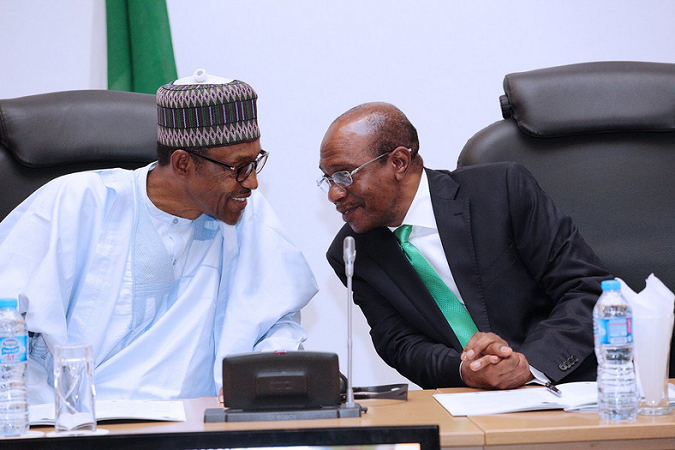
The Central Bank of Nigeria (CBN) is to establish an Infrastructure Development Company, its governor, Godwin Emefiele, disclosed on Monday in Abuja.

Mr Emefiele, who spoke during the online media briefing at the end of the 274th meeting of the Monetary Policy Committee MPC) said the company would leverage on local and international funds to rebuild critical infrastructure across the country.

[…]

Mr Emefiele said the Federal Government has already given approval for the establishment of the special purpose company, which would be wholly focused on Nigeria and Nigerians alone.

The company, he said, would be co-owned by the CBN, the Africa Finance Corporation (AFC) and the Nigeria Sovereign Investment Authority (NSIA).

However, the management of the company would be exclusively run by an Independent Infrastructure Fund Manager (IIFM).

The fund manager would mobilise local and foreign capital to support the Federal Government in building the transport infrastructure required to move agriculture and other products to processors, raw materials to factories, and finished goods to markets.

The CBN governor said about N15 trillion is projected over 5 years for the initial running of the company, adding that the MPC expressed satisfaction with the work on the updates and timelines for the establishment of the company.

That brings me back to IBB: how was he able to get those done even when oil revenue was low compared to what we have earned since 1999? Do the math: he did not fund an expensive democracy, from the national budget. Nigeria does not need Bank of Industry, Bank of Agriculture, IDC, etc to develop. Those are simply multiplying bureaucracy. What we need is to cut the size of government and that includes our democratic framework and public sector. If we do just that, we will have more money to invest in our infrastructure.

Looming Food Crisis in Nigeria: A Call for Concern

0

Somehow, the easing of the lockdown has brought about the scarcity and increase in the prices of food items in the market. Food crops and other food items were expensive during the lockdown, but everyone attributed that to the cost of bringing in goods and agricultural produce from farms and states, where they were produced. Before the reopening of interstate borders, security agents and “youths” of different communities made it difficult and expensive to transport food items from one state or town to another. But right now, people move freely so the price increase and scarcity can no longer be attributed to lockdown, at least, not directly.

I thought this problem was peculiar to Enugu until I spoke with people from different parts of the country and realised that the case is almost the same everywhere. One cannot help but wonder the cause of this price increase.

Some people have attributed the increase in prices of some food crops and food items to the season of the year. For instance, crops such as tomatoes and yams are out of season and are therefore scarce. Rainy season has also prevented or disturbed the availability of dry food items that need the sun for preservation. Example of food that belongs to this group is abacha. This truly shows that the high cost of some items is as a result of the season of the year. But how does that explain the high cost of other items such as vegetable oil, palm oil, fish, tomato puree (tin tomato) among others? Besides, this is the season of fresh corn, but that one is not just expensive but scarce too. This finally means that the season of the year is not the cause of price increase of food items.

Some people said the sudden increase in the price of fuel is the cause. According to people that belong to this group, increase in fuel pump price brought about the increase in transportation cost, which led to the unavoidable increase in prices of goods, including that of agricultural produce. Hence the sudden increase in the fuel pump price from N121 to N143 has caused a chain reaction that suddenly increased the price of things in the market. This theory would have been logical if the price of petrol before the lockdown was not N145.

The third theory is what gives me concern. According to some traders, there is unavailability of some food items, even in the farms. They claim that they have ordered for those items but are yet to get them. Some claim that middlemen find it more difficult to penetrate the interior parts of the country, where they buy some of these items. The reasons for this include insurgencies in the parts of the country that produce the majority of the staple foods that serve the nation. According to one of the stories surrounding this theory, insurgents have made roads unsafe and impassable. They kidnap, kill and maim many road users and even destroy or hijack their wares. This discourages people from carrying out any transactions that will take them to those volatile areas.

Another story surrounding the unavailability of food crops in the market is that farmers are afraid of going to farms because their farms have been made unsafe by insurgents, kidnappers and killers. You can imagine when bandits are attacking the North-West, Boko Haram is paralysing the North-East and Fulani Herdsmen have made North-Central unsafe, how then can Nigeria survive when these areas are the chief producers of food crops?

The way I’m seeing our food market today, I can tell you that a food crisis is looming. I don’t know what is happening but it is no longer funny. Our farmers need to be encouraged. If they missed this planting season because of the lockdown or insecurity, the government should consider lifting the ban on the importation of staple food items such as rice, tomato and maize, until things stabilise. If nothing is done, and done quickly, food scarcity will seize the country in no distant time.

Chinese Chipmakers Record Surge in IPO As Push to Keep Huawei in Business Continues

0
Tech product

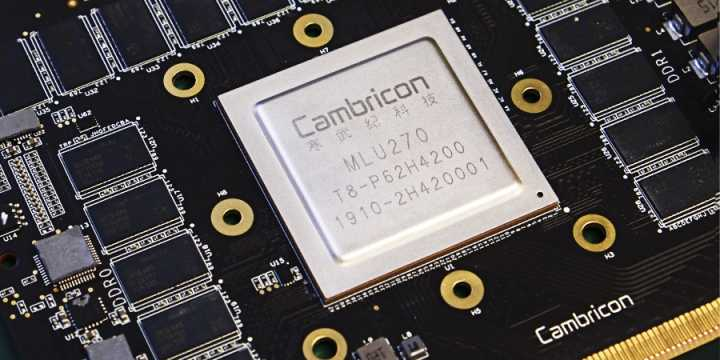
Chinese Chipmaker, Cambricon Technologies, recorded a 358% surge from its IPO to stay at 295 yuan at the Star Market, on Monday.

Cambricon, backed by Alibaba Group Holding among others, is the second high-profile chip maker to list on the domestic market in less than a week. China’s biggest chip manufacturer, Semiconductor Manufacturing International Corp (SMIC), listed Thursday on Star with 53 billion yuan ($7.58 billion), marking the biggest IPO in China in a decade according to SCMP.

Cambricon Technologies Corporation Limited develops and distributes software products. The Company produces terminal intelligent processors, cloud intelligent chips, accelerator cards, intelligent computing cluster systems, and other products. Cambricon Technologies also produces computer peripheral products.

Cambricon’s gain on Monday puts its capitalization 85 billion yuan, while SMIC has a capitalization of 587.1 billion yuan. The duo are pushing to bring Chinese semiconductor industry to the fore in the wake of a trade war between the United States and China that has impacted the global growth of Chinese telecom companies.

Cambricon was founded in 2016 by two brothers, Chen Yunji, 37, and Chen Tianshi 35, to produce AI chips for smartphones. The company has since become a big name in the semiconductor industry, producing chips used in millions of smartphones.

Huawei and Alibaba are its major clients, spurring the company to a potential competition with SMIC.

But analysts believe the growth is expected to slow in the near future due to increasing research and production cost. Yan Fan, an analyst at China Merchant Securities, said expenditure will erode the company’s earnings in three years.

According to the brokerage, it is expected that the chipmaker will lose about 482 million this year and 380 million yuan in 2021. It posted a 1.18 billion yuan loss in 2019, according to the IPO prospectus. But that was before the recent push by the Chinese government for more semiconductor manufacturing.

The US trade relationship with China has deteriorated that companies from the South Asian country have been denied rights to purchase US made chips.

Huawei, which leads the global 5G rollout was ousted from the United States last year on national security concerns. Against the backdrop, the Chinese company had the capacity to lead other companies in the business of 5G deployment until the United States government announced in May, that semiconductors in the US, including TSMC will no longer sell chips to Huawei.

The development is leading many countries who initially had stood up to the US pressure to boycott Huawei to reconsider their stand. It is also paving the way for Sweden’s Ericsson and Finland’s Nokia to lead the way in 5G technology.

On Tuesday last week, the UK government announced that it is dropping Huawei from its 5G plans, citing the US ‘chips ban.’ Without access to the US semiconductor market, it will be difficult for the company to live up to its 5G obligation.

The Chinese government has been working to minimize its dependence on foreign semiconductors, and to limit the impact such bans would have on its telcos. At the wake of the ban by the United States, Huawei employees had gone to produce alternatives to the American semiconductor parts. But that has not yielded the needed result because the semiconductor manufacturing takes time, and the US is ahead in the industry.

Christopher Ford, Assistant Secretary of State for International Security and non-proliferation, told reporters in May: “If one wants to be working in the area of the very best chips, the chips that have the most computing power packed into smallest space, it is necessary to use US design tools right now because we have a commanding comparative advantage in that area.”

Chinese companies could no longer use US design tools due to the trade agreement the two countries signed earlier in the year, which forbids China from stealing technology ideas from the US. Therefore, the situation has left Huawei’s survival hanging on the ability of China’s semiconductor companies to produce enough of the 5G infrastructural components.

China has a $1.4 trillion New Infrastructure initiative, designed to see a Chinese company lead globally in 5G roll out, and Huawei is at the center of it.

Recent apathy toward China sees the initiative falling apart and Huawei has been at the center of the controversy. As the US pressures its Western allies to cripple China’s 5G global leadership, as it would impact Western influence around the world, Huawei may find success in developing countries if the Chinese semiconductor industry ups its game.

Ezekiel Izuogu: a Visionary Like Henry Ford and Pacesetter like Elon Musk

1

My cousin, Engr Ndubuisi Ekekwe, was one of his senior engineers. They had a mission: build a car from the scratch with more than 85% of all parts sourced locally from Nigeria. They did many prototypes, spent nights and accomplished many things. Izuogu Motors Limited (IML) was the most advanced indigenous vehicle project in Africa. Under the leadership of a legendary inventor, IML was getting closer to an all-made-in Nigeria car. That inventor is Engr Ezekiel Izuogu. He has died.

The story of IML is the story of Nigeria: constrained progress. The Z-600 was the first indigenous car in Africa, and the man could qualify as Henry Ford and modern day Elon Musk. The BBC called Z-600, “the African dream machine”. Affordable, durable and with 90% of all parts sourced locally at a price point of $2,000, it was a beautiful vision.

General Abacha, the junta then, looked at Z-600 with a 12-man committee and gave a pass to the car for the Nigerian roads. Naze, near Owerri, was the destination for the mass production factory. They have done lots of work at the Ugwu Orji Owerri IML Lab. Nigeria promised funds, but none came. Then South Africa came, and wanted Izuogu to relocate to South Africa with his team.

Magically, “12 heavily armed men broke into Dr. Izogu’s factory in Naze and carted away various machines and tools including the design history notebook of Z-600, the design file Z-MASS, containing the design history for mass production of Z-600 car, and the moulds for various parts of the car.” Within weeks, IML collapsed because the robbers destroyed and stole most intellectual properties, design books, drawing, etc which had taken years to create. 

Nigeria has lost a technical legend.