DD
MM
YYYY

PAGES

DD
MM
YYYY

spot_img

PAGES

Home Blog Page 6232

Orange Launches Orange Bank Africa to Provide Financial Services in West Africa

0

Orange, a major telecoms provider in Africa and the Middle East, and NSIA, a leader of bancassurance, have partnered to launch the Orange Bank Africa in Abidjan and Côte d’Ivoire.

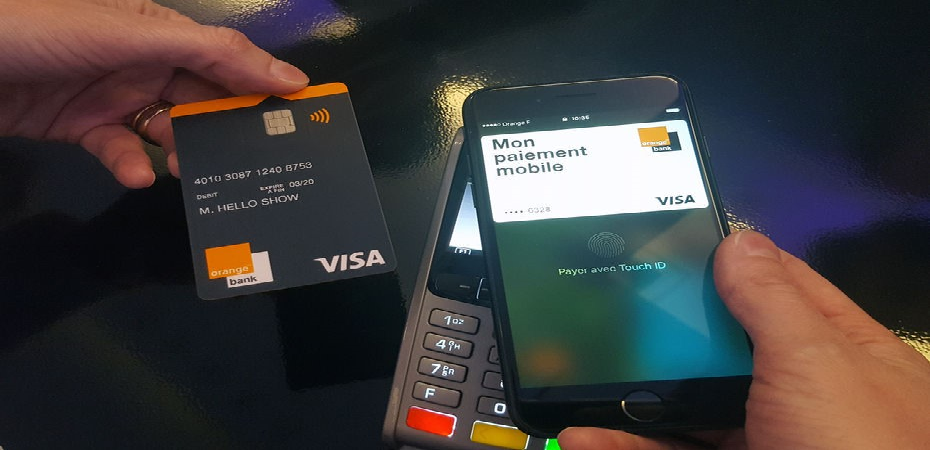
Orange Bank Africa, headed by Jean-Louis Menann-Kouamé, will offer clients a range of simple savings and credit services available at all times via mobile phone.

Orange Bank Africa will address the needs of a large part of the population, often excluded from the world of conventional banking, allowing them to borrow and save small amounts that are nonetheless essential for their everyday lives. When it launches, Orange Bank Africa via its Orange Money service will offer a range of savings and micro credit services allowing customers to borrow as little as 5,000 CFA francs instantly using their mobile phone.

Orange’s mobile financial services strategy in Africa aims to offer solutions accessible to the broadest population regardless of their income or where they live. Orange Bank Africa intends to become a leader in ensuring financial inclusion in West Africa.

Orange Chairman and CEO, Stéphane Richard, explains that there is a huge gap in the African financial sector that needs to be filled and it falls in line with the company’s strategy.

“New technology is needed to strengthen financial inclusion and support economic development, as proven by mobile money over the past few years. Banking is a new area of business for Orange in Africa. It falls squarely in line with our strategy as a multi-service operator and our desire to drive the digital transformation forward in Africa. Based on our association with NSIA, also a leader on the market in Africa, we provide easy access to bank services for as many people as possible, with simple and essential services that benefit all our clients,” he said

Jean Kacou Diagou, CEO of NSIA said that they have years of experience in African financial sector that have birthed banks and insurance solutions. The combination of such human capital experience with Orange’s digital expertise has resulted in the creation of Orange Bank Africa.

“I am very pleased that the partnership between Orange and NSIA has resulted in the creation of Orange Bank Africa. For the past 25 years, NSIA Group has been developing bank and insurance solutions to address the needs of African people and make them available to as many people as possible. We know that electronic banking is vital for the financial inclusion of our customers. We are proud to have combined our expertise and human capital with that of Orange to create the fully digital Orange Bank Africa.”

Orange Bank Africa will expand into Senegal, Mali and Burkina Faso.

Having played an essential part in financial transactions for several years now, Orange Money and digital services became even more important and more rapidly adopted by users during the health crisis. With this in mind, Orange believes that mobile banking has an important role to play in Africa. It is the very essence of Orange’s purpose of providing everyone with the keys to a responsible digital world.

Orange had earlier in the year, announced its plan to expand telecom and banking services in Africa and the Middle East. Part of its strategy is to develop digital financial services that will serve the unbanked and underbanked.

African fintech has witnessed a tremendous growth that makes it attractive to investors, and there are few telecom operators doing business in the sector for now. Venture capital to Africa stood at $1.35 billion in 2019, according to WeeTracker.

Orange plans to extend its services to many African countries including Nigeria, which has a booming population that falls into its line of strategy, by partnering with existing financial institutions to establish digital credit services.

Part of the strategy is to offer health services which has been spurred by the outbreak of coronavirus pandemic.
A Telecom Giant Launches A Bank in Côte d’Ivoire

1

Telecoms giant Orange and insurance provider NSIA have launched Orange Bank Africa in Côte d’Ivoire to focus on the population largely excluded from conventional banking, by offering clients simple savings and credit services via mobile phone.  If not for the brands involved, this is another top-grade fintech. In Nigeria, if say Glo joins hands with AXA Mansard, an insurer, to create a new bank, Glo Axa Bank, expect our current banks to have real problems. 

Glo has the demand with millions of users in its networks. In this web economy, supply is unbounded but demand is scarce. So, any firm which controls demand has an upper hand. This differs from the old industrial economy where supply was scarce, and winners were those managing the gatekeeping process to supply. Think of your old newspaper publisher; he decided on news he would run those days. Today, the supply of news is largely infinite as people can use Twitter, Facebook, LinkedIn, etc to share content. What matters more now is the control of demand (the users) and that has made  platforms like Facebook and Google exceedingly powerful; the platforms have the demand.

This is the video on the Airbnb piece: If you want to win in the 21st century digital economy, you must control demand, not supply. In the industrial age, power went to gatekeepers of supply. Today, the empires are those that control demand. This is possible because digital supply is unbounded and unconstrained, making it largely not a factor. Digital utilities like Google, Facebook, and Airbnb which control demand become the new gatekeepers.

Our largest bank by market cap in Nigeria, GTBank, has lost more than 50% of its market cap despite hitting new profit records. GTBank has a market cap of N637.185 billion, well down from N1.3 trillion it commanded a few months ago. This paradox is from this demand-value shift. Of course GTBank is going Habari to fix it.

Press Release

 Orange, a major telecoms provider in Africa and the Middle East, and NSIA, a leader of bancassurance, are pleased to announce the launch of Orange Bank Africa in Abidjan and Côte d’Ivoire. Orange Bank Africa, headed by Jean-Louis Menann-Kouamé, will offer clients a range of simple savings and credit services available at all times via mobile phone.

Orange Bank Africa will address the needs of a large part of the population, often excluded from the world of conventional banking, allowing them to borrow and save small amounts that are nonetheless essential for their everyday lives. When it launches, Orange Bank Africa via its Orange Money service will offer a range of savings and micro credit services allowing customers to borrow as little as 5,000 CFA francs instantly using their mobile phone.

Orange’s mobile financial services strategy in Africa aims to offer solutions accessible to the broadest population regardless of their income or where they live. Orange Bank Africa intends to become a leader in ensuring financial inclusion in West Africa.

Having played an essential part in financial transactions for several years now, Orange Money and digital services became even more important and more rapidly adopted by users during the health crisis. With this in mind, Orange believes that mobile banking has an important role to play in Africa. It is the very essence of Orange’s purpose of providing everyone with the keys to a responsible digital world.

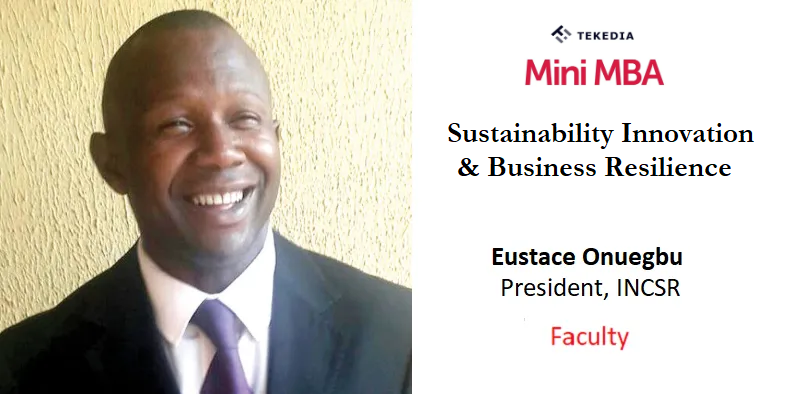
Sustainability Innovation & Business Resilience In Tekedia Mini-MBA

0

It is an Ubuntu moment for man, woman, environment, shareholders, stakeholders, governments, etc. How do you innovate when doing good? He will give us directions.

He is a business preacher – telling companies to run sustainably for them to live long. From stock exchanges to multinational corporations, governments to startups, etc, he has preached this message: sustainability innovation and business resilience.

A member of the United Nations Major Group on Business & Industry, a member of the United Nations Advisory Group on Business and Human Rights, he has played roles in many sustainability initiatives around the world, from the banking sector to the extractive industries.

He holds some of the most prestigious sustainability certifications: Professional Evaluation and Certification Board (PECB), ISO 26000 Social Responsibility,  ISO 45001 Occupational Health and Safety Lead Implementer, etc. He is presently serving as the President of International Network for Corporate Social Responsibility (INCSR). He holds a postgraduate degree in International Human Rights Law from Birmingham City University UK.

Eustace Onuegbu, a Tekedia Institute Faculty, will lead a session on Sustainability Innovation.  Register to attend his class.

https://www.tekedia.com/mini-mba-3/

 Bridging the Gap Between a Product and a Prospect

0

 He had been working on a solution to a market problem (market friction). He finally came up with a very novel product . 

His family and colleagues liked the product as it helps to solve that friction he observed.But, what is the next thing in having an innovation? 

He did not know what he needed to do in order to have a successful product that would bring him to the limelight.

You see, that entrepreneur had succeeded in creating the supply side of the market. This is very great and good because it is needed in the market equation.

Having a product is just one side of the coin. He needed to create the demand side of the market.

The demand side is the marketing and sales of the product. An entrepreneur needs to take the solution to those that he created it for, they may not be aware that a solution exists.

When an entrepreneur succeeds in taking a new product to those that it is made for, he will succeed in creating both the supply and the demand sides of his business.

Whether supply creates its own demand or demand creates supply, there is a demand and a supply in every product.

That is why the interest of this analysis is to consider what takes place between the product and the prospects in a business model. This is the fourth part of the guide on developing a business model.

 Bridging the Gap Between a Product and a Prospect

The first thing I learnt in my days in high school(secondary school) was that until a product gets to the final consumer, production is not complete. I see this to be more than a fact, that innovation is only complete when it is used as explained in 3S Rules and Tekedia.

 But taking a product or solution to the prospects involves some element to consider. We have two forms of products, digital products and non-digital products. 

While the process of taking a product to a consumer is longer for non-digital products, the process is shorter for a digital product.

 However, let’s see what need to be fixed in the gap between product and prospect;

 Fulfillment Factor

Selling a product to a customer or client is a promise that what you said your product will do is true. You are promising them that you will make the delivery of the product they are buying.

Buying from you is a commitment of trust. The entrepreneur needs not to destroy this trust by ensuring it fulfills the promise he made.

In e-commerce, we often hear of Amazon’s fulfilment, it simply means the process it takes for an order to get delivered to the customers. So in your business model, you must consider what you need, to take that product to the customer in a way that he is satisfied with.

 Logistical Factor

This applies to mainly non-digital products or physical products. In order for the goods to get to the buyer you must transport it to the location of the buyer.

For instance, in the agribusiness space. The farmer plants some crops and after some time he harvest the farm produce.

The aggregators buy and transport these produce from the farms to the market and the produce get transported from the market to the table. You see that the food moves in three stages before getting to the table.

The same is applicable to other physical products. You need to consider logistics which include, transportation and storage of goods.

This should be mapped out in your business model.

 Customer Support Service:

There is always marketing to be done after sales completion. This form of marketing will make the customer build more trust in your business. You know, more trust brings more patronage and customer retention.

You need to provide customer support so he will be guided in using the product. Without customer support, the buyer may have a bad experience with your product.

For example, how will you use a new product you have not used before. You definitely need support from the company to guide you in order to be able to use such a product. Customer support service may come in different ways.

For instance in Codecitty, we develop digital platforms (website, mobile app, blockchain etc) for clients. Our customer support is to train the IT head on how to manage the backend of the platform and we also provide technical support when the need arises. 

Doing these will help you to bridge the gap between your product and the prospect. But, it will be better if you can model this in your business model so as to be able to plan towards their execution.

Did Madagascar Lie about COVID-Organics?

0

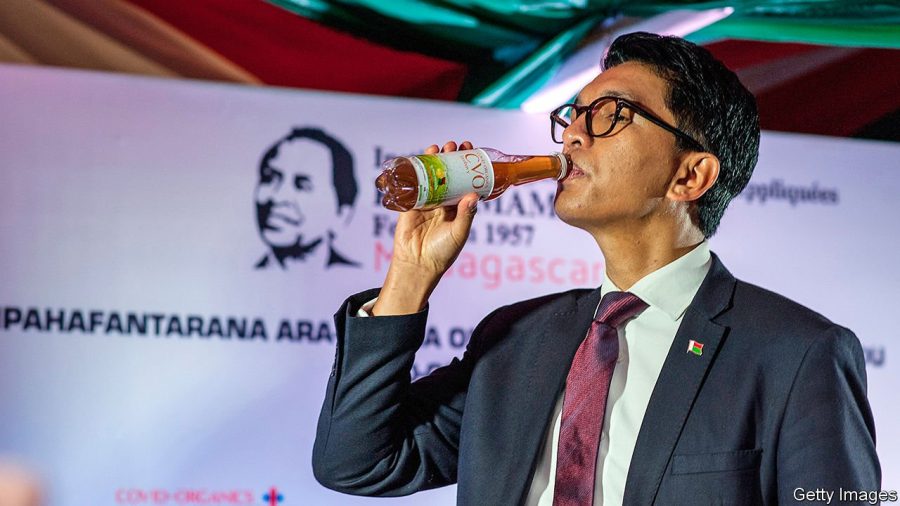
Sometime in April, 2020, the president of Madagascar, Andry Rajoelina, launched the herbal drink known as COVID-Organics, which he claimed can cure and prevent COVID-19. People, especially Africans, celebrated this discovery. Everyone believed COVID will be sent back to where it came from in a matter of weeks. Africans were so happy and proud because we will take the glory of finding the cure for Corona. In fact, it was a moment of hope and pride for many.

But then scientists began to throw questions at Madagascar. Medical doctors began to voice their concerns. Pharmacists wanted to find the components of the drugs. WHO cautioned people from using it (and any other medicines the body has not approved). And then, Madagascar was asked to provide peer-reviewed reports and clinical tests analysis to support their claims. That was when hell was let loose.

Instead of Madagascar to provide simple reports to show that the syrup is effective, the government became aggressive. It was that time that they remembered that Africa is being marginalised. It was then that Madagascar reminded other African nations that good things from Africa will never be endorsed by the rest of the world. It was then they remembered that scientists are kicking against the syrup because it is not a chemical that was manufactured in the lab. It was then that the Malagasy president remembered that WHO has been trying to suppress the production and distribution of the medicine. They truly played the victim. But did their trick work? Oh yes, it worked very well.

Trust other Africans, who already have it at the back of their mind that the Western world looks down on them, the Malagasy president’s “cry” pushed them into action. Without heeding the warnings of WHO, these African countries ordered for COVID-Organics from Madagascar, their brother. Nigeria also joined the bandwagon, even though the government claimed it was a gift from Madagascar. But all in all, COVID-Organics was distributed to many African nations. And then, many of us started the long, expectant and impatient wait for the miracle drink to prove WHO wrong.

We waited for weeks for reports to come from all the countries that bought COVID-Organics to show that the concoction is truly an African magic, but nothing happened. Nigerian government, in their rare wisdom, sent the drink to the lab to make sure it is safe for the citizenry. But from the moment they sent it to lab to Thursday 2nd July, 2020, nothing was heard of the syrup again.

On Thursday 2nd July, 2020, Nigeria Minister of Health, Dr. Osagie Ehanire, intimated us that the primary plant used in preparing the miracle drink, COVID-Organics, is grown here in Nigeria. This landed as the first bomb to show that COVID-Organics may not be what the owners claimed after all. The next bombshell from Nigeria came on Sunday 19th July, 2020, when National Institute of Pharmaceutical Research and Development (NIPRD) released their findings on the wonder drink.

NIPRD, in the report it presented to the Minister of Health, said that studies conducted on COVID-Organics revealed that the drink does not cure COVID-19 as claimed by Madagascar. The Director of the institute, Obi Adigwe, said, “They (the Madagascar’s officials) are hiding a lot of things and I think it is possible that they don’t have strong science backing up their claim. But our own analysis does not show any proof that it can cure COVID-19.”

To support the suspicion of NIPRD that Madagascar is hiding the clinical analysis of COVID-Organics, the virus has decided to attack the Malagasies in their numbers. Despite the availability of the wonder drink to these people, the virus has been taking its toll on them. This Tuesday, news had it that Madagascar hospitals are overflowing with COVID-19 patients and that only patients with severe symptoms are admitted. Cases of death were also reported and the number of deaths is still increasing. For this it will be good to ask, “Did Madagascar lie to the world?”

It is hard to answer this question from our own end because no one can actually say what’s going on. I would have said that they didn’t lie because Corona may have mutilated and become resistant to COVID-Organics. But then the NIPRD analysis will prove me wrong.

We may say that the Madagascar’s officials were in a haste to release the drug without conducting scientific analysis to prove its potency; but why have they not done it since scientists and medical practitioners demanded for it? Or, could it be that they did it and found out it wasn’t good enough and hid the result from the rest of the world?

Whatever it might be, I believe Andry Rajoelina owes a lot of people an apology. He made medical practitioners, scientists and indeed, the WHO, look bad. We pounced on our doctors that called for caution and told off pharmacists that asked questions. Now, we have seen that they were right and that we were played.

But, we need answers from Madagascar so we will know our stand.