DD
MM
YYYY

PAGES

DD
MM
YYYY

spot_img

PAGES

Home Blog Page 6232

The Need for Morality Checks in Leadership Selection

0

On May 20, 2020, a young South African woman lost her chance of being the 2020 Miss South Africa. Miss Bianca Schoombee from Pretoria was dropped out of the list of contestants as a result of her past posts on Twitter. These posts were dug out by Twitter users, who wanted to show that Miss Schoombee was not who she claimed to be. The posts that were dug out were her careless racial and derogatory comments, which she posted when she was a teenager. Even though she apologised for her youthful mistakes and claimed to have changed, South Africans will have none of her. They wanted her out, and she was thrown out.

One may wonder why South Africans did not let go of her past mistakes. Well, one of the reasons why they succeeded in removing her was because the rules for participation in the pageant states that those that have been involved in disrepute, unsavoury or unethical conducts such as racism, bribery, sexism, slander and libel, will be disqualified. Unfortunately for Schoombee, she was found guilty of some of these offences.

Now, you may ask yourself why South Africa bothers itself so much with all these rules for something “as trivial as” choosing a beauty queen. I am not a South African, but I can tell that the major reason for postulating all these is to ensure that whoever takes up the mantle of leadership has no past that might compromise her position as a leader. They want to make sure that whoever wears that crown will be worthy of emulation. In fact, those rules will give room for real and honest leaders to take up that position.

Now, let’s bring this discussion to Nigeria.

The moment I read about this young lady’s disqualification, I told myself that her “crimes” will not even be considered offensive in Nigeria. As disheartening as it may sound, Nigerians, or rather, many Nigerians celebrate crime and mediocrity. We have this issue of “lesser evil” or “the devil you know” ideologies. We tell ourselves, “let’s manage him” and thereby wave off red alerts that glaringly show corruptions, poor leadership and mismanagement.

If you look around the leadership of Nigeria today, you will agree with me that almost all of our public office holders have one scandalous past or another that is shouting at the top of its voice to notify us of what we will face if the person assumes office. But we ignore that voice with the statement, “who better pass” or “all of them are the same”. By the end of the day, we will sit down in one corner and wonder what we got ourselves into.

I tried to find out why Nigeria constitution allows people with questionable characters to be elected into office. I realised that anyone who, within the past ten years, has not been convicted of a crime of dishonesty or that which contravenes the code of conduct, is free to contest. I also found out that if there is no proof that you belong to a secret society, you can carry on with contesting for a position. These are just among the many requirements for contesting elections that needed review.

If you consider these two mentioned requirements, you will notice that they may not prevent the wrong persons from assuming offices. For instance, it is inappropriate for someone that has been convicted of corruption in the past to assume public office because the conviction happened more than ten year ago. What evidence do we have to show that the person has changed? What about his or her past associates? How do we know that they are no longer in contacts?

Of course, all these things were overlooked by Nigerians and that is why corruption will never leave this country, no matter how hard we try. Believe me, if Nigerian constitutional requirements for contesting elections could be a little bit modified to resemble closely that of Miss South Africa Beauty Pageant, we will have hope in Nigeria. All I am trying to say here is that the constitution should stipulate that anyone that has a shady past, whether convicted or not, should be disqualified immediately. Maybe by doing so, contestants that were cultists while in university and those that have been indicted for misappropriation of funds will be removed. Only then, will Nigeria have hope.
OPEN LETTER: How Eduwalt Concierge, an agency facilitating Students’ movement to Canada, collected N200,000 without providing agreed Service

2

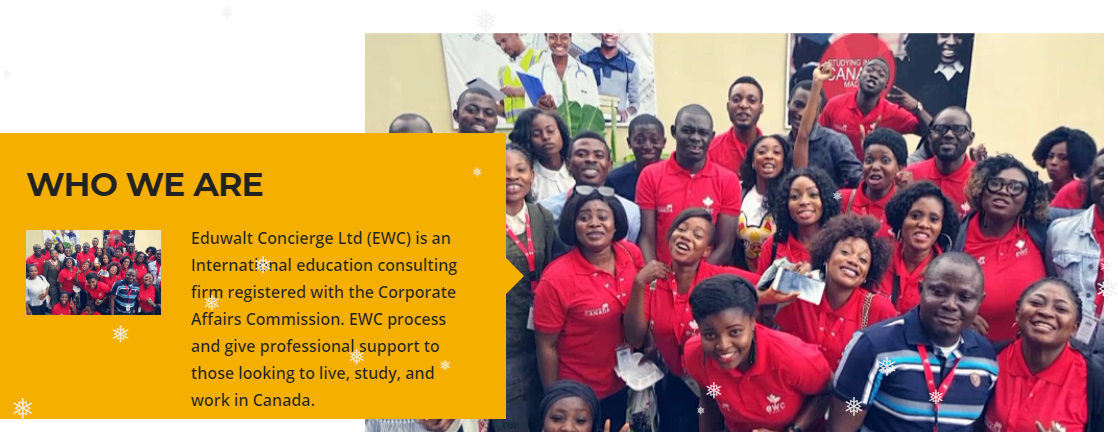
When getting the needed education at secondary and tertiary levels becomes difficult, parents and guardians and individuals consider countries where the expected education could be provided. However, most admission seekers and their parents usually consider educational consultants. As news reports indicate in the last few years, many people have been duped by agents or consultants. For instance, in 2018, a news report has it that a travel consultant issues fake Canadian admission letters to 22 students.

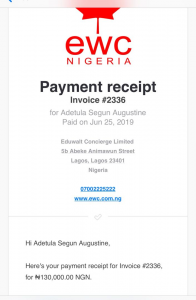
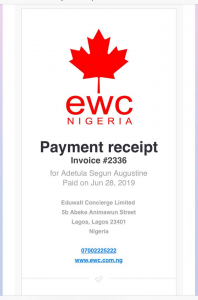
The story of Adetula Segun Augustine is not quite different from the 22 students. In 2019, in his efforts of seeking further education in Canada, he approached Eduwalt Concierge at its Ibadan branch for the facilitation of his movement to Canada. The company collected N200,000 as professional fees, which was paid immediately into the company’s account details. For more than four months, the company repeatedly notified him that his admission has not been successful.

“I got to know about the company in March, 2019 through their communication materials and I went into a transaction with them on June 26, 2019. After the engagement at their office located at 12th Floor, Cocoa House, Ibadan, I was told that the visa processing would be concluded within two months. But, to my surprise nothing was forthcoming and this made me to get worried. I started asking for what exactly was the issue.”

Segun informed that it was later clear that the company relocated to another place after efforts to get them at Cocoa House. “I went to their office sometimes in October, 2019 and was told they have left to another location without informing their clients. I later tried to locate them to Opposite First Bank Polytechnic Road, Eleyele, Ibadan, through one of their staff. When I got there, I met them with another name (SNOWFOX). They apologized to me about the sudden change of office location and promised my admission and visa would be ready by the end of November, 2019. When nothing was forthcoming, on January 27, 2020, I sought for refund of N200,000 I paid into their Zenith Bank Account (Eduwalt Concierge Limited; 10151725216). Till this day (9/7/2020), I am yet to get my refund. All entreaties to get the refund has proved abortive. The known employees of the company keep referring me to the Head Office in Lagos, located at Lekki.”

Segun wants the Federal Complaint and Consumer Protection Commission and relevant anti-crime agencies to help locate the underlisted employees and intervene in the matter.

  1. Mr Fred Ojemaye, Managing Director, Lagos (08143746550)
  2. Mr Spencer, Branch Manager, Ibadan (08036315905)
  3. Francis, General Manager, Lagos (08165209698)
  4. Office Mobile Number (+2347002225222)

Supporting Evidence

If Netflix, Amazon Prime Outbids MultiChoice (DStv, GOtv) for Live Football in Africa, DStv Will Fade

11

Samuel Nwite examines how MultiChoice and Netflix companies are battling for Africa.

Two years after Netflix was launched in Africa, in 2016, it gained around 400,000 users, mostly in South Africa, MultiChoice’s country of origin. And to instill more fear in MultiChoice, Netflix announced a budget of $8 billion for original contents targeting the African region among other places. Showmax Pro will hopefully keep MultiChoice subscribers within its ecosystem by inserting sports in the digital product.

“Provided that happens, a double play of holding off Netflix online while giving DStv set boxes room to grow offline may materialize. Provided MultiChoice controls live sports, Africans may not have no choice, and that means subscribing to both Netflix and Showmax Pro/DStv at the same time, as the products are not clear substitutes to each other.

My prediction is this: Netflix will bid for live sports rights for its African operations when that opportunity becomes available. The streaming business in Africa will be won with live sports and since it has a $8 billion content budget, dropping say $300 million for Africa operations seems balanced. That is the biggest threat ahead for MultiChoice. If it loses control of live sports, in Africa, it would fade in relevance.

With Naspers out of the picture, DStv faces the biggest threat in years as Netflix can decide to inflict wounds  by going to Europe with a bigger purse for football TV rights. (MultiChoice, now outside Naspers – Africa’s largest firm by market cap-, does not have the enormous capital to battle for TV rights as before.) Also, do not count Amazon Prime out.  Amazon already streams live sports in its ecosystems, and can create a product for Africa. If DStv does not have European football, it is game over for MultiChoice.

Fighting Corruption in Nigeria: Questions of Trust and Confidence

0

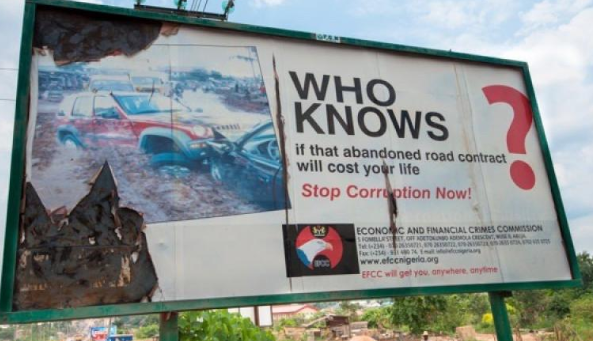
When people and organisations have the course to discuss corruption in Africa, Nigeria always comes into mind as one of the countries on the continent with systemic economic and political corruption. This issue has been linked with the several years of maladministration by the military and democratic governments. In 2000 and 2003, the administration of former President Olusegun Obasanjo created the Independent Corrupt Practices and Other Related Offences Commission and the Economic and Financial Crimes Commission for the purpose of fighting socioeconomic and political corruption.

For 20 years of the ICPC and 17 years of the EFCC, there have been obstacles and successes on the road to get rid of the corruption in the public and private sectors. In some cases, the two agencies’ activities and functionality have been obstructed because of the limited political will, insufficient structures such as personnel, finance among others, and insufficient judiciary. Like his predecessors, during the electioneering campaign, President Muhammadu Buhari promised Nigerians and the international community that he would stamp out corruption from the country. Since 2015, some observers and citizens believe that he has not lived up to expectations. This view has largely been driven by the poor rankings on Corruption Perception Index since 2015.

Apart from the systemic structural and legal issues impeding the two agencies’ activities, leadership problem has continued to impact the war against corruption as the country keeps changing chairmen. From Malam Nuhu Ribadu to Farida Waziri and Ibrahim Lamorde to Ibrahim Magu, the EFCC has not has so good in terms of leader who is free of issues while steering leadership of the agency. Some days ago, several reports had it that Ibrahim Magu has been suspended from office as the acting chairman of the agency after some hours of interrogation by Presidential Panel.

Issues at hands

With the leadership instability at the agency, our analyst believes that many issues need to be addressed if Nigeria is really serious about fighting corruption in the private and public sectors. Now, it is obvious that President needs to address leadership problem at the agency. This is necessary because citizens and the international community are doubting President’s ability and capability to eliminate corruption as he promised. For instance, a recent study indicates that Nigerian Netizens described incompetence, dishonesty and confusion that undermine the anticorruption measures poignantly. President in collaboration with the National Assembly needs to exhibit the needed political will towards addressing systemic issues in the country’s criminal justice, making the EFCC’s execution of activities in line with the constitutional provision impossible. This will increase public confidence in the war against corruption and level of trust in the government’s ability and capability towards total eradication of the scourge.

Exhibit 1: Trusting Political leaders (n=1,600 Nigerians)

Source: Afrobarometer, 2019

What is at stake?

With the examination of 20 allegations levelled against the suspended acting chairman of the agency, it is clear that Nigeria has many things at stake. A total of 16 of the allegations was found to be associated with processes for executing expected mandates of the agency and documentation purposes required of an establishment created for the elimination of corruption. More than 10 of the allegations signify severe threats to the war against corruption.

Exhibit 2: Issues in Magu’s Select Allegations and Their Threat to War Against Corruption

Source: Vanguard, 2020; Infoprations Analysis, 2020

MultiChoice Goes Double Play, Launches Showmax Pro for Live TV Streaming

1

MultiChoice has launched a new service called Showmax Pro, a streaming service designed to serve on-demand streaming and live TV. The platform has been on the pipeline since June last year as part of efforts by MultiChoice to challenge the presence of Netflix in Nigeria and exert dominance in Sub-Saharan Africa.

The company rolled out the streaming platform in Nigeria and Kenya on Tuesday, and said it will subsequently get to other countries in four to eight weeks.

“This is the biggest thing we’ve done at Showmax in the five years since we first launched. Africa is an incredibly diverse continent, so offering a single monolithic product may not be the best solution. Our approach is to standardize where we can and tailor where we need to,” Niclas Ekdahl, CEO of the Connected Video division of MultiChoice, told Forbes contributor Toby Shapshak.

“That’s why you’ll see different local content on Showmax in Nigeria than you will in Kenya, and South Africa’s content is different again.”

Over the past one year, Ekdahl and his team had worked to localize the contents and price of the Showmax platform according to country. In Nigeria, full Showmax Pro costs $16.25 (N6,300) and $8.26 (N32,00) for Showmax Pro Mobile. In Kenya, Showmax Pro and Showmax Pro Mobile will sell for $19.68 (Ksh 2,100) and $9.84 (Ksh 1,050) respectively.

“Payment methods and partnership have to be localized, but meanwhile the need for a mobile-only option and the desire for great international sporting content is universal,” Ekdahl said.

This is coming a few days after the news that DStv is considering dropping the purchase of EPL and Champions League rights in Nigeria. The packages on the Showmax platform include live football matches from the English Premier League, Italian Serie A, the Spanish La Liga and South Africa’s Premier Soccer League among other sports events.

Since 2014, MultiChoice has been pushing to create a profitable presence in the streaming industry. It launched Showmax in 2015 in a bid to foster the growth of its streaming services. But it was stalled by a lot of factors that included the use of mobile phone and broadband services which were low in quality compared to the capacity needed to sustain streaming services.

This among other factors discouraged MultiChoice from pursuing its goals on streaming. But in 2016, when Netflix showed up, MultiChoice knew it had to up its game on the streaming line or get eaten up by the US company.

Two years after Netflix was launched in Africa, in 2016, it gained around 400,000 users, mostly in South Africa, MultiChoice’s country of origin. And to instill more fear in MultiChoice, Netflix announced a budget of $8 billion for original contents targeting the African region among other places. Showmax Pro will hopefully keep MultiChoice subscribers within its ecosystem by inserting sports in the digital product. Provided that happens, a double play of holding off Netflix online while giving DStv set boxes room to grow offline may materialize. Provided MultiChoice controls live sports, Africans may not have no choice, and that means subscribing to both Netflix and Showmax Pro/DStv at the same time, as the products are not clear substitutes to each other.

Ever since then, Netflix has gone ahead to claim more contents and viewers in the continent. In Nigeria, it has secured exclusive rights to popular Nollywood movies, including Genevieve Nnaji’s Lion Heart.

It was a daring challenge that MultiChoice accepted with unflinching manliness. However, in 2018, MultiChoice’s majority shareholder, Naspers announced it would divest from the company through an IPO which was completed in February 2019. The absence of Naspers introduced a financial vacuum that MultiChoice knew it needed to fill, and it fueled its need to push the streaming services.

MultiChoice has been working to fix the lapses that had stymied the growth of the streaming services, from upgrading the platform from offering on-demand video services to live TV, Multichoice has also addressed the issue of Showmax device friendliness. The company said it has worked on the platform to consume less bandwidth.

“We have been adapting the service for the data connectivity constrains on the continent and focusing on the most-used viewing devices,” the company said.

But these upgrades and efforts aren’t just about competition with Netflix, it is suggesting that MultiChoice may be preparing to stop football services via the DStv in countries where the cost of rights is high. Techcabal noted that DStv is available only in a few African countries, and that limits the number of its viewership.

The DSTV is absent in Francophone Africa where OTT and Canal+ are dominant. But with the internet-based Showmax, there will be no limit to its reach. It appears that Multichoice is catching up with the trend of live streaming that many other companies, including Apple and Amazon have delved into. Though it is going to stir serious competition with Netflix, Showmax’s offers for live games will likely give MultiChoice an edge.

However, it is not clear what this will mean for DStv.