DD
MM
YYYY

PAGES

DD
MM
YYYY

spot_img

PAGES

Home Blog Page 6251

Real Madrid Are Spanish Champions

0

At the end of 90 minutes on the eve of Thursday, it was Real Madrid that the trophy went home with. And for Barcelona, it was just another sad evening since the resumption of the league in early June.

A 2-1 Barcelona loss to Osasuna in Camp Nou sealed it for the Blancos who secured their side of the bargain by ensuring a 2-1 win over Villareal.

The Spanish La Liga took a drastic turn at the resumption of the league in June. The coronavirus pandemic forced a pause in sports activities in March, when the league was still under Barcelona’s leadership. But Barcelona gave up their lead and eventually the hope of winning the 2019/20 league season through consistent draws and a loss. Real Madrid who had been following the league leaders, waiting for a slip up cashed in and held on to the top of the table.

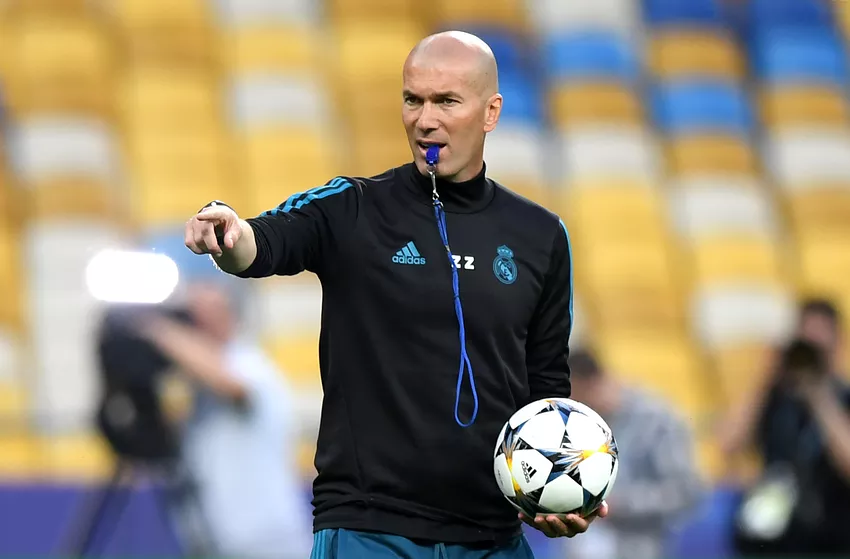
It is the 34th league title of the Madrid side, and the second under the tutelage of the club’s legend, Zinedine Zidane, who attributed the win to his players’ resilience.

“La Liga is always the most difficult title. After three months at home, coming back hungry and having done this is incredible. I have no words. I’m happy for the players, because they are the ones who fight,” he said.

The league run was shaky in the beginning as Real Madrid struggled to stay on the top of the table. But things turned around for the galacticos after the second leg of el classico, when they beat Barcelona 2-0 to close the table gap.

Consequently, the players showed determination to dethrone Barcelona, by conceding fewer goals and scoring more. Midfielder Toni Kroos said it’s a sign of togetherness.

“The idea when we started the season was to win this league and we have done it. We have received few goals and that is a sign that we are all working together. I am very happy because we deserved this title,” Kroos said.

The outstanding display of commitment by each Madrid player, led by captain Sergio Ramos, paid off eventually, and they have themselves to thank for it.

“Winning La Liga is always a joy, because this trophy rewards regularity,” said Ramos.

“We have made an impressive League final winning ten games in row. I have been able to enjoy with my teammates and I am happy because I have achieved another League with this club,” Marco Asensio said.

The 2019/20 league season was marred by the pandemic, forcing players to play indoor and restricting fans from attending games. Moreover, the absence of goal machine, Cristiano Ronaldo, in Real Madrid was expected to hinder the team’s chances of winning any trophy for now.

But the players defied the odds to maintain a winning mentality, a fact the club president, Florentino Perez acknowledged, even though he has been accused of cheating his way to the top.

Perez has been accused of using his influence to decide matches. It is believed that the VAR technology and referees make decisions to favor Real Madrid in matches, as is seen in the number of controversial penalties that got awarded to them. But Perez said the players worked their way to the wins and deserve accolades.

“Although the fans were not in the stands, we felt them in our hearts. The players have had the mentality to return with the desire to win this title. The strength and energy they had is something that everyone has been able to see. This League will go down in the history of Real Madrid,” he said.

On the other side of Spain, Barcelona, it is quite cold between the players and supporters. The club had sacked their former coach, Ernesto Valverde, mid-season, in a bid to win the league. Unfortunately, the new coach, Quique Setien watched helplessly as the league slipped into the waiting hands of Real Madrid.

Barcelona captain, Lionel Messi, who is leading La Liga goal scorers with 23 goals and 20 assists, said the club lost the league because the team has been playing badly.

He said: “If we want to win the Champions League, we need to change many things and get more serious. If we continue like this, we will lose against Napoli, and we will not win the Champions League.”

Barcelona is counting on the Champions League to take a trophy home this season. Messi who has been critical of the club’s president and board believes a lot of changes have to be made for that to happen.

However, the Catalonian giants have congratulated Real Madrid for winning the 2019/20 La Liga.

Nigeria Hits Gold as Charles Egbu, Adeola Olubamiji, Rita Orji Get Appointment, Accolades in the Diaspora

18

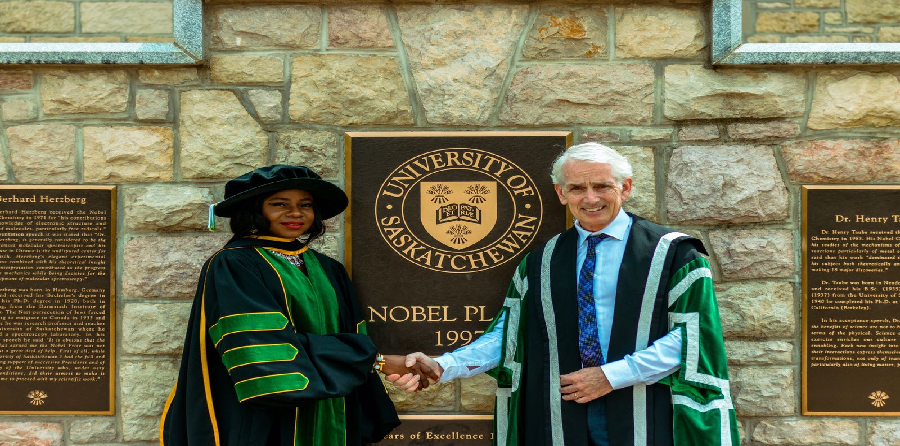
Nigeria seems to have hit gold as her citizens are getting appointments and  recognition across the world. From Canada to the United Kingdom, the Nigerian stars shone across the horizon. The Nigerian spirit of commitment, hardwork and excellence was recognized when a Nigerian, Prof. Charles Egbu, was appointed the Vice Chancellor of Leeds Trinity University in the United Kingdom.  The Anambra State born Professor of Built Environment made records as he will be returning to lead the university where he had previously studied and taught. According to information from the Independent Catholic News, Prof. Charles Egbu (pictured above) will resume his new role on November 1, 2020.

In his acceptance speech, Prof. Egbu said “I am honoured to be joining Leeds Trinity; a university whose values and ethos around widening participation, offering a personalised approach and encouraging all students to achieve their best align with my own. The University has an impressive track record in learning, teaching and employability… I have already been impressed by the sense of community at Leeds Trinity and I am looking forward to engaging with students, colleagues and alumni as we shape the future strategy of the institution. I am also looking forward to returning to Leeds; the city in which I spent much of my early academic life.”

Prof. Egbu, who was previously Pro Vice Chancellor for Education and Experience at the University of East London, has more than 25 years’ experience in higher education administration overseeing student experience, student success, student retention, quality assurance and enhancement. He had also served as the Dean, School of Built Environment and Architecture at the University of Salford. The Nigerian-born Professor had also held teaching positions at University College, London, Glasgow Caledonian University and Leeds Beckett University. As a university teacher, Prof. Egbu’s research interest spans project management, construction management and sustainable development with 12 books and 350 publications to his credit. He is described as a university faculty who has has strong interface with industry, professional bodies and policy makers.

In a similar story, two Nigerian female Canada-based professionals have made a list of the University of Toronto’s Women in Computer Science (WiCS) five most powerful women in Science, Technology, Engineering and Mathematics. The selected women, according to information available on WICS LinkedIn page, made the list on the strength of their career achievements and contributions to society. Their profiles would be showcased to highlight their careers and achievements to show young women what their future in a STEM career could look like. 

Photo: Dr. Adeola D. Olubamiji

Photo Credit: University of Toronto WiCS LinkedIn

On the list is Dr. Adeola D. Olubamiji. Olubamiji, who is the founder of STEMHub Foundation, holds a PhD in Biomedical Engineering from University of Saskatchewan in Canada. She is a Nigerian whose grass to grace story is capable of moving young people to break barriers and become the best version of themselves. Born in Mokola, Ibadan in Oyo State, South-western Nigeria with a humble background, Olubamiji, who was the last of five children, earned a degree in Physics with Electronics from Olabisi Onabanjo University, Ago Iwoye, Nigeria. She then proceeded to Finland for her Master’s degree in Biomedical Engineering at Tampere University of Technology in 2011.  Dr. Adeola D. Olubamiji is the First Black person to obtain a PhD in BioMedical Engineering from the 122 year old University of Saskatchewan. She is a 2019 honouree of Influential Women in Manufacturing and L’oreal Paris Women Worth Canada. She is on the shortlist of RBC Top 25 Canadian Immigrant Awards, 2020.

Photo: Dr. Rita Orji

Photo Credit: University of Toronto WiCS LinkedIn

Rita Orji is also on the WICS’s list. Rita Orji is a Professor of Computer Science and Director of the Persuasive Computing Lab at Dalhousie University, Canada. She is described as incredibly intelligent with over 100 peer reviewed articles in Human-Computer Interaction which is her major research interest. She Obtained a First Class in Computer Science from Nnamdi Azikiwe University in Awka, Nigeria. She then proceeded to Middle East Technical University in Turkey for her Master’s Degree before she bagged a PhD in Computer Science at the University of  Saskatchewan, Canada.

She was recognized for her impressive Curriculum Vitae. She has won several prestigious awards and funding including Natural Sciences and Engineering Research Council of Canada, Discovery Grant, Banting Fellowship Vanier Scholarship and scholarship from both the Nigerian and Turkish Governments. Rita, who is the founder of the Education for Women and the Less Privileged Foundation, was one of the top 150 Canadian Women in Science, Technology, Engineering and Mathematics (STEM). She features on Canada’s Top 100 Black Women to Watch. She is on the list of the Top 80 Women and Non-Binary People in Canadian Tech. She won the ISRII Rising Star Award and Dalhousie Research Excellence Award in 2019. She is passionate about inspiring the next generation of female tech leaders, promoting research excellence, equity, diversity and inclusion in Science, Technology, Engineering and Mathematics.

My Response to “Intel Campaign” Feedback

0

This is my response to John’s feedback:

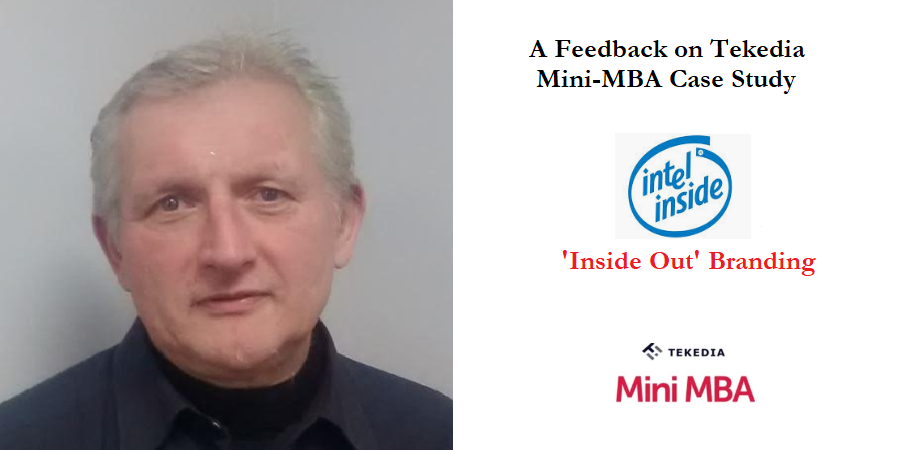
In one of our sessions, I used the “Intel Inside” campaign as a case study on perception branding. One of our co-learners, John Mc Keown, has some perspectives. He has called it “Inside Out” branding and also did some postulations on the effectiveness of the Intel Corp campaign.  Reading his feedback, we are largely on the same page.

AMD, then a major competitor of Intel on processors for laptops and desktops, had protracted years of stock value erosion. Wall Street did not give it any chance as Intel took over the air, even though AMD technology was not evidently poor.

So, in that case, Intel “slaughtered” AMD with that campaign through an effective change of the perception of users and Wall Street. AMD stock tanked; Intel stock rose. But nothing changed on core technologies – a campaign was the difference.

Read John’s piece on click, and let us continue the conversation in the Board.

In One Side of Processors And Out The Other!

In One Side of Processors And Out The Other!

3

It is interesting for me that the evolution of the PC processor seems to regularly get referred to through the Mini MBA. The first mention that I recall was in week 1, when it was suggested that the historic advertising campaign by Intel known as ‘Intel Inside’ is what clobbered AMD.

It was interesting to come across this as I was almost finished, but not yet published an article on my life long journey through branding. I had recognised two converse scenarios in branding objective – 

  1. Where what you make or do is inside another product or service created or provided by somebody else; they have the primary visibility with the end user or client, and you want to disrupt that so your own contribution and value proposition gains visibility with the end user or client, and if possible becomes a key purchasing factor for them, overshadowing the brand of the overall provider.

This I call ‘Inside Out’ branding.

  1. The converse of this is where the visibility of a particular component of your product or service is such that your customer overly identifies with it rather than what you offer as a product or service. You need a strategy to reduce the third party visibility.

This I call ‘Outside In’ branding. 

‘Outside In’ branding is important to give a provider independent leverage over its supply chain optimization without being limited by customer perception and allows changes to the supply chain without a negative impact on product or service perception by the marketplace. It’s important that solution providers are recognised by their market as the whole of their offering rather than the sum of their parts.

Attempting to embark on marketplace perception change through following the ‘Inside Out’ or ‘Outside In’ models is not universally applicable. In Nigeria if you are a taxi owner you will be on a losing battle trying an ‘Outside In’ approach to elevate the visibility of your service to overshadow the fact that you are driving a Volkswagen Golf while your competitor has a Toyota Camry. Equally it’s going to be hard for Advantech to convince the marketplace to put an MTN sim card in their phone simply because their microwave radio products are being used in MTN networks while maybe Dragonwave X are being used by Airtel.

I had been working on a variant of ‘Inside Out’ in Trinidad in the late 80’s in the custom second user vehicle market, and I remember later when Intel came out with the ‘Intel Inside’ that I thought, hey that’s my idea.. well sort of! But the perception that this somehow sunk AMD couldn’t be further from the truth.

This is an area that I am intimate with as I had my own PC assembly business and LAN solution provider to small offices and the self employed in London in the late nineties. 

You see, The x86 architecture, which is what Intel chips were built to operate on, was invented by IBM. Other architectures in common use were, and still are, ARM, RISC and CISC. IBM only licensed a very limited number of PC manufacturers to market PCs in the market alongside their own offerings, such as Viglen, OPUS and Elonex. IBM had an exclusive processor manufacturing agreement with Intel, so all x86 processors, whether in an IBM, Viglen, etc, were Intel. These became commonly known as ‘IBM Compatible PCs’. Other processor manufacturers such as AMD were more or less excluded from the ‘IBM Compatible’ market, and no threat to Intel. Then IBM made a bad business decision and released the source code as ‘Open Source’. This was in order to create more volume in the marketplace to combat Apple who at that point had been a key leader with their own architecture in a growing PC market. 

They presumed that their superior brand presence would dominate the ‘IBM Compatible’ market over copycats, while the added volume of products in the market on their format, would stifle Apple. They couldn’t be any further wrong! Several legal challenges later attempted to recover the proprietary status but failed. ‘Big Blue’ very quickly went into the red!

By 1994, in London, clone PC parts distributors mushroomed in business parks. I was building five PCs a day. My first one was a ‘386’. I was getting the parts at £150 per unit and selling them at £550.  IBMs units sold at a starting price of around £3000 while its licensed partners were selling from around £1800 upwards.  I had a continuous waiting list. 

Intel’s control over the x86 processor market disappeared almost overnight with other companies such as Cyrix, AMD and SGS Thomson producing chips that were always cheaper and often better performers. Other brands rose up producing other components for x86 architecture, such as motherboards, RAM, graphics cards, modems, hard-drives and Ethernet cards. 

It was a short window which I knew would close fast, as existing companies with robust parallel businesses up-scaled in the market combining overseas parts sourcing with industrial scale assembly located remotely where land and semi-skilled labour were much cheaper than major metropolis. Globally, companies like Dell and Compaq rose to prominence in the space, while Fujitsu, Packard Bell, Toshiba, HP and Acer became particularly strong in the laptop space. By 1996 the internet had become affordable and widespread in urban areas, and many of these companies went online. My value shifted to retaining the office business for LAN related work as parts-only distributors were no longer selling components at a collective discount to the cost of a PC in the retail marketplace. Parts-only survived as a low volume high margin aimed at enthusiasts or those needing legacy spares. 

This was the volatile market in which Intel came with the bright idea of ‘Intel Inside’ but far from shooting an aspiring company into the limelight, what it did was pluck it from the fire, or a sinking ship. Its restoration in the marketplace was not comparable to the monopoly it enjoyed under IBM before. 

It never slaughtered AMD, in fact, quite the contrary.

Intel’s main partner moving forward became Microsoft. The x86 platform was inherently buggy, and on the processor side they just fudged increasing software demands and complexity by throwing higher clock speeds at the problem. Microsoft wanted to move into more share of the Corporate and Server Market where Unix and Corporate Linux products like Red Hat were dominant because they were coded to run on processor architectures such as RISC and ARM. 

Through the mid-noughties, for instance, MS was desperate to make a serious penetration of the RDBMS space but MS Sql suffered relative obscurity when compared to IBM Informix, DB2, Oracle and even Sybase… which worked best on guess what? Unix and Linux!

One of the other limiting factors was that Intel had trouble pushing x86 beyond 32 bit. Intel had been working on a side project called the ‘Itanium’ but they took too long, it was too costly, and it brought too little performance and reliability above ‘traditional’ x86 when finally it arrived.

AMD found the holy grail and by 2003 created the ‘Athlon’. The first 64 bit processor on x86 Architecture, but also with legacy compatibility with 32bit x86 instruction, layman’s terms – existing windows and programs under windows will run fine on it.  

Intel at this stage had long dumped the -86 notation for its processors and started naming them Pentium. In 2004 Intel did a deal with AMD and the last in line Pentium 5, known as the ‘D’ or ‘Prescott Core’ had ‘EM64T’ their variant of AMD64. They dumped the IA64 (64 bit developed for the Itanium). While Intel has continued to develop, everything moving forward has been layered on top of this instruction. AMD 64 is irremovably at the heart of Intel and continues to bring royalty. AMD’s continued success is assured, not only for its own product and marketplace achievements but also its share of Intel’s success which it will enjoy indefinitely. (unless Intel dumps x86 entirely). The unaccredited speaker in week 4 refers to the 486 as something obsolete, but it lives on as an iteration in the x86 lineage as if one of the ancient prophets!

Fifteen years on from the resolution of Intel’s 64 bit x86 challenges, Microsoft may have increased its success driven by Steve Balmer as the course suggests. This is mainly as a result of a shift away from a software on a once-and-for-all licence which was supported almost indefinitely. New versions in the marketplace then needed to justify themselves by new or improved versions offering sufficient increased value, a very hard sell. So they moved to SaaS (Software as a Service) which effectively gave MS software access a fixed term.  When that expires… err… more money please!

Microsoft has shown only modest improvement  in its quest for a share of the RDBMS market.  With the rise of cloud, RDBMS has gained increasing relevance and underpinning technologies such as Azure, AWS, Digitalocean and Amazon s3. Mostly what they have done is look at ways they can layer offerings on top of RDBMS agnostically, and let the RDBMS market itself just simmer away.  Today 2020, the top RDMS globally (revenue not user popularity – source MarketWatch) are: 

  • MonetDB
  • CA Technologies
  • Cubrid
  • Microsoft
  • IBM

It has improved drastically next to IBM, but they are no longer the standard bearers to chase, it would seem, though if anybody has heard of SolarWinds, IBM Informix is its back end!

For my part, I sold that business towards the turn of the millennium for three reasons:

  1. Because I could foresee the window closing on simple small office LAN servicing, just as it had done with clone PC building. Internet services were maturing, offering unmetered usage, better speed and remote services over the internet were offering increasingly useful and user friendly group services such as shared space to store files, and an interesting array of collaboration and productivity tools. Many of these services were very cheap and some were for free.  The ‘dot.com’ boom had begun, and many online companies were adopting a business model aimed at rapidly swelling user numbers rather than demonstrating revenue, because that is what was driving business evaluations. I would say I got a good evaluation.
  2. Solutions for small networks were very quickly becoming plug and play. Just as IRQ settings and resolving IRQ conflicts had disappeared in PC building, similar simplification was coming in entry level server and router software. Once all user stations and devices like printers were connected by ethernet, a simple login to the router via a browser window and the router would offer a simple IP plan covering all devices. If a device was inaccessible or lost from the network, login to the router (depending on model) and it may offer suggestions or solutions. As long as there were no complex permission protocols or exclusive local user groups, small networks became easily manageable by an admin person of at least average technical awareness. The job of the periodic external professional visit to the office of ten or less people was quickly becoming obsolete.
  1. As a salaried leader, I wanted to devote extra time to working on a vision intended to be my legacy  for my employer LEOF.  The project, Safebuld.com involved the creation of the first ever combined ERP, CRM and Contractor/Consultant selection resource for the UK Construction Industry and Public Procurement. But, with the focus of placing BAME and MLE owned businesses at the centre of it.

The technical product opened other opportunities including successfully securing funding from The Housing Corporation to produce groundbreaking research ‘Contracts of Exclusion’ (Research Contractor- Salford University, Urban Studies Unit) and an Equality Code of Practice in the House of Commons launched for us by a Senior Cabinet Minister – Ian Mc Cartney. 

It also led to several awards, and one of the external architects for the project, Adam Afriye, went on to be the first black member of parliament for the Conservative Party (Windsor)

ERP and CRM before the terms were formally coined,  and BLM in the UK in the era of Stephen Lawrence, almost twenty years before George Floyd in the US.

I left LEOF and its commercial arm, Safebuild.com in 2008 to take up a quasi C level role in Lagos with Netcom Africa, anchored in Project Engineering, with additional ownership of QMO, The Group Product Life Cycle and Health & Safety; also training responsibilities across the NAL matrix for relevant disciplines. 

To this day, the ‘Intel Inside’ promotional and advertising campaign remains the most instantly graspable example of what I call ‘Inside Out’ branding.

Nigeria’s Facilities Management Industry to Register 6.4% CAGR with $12.7 billion Worth in 2027

0

A new market report has indicated that the Facilities Management industry in Nigeria is expected to have a compound annual growth rate of 6.4% from this year till 2027. The report shows that the market value of the industry during the year (2027) will be $12.7 billion. Examining the value, our analyst discovered that the industry will have $1.8 billion as average value from 2020 to 2027.

From the analysis carried out by the producer of the report, it is obvious that the commercial segment of the industry is likely to generate about three-fourths share during the forecast period. The current prediction is not quite different from what has been predicted by our analyst through qualitative understanding of the industry. For instance, for years, the key players in the industry have largely focused on industrial and commercial users of FM solutions, especially in Lagos, Port-Harcourt, Abuja and other big cities at the expense of residential places.

“On the other hand, growth in investments and incentives by the government for the construction industry and infrastructure sector is anticipated to offer remunerative opportunities for market growth. Further, an increase in investments in commercial infrastructure is expected to create the need for effective facility management solutions such as security, cleaning, and catering.

By application, the commercial segment dominated the Nigerian facility management services market in 2019 and is projected to grow at a CAGR 6.6% during the forecast period. By service, the property segment led the Nigerian facility management services market in 2019,” Notes to the report reveal.

The report wants players and professionals in the industry to have the right strategies and tactics for effective mitigation and elimination of the Covid-19 impacts. According to the report, uncertain micro and macroeconomic policies of the current government would hamper the growth of the industry.

“The novel coronavirus has undesirably affected a variety of facility management services, which include catering, security, plumbing, and electrical amongst others in the building industry. The adverse trends in the Nigerian economy is projected to worsen the growth of the Nigeria facility management services industry. Additionally, travel bans due to lockdown and absence of workforce have also influenced the demand for facility management services in Nigeria.”