DD
MM
YYYY

PAGES

DD
MM
YYYY

spot_img

PAGES

Home Blog Page 627

Top New Meme Coins to Invest in This Year – BullZilla’s Live Presale Draws Early Buyer Attention with Official Trump and Snek

0

Meme coins have long been dismissed as speculative jokes, but history has repeatedly proven otherwise. From Dogecoin to Shiba Inu, entire bull cycles have been fueled by community-driven tokens that turned memes into market movements. As 2025 unfolds, the spotlight is shifting again. This year’s narrative is centered on three standout contenders: BullZilla, Official Trump, and Snek..

Investors searching for top new meme coins to invest in this year are evaluating very different opportunities. BullZilla presale is live now, enters with a price of $0.00000575 and promises long-term loyalty rewards through its HODL Furnace. Official Trump has surged by 0.68% to $8.51, reflecting cultural momentum tied to global political narratives. Meanwhile, Snek, trading at $0.004160 after a 2.69% decline, embodies the meme power of Cardano’s ecosystem. Together, these three tokens define the broad spectrum of opportunities in the current meme market.

BullZilla: The HODL Furnace and Roar Burn Define Loyalty and Scarcity

BullZilla ($BZIL) is emerging as a presale project designed not only to capture attention but to reward loyalty and reduce weak-handed speculation structurally. Its presale price of $0.00000575 makes it accessible, but its design ensures that early participation could potentially translate into exponential gains.

The HODL Furnace: Stake, Lock, Earn

At the center of BullZilla’s ecosystem is the HODL Furnace. This staking system offers a staggering 70% APY, one of the highest yields in the crypto sector. However, unlike basic staking models, BullZilla incorporates vesting schedules to ensure that rewards compound over time.

This structure accomplishes two things. First, it disincentivizes short-term selling, reducing volatility. Second, it builds conviction among holders. As the project explains, the HODL Furnace is designed to turn “paper hands” into “diamond claws,” rewarding only those who demonstrate long-term commitment. Over time, these staking mechanics ensure the community becomes stronger, not weaker, as the project grows.

The Roar Burn Mechanism: Driving Scarcity and Value

BullZilla also introduces the Roar Burn system. At each major chapter of its roadmap, a portion of tokens from the Burn Pool Reserve is permanently destroyed. These burns are broadcast live on the blockchain, accompanied by what the community calls a Roar Surge, moments of progress celebrated across social media.

By reducing supply at visible milestones, BullZilla ensures that scarcity steadily increases. Research from Messari

shows that token burn mechanisms have historically supported sustainable price appreciation by balancing community excitement with economic fundamentals. In BullZilla’s case, each burn amplifies its narrative, making the token rarer and more culturally resonant at the same time.

Investment Scenario: $5,000 at Presale

Investment Amount Presale Price per $BZIL Tokens Secured Target Price Scenario Valuation at Target Potential ROI Multiple
$5,000 $0.00000575 ~869,565,217 tokens $0.00527141 (Launch) ~$4,580,000 ~916x
$5,000 $0.00000575 ~869,565,217 tokens $0.0026357 (Half Target) ~$2,290,000 ~458x

Official Trump: Politics Meets Crypto Volatility

Official Trump is a meme coin like no other. Trading at $8.51 after a 0.68% daily increase, it combines financial speculation with cultural and political narratives. Unlike traditional meme tokens built on internet culture, Official Trump is tied directly to one of the most polarizing figures in modern politics.

Political tokens have gained traction over the past two years as symbolic assets representing ideological bets. Official Trump has outperformed many of its peers by leveraging a blend of branding and community engagement. Supporters rally around it not just as a financial vehicle but as a statement of cultural alignment.

Official Trump’s strength is its ability to capture attention in mainstream spaces that most meme coins never reach. Its visibility goes beyond crypto Twitter or Telegram, spilling into broader conversations. However, this also makes it vulnerable to volatility, especially as regulatory scrutiny increases around politically motivated financial products.

For those evaluating top new meme coins to invest in this year, Official Trump represents an unconventional choice. Its value lies in narrative alignment more than technical fundamentals, making it both high-risk and high-reward.

Snek: Cardano’s Meme Experiment Gains Traction

Snek (SNEK) has positioned itself as the cultural flagship meme coin of the Cardano ecosystem. Currently trading at $0.004160 after a 2.69% decline in the last 24 hours, Snek demonstrates the resilience and challenges of meme projects tied to established blockchains.

Cardano, long criticized for its slow ecosystem rollout, has recently seen a surge in decentralized app activity. Snek has emerged as the meme coin standard-bearer within this ecosystem, functioning as both a speculative asset and a branding exercise for Cardano’s broader cultural push.

Despite the recent decline, Snek retains strong liquidity, ensuring accessibility for buyers and sellers. The challenge lies in sustaining relevance beyond Cardano-specific circles. Without broader cross-chain adoption or external integrations, its growth could be capped by the size of the Cardano community.

Still, for investors seeking exposure to meme coins that represent blockchain-native experiments, Snek remains an intriguing option. Its fluctuations illustrate both the opportunities and limitations of meme coins tied to specific ecosystems.

Conclusion: Navigating the Meme Coin Frontier

Meme coins remain some of the most fascinating experiments in digital finance. They blend culture, speculation, and community into assets that often outperform expectations. Bull Zilla is redefining presales with loyalty-driven staking and supply-reducing burns. Official Trump demonstrates how politics can shape token markets in real time. Snek reminds us that ecosystems like Cardano can find cultural lifelines through memes.

The question for investors isn’t whether meme coins will influence 2025, they already are. The real question is which of these tokens they will hold when the next major wave of meme-driven growth takes shape.

For More Information:

BZIL Official Website

Join BZIL Telegram Channel

Follow BZIL on X  (Formerly Twitter)

Frequently Asked Questions for BullZilla

What is the presale price of BullZilla?

$0.00000575 per token.

How does the HODL Furnace work?

It offers 70% APY staking rewards with vesting, rewarding long-term holders and discouraging early selling.

What is the Roar Burn system?

At each milestone, tokens are burned live on-chain, reducing supply and increasing scarcity.

Why is Official Trump considered unique?

It combines political narratives with financial speculation, creating high visibility and volatility.

What is Snek’s role in Cardano?

Snek represents Cardano’s meme coin culture, attracting younger investors and driving ecosystem engagement.

Glossary of Terms

  • bolic significance.APY (Annual Percentage Yield): The yearly return on staked assets.
  • Token Burn: Permanent removal of tokens from circulation to reduce supply.
  • Liquidity: The ability to buy or sell without causing large price swings.
  • Presale: A fundraising stage before public exchange listing.
  • Narrative Token: A coin valued primarily for its cultural or sym

Disclaimer

This article highlights top new meme coins to invest in this year, focusing on BullZilla, Official Trump, and Snek. BullZilla, starting at $0.00000575, introduces the HODL Furnace with 70% APY staking and the Roar Burn system, ensuring loyalty and scarcity. A $5,000 presale investment could yield millions at launch prices. Official Trump, priced at $8.51, leverages political narratives to generate cultural and financial momentum, though it remains highly volatile. Snek, at $0.004160, anchors itself in Cardano’s ecosystem as a meme-driven adoption strategy. Together, they represent different strategies: presale potential, political branding, and blockchain-native meme adoption.
Alibaba is developing A New AI Chip as Chinese Tech Giants Race for Semiconductor Independence

0

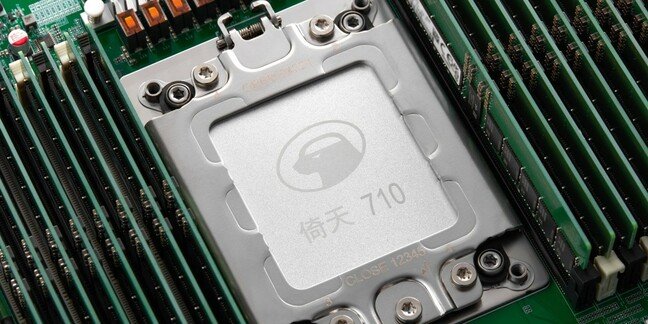
Alibaba is quietly developing a new chip tailored for artificial intelligence applications, according to two people familiar with the matter, marking its latest move in the intensifying race among Chinese technology companies to secure homegrown semiconductors.

The yet-to-be-launched chip, first reported by The Wall Street Journal and confirmed by sources who spoke to CNBC, is designed for “inferencing”—the stage where AI models are deployed to perform real-world tasks such as image recognition or language processing—rather than “training,” which requires significantly larger computing power and vast data sets.

Unlike Nvidia, which sells its hardware directly to customers, Alibaba’s new chip will not be made available for external sale. Instead, businesses will rent computing power from Alibaba’s cloud services, a model that keeps the technology in-house while strengthening its cloud division, which already saw revenue jump 26% year-on-year in its latest earnings report.

Shares of Alibaba surged 12% on Friday, buoyed both by the chip news and stronger-than-expected earnings. Nvidia, meanwhile, saw its stock fall more than 3% in early U.S. trading as concerns grew over the company’s vulnerability to mounting U.S.-China technology tensions.

Beijing’s Push for Semiconductor Self-Reliance

Alibaba’s chip effort is part of a wider push by Beijing to bolster China’s semiconductor capabilities amid U.S. restrictions that have targeted advanced chip exports. Washington has prohibited Nvidia and other American firms from selling their most powerful chips to Chinese companies, arguing that such technology could aid military applications.

One of the most high-profile examples came earlier this year when Nvidia’s H20 chip, designed with reduced performance to meet U.S. export rules, was barred from being shipped to China. Although the company has since been allowed to resume exports under a deal requiring it to pay 15% of the revenue to the U.S. government, Nvidia admitted it has not shipped any H20 units yet.

These restrictions have accelerated Beijing’s longstanding ambitions for “technological self-reliance,” with Chinese firms scrambling to fill the gap.

Alibaba’s biggest domestic rivals—Baidu and Huawei—are also making parallel bets on homegrown chips, each positioning itself as a pillar of China’s semiconductor independence.

Baidu has invested heavily in its Kunlun line of AI chips, designed for both training and inference tasks. The chips are integrated into Baidu’s cloud services, much like Alibaba’s approach, and have already been used to support its autonomous driving and generative AI platforms. Baidu sees chips as critical to ensuring that its AI services remain competitive even if foreign supplies tighten further.

Huawei, meanwhile, has emerged as a more aggressive player in this space. Despite U.S. sanctions that cut off its access to advanced chipmaking equipment, the company stunned the global tech industry last year by unveiling its Kirin 9000S chip, built with domestically produced tools and materials.

Huawei has since expanded its AI-focused Ascend chip series, which is increasingly being adopted in Chinese data centers as an alternative to Nvidia GPUs. The company’s resurgence underscores Beijing’s determination to build a fully independent semiconductor ecosystem, even in the face of export bans.

While Chinese firms continue to use Nvidia’s chips where available, they are steadily building internal capabilities to ensure resilience. Cambricon, another homegrown AI chipmaker, recently reported a 4,000% surge in revenue and record profits in the first half of the year, highlighting how domestic firms are capitalizing on the policy push.

Alibaba’s Chip Track Record

Alibaba, however, has been in the semiconductor design for some time. Through its T-Head unit, the Hangzhou-based company has been developing chips for years. Its most notable release was the Hanguang 800 inference chip in 2019, designed to power data centers handling AI workloads.

Now, with plans to invest at least 380 billion yuan ($53.1 billion) over the next three years into AI infrastructure, Alibaba is doubling down on the sector. Its cloud business has already benefited from this strategy, reporting that AI-related products have seen “triple-digit year-over-year growth for the eighth consecutive quarter.”

By keeping its chips proprietary—using them to enhance its own services rather than compete directly with Nvidia on the open market—Alibaba appears to be aligning both with Beijing’s strategic priorities and with its own need to build competitive advantage in cloud computing.

The Gap Is Still Wide

Despite these advances, Chinese companies remain reliant on foreign technologies for the most cutting-edge semiconductor processes. Nvidia’s chips, capable of both training and inference, still play a central role where export rules allow. Nvidia CEO Jensen Huang has warned that continued restrictions could backfire, accelerating China’s push to replace U.S. technology altogether.

Alibaba’s new chip is not expected to compete directly with Nvidia’s hardware in terms of performance, at least not yet. Instead, it represents a step toward securing control over critical AI infrastructure.

The battle for AI chips in China, for now, is less about outright replacement of U.S. products and more about survival under tightening restrictions. But with Alibaba, Baidu, Huawei, and smaller players like Cambricon pushing ahead, the outlines of a new semiconductor landscape in China are beginning to emerge.

GTCO Injects N365.85bn into GTBank to Boost Recapitalization Drive

0

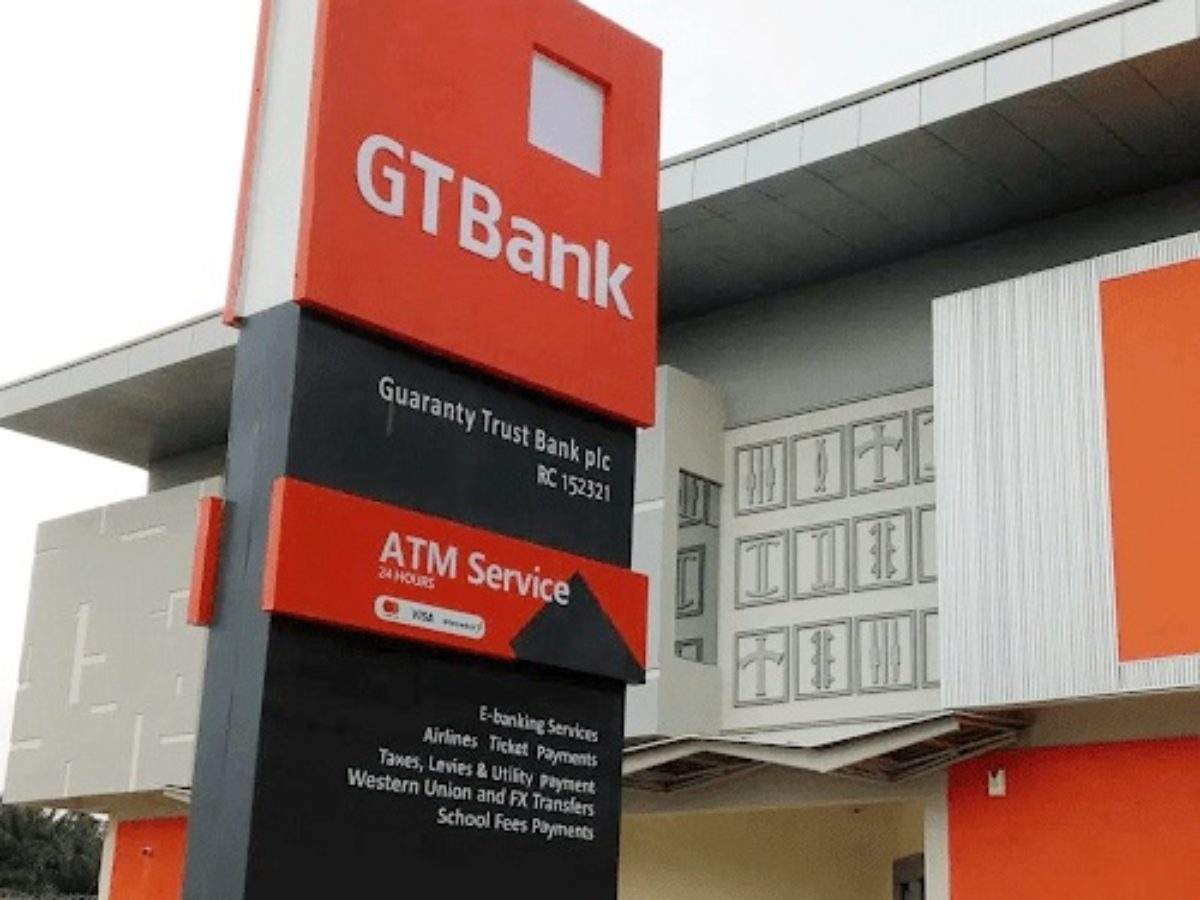
Guaranty Trust Holding Company Plc (GTCO) has announced a capital injection of N365.85 billion into its flagship subsidiary, Guaranty Trust Bank Limited (GTBank), in a bold move to comply with the Central Bank of Nigeria’s (CBN) new capital requirements for internationally licensed banks.

The transaction, disclosed in a regulatory filing on Friday and signed by Company Secretary Erhi Obebeduo, was executed through a rights issue involving nearly 7 billion ordinary shares issued to GTCO. This raises GTBank’s share capital from N138.186 billion to N504.037 billion—pushing it above the CBN’s N500 billion threshold.

“Through this capital injection, the share capital of GTBank has been increased from N138.186 billion to N504.037 billion and ensures the bank’s compliance with the new minimum capital requirement for commercial banks with international authorization stipulated by the Central Bank of Nigeria,” a statement from the company read.

The CBN Recapitalization Directive

The CBN’s recapitalization mandate, issued in March 2024, requires all commercial banks to significantly strengthen their balance sheets by March 2026. The policy was introduced against a backdrop of persistent inflation, the naira’s steep depreciation, and global financial uncertainties that have increased systemic risks in Nigeria’s banking sector.

Internationally licensed banks were ordered to meet a minimum capital base of N500 billion, while national and regional banks were given lower thresholds. The directive sparked an industry-wide scramble, with lenders pursuing capital raises through rights issues, public offers, and in some cases, mergers and acquisitions.

This is not the first time Nigerian banks have faced such a directive. In 2004, under then-CBN Governor Charles Soludo, banks were required to increase their capital base from N2 billion to N25 billion, a policy that triggered a wave of mergers and acquisitions, reducing the number of banks from 89 to 25. That exercise created today’s stronger tier-1 institutions, such as GTBank, Zenith, and Access.

As of July, Cardoso confirmed that at least eight banks had met the new requirements, while others continue to explore mergers and acquisitions to remain competitive. Analysts say this current recapitalization wave could reshape the industry again, forcing smaller banks to consolidate or risk losing relevance.

GTCO’s London Stock Exchange Milestone

GTCO has taken a more global route in its recapitalization strategy. On July 9, the holding company made history by listing all its ordinary shares for trading on the London Stock Exchange (LSE), becoming the first Nigerian banking group to achieve a full direct listing on the UK bourse.

The listing marks a shift from its earlier Global Depositary Receipts (GDR) programme and is accompanied by a fresh public offering aimed at raising approximately $100 million (about N154 billion at an exchange rate of N1,540/$). The accelerated bookbuild, managed by Citigroup, opened on July 2 and is scheduled to close on July 31.

GTCO said the equity raise is designed to bolster its capital buffers and directly support its compliance with the CBN’s recapitalization requirement for international banks.

Strategic Deployment of Capital

The group confirmed that the additional equity will be channeled into GTBank’s branch expansion, asset growth—including loans, advances, and investment securities—and the strengthening of its technology infrastructure. GTBank will also leverage the funds to tap into emerging opportunities both within Nigeria and in its other operating markets.

“The additional equity capital will be deployed by GTBank primarily for branch network expansion and asset growth (loans/advances and investment securities portfolio), fortification of its information technology infrastructure, and to leverage emerging opportunities in Nigeria and the operating environments where it maintains banking presence,” GTCO stated.

GTBank now joins other tier-1 lenders in crossing the recapitalization threshold, reinforcing its standing as one of Nigeria’s most resilient banks. With over eight lenders already confirmed to have met the new CBN capital levels, the race continues as smaller banks explore mergers to survive.

Tiger Research Forecasts Bitcoin Price Could Reach $190k in Q3 2025

0

Tiger Research’s forecast that Bitcoin could reach $190,000 in Q3 2025 is based on three main catalysts: increased institutional investment, unprecedented global liquidity, and the inclusion of Bitcoin in U.S. 401(k) retirement accounts.

Their report suggests a 67% potential upside from current levels, driven by a shift toward institutional dominance in the Bitcoin market, with buying power outpacing retail activity. They highlight record-high M2 money supply across major economies and the potential for even modest 401(k) allocations to significantly boost long-term demand.

Their valuation uses an adjusted Time Value of Money (TVM) model, incorporating on-chain activity and macroeconomic conditions, setting a base price of $135,000 with multipliers for network improvements (+3.5%) and macro factors (+35%). However, they caution about short-term volatility, with on-chain indicators like MVRV-Z suggesting possible near-term corrections.

The outcome depends on sustained institutional inflows, global liquidity trends, and macroeconomic stability. This prediction is notably bullish compared to others. For context, Standard Chartered forecasts $200,000 by year-end 2025, while VanEck predicts $180,000 with a potential 30% retracement mid-year.

More conservative estimates, like CoinDCX’s, suggest $125,000 if key support levels hold. Bitcoin’s history shows significant volatility, with rapid gains often followed by corrections, as seen in 2013 and 2021. Investors should remain cautious, as macroeconomic shifts, regulatory changes, or market sentiment could alter this trajectory.

A surge to $190K would signal a shift toward institutional investors driving Bitcoin’s price, as Tiger Research notes their buying power is outpacing retail. This could stabilize long-term growth but reduce retail influence. Such a price increase could significantly boost wealth for early adopters and institutional holders, potentially widening economic disparities unless broader adoption occurs.

A rapid rise might fuel speculative FOMO (Fear of Missing Out), attracting new retail investors but increasing the risk of a subsequent correction, as seen in past cycles (e.g., 2021’s peak and crash). Higher prices could accelerate mainstream adoption, especially if 401(k) integrations materialize, legitimizing Bitcoin as a retirement asset.

However, it may also deter use as a transactional currency due to increased value. Tiger Research cites unprecedented global M2 money supply growth as a driver. A $190K Bitcoin could reflect inflationary pressures or fiat currency devaluation, reinforcing Bitcoin’s “store of value” narrative.

A sharp price increase might prompt stricter regulations, especially if tied to retirement accounts. Governments could impose controls to mitigate systemic risks, as seen in past crypto crackdowns. A Bitcoin boom could divert capital from traditional assets like stocks or bonds, impacting broader financial markets. Conversely, a crypto market crash could destabilize portfolios with heavy crypto exposure.

Tiger Research warns of volatility, with on-chain indicators like MVRV-Z suggesting potential near-term pullbacks. A rapid climb to $190K could trigger profit-taking, leading to sharp corrections. Macro factors like interest rate hikes, geopolitical tensions, or regulatory shifts could derail the forecast.

For example, a U.S. Federal Reserve pivot to tighter policy could dampen risk-on assets like Bitcoin. The Market Value to Realized Value Z-Score measures Bitcoin’s market value relative to its realized value, indicating overvaluation or undervaluation. Tiger Research notes elevated MVRV-Z levels, suggesting Bitcoin may be nearing overbought territory.

Historically, high MVRV-Z has preceded corrections. A score closer to 1-2 supports undervaluation and room for growth, but a spike could signal a near-term top, challenging the $190K target. As of recent data, MVRV-Z is moderately high, indicating caution but not extreme overvaluation, supporting potential upside if institutional buying continues.

Hash rate measures the computational power securing the Bitcoin network, reflecting miner confidence and network health. A rising hash rate, as seen in 2025, supports long-term bullishness by indicating miner investment and network strength. Tiger Research’s +3.5% multiplier for network improvements likely ties to this.

However, a drop in hash rate (e.g., due to energy costs or regulation) could signal bearish pressure. Hash rate is near all-time highs, reinforcing network stability and supporting the bullish case. Active addresses and transaction volume reflect network usage and adoption.

Rising active addresses and transaction volume indicate growing adoption, supporting price appreciation. A stagnation or drop could undermine the $190K forecast, signaling reduced demand. On-chain activity is increasing, particularly in institutional-sized transactions, aligning with Tiger Research’s emphasis on institutional buying power.

A high proportion of Bitcoin held for over a year (as seen in 2025) suggests strong HODLing, reducing sell pressure and supporting price growth. However, if long-term holders start selling en masse (e.g., at $190K), it could trigger a correction. Over 60% of Bitcoin hasn’t moved in over a year, indicating strong conviction, which supports the bullish forecast.

The $190K forecast hinges on sustained institutional inflows, global liquidity, and 401(k) adoption, with on-chain indicators like hash rate, active addresses, and HODL Waves supporting potential upside. However, elevated MVRV-Z and historical volatility warn of short-term corrections. Investors should monitor these indicators closely, as deviations.

Pepenode Presale Review: A New Mine-To-Earn Meme Coin Emerges

0

A new meme coin called Pepenode (PEPENODE) recently launched its presale, offering a new mine-to-earn model that aims to revolutionize the way presales feel and operate.

What Problems is Pepenode Trying To Solve?

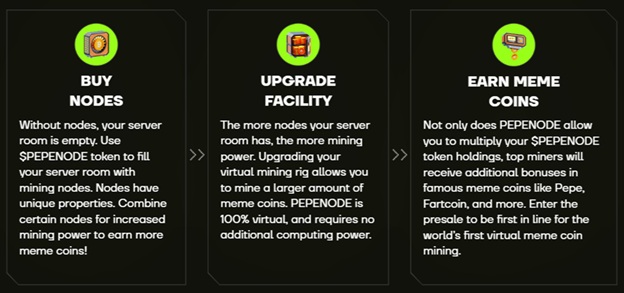
Pepenode allows its community to build their own virtual meme coin mining rig, buy nodes, build their own server room, and combine nodes for major bonuses.

The project aims to reimagine token presales and mining engagement through gamification and smart incentives.

It identified several problems in the current crypto space, such as the passivity of presales where there is no real engagement or utility before launch; boring mining models that may offer staking, but lack interactivity or excitement; weak early incentives that fail to reward early adopters meaningfully; and bot exploits, where bots dominate early access and harm fair participation.

Simply put, the industry is saturated with projects that lack engagement, utility, and innovation, especially during the early stages, when they are meant to capture the attention the most.

Token sale participants get reduced to passive investors with no interaction or value from the project until launch, which often fails to encourage investors to join presales in the first place.

Meanwhile, mining and staking protocols remain either too technical for mainstream users or are just devoid of excitement.

Pepenode’s Solution

Aiming to solve these issues, Pepenode came up with its own approach by introducing Gamified Virtual Mining, where users acquire Miner Nodes and Facilities to simulate mining in a visually rich dashboard.

Tiered Node Rewards, where early nodes mine more, encouraging early adoption; and presale utility, where users engage in an off-chain mining game before TGE, earning rewards and buying loyalty.

Simply put, the project intends to reinvent crypto mining by transforming it into an interactive, gamified experience accessible to everyone without needing any new hardware or technical knowledge.

It also introduced deflationary mechanics, referral boosts, on-chain evolution, and bot protection, all of which are meant to improve the overall experience.

Pepenode Presale Goes Live

Pepenode launched its ICO just recently, and it quickly started attracting attention, allowing the project to raise over $474.5k as of August 29.

Right now, the Pepenode price sits at $0.0010325 apiece, and it will maintain this value for a little over 24 hours, until its ICO enters the next stage.

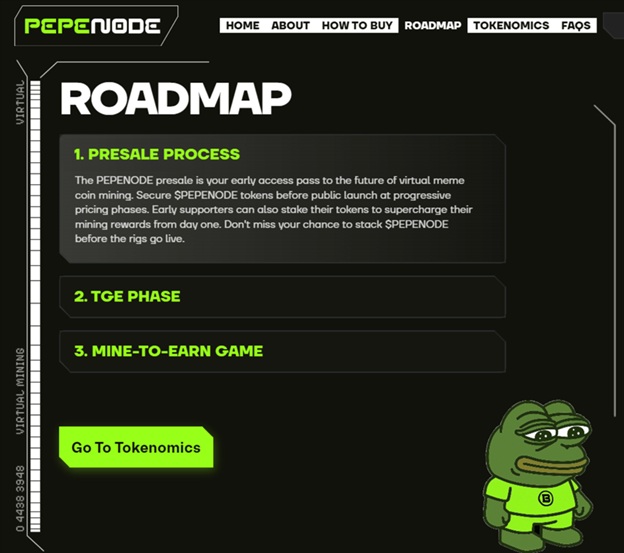
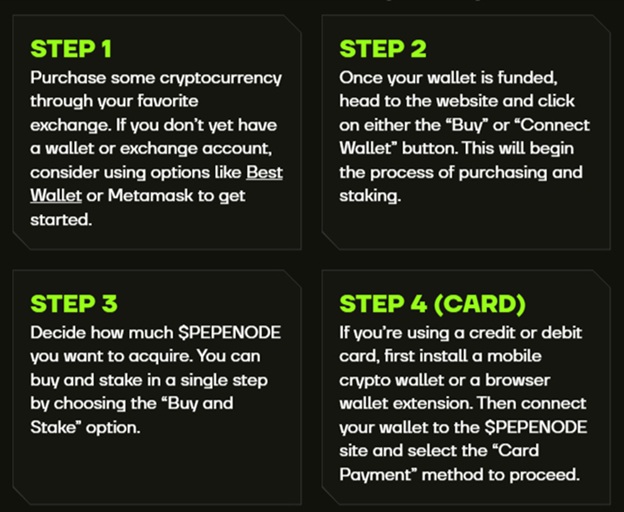
Those wishing to join the presale early and buy PEPENODE tokens at a lower price can join the ICO now and purchase with crypto or a card.

Not only that, but early investors can also stake their PEPENODE tokens for 2685% APY.

Furthermore, experts like Crypto Tech Gaming, a crypto YouTuber with over 88.4k subscribers, posted a video about the project, predicting 100x growth potential.

In addition to being a strong early investment opportunity, Pepenode also enables users to earn bonuses in meme coins and receive them through airdrops for top miners, including $PEPE, $FARTCOIN, and other popular meme cryptocurrencies.

Visit the Pepenode website