DD
MM
YYYY

PAGES

DD
MM
YYYY

spot_img

PAGES

Home Blog Page 6273

The YouTube TV’s Price Hike

0
A picture shows a You Tube logo on December 4, 2012 during LeWeb Paris 2012 in Saint-Denis near Paris. Le Web is Europe's largest tech conference, bringing together the entrepreneurs, leaders and influencers who shape the future of the internet. AFP PHOTO ERIC PIERMONT (Photo credit should read ERIC PIERMONT/AFP/Getty Images)

YouTube TV, Google’s kid company, announced Tuesday that it is raising its TV subscription from $50 to $64.99 a month, raising concern about the sustainability of the platform amid COVID-19 woes.

YouTube TV has since 2017 when it was launched, became a darling to a multitude of viewers. Over 2 million have signed up to the network that provides different TV channels for online streamers.

YouTube TV’s vice president of Product Management Christian Oestlien said that after three years, following feedback from subscribers, the company has decided to increase its number of channels as well as the subscription cost.

“As we continue to evaluate how to provide the best possible services and content for you, our membership price will be 64.99. This new price takes effect, June 30, for new members. Existing subscribers will see these changes reflected in their subsequent billing cycle on or after July 30.

“We don’t take these decisions lightly, and realize how hard this is for our members. That said, this new price reflects the rising cost of content and we also believe it reflects the complete value of YouTube TV, from our breadth of content to the features that are changing how we watch TV.

“YouTube TV is the only streaming service that includes a DVR with unlimited storage space, plus 6 accounts per household each with its own unique recommendations, and 3 concurrent streams. It’s all included in the base cost of YouTube TV, with no contract and no hidden fees, he explained.

The increase has come as a shock to YouTube TV subscribers, given that the price was increased by $10 last April. But it defended the increase saying that it’s only the streaming service that includes a DVR with unlimited storage space and allows six accounts per household.

Other additions that were used to justify the price increase include the ViacomCBS, BET, CMT, Comedy Central, TV Land, VH1 and Paramount Network brands that YouTube TV announced in May that it will be adding to its collection of channels.

YouTube TV base plan offers more than 85 TV channels over the internet to streamers. In addition to the channels, there are recently introduced Cinemax and HBO Max, which includes all of HBO plus a robust library of content and original series, to top its list of add-on channels.

YouTube TV listed a host of new features it is planning to introduce to the family soon, including the ‘jump to the news that matters most to you’ that allows users to jump to specific news clips within the complete recording. The streaming company said it will be made available on mobile devices in the coming weeks.

The price hike has made YouTube the most expensive of the cable TV streaming alternative services.

Other TV streaming platforms are notably lowering their prices. AT&T reduced its price to $55 monthly, and Hulu with Live TV is $54.99. Sling TV is the lowest, offering streams at $30 per month for its orange or blue packages, or $45 both, giving a $15 discount.

While these ones appear cheaper, it is notable that they offer fewer channels. For instance, Philo is cheaper than the rest with a $20 monthly offer for streams, but it has no news and sports channels.

It seems that whenever a streaming TV adds more channels, viewers should expect an increase.

Many of YouTube TV subscribers are understandably disappointed in the increase, given that COVID-19 has disrupted earnings globally, and most of them were not expecting a hike at this time.

New York Times Shira Ovide said the virtual cable services are becoming more expensive because “Netflix and most other internet video services grafted existing business approaches or behaviors onto the web. And they’re also buying programming in many cases from the same companies that sell stuff for conventional TV channels and theaters.”

But there is more to it than that in the case of YouTube TV. COVID-19 ushered in a new era of crumbling ad sales that left social media platforms strategizing for survival. In the wake of the pandemic when lockdowns confined many at home, internet TVs offered an escape from boredom.

It appears that YouTube TV is acting from a chapter of an opportunistic playbook. Though the platform said users can cancel if they don’t buy the price increase, they know better, that given the circumstances, many will choose the $15 increment over boredom.
Why Blitzscaling Struggles in Nigeria

3

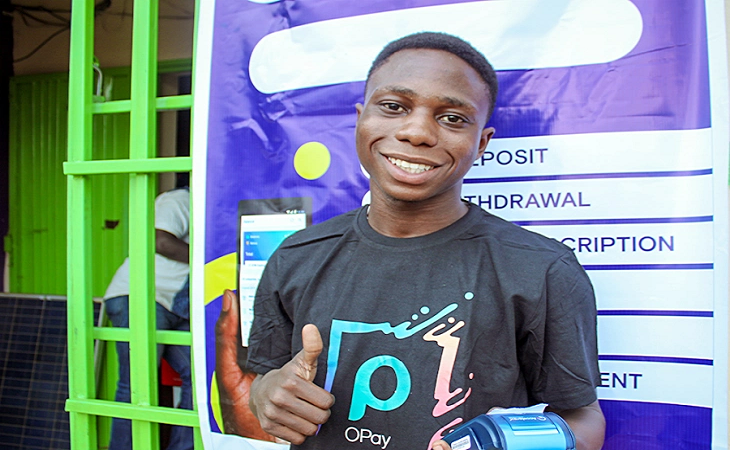
Many LinkedIn comments on the OPay piece. I spoke to a group of founders a few days ago, and the first question was the OPay article. Let me make it clear: OPay across its businesses have run validated business models.  No one is saying that the OPay business model is largely wrong. If you have read me, I have praised its aggregation and double play strategies. The core of my piece has remained that OPay has no patience. Yes, I have a problem with its intended rate of growth. In New York, London or Beijing, hyper-growth (or blitzscaling) delivers two options: win the trophy, or crash. In Nigeria, almost all the time, the only outcome is a crash because Nigeria does not have the conditions precedent to do any blitzscaling in the nation.

What is blitzscaling? Hoffman: Blitzscaling is what you do when you need to grow really, really quickly. It’s the science and art of rapidly building out a company to serve a large and usually global market, with the goal of becoming the first mover at scale. This is high-impact entrepreneurship

The point is that OPay put so much money into unlocking growth or better hacking growth. That does not work in Nigeria if done very aggressively. People will take the freebies and when they are gone, they move on. But in New York, people take the freebies and some will hang around. OPay had no patience and that is the issue; I contrasted with the “slow…stay the course” line in the piece.

See it this way: if you validate a product in New York, it is safe to write that you can raise money (as much as possible) and scale it across the United States. The U.S. is largely homogeneous which means the customer demographics are similar across most regions.

But in Nigeria, that is not the case. If you validate a product in Lagos and you think you can scale it across Nigeria, you would be surprised. There is no relationship between Zamfara market and Lagos market except that both use naira as a currency. So, a playbook that worked in Lagos will not work in Zamfara. 

So, the deal is this: if you look at that 200 million population, and think you can raise tons of money to scale a business that has worked in Lagos, across Nigeria, you will struggle because the other parts of Nigeria will disappoint you. Our communities and cities are heterogeneous with no apparent homogeneity making scaling any playbook harder. The implication is this: you need multiple playbooks in Nigeria across regions. And because of that requirement, you cannot blitzscale as you need effort and time to understand what each micro-market needs!

For most technology-based products, you have about 30 million people to work with as potential customers. Pumping insane amounts of money will not change that overnight. In short, your first $10 million investment could  show promise. But if you dump $100 million, you may be surprised, as that fund may not deliver efficiency as you utilize it because even the market you are pursuing has reached its absorption capacity. In other words, the Nigerian market is not that big to absorb all that big money. Yes, there is a diminishing returns on the amount of money you can invest in some sectors in Nigeria! That is because Nigeria is a relatively poor country when benchmarked with its population.

What people do is to diversify, putting that money in other areas, and then growing parallel businesses because a solo-focused business cannot absorb all the resources due to the sector carry-capacity. FarmCrowdy has diversified instead of putting so much resources in a sector that it may not grow further without losses. Why produce so much in farms only for them to waste? To deal with that, the company began buying processing factories knowing that if that expands, it will open opportunities in the stream of agro-processing. But blindly farming without thinking of the whole chain would ruin its business.

Back to OPay, it ran a good business model. But it had no patience with all those FREE this, free that. This is what I wrote when I predicted that OPay impatience was a problem. This is the heart of my OPay piece: if you serve Aba and you need people to be earning $4 per day to be profitable. But they are earning $2, and you give them freebies to join you. When you remove the freebie, you will likely lose most. How much freebies you give will not change that $2 core problem. A better strategy could have been adjusting the product to find a path in that $2!

Let me say it here: if OPay’s playbook is to “tax” Nigerians this way, it has no future. It has been proven that Nigerians like FREE things. If you try to ask them to pay, they move in exodus. Yes, provided it is free, you are the best service provider. Any playbook that depends on attracting users with freebies and expecting a paid conversion without a new level of product evolution will fail in Nigeria. So, OPay, you can burn your $50 million war chest, and the day that money runs out, all the users will look for the next deal in town. There is nothing like lock-in in Nigeria because the hardest thing is to get a Nigerian to spend money!

More so, because of the infancy of Nigerian market, we do not have depth. If you blitzscale in New York and lose a key customer, there are others you can rely on. But in Nigeria, you would be in trouble as there are very few of those customers to serve as backups. When such happens – losing a key customer- the blitzscaling will become muted, as you will start quenching fire to survive and all growth investments will stall. Lack of diversity in revenue base is a major element why Nigerian startups should be careful as they attempt to blitzscale..

OPay Other Businesses Fail

Week 3 Session Is Live; Week 2 Live Videos Posted

0

Good People, we have posted today’s Tekedia Live video session in the Board; our live session remains Saturdays 11 am Lagos time. Also, Week 3 class notes and videos are up in the Board.

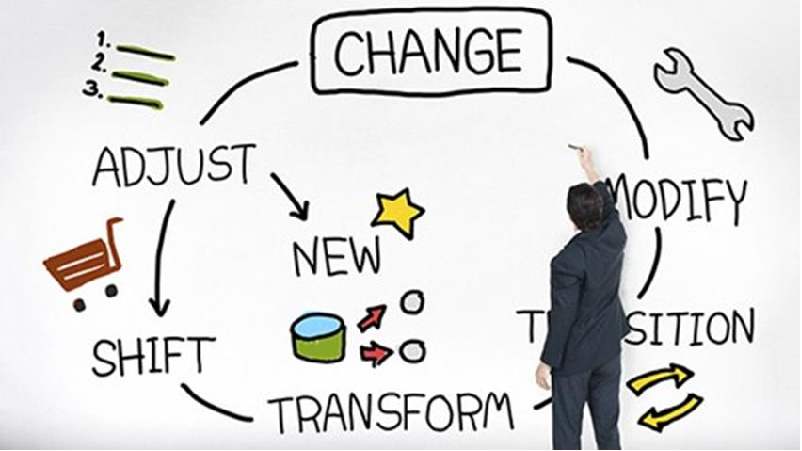
The focus is on “Business Model & Transformation”.  I begin with “Modern Business Models and Growth”, looking at Aggregation Construct, Double Play, etc while Omowunmi Adenuga-Taiwo examines “Effective Organizational Change Management”. So, as technology and markets drive organization changes, triggering new business models, Omowunmi helps us on protocols to ensure that CHANGE is done effectively. 

Then, Femi Aiki, CEO of digital grocery startup, Foodlocker, took it home by looking at ecommerce. Yes, sector-transformation in action!

Go to the Board and experience positive business CHANGE. We have launched Tekedia Mini-MBA edition 3 which begins Aug 10 to Dec 3; register and join us. Learn about the Certificate courses also.

You must have attended, begun or about attending Tekedia Mini-MBA to qualify. The following Certificate tracks are available:
CLSM Certificate in Logistics and Supply Chain Management
CSBM Certificate in Startup and Small Business Management
CETS Certificate in Exponential Technologies and Singularity
CPCD Certificate in Personal Career Development
CPFM Certificate in Personal Finance & Wealth Management
CBIS Certificate in Business Innovation, Growth & Sustainability

I want to wish everyone a profitable week.

https://www.tekedia.com/mini-mba-3/

Week 3 Session

43

Notes: Nice piece from one of our community members on business model For Monday, July 13 at 11am Lagos time Tekedia Live, go to Week 4 board for a link to join. Updated version of Written Material (N. Ekekwe) has been uploaded. We fixed the terminology issue as discussed during the webinar. July 11 Live […]

This post is only available to members.

Tekedia Institute Unveils 3rd Edition of Tekedia Mini-MBA, Certificate Courses

0

Good People, we have launched Tekedia Mini-MBA 3rd edition (Aug 10-Dec 3). This is coming because industry stakeholders asked for it as companies re-strategize post-lockdown. This 3rd edition is simply the same as the 2nd edition: four months, online, and costs $140 or N50,000 naira and taught by world-class faculty of Tekedia Institute. The optional $30 (N10,000) Lab Review remains.

More so, we processed feedback from Edition 1 and members asked for final projects. Accordingly, we have unveiled Certificate courses which are completely capstone-based. Tekedia capstone is a research paper or a case study exploring a topic, market, sector or a company. You must have attended, begun or about attending Tekedia Mini-MBA to qualify to register. You pick a topic and the Institute guides you: you produce a report under our guidance.

Here are the Certificate courses: each costs $60 or N20,000.
– Certificate in Logistics and Supply Chain Management
– Certificate in Startup and Small Business Management
– Certificate in Exponential Technologies and Singularity
– Certificate in Personal Career Development
– Certificate in Personal Finance & Wealth Management
– Certificate in Business Innovation, Growth & Sustainability

To Register for the 3rd edition of Tekedia Mini-MBA and/or the Certificate courses, click here.

https://www.tekedia.com/mini-mba-3/