DD
MM
YYYY

PAGES

DD
MM
YYYY

spot_img

PAGES

Home Blog Page 6281

After 12 years in the UK, I still miss the vibe and bustle of Nigeria- Emmanuel Mogaji

0

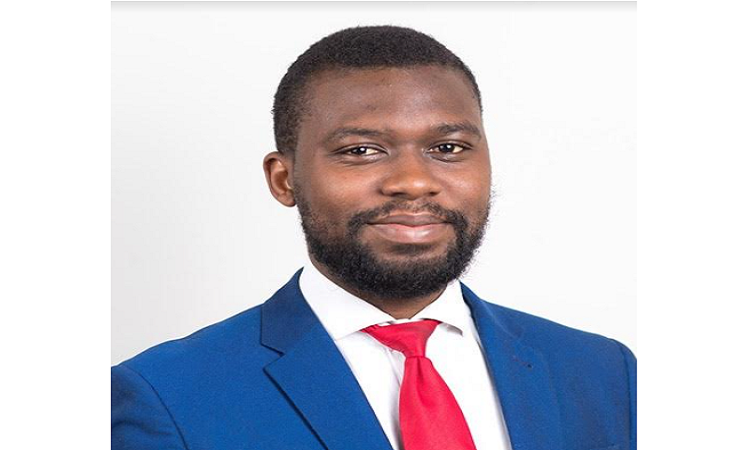
Emmanuel Mogaji is a faculty member of the University of Greenwich in the United Kingdom. The Ekiti State, Efon-Alaye-born university teacher is one of the thousands of Nigerians plying their professional trade across the world. With a Bachelor’s degree in Architecture from the University of Lagos, he moved to the UK in search of a second degree in 2008 at the University of Bedfordshire, the same university where he eventually got his PhD in 2015. The Advertising and Marketing Communications Researcher had a chat with Rasheed Adebiyi on his career trajectory and love for Nigeria. Here are the excerpts.

Tekedia: Could you tell us the story of your journey to the UK?

Emmanuel Mogaji:  I came to the Uk to study my Master Degree and after Master Degree, i stayed back to work and i went in for my PhD studies and since then I have actually been here. I came in through education route, that’s why I have been here. Well, the journey so far, I can say it has been fine. I did my first degree in the University of Lagos. I have a first degree in Architecture.  I finished in 2006. I served in 2007 and finished national service in 2008. I came to the UK to do my Masters. The year of the journey to the UK was 2008. It was in September to be specific. I had a background in Architecture but because I could not afford to do a Masters degree in Architecture in the UK because it was quite professional, quite expensive, I had to do something Art related. Something still Creative, so I did Art and Design with Internet Technology and from there I was able to work in a small advertising agency and then I did my Ph.D in Advertising and Marketing Communications.

Tekedia: I saw an interesting career trajectory in your profile. You moved from Architecture to Art & Design and then Advertising and Marketing Communications. What motivated that? How easy was it to go through that lane?

Emmanuel Mogaji: The shift has not been bad. I have always loved creative ideas. Since I couldn’t do my Masters in Architecture, I had to do something creative which was art and design. Then I worked in an advertising agency where I developed interest in marketing communications and then a PhD which looks at banks’ marketing communications after the 2008 global financial crisis and now I research it.

Tekedia: What was the feeling that defined the day you arrived in the UK?

Emmanuel Mogaji: I arrived in the UK with a friend of mine, we both came to the same university to do our Masters degree. So, it was quite easy to find our way around but I think what was most daunting was trying to find the transportation. Yes, I think because we were coming down from Heathrow, we had to get the train, the underground then try to get to St. Pancreas and then to where we were going. I came in September, so, it was not that very bad in terms of weather. We didn’t really feel anything about the weather. So, I think the most daunting thing was the transportation, trying to find your way around while still carrying the travelling bags and all those things, but we got to where we were going finally. I would say it was a feeling of excitement like feeling of at last, we got here safely thank God. Since I had a friend with me, it made it quite easy for me to be relaxed and to go along very fine. So, I think it was a feeling of excitement, a feeling of happiness. A feeling of what would happen next.

Tekedia: So, after the Master’s programme, you went for a PhD. What did it take you to navigate the UK higher education terrain?

Emmanuel Mogaji: I think what it took me was actually recognizing the fact that I was in a new environment and that I needed to take responsibility for my learning especially when you know where you are coming from, the cost and the fact that you needed to juggle things around. You still want to make sure you put in more effort into your academics and pass. So, I think it was me taking responsibility for my knowledge, asking questions, meeting people like interacting and knowing how they went about it.

Tekedia: What were the issues you encountered and how did you surmount them?

Emmanuel Mogaji: I think the main issue was more of time management. You might think you have got a free time to do everything but you know assignment were due. You know you need to go and work, you need to do some other things. So, I think the main issue was how to manage my time but I think I was able to do that by recognizing the fact that I can plan things. I knew when to read. I knew when I was going to classes. I knew when I needed to go and work and also having people around  you to motivate you as well. You know you were not on your own. You could get support. People shared ideas and were just making sure you know what to do.

Tekedia: You have transited from studentship to lecturing. What are those systemic things that you think make higher education in the UK different from anywhere else, especially, a developing country like Nigeria?

Emmanuel Mogaji: I think the main issues here are assessment and student engagement. Assessment is not to make you fail but to test your knowledge and see how much knowledge you have acquired. Also there are different level of engagement between the staff and student. Members of staff knows they should support their students. This is just beyond class room but looking after their welfare.

Tekedia: How does relating with your colleagues on campus like?

Emmanuel Mogaji: Here at Greenwich, it’s been fine. I guess may be because it’s London. Everyone seems welcoming.

Tekedia: Is there anything you miss about Nigeria?

Emmanuel Mogaji: I guess what I miss more about Nigeria is the community, the vibe and the bustling. I will say I miss excitement of life in Nigeria, the engagement with people, the buying and selling in the market. I mean the interaction and even the street food.

Tekedia: What is your general perception about the way issues in Nigeria are covered by international media?

Emmanuel Mogaji: I think we can’t control what the media say about Nigeria. We just have to create our own narratives. I like what Neflix and Nollywood are doing in that direction. The foreign media may choose to show the bad part of Nigeria, the fraud and the corruption. But with the movies and creative output from Nollywood/Netflix partnership, there is a new narrative about Nigeria. They show the good sides about Nigeria. They tell our story. But most importantly, Nigerians should keep doing good.

Tekedia: Any hope of a return soon or a project in Nigeria?

Emmanuel Mogaji: I have plans to return to Nigeria, especially to work with a university, albeit on a part time basis as a visiting professor. Through that, I hope to contribute my own quota.

Tekedia: Thank you for your time.

Emmanuel Mogaji: It is my pleasure.  

 

Ndubuisi Ekekwe To Speak in FCMB Masterclass

0

On Thur 18, I will speak in First City Monument Bank (FCMB)’s Masterclass on a topic I have titled “Innovating for Growth & Improving Supply Chain”. Supply chain is a very critical component of modern commerce, and in this post covid-19 era, innovation is the only trajectory to leverageable growth. Few days ago, I spoke with a brilliant Lagos banker for close to 2 hours: Ladi Balogun, the Group CEO of FCMB Group Plc. 

I learnt something from the very best who are at the forefront, and I decided to open a business account in FCMB for one of our businesses. People, from my laptop in America, I opened a business account within 5 minutes, received account number and could receive payments. 

Simply, FCMB impressed me, and I told the big banker. So FCMB is innovating, using digital to transform the bank. It wants its customers to also innovate. This masterclass will examine the path to growth for these customers.

As a big part of Zido Logistics, I will be sharing perspectives on supply chain and logistics. Zido did very well during this pandemic. I hope to connect innovation and supply chain for GROWTH.

Register here to join us, free. 


Examining Causes and Prevention of Rape

0

Sometime last year, I was around my school’s female hostel when I saw a cluster of monkeys on the backyard fence of one of the hostel buildings. The monkeys seemed to be viewing something, or waiting for something to happen. They were all seated at the fence, seriously peering into the compound. The sight was hilarious and scary at the same time. Those monkeys on the fence reminded me of small children waiting for a movie to start.

I asked my students why monkeys clustered around their fence and realised that it was a common occurrence. In fact, the students were already used to it. From what they said, those monkeys usually pay them visits whenever they hear the students chattering and they stay there till dusk. In other words, the monkeys came for chit-chat with the ladies.

The strange thing about these monkeys is that they don’t visit the male students’ hostels. More strange is the fact that they do not leave their comfortable position on the fence when shooed by a female. But when a man, even if it is a younger boy, shoos them, they leave. I tried this very experiment and found out that it is true. Monkeys don’t fear females like they do men.

I relayed this incidence to an elderly man. He laughed and told me that in the olden days, women do not go to farms or streams alone for a lot of reasons. One of such reasons is that they could be raped, even by monkeys (sorry I have forgotten the name of the particular monkey he said that rapes women). But there is something this man said that I will like to share here.

The man said, and I quote “One thing you women do not realise is that you are like that lone ripe fruit on the tree. Fruits like this attract attentions to it. Some people will want to climb up the tree to harvest it. Some will prefer to use stones to strike it down. Whatever method that is used, the major thing here is that everyone that comes near the fruit will want to have it.”

This short story by the elder is an effort to explain why women should be protected. He believes that even lower animals realised how precious women are and are therefore more attracted to them. He described women as jewels that shouldn’t be exposed or else thieves will come for them. Hence, those monkeys that pay our female students visits are only obeying the rule of nature.

Coming to the recent increase in the news of rape, one couldn’t help but wonder what is going on. It is not as if rape has not been happening before, but it seems to be on the increase these days. Demonstrations and outcries against rape have been going on for some weeks now, but it seems as if the more public outcry we have, the more the news of rape we receive. It is quite disheartening.

People have pointed some reasons on why rape is on the increase. Among the causes they mentioned are:

  • Indecent dressing by women;
  • Women demanding for money from men and therefore making the men entitled to their bodies;
  • Negligence of girl-child;
  • Girls exposing themselves to danger;
  • Patriarchal system that treats women as sex objects;
  • Lack of proper home training on the part of boys, and so on.

All these causes have been established but it didn’t stop rape. That means there is more to it than meets the eyes.

More Insights into Causes and Prevention of Rape

In addition to many mentioned causes of rape, the following aspects should be considered also.

  • Rapists with mental instability should be intercepted

All the agitations again rape and rapists have not acknowledged the fact that most rapists, especially those that rape minors, are mentally unstable. The instability could come from drug influence or congenital problems. People like this cannot be stopped by law courts and other forms of enforcements. They need psychiatrists and psychologists. Believe me when I say that people like this live in many communities and are known by their community members. The only thing is that they will be blacklisted and girls will be warned to stay away from them. And when they strike and get caught, their communities punish them by public disgrace and/or corporal punishment and then let them back into the society. Even if the police get involved, they will still release them later and they will come back into the society to continue from where they stopped. Even serial rapists are not reported to police despite several fingers pointing at them. Maybe we should start sanitising our land by sending people like these to the right places. Public outcry alone will not do this.

  • Rape should be prevented through precautions

It is necessary to say this here because a lot of women refuse to understand that rape is among the crimes that exist in our community. We have burglars, kidnappers, pick-pockets, murderers, scammers and what have you. We do everything within our reach to prevent falling victims to these mentioned crimes. We do not wait for anyone to tell us to install security devices in our cars to prevent theft. We do not wait for anyone to tell us to install burglary proofs in our houses. In the same vein, women should not wait for anyone to tell them to avoid situations that will expose them to rape. Many women do not understand this. Some went as far as saying that even if they expose themselves to situations that could put them at risk, that it should be understood that they have to give consent first before copulation. Well, we don’t give pick-pockets consents before they steal our phones; we guard our bags to prevent their intrusion. So women should guard themselves to prevent unpermitted intrusion.

Women need to understand that since other crimes still exist despite the existence of laws and public outcries, rape will not go away. The only way around it to avoid circumstances that could warrant it. Parents also have roles to play. Most minors are raped by their relatives and neighbours. Parents should, therefore, be watchful of where their children go to and who comes to their house. They should also instil it into their children to avoid going into people’s houses alone. They have the responsibility of securing the lives and dignity of their children until they become fully independent.

Nigerian Doctors Embark on Strike Action Amid Covid-19

0

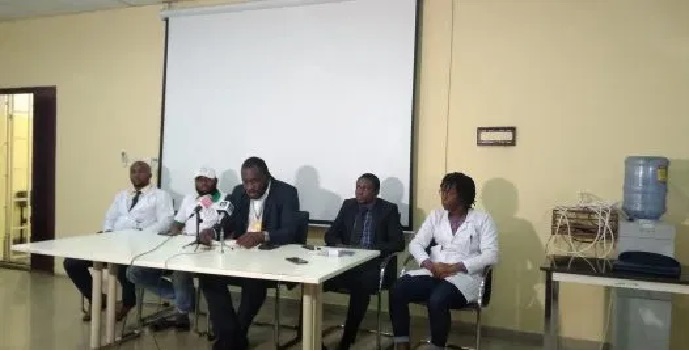
Nigerian doctors on Monday embarked on a nationwide strike action in protest of poor working conditions ranging from lack of Personal Protective Equipment (PPE) to governments’ unwillingness to pay their salaries and bonuses among other demands.

The National Association of Resident Doctors of Nigeria (NARD) had last week issued a one week warning to the state and federal governments. A letter signed by the president of the Association, Dr. Aliyu Sokomba said the doctors would have no choice than to embark on strike if the governments fail to meet their demands in the seven days window.

Dr. Sokomba acknowledged that the decision is “painful” given the time, but has to be taken for the interest of NARD members who have to face the harsh realities of the situation.

“Consequent upon the 14 days ultimatum duly served the Federal Government for indefinite strike action, in accordance with the resolution of the Ordinary General Meeting of the Association on the 29th of May 2020, we hereby notify you that all resident doctors, medical officers below the rank of Principal Medical Officer (PMO) and House Officers across all the Federal and State hospitals in Nigeria, shall be embarking on a total and indefinite strike action effective 12:01 am Monday, 15th June 2020.

“It is important that you make alternative arrangements for the care of the patients as the strike shall be total and indefinite. No service of any kind, be it emergency, care at COVID-19 isolation and treatment centers shall be exempted. We sympathize with the patients and Nigerian populace.

“For purpose of clarity, the demands on which the ultimatum was predicated include the following: provision of grossly inadequate appropriate Personal Protective Equipment for all health workers, immediate reversal of the illegal disengagement of all 26 resident doctors in Jos University Teaching Hospital, and the payment of all salaries owed them, in keeping with provisions of the Medical Residency Training Act.

“Provision of funding for Medical Residency Training in the 2021 Appropriation bill. Payment of all arrears owed our members in federal and tertiary health institutions, arising from the consequential adjustment of the National minimum wage.

“Stoppage and immediate refund of all illegal, unjust and callous cut in salaries of our members by Kaduna State and other state governments.”

It is based on these demands that the doctors embark on strike action today, though those working in the frontline of COVID-19 crisis were exempt.

The situation has been described as “unfortunate” by Nigerians as it is happening at a time when the country needs the health workers most. Resident doctors make up over 80% of doctors in teaching hospitals, which means that the development will paralyze medical activities in federal and state hospitals.

The NARD has been calling on the federal and state governments to address these situations, but the governments’ insouciant attitude has forced the Association to do the only thing that could instigate the governments to action.

Last month, the Kaduna State Government had forced health workers in the state to take pay cuts; their refusal has resulted in the State’s decision to disengage most of them even as the number of coronavirus cases is rising in the State.

The Nigerian health sector has been in loggerheads with the governments over the welfare of personnel and hospitals. The lack of PPE in the face of the fight against coronavirus has been described as “shameful government’s failure.” The number of medical workers who have contracted coronavirus has been on the rise and many have died eventually. It is believed that the situation would have been different if there is provision of enough PPE.

The federal government has been borrowing upon donations from local and international donors, amounting to millions of dollars for the fight against the COVID-19 pandemic, it is expected that it lives up to the financial responsibility of the health crisis.

NARD warned that if the demands of the doctors are not met by the federal government in two weeks, the exempted COVID-19 frontline workers will join the strike.

Facebook Sends RED Alert to Fintechs With WhatsApp Pay

4

I wrote a piece a few months ago in Harvard, noting the difficulty of competing in a world dominated by Google and Facebook. Facebook has built the platform, it can keep adding on top of it. A few weeks ago, it was Facebook Shops. This week, the new one is WhatsApp Pay. So, it goes for this ICT utility company which is already a key part of the 21st digital infrastructure. When you control DEMAND, you become the digital king; Facebook will squeeze more sectors because it has the users. I have a construct for it: The Inversibility Construct.

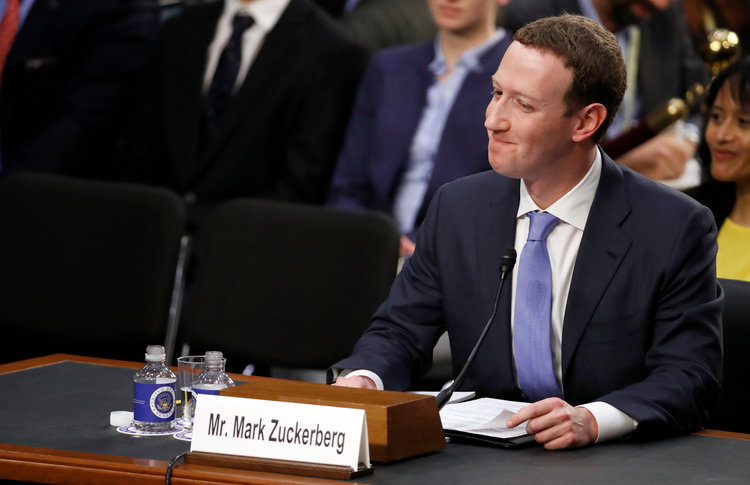
Facebook has announced the launch of its payment system via WhatsApp, as part of its effort to delve into fintech and ecommerce. The CEO Mark Zuckerberg said on Monday that the launch is starting in Brazil.

“Today we’re starting to launch payments for people using WhatsApp in Brazil,” Zuckerberg said in a statement posted on Facebook. “We’re making sending and receiving money as easy as sharing photos. We’re also enabling small businesses to make sales right within WhatsApp.”

“To do this, we’re building on Facebook Pay, which provides a secure and consistent way to make payments across our apps. I want to thank all our partners for making this possible. We’re working with local banks, including Banco de Brasil, Nunbank, Sicredi as well as Cielo, the leading payments processor for merchants in Brazil,” he added