DD
MM
YYYY

PAGES

DD
MM
YYYY

spot_img

PAGES

Home Blog Page 6282

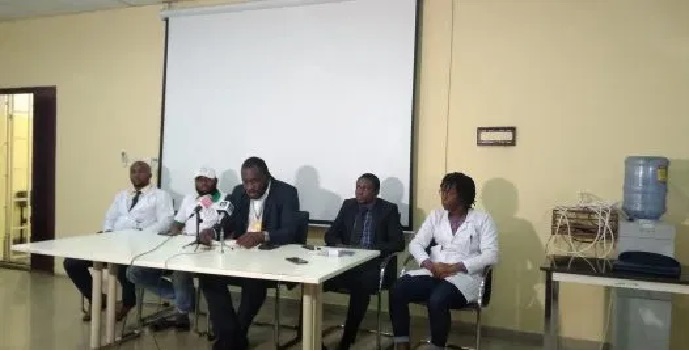
Nigerian Doctors Embark on Strike Action Amid Covid-19

0

Nigerian doctors on Monday embarked on a nationwide strike action in protest of poor working conditions ranging from lack of Personal Protective Equipment (PPE) to governments’ unwillingness to pay their salaries and bonuses among other demands.

The National Association of Resident Doctors of Nigeria (NARD) had last week issued a one week warning to the state and federal governments. A letter signed by the president of the Association, Dr. Aliyu Sokomba said the doctors would have no choice than to embark on strike if the governments fail to meet their demands in the seven days window.

Dr. Sokomba acknowledged that the decision is “painful” given the time, but has to be taken for the interest of NARD members who have to face the harsh realities of the situation.

“Consequent upon the 14 days ultimatum duly served the Federal Government for indefinite strike action, in accordance with the resolution of the Ordinary General Meeting of the Association on the 29th of May 2020, we hereby notify you that all resident doctors, medical officers below the rank of Principal Medical Officer (PMO) and House Officers across all the Federal and State hospitals in Nigeria, shall be embarking on a total and indefinite strike action effective 12:01 am Monday, 15th June 2020.

“It is important that you make alternative arrangements for the care of the patients as the strike shall be total and indefinite. No service of any kind, be it emergency, care at COVID-19 isolation and treatment centers shall be exempted. We sympathize with the patients and Nigerian populace.

“For purpose of clarity, the demands on which the ultimatum was predicated include the following: provision of grossly inadequate appropriate Personal Protective Equipment for all health workers, immediate reversal of the illegal disengagement of all 26 resident doctors in Jos University Teaching Hospital, and the payment of all salaries owed them, in keeping with provisions of the Medical Residency Training Act.

“Provision of funding for Medical Residency Training in the 2021 Appropriation bill. Payment of all arrears owed our members in federal and tertiary health institutions, arising from the consequential adjustment of the National minimum wage.

“Stoppage and immediate refund of all illegal, unjust and callous cut in salaries of our members by Kaduna State and other state governments.”

It is based on these demands that the doctors embark on strike action today, though those working in the frontline of COVID-19 crisis were exempt.

The situation has been described as “unfortunate” by Nigerians as it is happening at a time when the country needs the health workers most. Resident doctors make up over 80% of doctors in teaching hospitals, which means that the development will paralyze medical activities in federal and state hospitals.

The NARD has been calling on the federal and state governments to address these situations, but the governments’ insouciant attitude has forced the Association to do the only thing that could instigate the governments to action.

Last month, the Kaduna State Government had forced health workers in the state to take pay cuts; their refusal has resulted in the State’s decision to disengage most of them even as the number of coronavirus cases is rising in the State.

The Nigerian health sector has been in loggerheads with the governments over the welfare of personnel and hospitals. The lack of PPE in the face of the fight against coronavirus has been described as “shameful government’s failure.” The number of medical workers who have contracted coronavirus has been on the rise and many have died eventually. It is believed that the situation would have been different if there is provision of enough PPE.

The federal government has been borrowing upon donations from local and international donors, amounting to millions of dollars for the fight against the COVID-19 pandemic, it is expected that it lives up to the financial responsibility of the health crisis.

NARD warned that if the demands of the doctors are not met by the federal government in two weeks, the exempted COVID-19 frontline workers will join the strike.
Facebook Sends RED Alert to Fintechs With WhatsApp Pay

4

I wrote a piece a few months ago in Harvard, noting the difficulty of competing in a world dominated by Google and Facebook. Facebook has built the platform, it can keep adding on top of it. A few weeks ago, it was Facebook Shops. This week, the new one is WhatsApp Pay. So, it goes for this ICT utility company which is already a key part of the 21st digital infrastructure. When you control DEMAND, you become the digital king; Facebook will squeeze more sectors because it has the users. I have a construct for it: The Inversibility Construct.

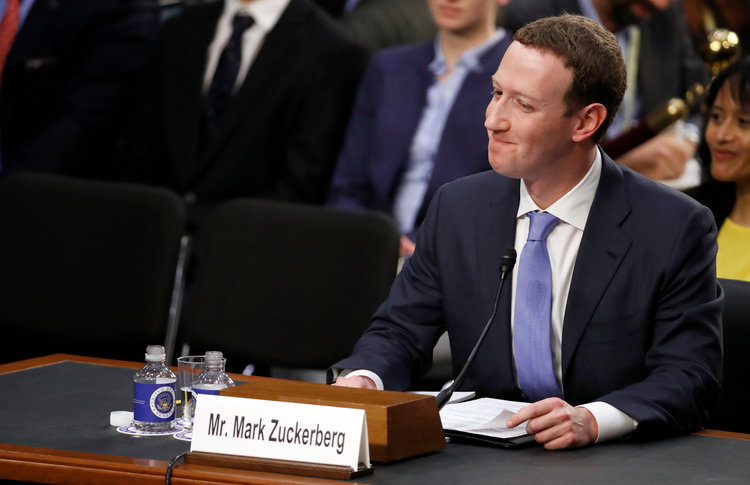
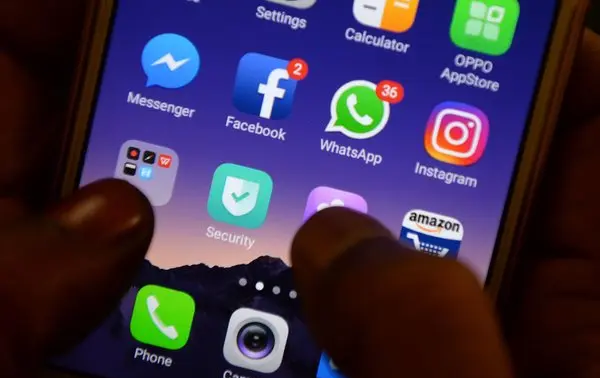
Facebook has announced the launch of its payment system via WhatsApp, as part of its effort to delve into fintech and ecommerce. The CEO Mark Zuckerberg said on Monday that the launch is starting in Brazil.

“Today we’re starting to launch payments for people using WhatsApp in Brazil,” Zuckerberg said in a statement posted on Facebook. “We’re making sending and receiving money as easy as sharing photos. We’re also enabling small businesses to make sales right within WhatsApp.”

“To do this, we’re building on Facebook Pay, which provides a secure and consistent way to make payments across our apps. I want to thank all our partners for making this possible. We’re working with local banks, including Banco de Brasil, Nunbank, Sicredi as well as Cielo, the leading payments processor for merchants in Brazil,” he added

Facebook Launches WhatsApp Pay Amidst Push to Delve into ecommerce

0

Facebook has announced the launch of its payment system via WhatsApp, as part of its effort to delve into fintech and ecommerce. The CEO Mark Zuckerberg said on Monday that the launch is starting in Brazil.

“Today we’re starting to launch payments for people using WhatsApp in Brazil,” Zuckerberg said in a statement posted on Facebook. “We’re making sending and receiving money as easy as sharing photos. We’re also enabling small businesses to make sales right within WhatsApp.”

“To do this, we’re building on Facebook Pay, which provides a secure and consistent way to make payments across our apps. I want to thank all our partners for making this possible. We’re working with local banks, including Banco de Brasil, Nunbank, Sicredi as well as Cielo, the leading payments processor for merchants in Brazil,” he added

Facebook had earlier made known its intention to join online companies like eBay and Amazon, as it hopes that its 2.6 billion users will yield spontaneous growth that will put it in direct competition with the giants in the ecommerce field.

The disruption of ad generated revenue by the coronavirus pandemic has spurred the Silicon Valley giant to begin to explore alternatives for earning. The introduction of WhatsApp Pay is another step aimed at integrating users of different Facebook apps into one commercial community that will have shops and payment systems on the same platform.

In a chat with Financial Times last month, Facebook had revealed some of the steps it intends to take to actualize its dream of becoming a big name in the online buying and selling market.

“Facebook Shops” will allow sellers to create digital storefronts on Facebook or Instagram, the company said, adding that it would benefit by gathering valuable data on what shoppers want.

Users will be able to browse products, message businesses to arrange purchases, and in some cases buy them directly via a recently introduced online checkout feature.

Zuckerberg said that he had accelerated plans for Shops to take advantage of the boom in online shopping during the coronavirus crisis. He added that the social media giant would be able to use the data to improve its advertising service and charge more for it.

“If you browse a shop inside of our app or if you buy something, we will see that and we’ll be able to hopefully use that to show you better recommendations for other things that you’d be interested in the future,” he said.

Facebook Shops will allow sellers to create digital storefronts on Facebook or Instagram Shops will help businesses “complete the conversion and the transaction [of a sale] more frequently with less drop-off”, he added. This will, in turn, translate into higher bids for advertising.

In the US, where Facebook has rolled out a checkout service from Instagram, the company will also collect a small fee to cover credit card processing costs and fraud monitoring.

The Facebook founder said, however, that he was not trying to replicate Amazon’s “end-to-end experience” and instead would work with existing ecommerce services such as Shopify, which helps small businesses create online shops and takes care of analytics and payments. Mr Zuckerberg added that Facebook would also integrate with shipping and logistics services.

Facebook Shops will make use of Facebook’s messaging capabilities: users will be able contact businesses through WhatsApp, Messenger or Instagram Direct to ask questions or track deliveries, for example. It will also have tools for creating and tracking loyalty programmes.

Mr Zuckerberg said Facebook would focus the rollout in developed regions such as the US and western Europe, where the company had the resources to vet sellers properly — as rivals such as Amazon battle against counterfeits.

“In countries that don’t have as much infrastructure, that’s one of the challenges [preventing] the full launch of this,” he said. In the longer term, he said he envisaged a system whereby sellers had reputation scores and star ratings.

Mr Zuckerberg suggested that, in the longer term, it “would be good” to host restaurant and food ordering.

Rich Greenfield, partner at consultancy LightShed Partners, said the move has long been anticipated due to the strains on advertising.

“What took them so long? It appears very obvious that the next step, especially if advertising is under pressure, is how are you going to take advantage of the ecommerce wave which is benefiting the likes of Amazon?”

“People don’t want to go to third-party websites or go to checkout, they want one-click buy. They want it simple, easy,” he added.

The Monday announcement is a cause for worry to many in the fintech industry, especially at the wake of COVID-19 when most of them are struggling to stay in business.

Given the over 2 billion number of WhatsApp users globally, it will be easy for Facebook to exert dominance in the sector and put many fintech startups out of business.

Tekedia Mini-MBA Powers Problem Space

0

By next week, dozens of U.S.-based digital transformers, agile development practitioners and innovators will begin a management ASCENT journey in a dedicated Tekedia Advanced Management Program board for Program Space. Russell Avre, an agile coach, leads this.

Schools, companies, alumni unions, etc are opening dedicated digital boards at Tekedia Mini-MBA. From Double Play Strategy to One Oasis Strategy, our management constructs are discussed and used by startups, not just in Africa but in Singapore, Canada, US and beyond.

You are invited to open a Board at Tekedia AMP and GMP elements of Tekedia Mini-MBA.

https://www.tekedia.com/mini-mba-2/


An Energy Analyst from NNPC To Lead A Session on Tekedia Mini-MBA

0

A trading & energy analyst will be joining us from the Nigerian National Petroleum Corporation (NNPC) to lead a session on “Global Energy Mix and Energy Economics” in the second edition of Tekedia Mini-MBA. Chidi Nwosu will help businesses understand crude oil and the economics of energy. If you do business in Nigeria, you need to understand what happens in the energy sector because everything there affects Nigeria! Begin your management ASCENT.

https://www.tekedia.com/mini-mba-2/