DD
MM
YYYY

PAGES

DD
MM
YYYY

spot_img

PAGES

Home Blog Page 6290

Senator Abiola Ajimobi Becomes APC Interim Chairman After Court Upheld Oshiomhole’s Suspension

1

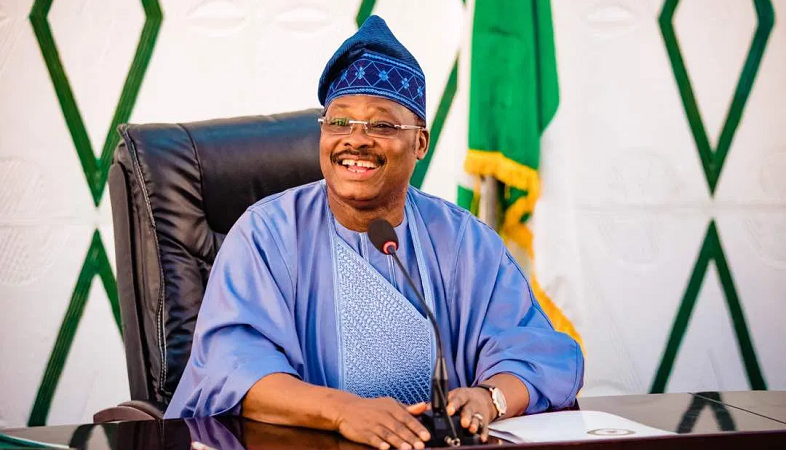
Unbelievable: APC has a new Chairman, albeit an interim one. Senator Abiola Ajimobi, a former governor of Oyo state, is the new man. An Appeal Court has upheld the earlier suspension of Adams Oshiomhole by a lower court. Crazy things happen: the disqualified governor of Edo State, Godwin Obaseki, who had since resigned from APC could make it back. Everything depends on how Senator Ajimobi is sneezing.

Mr Oshiomhole was earlier suspended by the APC in Edo State in what is part of his battle with the state governor, Godwin Obaseki.

A Federal High Court also ruled that his suspension was legal and ordered Mr Oshiomhole to stop parading himself as APC national chairman.

The suspension was initially lifted after the appellate court granted a stay of execution of the high court’s order.

The appeal court on Tuesday, however, ruled that Mr Oshiomhole’s suspension was valid.

This throws a new twist into the Edo APC crisis as the party prepares for the governorship election.

Earlier on Tuesday, Mr Obaseki announced his resignation from the APC.


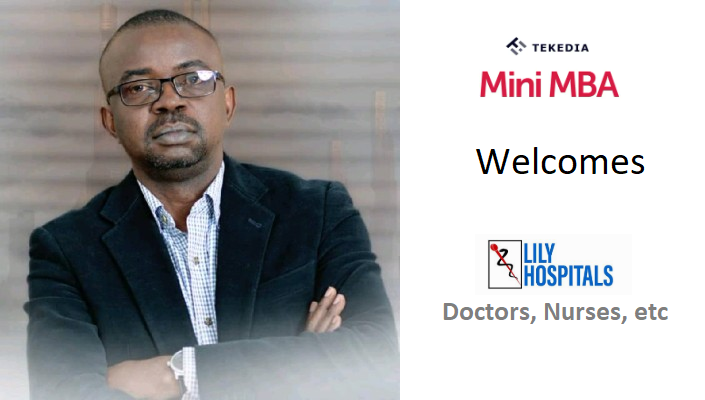
Tekedia Mini-MBA Welcomes Lily Hospitals

0

Lily Hospitals continues to pursue that construct of bringing scientific miracles in its clinics, through superior, patient-focused and affordable healthcare services. In our journey on management and leadership ascent, more than 15 healthcare professionals from Lily would be joining Tekedia Mini-MBA, to co-share, and co-learn, with our community, on how new innovative management processes and systems can advance the wellbeing of patients and the communities they serve. 

We are honoured to be working with Dr. Austin Okogun, Lily doctors, nurses, etc. Lily Hospitals is one of the largest networks of private hospitals in West Africa.

Lily, continue your care in our communities. We welcome the heroes of this era to our program.

Learn how Tekedia Mini-MBA can advance your mission here .

https://www.tekedia.com/mini-mba-2/

Digital Right Group, Paradigm Condemns Nigerian Government’s Move to Halt Exclusive Broadcast Rights

0
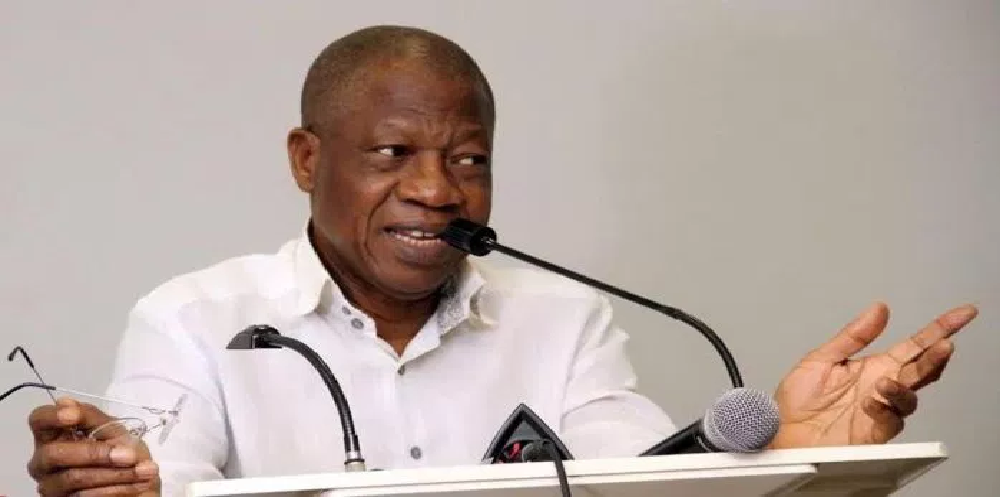
Lai Mohammed, Nigeria's minister of information

Paradigm Initiative, a pan-African social enterprise working to advance digital rights and inclusion in Africa, joins voices with innovators and internet broadcast content creators in Nigeria to strongly condemn the recently amended National Broadcasting Commission (NBC) Code released to “make provision for local content, increased advertising revenue, and restriction of monopolistic behaviour in the broadcast industry.”

The digital right group thus joined voices with stakeholders and members of the civil rights groups to condemn what has been described by many as an anti-capitalism move by the federal government of Nigeria.

In a statement issued during the week, Paradigm described NBC’s policies as unfavorable, unfair, burdensome and capable of stymieing the growth of the young internet market in Nigeria.

“The Commission has by this Amendment, laid down unfavorable conditions and requirements for the just budding PayTV Industry in Nigeria; placing unfair and unrealistic burdens on local content producers and by extension, the economy.

“While we’re yet to get an official definition from the Commission for ‘Web/Online Broadcasting’, it is clear from the new provisions that certain clauses will affect the development of the sector. The compulsion to prevent exclusive rights to content on PayTV platforms is archaic and regressive, to say the least. Apart from it being a blatant affront to the freedom of copyright holders to use and license their work as they wish, it also chokes innovation in the streaming television business.

“Furthermore, the NBC mandates that all persons wishing to operate web/online broadcasting services in Nigeria must register with the Commission. However, there is no public record of the Commission’s consultation with these stakeholders in making these amendments.

“The internet space in Nigeria is developing and innovation is to be encouraged. However, policies like this can greatly discourage the development of technology and technology-based services thereby creating an unfavorable environment for the kind economic growth that is relevant in this age.

“Especially with the new realities faced by Nigeria as a result of the COVID-19 Pandemic, government policies should not only desist from hampering nascent technologies but must in fact, encourage and incentivize same. The amendments to the NBC Code do not incentivize innovation in the broadcast and television industry and therefore, we join voices with other stakeholders to call upon the NBC to re-engage its process of amendment by opening dialogue between itself and the key stakeholders who would be affected by these policy directions.

“Furthermore, we call on the NBC to seek policies that will incentivize and not punish local content creation and technology service delivery in the broadcast industry.”

The Ministry of Information and Culture had in January, directed the regulator to enforce the new directive prohibiting exclusivity of sporting rights in Nigeria. The new directive mandates media houses, broadcasters and all those who have exclusive licenses to sports contents to share such rights with others.

The Ministry of Information said the decision is in order to boost reach and also maximize utilization by all broadcasters of premium content. The statement signed by the Hon. Minister of Information, Alhaji, Lai Mohammed said the new rule will compel broadcasters to utilize the content and services of Nigerian independent producers.

Lai Mohammed said the new rule is in line with already existing regulatory requirement that is designed to accommodate 70% local content, but is being exploited due to the loopholes in the exclusive rights of broadcasters.

Adding their voice, other stakeholders in the industry have condemned the move, saying it will kill the entertainment industry. Jason Njoku, founder and CEO of IrokoTV said it is “champagne socialism” that will destroy pay TV in Nigeria.

“Nigerian Broadcasting Commission (NBC), in making exclusivity illegal, compelling sub-licensing of content & regulating price, are effectively turning private enterprise into state property. Interface Distorts Markets. If implemented, this 100% destroys payTV in Nigeria,” he wrote.

He added that it is regrettable that Nigerian policymakers would compel people who invested billions in broadcast licenses to share with everyone else, just because the NBC sets the price.

The government’s move to halt exclusive broadcast right is seen as an attempt to nationalize private corporations in Nigeria, and it sets a trajectory that will scare potential investors away. At a time when the government said it is working to diversify the economy, its policies are becoming more hostile to businesses and investors.

Concerned individuals, stakeholders and civil rights organizations are urging the Nigerian government to reconsider its decision as it would cause harm not only to the broadcast industry, but the Nigerian economy as a whole.

Nigeria in Financial Crisis: Robbing Our Children to Pay for Our Freedom – Atiku Abubakar

3

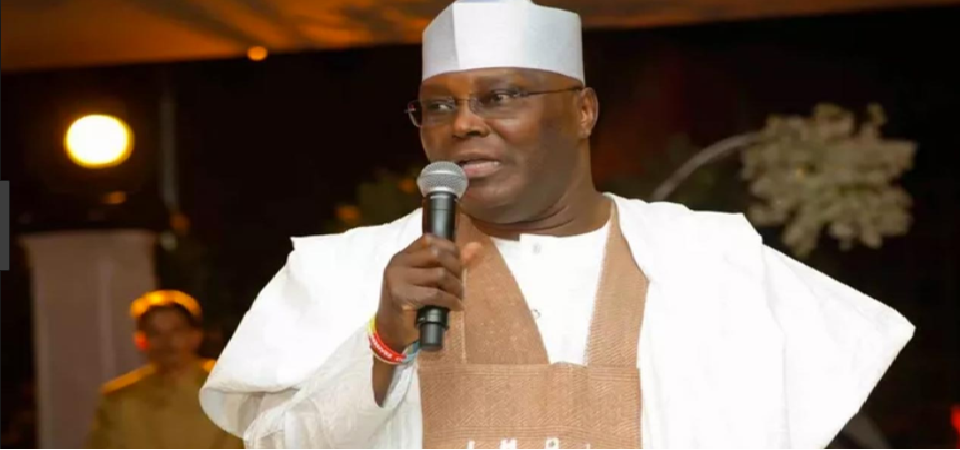
Nothing has shocked me in my entire life in public service as the revelation from Nigeria’s First Quarter 2020 financial reports in the Medium Term Expenditure Framework and Fiscal Strategy from the Federal Ministry of Finance, Budget, and National Planning, which shows, alarmingly, that whereas Nigeria spent a total sum of N943.12 billion in debt servicing, the Federal Government’s retained revenue for the same period was only N950.56 billion. This means that Nigeria’s debt to revenue ratio is now 99%.

No one should be deceived. This is a crisis! Debt servicing does not equate to debt repayment. The reality is that Nigeria is paying only the minimum payment to cover our interest charges. The principal remains untouched and is possibly growing.

We are at a precipice. If our revenue figures do not go up, and go up quickly, Nigeria risks a situation where our revenue cannot even sustain our debt servicing obligations. Meaning that we may become insolvent, and our creditors may foreclose on us, as has occurred in Sri Lanka and the Maldives.

In my opinion editorial of December 17 2019, titled ‘Endless Borrowing Will Lead Nigeria to Endless Sorrowing’, I had cause to counsel the Federal Government to desist from indiscriminate lending, and offered suggestions on ways to both increase revenue and reduce expenditure. However, my counsel fell on deaf ears. And now we have come to this.

Again, on May 15, 2020, I counselled that the Federal Government ought to reduce Nigeria’s budget by at least 25%, to reflect the economic realities of the times that we live in. Again, my entreaties were brushed aside.

As part of an administration that paid off Nigeria’s entire foreign debt, I am concerned by the alarming and avoidable unprecedented increase in our debt to GDP ratio and debt to revenue ratio. The alarm I sounded last year is now sounding louder.

Not only have we squandered our opportunities, we have also squandered the opportunities of our future generations by bequeathing them a debt that they neither incurred nor enjoyed.

As a matter of utmost urgency and importance, I call on the Federal Government to take immediate steps to drastically reduce its expenditure, especially on wasteful projects, such as maintenance of the Presidential Air Fleet, and unnecessary renovations of buildings that could serve as is, limousine fleet for top government officials, overseas travels and treatments, and the N4.6billion Presidential villa maintenance budget, etc.

We cannot be on the verge of economic ruin, while still maintaining a Presidential Air Fleet that has more planes than the Presidential fleets of those from whom we take these loans. Nigeria must sell those planes and channel the revenue to other vital areas of need while taking additional steps to reduce the cost of running our government.

The Federal Government cannot continue to justify these unsustainable numbers by pointing at Nigeria’s debt to GDP ratio. That is only half the picture. Our debt to revenue ratio paints a much more realistic portrait of our financial situation, especially as our revenues are majorly tied to a mono-product, oil and gas, which are very vulnerable to global shocks.

Again, I warn that Nigeria is facing a crisis, and we cannot continue to keep up appearances by taking out more loans to prop up our economy. That will amount not just to robbing Peter to pay Paul, but to robbing our children to pay for our greed!

What A Bank Could Learn from Queueing Theory

0

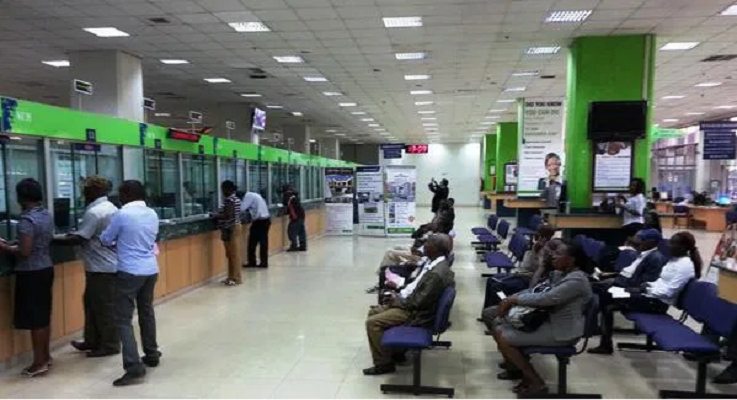
I had an idea in 2013 to help improve, optimize or even eliminate queues in banking halls. It was about two years into my career as a HR professional. It is now about 10 years into my career and I still believe in the idea.

I first came across the concept of queuing theory in 2013 and its applications to banking were self-evident. I tried to conceptualize solving virtual queues with the theory_ imaginary queues like number of persons on a “promotion queue” as well as number of persons waiting to go on leave to mention a few. I shared my cogitations with my then team members. It was a wonderful presentation. But then it ended at that – a wonderful presentation, nothing more.

I was young in my career, so obviously, I had little clout to pursue my theories to a logical conclusion, albeit if implemented would have been one of those innovations that could have caused an inflection point in Banking

I would walk you through the conceptual solution to the queuing challenge I formulated in 2013. But before then let me lay a background to queuing theory.

Queuing Theory

Queuing theory is “a mathematical study of congestion and delays of waiting in line. It is a discipline in Operations Research that examines every component of waiting in line to be served, including the arrival process, service process, number of servers, number of system places, and the number of customers”

Two important metrics in studying any kind of queue (or waiting) is the mean arrival rate (mAR) and mean service rate(mSR). A queue will always form when the former exceeds the later, i.e mAR > mSR. And there also lies the solution to a queuing challenge: tinkering with mSR.

Now for a Bank with a distributary of branches, (sometimes two less than a km away) while it can not control the arrival rate of customers, it can calculate mAR for every branch. Armed with this metric, it is theoretically possible to reassign tellers and customer service personnel such that mSR will be equal to mAR at the minimum. We all have had experiences where we went into a bank at supposedly peak hour to find the banking hall empty and under-utilized personnel.  The answer for Banks is not hiring new staff, it is redistribution of personnel. An action which will be armed with proper analytics of the mAR per branch.

Calculating mAR and mSR for a Bank

With the advances in Machine Learning (ML) and Artificial Intelligence (AI), it is not difficult to conceive how mAR can be calculated for every customer who comes to the branch over a time period. mAR calculations deal with customer arrival patterns and the time difference between the arrival of one customer and the next. mSR calculations deals with the average time it took to service the customer. Most banks already have data on mSR (or at least an approximation of it) without knowing. Most in branch banking transactions are electronically logged e.g. like the time stamp when a teller calls up an account to post on it and when the transaction was successfully posted. The time difference per customer divided by the total number of customers is an approximation of mSR for some class of customers.

For mAR, one can easily train a facial recognition software to recognize a human being at the entrance and log the time of entry between each successive customer. With mAR and mSR, queuing challenges can be optimized in a bank.

Summarizing

While this is a simplistic and high-level solution to the problem, it does reveal that at least there is a conceptual solution to the problem of waiting; not just for banks but for any service industry. And about the same conceptual thinking can be adopted to solve the problem.