We are working with some companies and partners to provide support to Tekedia Mini-MBA participants and companies (current and past) which sponsored staff. Some will offer legal services, web hosting, product samples, some digitization works, heavily discounted services, fundraising support, etc. A company likeInfoprivewants to help startups in the broad fintech area with cybersecurity & security monitoring.DealRoom Nigeria can help startups on fundraising. A Dubai-based platform will help freelancers find opportunities. There are three nexus for our individual and corporate members:
Pitch Your Idea: Entrepreneurs share what they are doing and seek support.
Show Your Skills: Members explain their capabilities and what they can do.
What We Do: Companies tell our community what they do and explore opportunities in our community. This also offers the ability for members to share product and service ideas, and get feedback from the community.
To participate, send a max of 7-minute video and PowerPoint (max of 5 pages); contact Admin on how to transfer files. The contents would be shared on Tekedia and some on LinkedIn, and some would make it into flash cases in our lectures. This applies to current and past Tekedia Mini-MBA participants and company sponsors.
For companies which want to partner with Tekedia where you can offer some services or products for free or heavily discounted, please contact my team. We will put your products or services before our members. It is completely free. In your email, let us know what you plan to offer to our community.
Within the last one year that the Abdulrasaq administration was inaugurated in Kwara State, a lack of public confidence in the state budget process and implementation has been observed.
In a Flash Report released by the Brain Builders Youth Development Initiative, a non-governmental organization that focuses on good governance and transparency, the state government under the All Progressive Congress needs to go extra length to restore public trust and ensure performance oriented budgeting process in the state.
The report titled “Reconstructing Processes and Repositioning People for Budget Estimates and Implementations towards Sustainable Inclusive Growth in Kwara State” observed poor public trust in the budget performance in Q1-Q4, 2019 and Q1 2020. It noted the state fixation on federal allocation supported by the meagre internally generated revenue. The study, for instance, averred that a trending analysis of the state government’s attempt to generate revenue from Q1, 2019 to Q1, 2020 shows that Kwara’s main source of revenue was statutory allocation from the Federal Government. This, according to the report, has made the state economy tied to the vagaries of the oil prices and exposes the state as not being capable of survival without the handouts from the national government.
Again, the report also indicated an uncoordinated and insufficient approach to raising revenue from within the state. It posits that there is no steady growth of the funds that accrued to the state from the IGR. There was a rise between revenue generated from Q1, 2019 from N6.2 billion to N9.8 billion in Q2. However, there was a revenue drop to N7.9 billion in Q3, 2019 followed by further descent to N6.6 billion in Q4, 2019. The rise of the revenue by less than N1 billion in Q1, 2020 highlights the government’s poor performance in engineering a continuous growth from its internally generated revenue even with Value Added Tax.
The report discerned a continuous mismatch between budget policy thrust and objectives from the former administration of Governor AbdulFatai Ahmed and the incumbent administration of Governor Abdulrasaq Abdulrahman. The study which factored in a change of government in 2019 did a comparative analysis of budget performance of the two administrations. It concluded that there was a measured restraint to deploy resources on capital expenditure when compared with recurrent expenses.
In its recommendations, the report suggested expansion of revenue bases, diversification of the state economy as well as engagement of the right personnel to drive the budget processes of the state from conception to implementation and monitoring. There is also a suggestion that leakages must be blocked if the state government must be weaned from the handouts coming from the federation accounts. There should be more focus on human capital development with improved spending on education, entrepreneurship, empowerment and social protection programmes. These measures would not only go a long way to ensure a match between budget provision and policy thrusts/objective but also restore public trust in the government budget processes that would facilitate a sustainable delivery of socio-economic benefits to the populace.
Abideen Olasupo
Executive Director
Download the full report and read to gain more insights here
Great comments in our community on the MultiChoice (parent of DStv), Netflix and Amazon partnership. Some have called it a guerrilla warfare or battle; nothing like that though. In ancestral Africa, when three clans fight one another at once, be informed that a festival is taking place, not a war of strategic value. In other words, for Amazon and Netflix to fold parts of their African strategies into DStv, they want to improve margins in the easiest ways possible. DStv distributes the goods in Africa, while the American firms provide regular supply from their production studios. Expect Disney+ to join in coming years once it settles in the U.S. and Europe. Simply, DStv plans to become an operating system for video distribution in Africa, as a super-aggregator.
From the comments also, many do think that MultiChoice (DStv, GOtv) is a monopoly. While I do not sanction anti-market prices, it is important to note that MultiChoice’s raw materials – the European football- are free products for anyone to bid, and the company is not the primary producer with no apparent moat against anyone bidding. I have looked at the numbers, from an independent angle, the price growth in DStv has trail-correlated with TV rights costs in Europe. According to Statistica, revenue from Premier League broadcasting rights was $3 billion in 2013-2016; for 2016-2019, it shot to $5.1 billion. That is the raw material which DStv sells. Yes, it has gone up by close to 70%.
Raise your hand if you would not increase price when your raw material has gone up by 70%. If you did raise a hand, you are running a charity and once your funds finish (or your donors get tired), you would close shop. DStv is not running a charity and the 15% increase Nigerians experienced during that time might have happened because the company possibly got a discount as it was always the only one bidding for Africa! So, European football has to dance or it misses the revenue altogether.
Nothing stops companies like NTA, Channels, AIT, etc joining the bidding. My point is simple: anyone that holds these rights would at the end ask to be paid to recover its investments. Where we think we cannot take it, Enyimba, Rangers, Kano Pillars, etc, are still there.
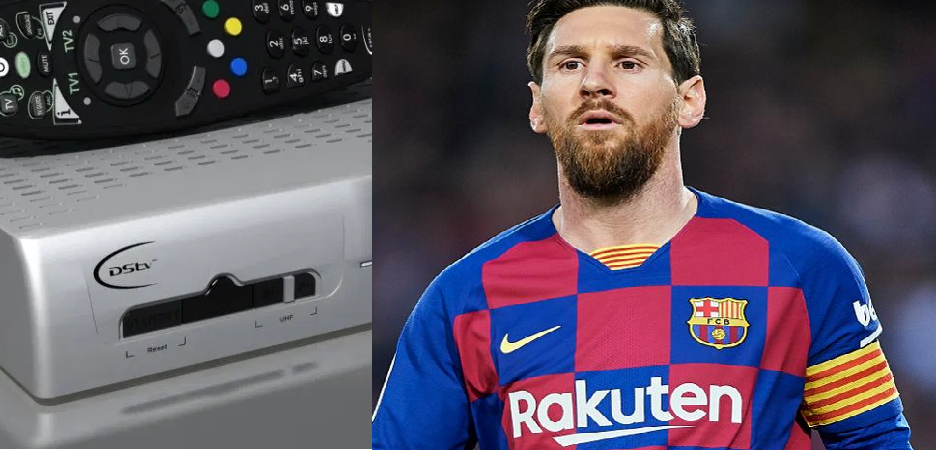
So, when I read statements that Nigeria wants to force video entertainment companies to sub-license contents to competitors at aregulated price, you would ask, Why Not Ask Those Sub-firms to Go and Bid in Europe. So, DStv buys at say $100 and Nigeria will demand it sells for $50 knowing fully well that value makes sense when supply is not unbounded? Does not make sense to me how DStv will return in three years to pay Messi and C.Ronaldo equivalent of Abia State budget to keep them happy, kicking a round leather. Nigeria needs to live on FACTS as we make policies!
But DStv’s ambitions in Nigeria might hit a major wall if the new broadcast code by the regulatory commission goes into effect. The new code will prevent pay-TV and streaming platforms from making content exclusive and compel them to sub-license content at prices that it will regulate. (TC Daily newsletter)
Read more on this old piece where I explained further.
If MultiChoice does not increase rates, it has no business in Africa. It is irrelevant if the price in Nigeria is higher than what it prices in Ghana. It has made it clear that running a business in Nigeria is higher because it runs generators and hires private guards unlike in other economies where those are readily provided by governments.
The key reason why MultiChoice is increasing the price is thus: it is losing its best subscribers and to cover and service the loans it took to pay for the TV rights which have made it the best Pay-TV product in Africa, it needs to ask existing customers to pay more, and because TV rights are always going higher it has to budget more for the next cycle of licensing.
The statistic depicts the revenue from the Premier League television broadcasting rights from 1992 to 2019. From 2013 to 2016 the Premier League generated over 3 billion pounds in revenue from its marketing of TV broadcasting rights per year. (source: statista)
In other words, if it loses the most premium customers, it will not have enough money to pay for the TV rights. And if you ask it not to increase the prices on the existing customers, you have technically frozen its business. The product it sells was not created by it: England Premier League, Serie A, La Liga, etc decide their TV rights prices. As these brands continue to increase rights, and MultiChoice continues to see its customer base disintermediated, expecting it to keep prices static is not fair. What the court should have done is to demand that those selling TV rights freeze price increase and those leaving MultiChoice brands stop.