DD
MM
YYYY

PAGES

DD
MM
YYYY

spot_img

PAGES

Home Blog Page 6306

The Full Deregulation of Nigeria

1

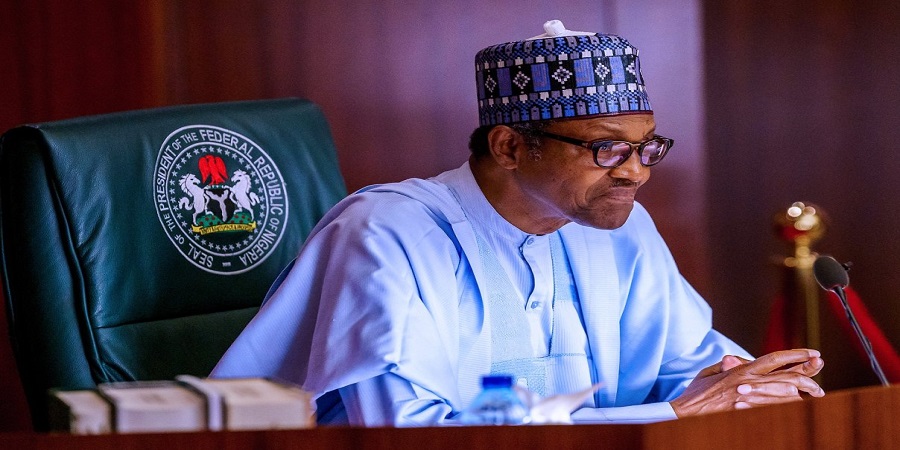
Nigeria desires to fully deregulate the downstream sector of the petroleum industry by putting the price of petroleum products to swim against market forces. In other words, the forces of demand and supply will determine the prices customers pay. “Ahu na’anya ekwe” (You need to see to believe, in Igbo). Yes, I do not believe this policy or initiative would survive the next election. Buhari has the liberty to do most things since he would never face voters again in Nigeria. But for his party, once a new candidate emerges for 2023 elections, under the high voltage searchlight of the labour, academia and broad citizenry, it would be run, run, run, ….. Yes, run from any decent reform, and return to the old world!

A few years ago, I traveled to meet a governor. He wanted to build new water systems to supply potable water in the state. We ran some numbers and told His Excellency that the current water rate in the state would not support any investment in the state. The governor asked for a possible break-even market rate, and it was provided.

He looked at it, and actually agreed with the model.It was an easy call as the last update on the water rate was done many years ago. With inflation and currency deterioration synonymous with the Nigeria economy, what consumers are paying for potable water today are severely subsided by governments. Of course some people believe that drinkable water should be free.

At the end, the governor killed the project: he would not like to approach voters with higher water rates. Yet, we thought we could salvage the situation.  I raised my hand to speak and His Excellency permitted. I explained that the affected citizens would be highly marginal since only those in the GRA and few areas actually have water at the moment. He did not buy into my point, noting that even in villages, with no water systems,  many would complain that he has raised water rates.

Largely, the fear of voters pushed him not to do the right thing to help more citizens statewide (that fear is unfortunate as Sam Mbakwe had proven). Only few people enjoy clean water in most states in Nigeria, and most of those citizens pay below market rates. The implication is that those in rural areas are subsidizing the lives of those in cities where governments provide clean water. And to expand services to help those rural communities, governments are to raise rates on the city dwellers, but cannot because of fear of losing elections.

As I noted during my National TV speech on The Platform, there used to be a country where parents would give money to students and pupils to send governors to assist them on projects. A governor wanted to build an airport, power plants, etc, he reached out to the Imo people – and they responded. My mother gave me 25 kobo to support Chief Sam Onunaka Mbakwe, an incorruptible and peerless leader of his generation. My headmaster had told us to come to school with donations to Imo State Projects. Mr. Governor executed and we all saw it.

Take this construct to electricity, you get a complicated system. Since the second coming of the Obasanjo presidency, Nigeria has an opportunity to reform many sectors since Buhari does not have to worry about losing elections. What has been done in the deregulation of the petroleum products can ideally be implemented in other sectors. But I am not sure his party will be open to major reforms because the business is really winning elections and not getting things done.

Buhari has the moment to save Nigeria! I hope he steps forward and reforms this nation, big time. The result in the telecom sector is there for him to know that REAL reforms work.
Are Racism and Tribalism Natural Human Behaviours?

0

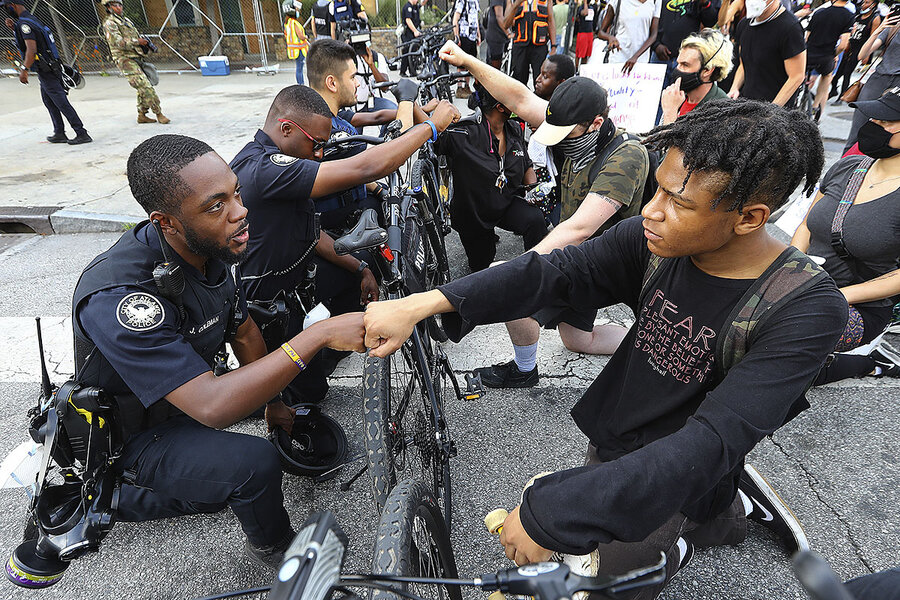
The huge protests against racism in the United States have caused many Nigerians to point out the similarities between racism and tribalism. Some Nigerians believe that both concepts are one and the same thing because they both exhibit prejudice against a particular group of people. Many went as far as calling for protests against tribalism in Nigeria.

This intimation of the similarities between the two concepts is made more glaring when one considers the discrepancies in the appointment of people by the present Nigerian administration. As of May 2020, the appointees of the present administration are 33.7% Southwest, 19.5% Northwest, 15.3% Northeast, 12.6% Southsouth, 11.1% Northcentral, and 7.9% Southeast. Premium Times of June 5, 2020 further broke this down and gave total number of appointees as 64 appointees from Southwest (mostly from Ogun State), 37 appointees from Northwest, 29 from Northeast, 24 from Southsouth, 21 from Northcentral (0 from FCT), and then 15 from Southeast. All these happen despite the existence of the Federal Character policy.

Looking at the discrepancy in the appointment of top political officers by the incumbent administration, it will be unwise to say that racism and tribalism are different. However, unlike racism, it is hard to find hate-crimes in tribalism. Not that it is not possible or that it doesn’t happen, it is however rare. What actually distinguishes racism from tribalism is that the former is borne out of hatred while the latter emerges from loyalty. Put simply, racism is the discrimination of people of a different race because there is the existence of hate for the discriminated race. On the other hand, tribalism is the act of discriminating against a group of people because the discriminator wants to favour another group. Hence, tribalism in Nigeria comes because the people in power want to favour a particular group of people at the expense of other groups.

But the major question for this article is, “Are racism and tribalism natural human behaviours?”

To answer this question objectively, let us consider the following:

1. A mother was outwitted into hatching eggs of turkeys, ducks and chickens together. Of course the farmer did it in such a way that the hen hatched all the eggs within a space of two or three days. When these eggs hatched, this hen had chickens, turkeys and ducks as her “babies”. She brooded and reared them till they were independent. But this same hen hit and chased off other chicks and ducklings because they weren’t hers. This makes one wonder why this hen was loyal to her own “children” and took care of them while she chased off other people’s children. Now, the questions here are, “Why do mothers naturally care for their children more than they do other people’s children?” “If mother’s love discriminates, is it connected to tribalism and racism?”

2. Lions eat flesh and snakes swallow smaller animals. But these two animals have never been known to kill their kinds, unless there is power tussle. They protect their kinds and species but “destroy” other kinds. They don’t hunt one another no matter how hungry they are. They seem to have a common goal of preserving their species. Now the question here is, “Do tribalism and racism exist for species preservation and protection?”

There are so many other instances that will show that every living thing remains more loyal to its in-group members than to the out-group members. In-group members are protected while members of out-groups are destroyed. Hence there seems to be constant competition and antagonism between different groups. In fact, there is a struggle for survival and supremacy that most of us do not know about.

It is therefore possible that racism and tribalism exist because different human groups are struggling for supremacy and survival. It is possible that there is a natural competition that exists between humans which is beyond human imagination. The only problem here is that unlike the mother hen that wanted to protect her chicks and provide them with the limited foods available, and the lions and snakes that hunt other animals for food, human-group competition is baseless. In fact, it is illogical.

The humans’ competition should not be against other humans but unfortunately, that’s the way it exists. The worst thing here is that those that benefit from the divides are fuelling the competition with hatred and fanning this flame of hatred until it begins to consume both the haters and the hated. Worst is that this same unhealthy competition is passed on to younger generations who continue with the tradition. Humanity is indeed in deep trouble.

The way out of this mess is not by enacting laws because several laws that will battle natural human behaviours that harm others are in existence but those crimes still persist. Besides, lower animals do not have law courts and law enforcers but they live their lives the way they should. All that mankind needs to do is to retrace their steps to the beginning of their trouble and fix it from there. This will not come without its challenges because those that reap out of the chaos will prevent the rebirth of humanity. However, there is hope if our younger generations are taught of the beauty and importance of diversity.

To answer the key question of this article, racism and tribalism are borne out of the human innate desire to protect and preserve their species. However, racism became destructive because it is laced with hatred FOR the discriminated. But then tribalism is brewing destruction because it encourages hatred FROM the discriminated.

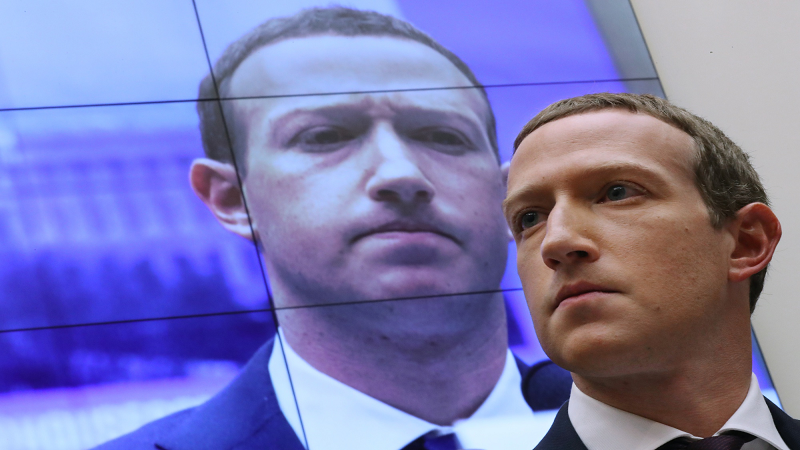
How Facebook Got Caught Up in A Moral Controversy

0

Facebook has inadvertently found itself at the center of controversy emanating from the death of George Floyd, an African-American who died at the hands of the police in Minneapolis, days ago.

The racially-charged development sparked protests across the 50 states of the United States and many countries around the world. The protests were mixed with burning and looting in the US, prompting President Donald Trump to deploy the National Guard Army in a bid to quell the upheaval.

In his statement authorizing the National Guard to halt the unrest, Trump quoted a controversial racial statement from the past: “These thugs are dishonoring the memory of George Floyd, I won’t let that happen. Just spoke to Governor Tim Walz and told him that the Military is with him all the way. Any difficulty and we will assume control but, “when the looting starts, the shooting starts”,” he wrote on Twitter.

The violence message that concluded his statement violated Twitter’s policy that prohibits promotion of violence, so the social media platform placed a warning notice on the tweet but did not remove it because it was made in the public’s interest.

Trump shared the same statement on Facebook, and it was left unchecked, a development that did not only irk the public but also Facebook staffers. One of the reasons being that overtime, the platform has appeared to be making itself pro right wing.

Before Trump shared the “when the looting starts, the shooting starts” statement, he had got into a brawl with Twitter over his tweet discrediting mail-in voting. Twitter had appended a link on his tweet that provides more information about mail-in voting, and Trump called it “censorship,” and threatened to amend Section 230 of the communication Decency Act to hold social media platforms responsible for anti-conservatives posts.

As the controversy between Twitter and Trump escalated, Facebook CEO, Mark Zuckerberg weighed in and took the side of Trump. He said that social media platforms “shouldn’t be acting as an arbiter of truth.” And in justification of his executive order aimed at the review of Section 230 of communication Decency Act, Trump quoted Zuckerberg.

A few days later, following a heavy backlash on Trump’s response to the protests, Zuckerberg found himself defending his inability to take down the looting and shooting statement from Facebook.

“I’ve been struggling on how to respond to the President’s tweets and posts all day,” Zuckerberg admitted in a post he made on Facebook. “Personally, I have a visceral negative reaction to this kind of divisive and inflammatory rhetoric…

“But I’m responsible for reacting not just in my personal capacity but as the leader of an institution committed to free expression. I know many people are upset that we’ve left the President’s posts up, but our position is that we should enable as much expression as possible unless it will cause imminent risk of specific harms or dangers spelled out in clear policies.”

Zuckerberg said he let the controversial post on because it has violated no Facebook policy, though it clearly has a troubling historical reference. He said that Facebook read the post as a warning about state action, not a threat to the public.

However, his efforts to excuse his actions were greeted with further criticism. On Monday, Facebook workers staged a virtual walk out to protest the company’s decision to allow Trump’s statement on the platform. There was a report that Trump had a telephone conversation with Zuckerberg after he criticized Twitter for fact-checking the former, and that has further heightened people’s concern on where the Silicon Valley giant stands on the issue of morality.

Though Zuckerberg has doled out $10 million to support the movement against racial injustice, the gesture is failing to change the perception that the decision not to check controversial posts by Trump and other GOP members has been created.

On Friday, Timothy Aveni, an engineer with Facebook turned in his resignation. He said that the company is being “complicit in the propagation of weaponized hatred.” This is after a host of his coworkers had used their social media pages to fiercely oppose Zuckerberg’s stand on the matter.

As Facebook continues to receive backlash, Zuckerberg has been compelled to engage the company’s employees in a move to review some of the policies. On Friday, he outlined some of the areas that Facebook needs to work on especially in times of crisis.

“We’re going to review potential options for handling violating or partially-violating content aside from the binary leave-it-up or take-it-down decisions. I know many of you think we should have labeled the president’s posts in some way last week,” he said.

The events of the past few days have put Zuckerberg at the center of moral and political tussle, and it will take more than statements to prove what matters more to him.

Pick A Nickname, “The Innovator”

0

Pick a nickname, “The Innovator” – and we will help you live it. ebeano. wa nibi. zo nan. Here we go … jeka

Tekedia offers an innovation management 4-month program, optimized for business execution and growth, with digital operational overlay. It runs 100% online. The theme is Innovation, Growth & Digital Execution – Techniques for Building Category-King Companies. All contents are self-paced, recorded and archived which means participants do not have to be at any scheduled time to consume contents. Class begins June 22.

If you pay before  early bird ends, you get two free ebooks:  “Africa’s Sankofa Innovation” and upcoming “The Dangote System: Techniques for Building Conglomerates” along with free Facyber.com cybersecurity certificate course.

To learn more about this program, click the program page.


https://www.tekedia.com/mini-mba-2/

How Would Facebook Shops Make Money?

0

 The best thing to know in business is when a particular strategy is effective and when it is not effective. It is to know how the first mover advantage differs from the second mover advantage strategically. 

That is why the legend Strive Masiyiwa always says that when you see the bandwagon, it’s already too late. That means we should see the bandwagon before it takes off.

 When we see the trend when it becomes trendy it becomes oversaturated and unprofitable in business. When we see trends before they become trendy then we shall make good business moves. That is very true with those that trade the stock market, forex and crypto market.

 First mover advantage becomes very suitable when you are able to spot a profitable advantage in the market and cease it before every other person sees it. That is before it becomes trendy, you are already reaping the benefits. This is why it is called the first mover advantage.

 As the new world has evolved more into an online world and online shopping has been seen as the better way of shopping, entrepreneurs have created solutions around it. The Facebook Shop is one of the interesting ecommerce platforms created to help businesses achieve digital status.

  This is the time businesses need to apply the first mover strategy in order to explore the potential of the Facebook Shops to build their businesses.

My interest in this article is to show you how the Facebook shops work and how it makes money. You  shall end up understanding the Facebook Shop’s business model. Let’s get started;

 How does Facebook Shops Work

The business models of Facebook shops shows how it works to create value in real terms and to generate revenue. The Facebook shops model has two interesting parts that makes it very strategic for the entire business of Facebook Inc.

  •  Freemium Model.

To have a shop on Facebook you don’t need to make payment for that. You only need to create and design your shop  and stock your catalogue with your product. 

This is what Facebook said about the shop “Those businesses will be able to create a Facebook Shop for free. They just upload their catalog, choose the products they want to feature, then customize it with a cover image and accent colors. Visitors can then browse, save and order products.”

Visitors in this context are prospects or potential clients, when they visit they will see your products and make purchases.

This freemium model has been an effective model of digital brands such as Google, YouTube, LinkedIn, Twitter etc because it is always a springboard to unlock other values in the business.

  •  Market Your Shop.

Once you have a shop on Facebook, then you must market the shop before people discover your products. As the third law of value states that the value of a product is determined by the market test when people buy and exchange money for it.

There is already infrastructure for effective digital marketing on Facebook. This will help every shop to explore the opportunity.

You can pay Facebook to promote your shop to gain more visibility or you can choose to do organic marketing. This is why I analyzed in one of my articles why the freemium model is not free but an inroad to unlock value for a business.

 We now understand how Facebook shops work, this will lead us to explore how it makes money.

 How does Facebook Shops makes money (Facebook shops revenue model)

This is the most important aspect of every business to business executives and entrepreneurs. As entrepreneurs fix market frictions through solutions they also want to generate revenue in order to keep the wheel of the company in motion. To Facebook shops here are the two ways it makes money for the shareholders and entrepreneurs.

  •   Commission Revenue:

This is the core revenue model of ecommerce platforms like Amazon, Jumia, Alibaba, eBay, Pollstaker etc. Every sale made on the platform will attract a deduction of a fixed rate . That commission is the payment for the management of the platform and marketing activities done for you by the company.

 On Facebook Shop, the sales of every product will attract a commission charge. This is how Facebook shops make money. If for instance my shop  makes a sales of $100,000,  if the commission is 10%, Facebook will earn a commision of $10,000 from such transactions.

  •  Advert Revenue:

The advert revenue model is the core revenue model of data mining brands like search engine brands and social media brands. Ths made up about 80% of Facebook annual revenue.

The Facebook shop product has the tendency of increasing the ad revenue of Facebook in this way. As more businesses have shops on Facebook, they will need marketing. This will make them run paid advertisements on Facebook. The more the shops, the more the paid advert.

At the end of the day Facebook may earn more from advert than commission as the revenue models of the shop.

This  analysis is in two folds, the first one was about; Facebook Shops: Pivoting in Pandemic. Click to read it here

 As we have seen, this is the suitable time to benefit from the first mover advantage strategy.