DD
MM
YYYY

PAGES

DD
MM
YYYY

spot_img

PAGES

Home Blog Page 6309

3 Approaches to Improving Manufacturing Productivity

0

A delay of a few seconds is far from the end of the world in many lines of work. However, any source of delays, pauses or downtime in manufacturing gets amplified across the repetitive nature of production. This has the potential to put a serious wrench in the works, costing companies valuable time and revenue.

Perhaps in no other industry is it quite as important to prioritize productivity and efficiency, and here are three approaches manufacturers are taking in an attempt to do just that.

Automate Certain Processes via “Cobots”

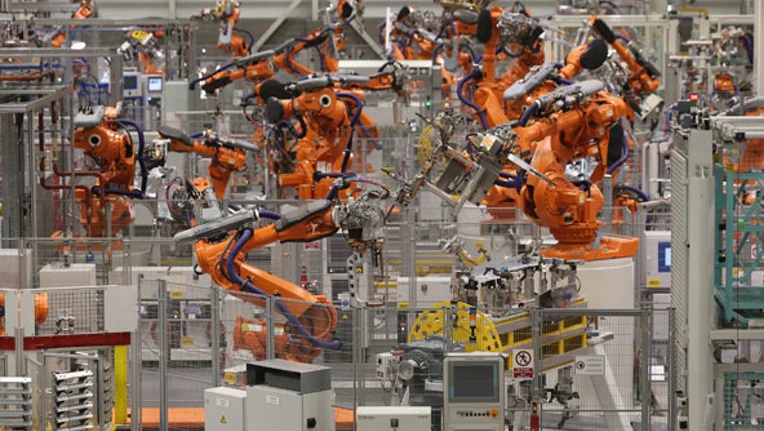
Rather than treating automation as an all-or-nothing proposition, many manufacturers have gone the route of streamlining operations using a combination of employees and collaborative robots (cobots).

There are a few potential advantages manufacturers can reap by supplementing their human workforce with robots — precision, 24/7 availability and speed to name just a few. 

These gains can also translate into more efficient processes overall.

Five of the key applications for cobots in manufacturing today include:

  • Picking items, packing them in boxes and stacking these containers on pallets
  • Soldering and welding on an ad hoc basis
  • Assembling parts into whole products
  • Handling and transporting various materials, including those unsafe for humans 
  • Inspecting finished products for quality before sending out

Harness Internet of Things (IoT) & Data Analytics

The ever-growing Internet of Things (IoT) is well suited to manufacturing because these smart devices — such as sensors placed all around the manufacturing floor — provide valuable information that decision-makers can then use to make improvements. The proliferation of IoT devices throughout factories and warehouses has gone hand in hand with the rising importance of manufacturing data analysis in making decisions aimed at optimizing business outcomes.

As Industry Week reports, 82 percent of the manufacturing firms that have harnessed the IoT have seen increased efficiency. Similarly, nearly half have reduced the number of product defects and boosted customer satisfaction as a result.

Here’s one example: IoT-connected sensors help manufacturers keep a close eye on equipment usage and reliability — allowing them to intervene quickly when needed and predict when timely maintenance could prevent costly downtime.

Another use case is harnessing IoT to monitor and optimize energy usage within manufacturing facilities — a significant overhead cost that can easily start to climb without intervention. IoT sensors and systems can identify opportunities to reduce waste, replace outdated systems, streamline schedules, proactively schedule maintenance and reduce utility bills.

Streamline Floor Layout

Equipment uptime and energy consumption are important building blocks of overall efficiency, but mean less when floor layout is hampered by lack of flow. As Assembly Mag notes, the arrangement of tools and workstations ultimately affects “ergonomics, productivity and throughput.” 

Devotees of the lean manufacturing method, first popularized by Toyota to reduce waste, recommend manufacturing decision-makers take regular “Gemba walks” — an opportunity to step back from normal day-to-day activities to see how everything is flowing. This also gives leaders an opportunity to engage directly with employees on the line, who often have valuable feedback about their workflows and challenges.

While manufacturers may be hesitant at first to reconfigure their lines, doing so with a plan in mind can help maximize flow and minimize waste. For instance, taking the time to reduce extraneous transportation across the factory floor now can shave seconds or minutes off every single batch of finished products in the future. But the key is always basing layout decisions on real worker feedback and data rather than tradition or short-term convenience.

There are many ways to go about improving manufacturing productivity — automation of rote tasks, the use of IoT to beef up data analytics capabilities and optimization of layout are three places to start.

How To Write Actionable Business Plan

9

“A goal without a plan is just a wish.” Antoine de Saint, writer and pioneering aviator.

“By failing to prepare you are preparing to fail.” Benjamin Franklin, one of the founding fathers of the United States

This article shall be discussed in two parts. Business Plan is not what one can didactically discuss in one series because it is vast and wide. As a business coach with passion for success, efficiency and productivity, I will be very thorough in treating this salient business topic titled: Writing Actionable Business Plan.

Most businesses have gone down the drains because their promoters or founders did not do background checks of the business they undertook very well partly because the enterprise or business does not have a well-established written out Business Plan. The opening quote by Benjamin Franklin is a ready axiom to back up my postulations- “by failing to prepare you are preparing to fail.”

So, this article is basically for start-ups, entrepreneurs, aspirational individuals and would-be business owners (people switching over quadrants from employees to business owners). I therefore urge you to be painstaking to the gobbets (extracts) that will be marshalled out in this treatise (discourse).

A plan is simply analytic details of something that are intended to be carried out with the intent to achieving a goal. Now that you understand what a plan is, adding business to the prefix makes it Business Plan. A Business Plan is therefore defined as well-documented essential details that will guide the gamut of operations of a yet-to-be established ‘successful’ business from gestation to maturation.

The absence of a well detailed Business Plan is likened to a sea pilot who has lost his compass of navigation and may not be able to sail the ship to safety. The new entrepreneur who wishes to play small or big in the world of business having a comprehensive business plan has scaled above the teething-stage of failure. A Business Plan is a vade mecum or the bible of the business where key goals, procedures and processes; resource allocation and utilization, financial deliverables and endeavours that are supposed to be followed in order to turn business dreams into reality are found.

The importance of a well-written down Business Plan cannot be overemphasized. Every aspect of the business ranging from legal to marketing, financial to operations, production to sales, foundation to structures are well enshrined. Some of the importance would be mentioned here but they may not be exhausted:

– It provides investors with how viable and viral the business would be. Therefore, serving as an investment guide before committing money, time and resources

– It provides information about the legality or otherwise of the business and provides confidence to all stakeholders 

– It sheds lights on strategies required to start the business and making it operational

– A Business Plan provides the steps needed to be taken for efficient resource allocation and for achieving business goals and timelines of expected results- timelines deliverables to stakeholders and investors

– Since a Business Plan is the bible of the business, it can always be consulted whenever there are hiccups therefore updating a business plan even when the business is running should be an annual ritual

– It positions the business to attract the needed funding from venture capitalists, business angels, banks and NGOs

– Some Business Plans explain when scale-ups should be done and handled i.e when new assets can be acquired; operations increased to meet new trend in the market, increase in demand, among others

– Business Plan should contain some key aspects of marketing concepts, mix and strategies as they are key boosters and serve as Key Performance Indicators (KPI) to investors

– A well-documented Business Plan defines the business vision and mission as well as objectives. This helps the management to check ultra vires (acting beyond constituted power or objectives or beyond terms of reference)

– Business Plan, if well written helps in aiding management in taking crucial decisions particularly when expectations go awry with reality

– Business plan is also needed to avoid mistakes. In reality, we know mistakes are unavoidable and insurmountable but not big mistakes which can results into big unmitigated risk, leading to loss in profit and eroding capital.

Now that I have been able to convince you of the importance of a Business Plan, there is need to show you what the essential components of a standard Business Plan should contain:

– A glimpse or panorama or snapshot of your business: graphically and in words

– A brief description of the business nay company. Passion and history of the business may not be totally excluded

– Domicile or address of the business with the likely social media presence with which to project the business

– Details of target markets and competitors. Please ignore competitors and focus more on your strengths and opportunities that you intend to grasp. 

– The products or services your business hopes to produce or provide and how they are differentiated from others. Trademark, branding and others may be briefly discussed

– For products: you need to show the prototype, so as to convince would-be investors of your readiness to hit the ground running as soon as funds are made available

– The strategies to adopt with respect to sales and marketing must be included in any Business Plan

– All classes of funding and their differentiations and how to manage them as well must be stated; so that would-be investors can have variety of options and what they are to expect at the end of the financial year

– Identify what your cost centres and expense structures should be; at least a 12-month duration is ideal

– Forecasting for at least five years. It is a tacit way of telling investors that you are not closing down soon therefore guarantees Return on Investment (ROI)

A well decrypted Business Plan must be hinged on the following modus operandi or stepping Stones: 

– It must have undergone thorough work of research. It must not just be a document put together without adequate verification of facts and figures. It should be a document that is empirical

– It must be able to provide information about company’s profile, ownership, products and services, stakeholders’ interests, among others

– A statement of cash flow of income and expenditure for at least 12 months

– The plan should include well-structured marketing plans with their objectives and deliverables

– The Business Plan must not be rigid in operation and therefore it should be adaptable to all persons who show interest

– A well-documented Business Plan must be hinged on acceptable norms, social graces and above all sound ethical standards that are fair, good and rewarding

In concluding this first series on Actionable Business Plan, I will briefly discuss qualities that a good Business Plan should possess:

– A qualitative Business Plan must fit the needs of the business. It must define the purpose for which it is created. Simply put, a Business Plan must be tailored to the business you seek to establish. Imagine you taking the business plan for a service company and turning it to a production company. They may not entirely have same contents and variables. And therefore, it will not yield result.

– In addition, a good Business Plan must be realistic and not fantasized. In the paragraphs above, I already mentioned that enough research is required to empirically provide facts and figures. Not just cook ups. So, a Business Plan that is not real cannot attract investment and if it does, the promoter might run into trouble waters because projections were based on fantasies. 

– For start-ups, a Business Plan should be specific and track records of result achieved. This means that a Business Plan must include set targets, goals, deadlines, scale-up dates, budget, forecast, and metrics, among others

– As mentioned inter-alia, a Business Plan must carry along in itself the responsibility for implementation. It is a vade mecum and as such, it needs to be consulted from time to time, so as to keep the vision, mission and strategies in tune with current realities

– This is the odd one. There are assumptions too in Business Plan. Many may have heard of the term ‘Cateris Paribus’ meaning ‘all other things being equal’. As the planner, you must also factor this in your decision making processes because wishes are different from reality. And always realize this whenever you are making real life decision or face challenges

– Every Business Plan must communicate. The type of communication we talk about here is that, everyone who comes in contact with it should be able to run with the vision and mandate. It should speak clearly and unambiguously to its promoters and executors. 

……to be continued

I leave you with the words of Alan Lakein, author of the book titled: “How to get control of your time and life.” “Planning is bringing the future into the present so that you can do something about it now.” 

IBM Punts on Facial Recognition – And Why That Is A Mistake

1

IBM punts on facial recognition technology because the technology is biased against minorities: “IBM no longer offers general purpose IBM facial recognition or analysis software.” Yes, if you feed 100 images into an algorithm, and 90 are oranges while 10 are apples, there is a good likelihood that the algorithm will be biased towards oranges. To fix that work which must naturally happen, if not in this decade, but in future ones, you do not suspend the project. So what do you do? You bring more apples to equilibrate on density and regularity, at parity with oranges. That IBM has a different idea is surprising. Yet, no one says it would be easy.

In a decision which seems to be inspired by the racially-charged protests going on around the world, IBM has announced that it is suspending work on general purpose facial recognition or analysis software.

In a letter sent to congress on Monday, IBM CEO Arvind Krishna said the company will no longer pursue facial recognition technology.

“IBM no longer offers general purpose IBM facial recognition or analysis software. IBM firmly opposes and will not condone uses of any [facial recognition] technology, including facial recognition technology offered by other vendors, for mass surveillance, racial profiling, violations of basic human rights and freedoms, or any purpose which is not consistent with our values and principles of Trust and Transparency.

“We believe now is the time to begin a national dialogue on whether and how facial recognition technology should be employed by domestic law enforcement agencies,” he said.

IBM should not be made a racial hero because it is stopping facial recognition research. Nonsense! IBM knows what to do – and that thing is this: take 10% of that wasteful $4 billion stock buyback, and send it to minority schools, helping them to deepen their capabilities in science, technology, engineering, and science (STEM). Then take another 5% to support high schools in minority neighborhoods to support STEM. If IBM does it within a decade, facial recognition paralysis will begin to be normalized as those young leaders will contribute in building the tools and technologies in the domain. Sure, IBM is not a charity, and has its priorities. But it must make this a pure-Congress problem. There is something it can do to get other tech companies to take action. A “national dialogue” will not fix the root cause which is lack of representation of minorities in STEM.

IBM is exiting the facial recognition business. The company will no longer offer, develop or research facial recognition software, with its chief calling for a “national dialogue” on whether or how the controversial tech should be used, CNBC reports. Studies have shown that facial recognition technology performs worse at identifying the gender of people with dark faces. IBM’s decision comes as tech companies face increased scrutiny over their contracts with law enforcement agencies amid crackdowns on protests against police racism and brutality across the country.

America did not stop football, baseball, etc because the games were biased in the past against minorities. They simply developed ways to bring minorities into the games. And those men and women competed and the game has gotten better. Evil was that a black man could not play baseball, and freedom was a black man decided that baseball was not his career option

That is what we need in science. All the noise making on ethics without dealing with the root cause in waste of time. Fund minorities and unleash young minds into STEM; good things will happen. IBM can lead that in tech and mobilize peers to fund STEM programs for minorities.

IBM Ends Facial Recognition Technology, Urges Congress to Address Racial Injustice

0

In a decision which seems to be inspired by the racially-charged protests going on around the world, IBM has announced that it is suspending work on general purpose facial recognition or analysis software.

In a letter sent to congress on Monday, IBM CEO Arvind Krishna said the company will no longer pursue facial recognition technology.

“IBM no longer offers general purpose IBM facial recognition or analysis software. IBM firmly opposes and will not condone uses of any [facial recognition] technology, including facial recognition technology offered by other vendors, for mass surveillance, racial profiling, violations of basic human rights and freedoms, or any purpose which is not consistent with our values and principles of Trust and Transparency.

“We believe now is the time to begin a national dialogue on whether and how facial recognition technology should be employed by domestic law enforcement agencies,” he said.

Facial recognition software has been surrounded by controversy from the first time it was trialed. In 2018, research conducted by Joy Buolamwini and Timnit Gebru found that most of the systems were biased. The finding spurred further criticism of the algorithms and efforts to fix the shortfalls of the system that resulted in bias.

The Verge analysis of the entire system found more loopholes in other areas including privacy. In December 2019, the National institute of Standards and Technology discovered “empirical evidence for the existence of a wide range of accuracy across demographic differences in the majority of the current face recognition algorithms that were evaluated,” part of it, violation of privacy that has become an everyday story of technology.

Most of the companies selling the facial recognition software have been under scrutiny. Even though not all the companies were involved in the studies conducted, many that were involved had cases to answer. For instance, Clearview AI came under scrutiny when it was discovered that its facial recognition tool, built with more than 3 billion images compiled partly from social media sites is being used by private organizations and law enforcement agencies.

IBM attempted to help with the issue of bias in facial recognition through the public data set it released in 2018. The data showed that commercial systems are more accurate if you’re a white male. This is because of lack of system technique to accommodate diversity; people of color appear less frequently than others, limiting their chances of recognition.

While IBM was still making an effort to clear the issue of bias, it was caught in a privacy controversy. The company was found sharing a separate training data set of nearly one million photos taken from Flickr without the consent of the subjects in 2019.

Other companies were also getting into trouble for the use of facial recognition technology. Facebook faced a class-action lawsuit for unlawful use of facial recognition technology that it settled with $550 million in January.

In 2018, the American Civil Liberties Union found that Rekognition, facial recognition software sold by Amazon, incorrectly matched 28 members of Congress to faces collected from 25,000 public mugshots.

IBM also considered the issues of racial profiling by law enforcement agents. As part of the reason it’s discontinuing its work on facial recognition technology, it urged the government to reform the police and address the ever increasing cases of racial injustice.

In the letter, Krishna quoted the letter Thomas J. Watson Jr., the 1953 president of IBM, wrote to all employees:

“…Each of the citizens of this country has an equal right to live and work in America. It is the policy of this organization to hire people who have the personality, talent and background necessary to fill a given job, regardless of race, color or creed.”

He added: “congress should bring more police misconduct cases under federal court purview and should make modifications to the qualified immunity doctrine that prevents individuals from seeking damages when police violate their constitutional rights.

“Congress should also establish a federal registry of police misconduct and adopt measures to encourage or compel states and localities to review and update use-of-force policies.”

With abundant evidence of inconsistencies of facial recognition technology, especially the lapse in recognition of people of color, congress is likely going to act on IBM’s letter. Other companies that may still have the intention to continue their work with the technology will eventually be stopped or face tighter rules.