DD
MM
YYYY

PAGES

DD
MM
YYYY

spot_img

PAGES

Home Blog Page 631

The Samsung’s Option As US Pushes for End of Chip Making in China

0

One of the most “elitist” technical jobs in America is mixed signal integrated circuit design. Why? There are just a handful of universities which are in the MOSIS program, funded by DARPA, the US military funding organization, which makes it possible for students to design chips and get them fabricated. If your university in not in the MOSIS program, that is it. And if you are in, you will have access to the most important CAD tool in the world: Cadence. Upon Cadence is the chips of nations designed.

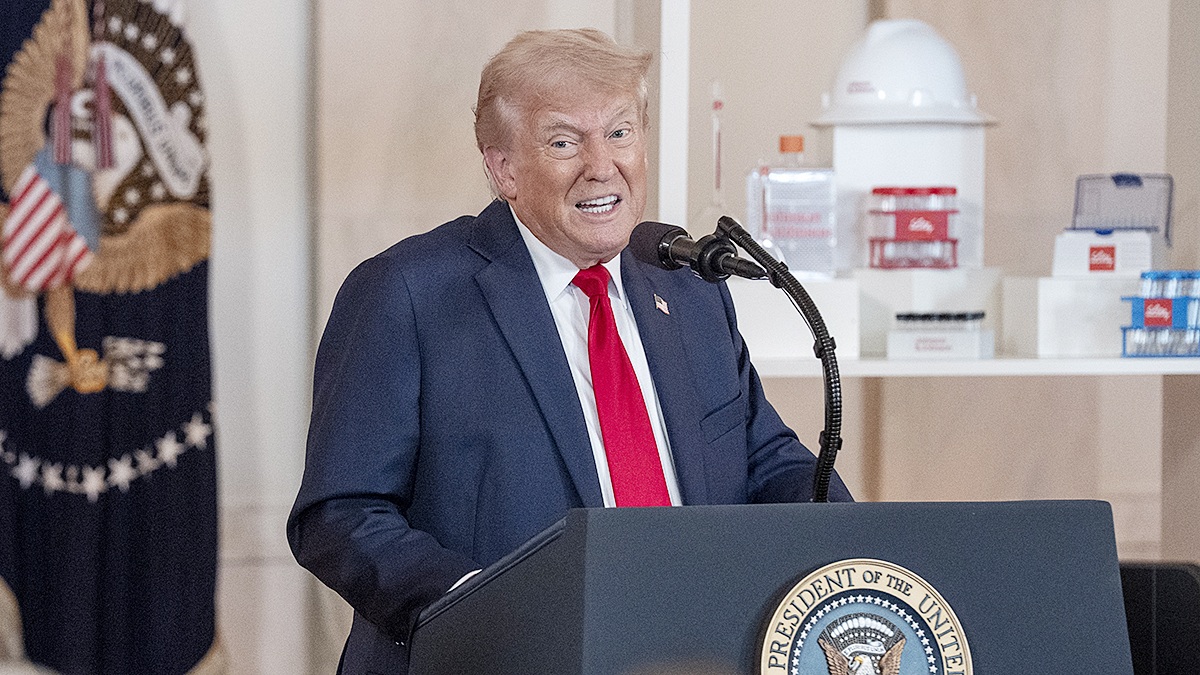
When you finish the schematic design, you do the layout and then generate the files which are then sent to the foundry for manufacturing. (I explained the steps here . ) Trump understands that before the factories receive the files in Taiwan or anywhere, America’s Cadence has done the design job. One European company, ASML, makes the most important equipment (primarily in lithography) used in the manufacturing, and over time, the US does influence where ASML ships its products.

Looking at everything, the news that the US does not want South Korea’s Samsung to run chip manufacturing in China with US equipment is another way of saying Samsung get out of China chip manufacturing: “President Donald Trump’s administration has escalated its technology confrontation with China by revoking authorizations that allowed South Korean chip giants Samsung Electronics and SK Hynix to use American semiconductor equipment in their Chinese plants.”

But Samsung has an option – come to Abia State and build your plants! No restrictions because Nigeria is a friend of Trump’s America!

Comment on Feed

FB:  Emeka… thanks for bringing my attention to this post.

Prof, this is a brilliant breakdown. You’re absolutely right that mixed-signal IC design is one of the most “gatekept” technical careers because of how access to tools, foundries, and training is controlled.

The MOSIS program, Cadence, and DARPA’s early investments created a pipeline where only a handful of universities (and their students) could get hands-on exposure. That exclusivity translates into both scarcity of talent and high strategic importance.

On the geopolitical side, it’s fascinating how design and manufacturing dependencies are structured. Cadence and Synopsys dominate EDA (design), ASML monopolises EUV lithography, TSMC/Samsung/Intel dominate advanced fabs, and the US wields leverage by controlling licensing of critical equipment.

That’s why the “chip war” isn’t just about fabs in Taiwan or Korea—it’s about who controls each link of the toolchain.

But the top priority for countries like Nigeria should be local capacity development in VLSI, chip design, and semiconductor engineering.

A hyper-skilled workforce is a major driver of outsourcing—companies take their design work to where the talent pool exists.

And while Cadence is the gold standard, it’s worth noting that there are also open-source EDA tools, especially within the RISC-V ecosystem, which is built on an open ISA. These tools are not yet at the scale of Cadence/Synopsys, but they lower the entry barrier for training and experimentation.

Your Abia State point is spot on as a provocation: why not think about building alternative hubs in friendlier, less geopolitically constrained regions?

Of course, fabs require billions in CAPEX, water, power, and highly skilled engineers, but Nigeria and other emerging economies could position themselves as strategic partners if they start small—say with packaging, assembly, or even specialised analog/mixed-signal fabs where the barriers to entry are lower.

Over time, building such capacity could break the monopoly of a few nations.

It’s a bold idea—and in this chip war era, the countries that prioritise skills and think outside the established power map may actually create new opportunities.

U.S. Revokes Key Authorizations for Samsung, SK Hynix in China, Tightens Grip on Global Chip War

0

President Donald Trump’s administration has escalated its technology confrontation with China by revoking authorizations that allowed South Korean chip giants Samsung Electronics and SK Hynix to use American semiconductor equipment in their Chinese plants.

The move, disclosed in the Federal Register, marks a sharp turn in Washington’s efforts to ensure that its allies’ chip production in China cannot advance beyond current levels.

Intel, which sold its Dalian memory chip plant earlier this year, was also named in the filing.

The revocations will take effect in 120 days. After that deadline, Samsung, SK Hynix, and others will need to secure new licenses to obtain American chipmaking tools for their Chinese operations. The Commerce Department said it intends to approve licenses that allow the firms to keep existing facilities running, but emphasized it will not authorize any expansion or technology upgrades.

“This move will make it harder for Korean chipmakers with facilities in China to continue producing more advanced chips,” said Chris Miller, author of Chip War.

Korea Pushes Back, But U.S. Sets Boundaries

SK Hynix said it “will maintain close communication with both Korean and the U.S. governments and take necessary measures to minimize the impact on our business.” Samsung declined to comment.

South Korea’s government has appealed to Washington, stressing that its companies’ Chinese operations are essential to the global semiconductor supply chain. The Ministry of Trade, Industry, and Energy vowed to “continue discussions with the U.S. to minimize the impact on South Korean companies.”

Yet Washington is signaling it will not bend on its core objective: keeping China from advancing technologically through access to U.S. chipmaking machinery.

U.S. Suppliers Hit as Well

The licensing change will ripple back to American equipment suppliers such as KLA Corp, Lam Research, and Applied Materials, which collectively generate billions in annual sales from Chinese fabs. Shares of Lam fell 4.4%, Applied Materials dropped 2.9% and KLA lost 2.8% after the filing.

In June, a White House official described the possibility of revoking the authorizations as “laying the groundwork” in case trade talks with China broke down. Although Trump and South Korean President Lee Jae Myung announced a tariff truce in July, they left key details unresolved. That truce currently caps U.S. tariffs on Chinese goods at 30% and Chinese tariffs on American imports at 10% until November.

Winners and Losers in the Chip War

Analysts say the licensing revocations may unintentionally strengthen Chinese domestic equipment makers, who could step in to fill supply gaps for Samsung and SK Hynix. The move may also benefit Micron, a U.S. memory chip competitor, by weakening Korean firms’ ability to expand production in China.

“If this isn’t accompanied by further steps against Chinese chipmakers like YMTC and CXMT, it risks opening market space for Chinese firms at the expense of the Korean firms,” Miller said.

Thousands of license applications by U.S. suppliers remain uncertain, creating what industry officials describe as a paralyzing backlog. The Commerce Department is also moving to strip Samsung and SK Hynix of their “Validated End User” (VEU) status, which currently allows faster, license-free shipments of U.S. technology. Removal of that status will slow the pipeline of crucial chipmaking tools into China.

A Pattern of U.S. Tech Protectionism

The clampdown on Samsung and SK Hynix fits into a broader pattern of Washington using trade tools, export restrictions, and tariffs to maintain a technological edge over China. Trump has already sought to wall off U.S. advances in areas like artificial intelligence, quantum computing, and biotechnology from Chinese firms, while urging allies in Europe and Asia to align with American policy.

This approach mirrors the administration’s tariff strategy — recently thrown into legal jeopardy after a federal appeals court struck down Trump’s sweeping “reciprocal tariffs” as unconstitutional. While Trump plans to appeal that ruling to the Supreme Court, his administration has pivoted aggressively toward sector-specific measures, especially in strategic industries like steel, aluminum, and semiconductors, that courts are less likely to strike down.

The latest restrictions are likely to deepen frictions with allies like South Korea, who rely on China as both a production base and a massive consumer market. They also come as Europe intensifies its regulatory scrutiny of U.S. tech giants and signals willingness to retaliate against Washington’s trade measures.

The Biden administration carried forward many of Trump’s first-term chip restrictions, but the latest escalation shows Trump is doubling down on his strategy of using trade law and export controls not only to squeeze China but to protect U.S. companies from foreign competition — even when the foreign firms are close allies.

BullZilla Presale Hype and BabyDogeCoin Price Forecast: Are These the Top Meme Coins to Join for Short Term?

0

In the rapidly evolving landscape of meme coins, investors are always on the lookout for the next opportunity that could yield massive returns. While many traders regret missing out on Pepe or Dogecoin during their early boom stages, new projects are now entering the scene with unique momentum. 

Among them, BullZilla is capturing attention with its explosive presale activity, while Babydogecoin continues to move under the spotlight with mixed signals from the technical indicators. In this detailed analysis, we explore whether these two cryptocurrencies could be among the top meme coins to join for short term.

BullZilla Presale: A Breakout Moment in Meme Coin History

The BullZilla ($BZIL) presale is now live and has already sold an astonishing 4.7 billion tokens, underscoring the immense demand that the project has generated. This early frenzy positions BullZilla as one of the top meme coins to join for short term, particularly for traders eager to seize momentum before it lists on major exchanges. Unlike other meme tokens that struggled to maintain hype, Bull Zilla has built its reputation by blending scarcity mechanics, community-driven utility, and consistent updates that keep traders engaged.

For investors who felt the sting of missing out on Pepe or Dogecoin, the Bull Zilla presale offers a second chance to ride an early-stage wave that shows strong potential. With its current trajectory, many analysts are already highlighting BullZilla as one of the trending meme coins of 2025 that could challenge long-established names. Its growth strategy, paired with strong presale numbers, makes it difficult to ignore when discussing the top meme coins to join for short term.

BabyDogeCoin Price Analysis and Forecast

BabyDogeCoin currently trades at $ 0.0081, but based on technical indicators, the price is projected to drop by 3.86% and reach $ 0.0076 by September 29, 2025. The overall sentiment remains bearish, with the Fear and Greed Index sitting at 39, indicating clear fear among investors. Over the past 30 days, BabyDogeCoin recorded 14 out of 30 green days, reflecting 47% positive closes, but the volatility of 4.65% keeps traders cautious.

The 50-day simple moving average is at $0.0?1363, while the 200-day simple moving average is considerably higher at $0.0?1666, suggesting that the asset is still struggling to recover its longer-term trend. The 14-day relative strength index stands at 42.50, pointing to weak momentum. Given these signals, babydogecoin is not currently considered among the top meme coins to join for short term, as indicators lean heavily toward a potential decline in value.

Comparison: BullZilla vs BabyDogeCoin

When comparing BullZilla and babydogecoin, the difference in momentum becomes striking. BullZilla is thriving on explosive presale success and strong investor demand, making it a clear contender for traders eyeing the top meme coins to join for short term. Meanwhile, babydogecoin continues to show weaknesses, weighed down by bearish sentiment and technical red flags.

This comparison highlights why traders who want to be positioned early in promising meme coins are closely watching the BullZilla presale. It offers an entry point before the token becomes widely available on exchanges. On the other hand, babydogecoin is in a consolidation or downtrend phase, making it less appealing for immediate short-term gains.

Why BullZilla Could Dominate Trending Meme Coins 2025

One of the most critical aspects of meme coin investing is recognizing when a project has the potential to trend beyond short bursts of hype. BullZilla has already attracted attention not just because of its presale numbers, but because of its positioning as a community-focused and scarcity-driven asset. As one of the top meme coins to join for short term, it could also extend its relevance into trending meme coins 2025, offering both short-term and long-term appeal.

Conclusion

Investors seeking the top meme coins to join for short term must weigh both hype-driven momentum and technical data. In this case, BullZilla stands out thanks to its 4.7 billion tokens already sold in its presale, making it one of the hottest opportunities currently on the market. babydogecoin, on the other hand, shows bearish technicals and a potential downside of -3.86%, signaling caution for traders who were hoping for immediate upside.

Ultimately, those who missed pepe and missed dogecoin may view BullZilla as their next chance at early adoption. With strong presale demand and a growing community, it emerges as one of the most compelling candidates among the top meme coins to join for short term today.

For More Information: 

BZIL Official Website

Join BZIL Telegram Channel

Follow BZIL on X  (Formerly Twitter)

Frequently Asked Questions for Top Meme Coins to Join for Short Term?

What was the starting price of BullZilla’s presale?

The presale launched at $0.00000575 per token.

How quickly did BullZilla raise funds?

It raised $10,000 within two minutes and sold over one billion tokens almost immediately.

What is Baby Dogecoin short-term price outlook?

Analysts expect consolidation between $0.12 and $0.18, with potential breakouts toward $0.20–$0.30.

Why is BullZilla considered a top early stage crypto investment?

Its presale mechanics, live burn system, staking rewards, and explosive early demand highlight its unique potential.

Glossary

Presale – The earliest stage of a token offering, often providing the lowest entry price.
Mutation Mechanism – BullZilla’s price-rise system triggered by time or funding milestones.
Roar Burn – The on-chain destruction of tokens at each presale stage.
Staking Furnace – BullZilla’s staking feature offering high APY rewards.
Base Chain – The Ethereum Layer 2 network where Brett gained popularity.

Summary

BullZilla and BabyDogecoin present two sides of today’s meme coin market. BullZilla’s presale launch stunned the community by raising $10,000 in just two minutes and selling one billion tokens instantly, making it one of the top new meme coins to buy for 2025, top early-stage crypto investments. Popcat, meanwhile, continues to capture attention with price predictions pointing to both steady short-term consolidation and the possibility of long-term growth above $1.

Disclaimer: 

This article is for informational purposes only and should not be considered financial advice. Cryptocurrency investments are highly volatile and speculative. Always do your own research before investing.

Roqqu Lists Nigeria’s First Regulated Stablecoin cNGN, Driving Adoption at The Grassroots

0

Nigerian crypto exchange Roqqu has officially listed Nigeria’s regulated cNGN, a stablecoin pegged at a 1:1 ratio to the Naira.

While Roqqu is still awaiting a provisional crypto licence from the Securities and Exchange Commission (SEC), its decision to list the SEC-approved token underscores the growing acceptance of cNGN among market operators.

Roqqu, which says it now serves 1.8 million users and has a strong grassroots presence, believes its network will help bring stablecoin closer to everyday Nigerians.

A currency is not a thing if it’s not embraced by the people, and we know how to get to these people,” said Emmanuel Peter, Roqqu’s Head of Academy and Business Partnerships. This could be what the cNGN token has been missing, wider distribution.”

Roqqu will earn exchange fees from fiat-to-cNGN swaps but plans to make peer-to-peer cNGN transactions feeless to encourage adoption.

The platform has already integrated with Base, one of six supporting networks. It will run a co-marketing campaign with the cNGN team featuring educational and promotional events across campuses and multiple Nigerian cities.

CEO Benjamin Onomor added that Roqqu intends to build additional financial services around cNGN.

We want to unlock all the opportunities this stablecoin brings, including eventually providing users with low-interest loans and other services”, he said.

With this move, Roqqu joins other Nigerian startups such as Busha, Quidax, Xend Finance, Blockradar, and Boundlesspay that have adopted the stablecoin.

Inside cNGN

The cNGN is Nigeria’s first regulated stablecoin, launched on February 3, 2025, after a year-long delay to meet regulatory requirements. It is fully backed by naira reserves held in licensed custodian banks and operates under the SEC’s Regulatory Incubation (RI) Program.

Distributed by the WrappedCBDC team, the stablecoin now has ?603 million ($395,000) in circulation. Its goal is to provide a stable, transparent digital currency that avoids the volatility of traditional cryptocurrencies while enabling payments, remittances, and trading.

The listing of cNGN across crypto platforms in Nigeria is timely, as Stablecoin adoption in the country has surged, driven by economic challenges like naira devaluation, high inflation, and limited access to traditional banking.

Nigeria is Africa’s largest stablecoin market, processing nearly $22 billion in transactions between July 2023 and June 2024, with stablecoins accounting for 43% of Sub-Saharan Africa’s crypto transaction volume.

Why cNGN Matters

The stablecoin offers multiple benefits for Nigeria’s digital economy:

  • Financial Inclusion: Provides unbanked and underbanked Nigerians with a stable entry point into digital finance.
  • Economic Efficiency: Enables faster settlements and lower-cost transactions for individuals and businesses.
  • Blockchain Adoption: Encourages broader use of blockchain-based financial solutions by showcasing transparency, security, and efficiency.

By being 100% naira-backed and SEC-regulated, cNGN stands apart from volatile crypto assets, offering a safer option for merchants, investors, and everyday users. It also simplifies remittances, making cross-border transfers faster and cheaper than traditional methods.

The Road Ahead

Despite its promise, concerns remain about the naira’s stability, which could impact trust in the token’s long-term value. Ultimately, the success of cNGN will hinge on its ability to maintain regulatory compliance, transparency, and user confidence while driving adoption at scale.

With exchanges like Roqqu pushing grassroots distribution, Nigeria’s stablecoin experiment may mark a turning point in the country’s digital finance journey.

Solana Price Prediction: SOL Could Hit $800 in 2025, But Ripple (XRP) and Little Pepe (LILPEPE) Will Explode First

0

Solana (SOL)’s breakthrough scaling enhancements and lightning-fast transaction speeds give it an edge over every other blockchain in the space.  Many analysts expect SOL to reach $800 by 2025, thrilling investors.  However, Ripple (XRP) and Little Pepe (LILPEPE), a presale sensation reinventing the meme coin playbook, may be the near-term breakout stars.

Little Pepe (LILPEPE): The Meme Coin Turning Heads in 2025

Before diving into Solana and Ripple, let’s talk about the project that has the community buzzing—Little Pepe. This new meme token is in Stage 12 of its presale, priced at $0.0021 per token, and has already raised over $22.6 million. With 35,983 holders and an active Telegram group boasting 28,045 members, data indicates Little Pepe is building one of the most committed communities in the market.

What sets Little Pepe apart is its fusion of meme culture with robust tokenomics. A tidy 26.5% of the total supply is sold in the presale, which means it’s pulling in enough cash for serious liquidity and future upgrades. A further 10% is earmarked for liquidity pools, which lock in stable trading as soon as the token goes live. The clever minds behind the project also tucked away 30% in chain reserves.

Features like 0% transaction tax, staking rewards, and a CertiK audit give it both hype and credibility—a combination rarely seen in this category. We believe that with its rapidly growing user base and viral potential, Little Pepe could deliver returns that eclipse not only Ripple but even Solana in percentage terms.

The ongoing $777,000 giveaway, with over 231,000 participants already, suggests momentum is only increasing. Compare this with other meme tokens like Dogecoin and Shiba Inu, which are already trading at multi-billion-dollar valuations. Little Pepe offers a low entry point, meaning early investors stand to benefit most if it mirrors the viral growth of previous meme coin giants. In our view, Little Pepe could be the biggest success story of 2025 for investors seeking massive upside from a tiny starting price.

Ripple (XRP): Institutional Validation from SWIFT

Ripple makes headlines, but this is a game-changer:  SWIFT, the worldwide interbank communication network, is testing XRP Ledger for cross-border transactions.  This shows traditional finance’s rising interest in blockchain solutions, especially fast and efficient ones.

With a market cap of about $183 billion and daily transactions close to $5.7 billion, XRP is now trading between $2.88 and $3.02.  The key lesson here is institutional acceptance, even though some optimistic forecasts place XRP between $5 and $6 by the end of 2025. XRP has strong fundamentals and clear utility, but given its size and current valuation, its upside is likely more limited compared to Little Pepe. While XRP might deliver steady growth, meme-powered momentum often beats conservative utility-driven assets when it comes to sheer percentage gains.

Solana (SOL): Speed Meets Scalability

Solana’s recent performance metrics are nothing short of staggering. The newest test just dropped, and Solana hit a mind-blowing 107,000 transactions per second (TPS) all in one block. That number doesn’t just break records; it makes Solana one of the speed champs of the whole blockchain world. But it doesn’t stop there— the upcoming Alpenglow upgrade plans to cut block finality to only 150 milliseconds. This quick confirmation time will make Solana even more attractive to developers and businesses looking for a fast and reliable platform. Currently trading at $196, with a market cap near $106 billion and daily volumes around $4.6 billion, Solana has long been seen as Ethereum’s top challenger. Some forecasts predict SOL will reach $400 by the end of 2025, while more aggressive models suggest a potential surge toward $800—particularly if a U.S. spot ETF is approved.

Conclusion: Why Little Pepe Could Outperform

Solana may hit new highs, and Ripple might gain institutional adoption, but Little Pepe offers something these giants can’t: extreme asymmetry in risk and reward. Starting from a presale at the lowest price, even modest adoption could lead to exponential gains for early investors. We believe the next wave of meme coin mania could start with Little Pepe. With a rapidly growing community, strong tokenomics, and viral momentum, it’s positioned to be more than just a meme—it could be one of 2025’s most profitable plays.


For more information about Little Pepe (LILPEPE) visit the links below:

Website: https://littlepepe.com

Whitepaper: https://littlepepe.com/whitepaper.pdf

Telegram: https://t.me/littlepepetoken

Twitter/X: https://x.com/littlepepetoken