This is a recap video for Tekedia Mini-MBA 1st edition. Thank you all for joining us.


IBM punts on facial recognition technology because the technology is biased against minorities: “IBM no longer offers general purpose IBM facial recognition or analysis software.” Yes, if you feed 100 images into an algorithm, and 90 are oranges while 10 are apples, there is a good likelihood that the algorithm will be biased towards oranges. To fix that work which must naturally happen, if not in this decade, but in future ones, you do not suspend the project. So what do you do? You bring more apples to equilibrate on density and regularity, at parity with oranges. That IBM has a different idea is surprising. Yet, no one says it would be easy.
In a decision which seems to be inspired by the racially-charged protests going on around the world, IBM has announced that it is suspending work on general purpose facial recognition or analysis software.
In a letter sent to congress on Monday, IBM CEO Arvind Krishna said the company will no longer pursue facial recognition technology.
“IBM no longer offers general purpose IBM facial recognition or analysis software. IBM firmly opposes and will not condone uses of any [facial recognition] technology, including facial recognition technology offered by other vendors, for mass surveillance, racial profiling, violations of basic human rights and freedoms, or any purpose which is not consistent with our values and principles of Trust and Transparency.
“We believe now is the time to begin a national dialogue on whether and how facial recognition technology should be employed by domestic law enforcement agencies,” he said.
IBM should not be made a racial hero because it is stopping facial recognition research. Nonsense! IBM knows what to do – and that thing is this: take 10% of that wasteful $4 billion stock buyback, and send it to minority schools, helping them to deepen their capabilities in science, technology, engineering, and science (STEM). Then take another 5% to support high schools in minority neighborhoods to support STEM. If IBM does it within a decade, facial recognition paralysis will begin to be normalized as those young leaders will contribute in building the tools and technologies in the domain. Sure, IBM is not a charity, and has its priorities. But it must make this a pure-Congress problem. There is something it can do to get other tech companies to take action. A “national dialogue” will not fix the root cause which is lack of representation of minorities in STEM.
IBM is exiting the facial recognition business. The company will no longer offer, develop or research facial recognition software, with its chief calling for a “national dialogue” on whether or how the controversial tech should be used, CNBC reports. Studies have shown that facial recognition technology performs worse at identifying the gender of people with dark faces. IBM’s decision comes as tech companies face increased scrutiny over their contracts with law enforcement agencies amid crackdowns on protests against police racism and brutality across the country.
America did not stop football, baseball, etc because the games were biased in the past against minorities. They simply developed ways to bring minorities into the games. And those men and women competed and the game has gotten better. Evil was that a black man could not play baseball, and freedom was a black man decided that baseball was not his career option
That is what we need in science. All the noise making on ethics without dealing with the root cause in waste of time. Fund minorities and unleash young minds into STEM; good things will happen. IBM can lead that in tech and mobilize peers to fund STEM programs for minorities.
In a decision which seems to be inspired by the racially-charged protests going on around the world, IBM has announced that it is suspending work on general purpose facial recognition or analysis software.
In a letter sent to congress on Monday, IBM CEO Arvind Krishna said the company will no longer pursue facial recognition technology.
“IBM no longer offers general purpose IBM facial recognition or analysis software. IBM firmly opposes and will not condone uses of any [facial recognition] technology, including facial recognition technology offered by other vendors, for mass surveillance, racial profiling, violations of basic human rights and freedoms, or any purpose which is not consistent with our values and principles of Trust and Transparency.
“We believe now is the time to begin a national dialogue on whether and how facial recognition technology should be employed by domestic law enforcement agencies,” he said.
Facial recognition software has been surrounded by controversy from the first time it was trialed. In 2018, research conducted by Joy Buolamwini and Timnit Gebru found that most of the systems were biased. The finding spurred further criticism of the algorithms and efforts to fix the shortfalls of the system that resulted in bias.
The Verge analysis of the entire system found more loopholes in other areas including privacy. In December 2019, the National institute of Standards and Technology discovered “empirical evidence for the existence of a wide range of accuracy across demographic differences in the majority of the current face recognition algorithms that were evaluated,” part of it, violation of privacy that has become an everyday story of technology.
Most of the companies selling the facial recognition software have been under scrutiny. Even though not all the companies were involved in the studies conducted, many that were involved had cases to answer. For instance, Clearview AI came under scrutiny when it was discovered that its facial recognition tool, built with more than 3 billion images compiled partly from social media sites is being used by private organizations and law enforcement agencies.
IBM attempted to help with the issue of bias in facial recognition through the public data set it released in 2018. The data showed that commercial systems are more accurate if you’re a white male. This is because of lack of system technique to accommodate diversity; people of color appear less frequently than others, limiting their chances of recognition.
While IBM was still making an effort to clear the issue of bias, it was caught in a privacy controversy. The company was found sharing a separate training data set of nearly one million photos taken from Flickr without the consent of the subjects in 2019.
Other companies were also getting into trouble for the use of facial recognition technology. Facebook faced a class-action lawsuit for unlawful use of facial recognition technology that it settled with $550 million in January.
In 2018, the American Civil Liberties Union found that Rekognition, facial recognition software sold by Amazon, incorrectly matched 28 members of Congress to faces collected from 25,000 public mugshots.
IBM also considered the issues of racial profiling by law enforcement agents. As part of the reason it’s discontinuing its work on facial recognition technology, it urged the government to reform the police and address the ever increasing cases of racial injustice.
In the letter, Krishna quoted the letter Thomas J. Watson Jr., the 1953 president of IBM, wrote to all employees:
“…Each of the citizens of this country has an equal right to live and work in America. It is the policy of this organization to hire people who have the personality, talent and background necessary to fill a given job, regardless of race, color or creed.”
He added: “congress should bring more police misconduct cases under federal court purview and should make modifications to the qualified immunity doctrine that prevents individuals from seeking damages when police violate their constitutional rights.
“Congress should also establish a federal registry of police misconduct and adopt measures to encourage or compel states and localities to review and update use-of-force policies.”
With abundant evidence of inconsistencies of facial recognition technology, especially the lapse in recognition of people of color, congress is likely going to act on IBM’s letter. Other companies that may still have the intention to continue their work with the technology will eventually be stopped or face tighter rules.
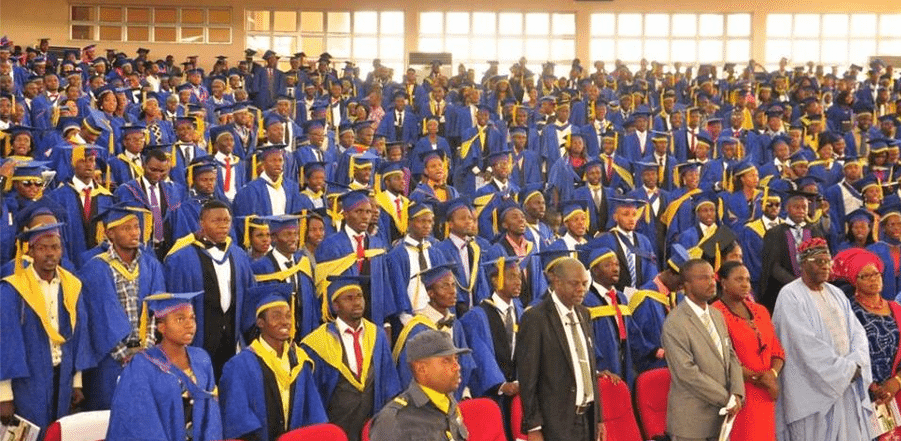
The online teaching and learning style is trending in every part of the country. Many private schools that have websites added a page where students and parents can log in to access learning materials. Some schools went as far as creating websites in order to join in this trend. This development in developing countries, such as Nigeria, is a welcomed idea but it comes with a price, and that price is an impending crisis in our education system.
In Nigeria, schools are regulated by government-owned agencies. These agencies provide curriculum for each class and insist that it must be finished before a child is said to have completed a class. These agencies also set up general academic calendars that specify periods of resumption and closure for each school. No school in this country, no matter who the owner is, can ignore the directives of these agencies and go scot free.
Some may say that tertiary institutions have their own academic calendars and sets of curriculum for different schools and departments. Well, this may be so in other countries but never in Nigeria. Polytechnics, for instance, get their curricula from the National Board for Technical Education (NBTE) and this board comes for regular inspections to make sure that every department sticks to the stipulated items in the curriculum. Failure to do so leads to the withdrawal of the department’s accreditation or the agency may mete out any other sanctions it deems fit.
As for the dates for yearly resumption and closure of higher schools, Joint Admission and Matriculation Board (JAMB) sees that. This agency controls schools resumptions through the UTME exam schedules, result release and posting of students for admissions. When they post students to the school, it is expected that their admissions should be processed within a certain period of time. Schools that miss that period may be denied access to freshers for the following session. However, tertiary institutions are in positions to decide when and how their semesters run. The most important thing is that they resume and close within a specified period of time. And that they cover up the contents of the curricular before the students graduate.
Now, you must have noticed that some schools have already gone deep into the scheme of works for 3rd term (for primary and secondary schools) and course outline for second semester (for tertiary institutions) through online classes. But one special thing about these schools engaging in online schooling is that they are all private-owned. No government-owned school has been recorded to be engaged in any of this practice, and no announcement by the government directed schools to start online classes. In fact, just recently about twelve universities have been approved to start distance learning, which they are yet to do. This is just to say that all the schools in Nigeria that carry out online teaching and learning are, like our people will say, on their own.
Now, let’s look at how the educational crisis will happen as a result of these online schools.
From what I know, many schools engaging in online classes have made their students pay their 3rd term school fees. This must have been used in paying salaries and settling other logistics because these schools insisted that their teachers come to work. We know that very soon schools will definitely reopen for the completion of second term/first semester, and the resumption of third term/second semester. One is then left to ask how these schools plan to pay teachers and other workers their salaries when they resume fully and officially.
It is obvious that these schools are going to re-teach physically all they have taught virtually. This comes to ask how the teachers and children can stand this repeat because it will definitely lead to loss of interest in academic activities. It is more worrisome when one considers that this is bound to happen for about three months or more within the term. It would be better if schools are asked to reopen and vacate at their own discretion, but that will create more problems. Besides, it is unwise to leave some children at home when others are in school. However, this can be advantageous if well utilised. The teachers may need to spend more of their time on evaluation and practical than on teaching what they have taught before.
It would have been easier to re-organise school calendars if external exam bodies, such as WAEC, do not exist. But in a situation where countries that subscribed to WAEC re-opened their schools while Nigerian schools are still shut down, there is bound to be a problem. Many Nigerian WAEC candidates are in government-owned schools that do not engage in online teaching and learning, and so did not engage in any lessons that will help them with their studies and preparation for the exam. This will be most unfair to them because WAEC may not consider them when it fixes exam timetables. These children truly need help.
It is known that the education agencies that regulate school activities are working round the clock to ensure that schools are reopened and that it will be safe for the children to go back to school. As they plan for school reopening, they should also consider these mentioned problems and find ways to address them too.

I made a prediction a few years ago, noting that Nigeria would enter the year of immersive connectivity by 2022: “2020s, starting at 2022, will be the decade of immersive connectivity.” I used the same model which I used in my book – Nanotechnology & Microelectronics – which received IGI Global Book of the Year award, to model that by 2022, a parity would develop, closing some telecom infrastructure gaps and unleashing immersive connectivity at scale in Nigeria. I do think we are getting there.
In today’s videocast, I make a case that Africa will enter the era of affordable broadband internet in 2022. That will be the year we will begin a new dawn of immersive connectivity where you can eat and surf all you can. Industry players will take off the Internet meter and then focus on service, experience and quality. From satellite broadband vendors to the MNCs with balloons and drones, the sector will become very competitive and service will drive growth. This has happened in the past – every decade, Africa experiences a major industrial transformation. We saw that in banking and voice telephony. 2020s, starting at 2022, will be the decade of immersive connectivity.
But as that happens, there would be major dislocations: Google and Facebook which I baptized as ICT Utilities in a Harvard Business Review article, will play key roles. There is a convergence and consolidation of power in technology. Yes, once you have capabilities in one thing, the cost of doing other things is so low that you can just do it. Blame Moore’s Law for it. So, as time goes on, the powerful technology companies are doing more things in-house and becoming more powerful.
Today, Facebook makes hardware for its servers. Google does the same. Now, they are becoming telcos in Africa, offering possibly near-free broadband services. Sure, they will serve you adverts. But who will resist that? Add the promise of Elon Musk and his Starlink, you get a future-worry for the likes of 9Mobile, Airtel, Glo and MTN.
Yes, if Google and Facebook provide broadband services at near-free cost, before us is a massive disruption. In this piece, Samuel Nwite explains what is happening in that space.
For some years now, Google and Facebook have been working to provide free global internet. However, this push to help internet users, especially in Africa to access reliable and fast internet has become a topic of interest recently due to the disruption it will cause to existing internet structure in the African continent.
There would be a new order, depending on what regulators do. But if they do not do anything smart, I will ask the telecoms to follow the same thing I have recommended to startups in the above Harvard Business Review article: do not resist frontally; simply, find a way to work with Google and Facebook because they are utilities, and utilities like electricity and water boards do not offer choices. Yes, any frontal confrontation will lead to value destruction for traditional telcos. Telcos need to master the flank strategy from Sun Tzu’s Art of War!
For Facebook, the playbook is one thing: control demand (yes, users).
In the digital age, what matters is not who controls supply, but who controls demand. Supply is largely infinite as there are many ways to get to the web, and because it is infinite, users congregate to platforms to help them navigate and make sense of the web.
In 1980, before the digital age as we have it today, the most powerful people in media were newspaper publishers. They were the people you needed to reach to get your message to the world. They decided what everyone read on the dailies and they were powerful. They controlled supply and by controlling supply, they shaped everything including advertising.
Comment: Do you think that is what the Indian Telco Jio’s parent (Jio platforms) has recently done with FB taking some stake in it, in part sensing what you are saying?
My Response: Absolutely – that is the only option for Jio. The real question is how do you partner with these ICT utilities? Jio got a good deal and was very smart to have done that. For every $100M, Facebook spends/wastes to get more IPs in India, it would add at least $500M in its market cap. So, investing in India was not to make direct “profit” but to get IP addresses (users) which it can convert into another value as its stocks move upwards. It is like using $10m to do discount in retail stores a week to end of quarter to improve same store numbers so that your stock can add $100m by beating estimates.
Nigerian Telcos Jitter As Google And Facebook Roll Out Plans for Free Internet