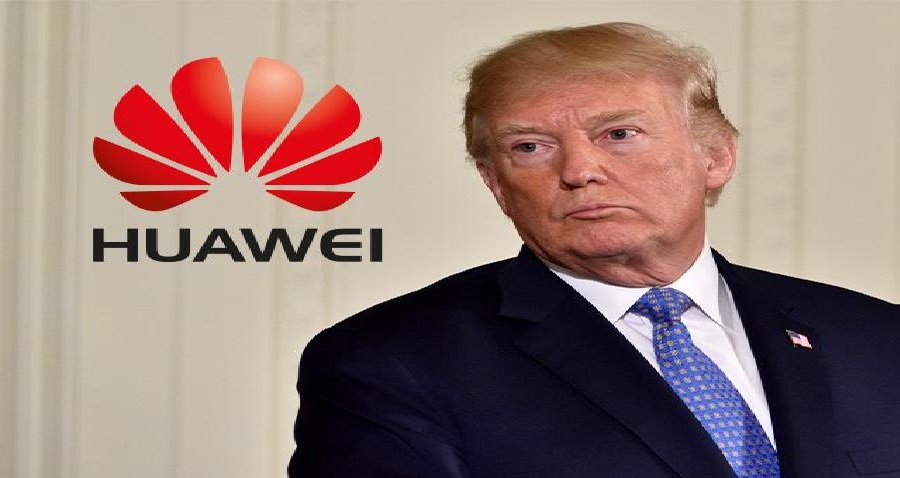
The 15th of May, 2020, was a big day in the technology supply chain realm; the United States threatened to banish China from the semiconductor production niche, which the Western nation, alongside South Korea, and Taiwan, has been dominating for some time now. You might be wondering, ‘what on Earth is a semiconductor?’ The truth is, all you really need to know is that they’re used extensively in electronic circuits, and today’s smart devices need them.
The U.S. managed such a seismic shift by luring Taiwan Semiconductor Manufacturing Company (TSMC), the world’s largest contract chipmaker, to home-soil, where they have committed to building a $12 billion plant within the next four years. That’s an incredible feat; a Taiwanese manufacturing giant setting-up shop in Arizona, providing 1600 jobs to the local population and thousands more, indirectly.
Trump administration 1 – China’s hold on the technological supply chain, 0. Or is it…?
The Big Daddies
TSMC, although you may never have heard of them, is one of the three global manufacturers capable of producing computer chips that contain transistors of 10 nanometers or smaller ? in other words, the most advanced computing chips in the world. The more notable brands, Samsung, and Intel round up the top three. Both of whom tend to keep the best of the best for their own flagship products, to boost their sales, as you’d expect. Unfortunately, China limps behind in the semiconductor race, with its largest manufacturer, Semiconductor Manufacturing International Corp, producing 14-nanometer chips at best. Meaning, Chinese tech giants have to outsource their semiconductor production, because they just can’t keep up.
Taiwan In The Middle
What does this mean for TSMC? Well, the manufacturer has a unique standing in the middle of the U.S. and Chinese tech markets – they’re the umpires of this international tennis match. Fortunately for their wallet, both Apple and Huawei source their semiconductors from the manufacturing giant. There are worse places to be; it’s like having Bill Gates and Jeff Bezos as your uncles, competing for your favor by pumping money into you. The problem is, technology is the future, and dominance is defined by technological capabilities – which is why the U.S. Department of Commerce has weighed in.
Semiconductors Go Political
Back in 2019, the US Department of Commerce, alongside much of the Western world, placed Huawei and 114 of its affiliates on its entity list. The entity list is just a list of businesses, organizations, and governments that are subject to licensing requirements for the export, re-export, and transfer of certain items into the United States. It sounds simple. But there was a reason for this action: it banned U.S. companies from selling their state-of-the-art tech to Huawei and its affiliates unless they had a special license from the Department of Commerce. The move was made under the guise of national security, with Huawei’s 5G signals and AI-enhancement infiltrating the countries worldwide in the form of ‘the next best thing.’ However, this didn’t affect TSMC, because they weren’t a U.S.-registered business – this meant that Huawei could still access the same semiconductors as Apple and other global tech giants.
Sewing Up The Loophole
Well, to the Department of Commerce, that’s a loophole that China is exploiting, and that just won’t do. So to sew it up, just hours after TSMC announced its plan to build a new U.S.-based plant, the Department expanded the existing entity list regulations. They announced that any non-American chip producers who utilize American chip-making machinery and equipment also need a special license to trade with Huawei and their affiliates. That’s handy, given that the equipment needed to produce the very best semiconductors costs upwards of $100 million per machine, and the United States produces them. This move is designed to bind top-tier semiconductor producers to the nation, preventing them from supplying Chinese tech leaders.
The Catch
While it all sounds great, there’s a catch… TSMC currently produces 12 million wafers of their industry-leading 5-nanometer chips per year, it only intends to produce 20,000 wafers of semiconductors per month at their U.S. facility, once it is built. The facility won’t be complete until 2024, and it’ll be equipped for this particular chip – which will be outdated. And, the company already plans for its upcoming, 3-nanometer chip production to take place in its Taiwan-based plants in the coming years. This means that tech giants in the U.S. will still be reliant on overseas supply chains for the best nanometers, and by the time they can produce them on home-soil, they’ll be going overseas for the cutting-edge tech of the day, yet again.
So, in the end, the TSMC plant does little to untangle the U.S. and Chinese supply chains, and will seldom affect the global outlook on the matter.
Untold Consequences – Inspiring China
Now, there are a couple of other major issues that the U.S. Department of Commerces meddling has unceremoniously created. Most important of which is the reality of the expanded export ban being held in place – China, as it stands, is the country that purchases the majority of semiconductor tech from U.S. manufacturers. As a prime example, China provides Qualcomm with two-thirds of its yearly income. This implies that losing Huawei and China’s trade could, in fact, severely impair the development of the U.S. tech sector. It will certainly hinder the nation’s ability to innovate the upcoming wave of industry-leading next-gen tech.
Additionally, the U.S.’s interference inspired the Chinese government to endorse their leading chipmaker, Semiconductor Manufacturing International Corp (SMIC), in their pursuits of producing the industry-leading semiconductors. And, what better way to do that then injecting a fresh $2.2 billion investment into their bank account? None. So that’s exactly what they did.
Shanghai-based chip maker Semiconductor Manufacturing International Corp has secured an investment worth $2.2 billion dollars from Chinese state investors, the company announced on Friday.
The funding was revealed on the same day that the United States announced new restrictions on Chinese tech company Huawei Technologies that would further impact its ability to source chips made with American technology.
According to SMIC’s announcement, a number of vehicles under China’s so-called “Big Fund,” a government-backed money pool for funding domestic chip companies, will jointly make the investment in one of SMIC’s plants.
The U.S. has been looking to break China’s stranglehold on the technology supply chain for many years now. And, on the surface, this announcement has good optics, looking like a massive victory for Trump and U.S. policymakers in their seemingly endless battle with the Eastern powerhouse. The governing body came up with a scheme, executed it, and painted a pretty picture for the nation to see – we’ve regained our high-tech manufacturing capacity, cutting Asia out of the loop, and our technological advancements and intellectual property are no longer in the hands of Chinese manufacturers and tech giants.
Unfortunately, it shows us how intertwined the United States and Chinese supply chains really are, and just how much the two nations need each other to maintain global dominance.