DD
MM
YYYY

PAGES

DD
MM
YYYY

spot_img

PAGES

Home Blog Page 6319

Why Now Is Actually When You Can GROW Your Business

1

My model is that only about 30 million Nigerians earn income to buy products and services which are not food items, medicine and other core essential necessities. I have called these 30 million the Precious Nigerians – those with money to buy things for themselves and support others. You can read the analysis here and here.

In most of my analyses when it comes to people that actually have money to spend or pay for (technology) solutions in Nigeria, I use 30 million people. Yes, despite 198 million human population, the effective addressable market in Nigeria is less than 30 million people. In Fasmicro Group model, these are people with decent incomes for anyone to craft solutions to their personal and business-related frictions. The remaining 168 million people are opportunities, nevertheless [they have to eat, shower, etc].  But we see them from the track of the core 30 million people who have the money to pay for tech things. For most technology solutions (think gaming, apps purchase & digital subscriptions and the platforms like smartphones, computers and connectivity required for them) where the buyers are usually the direct beneficiaries, the 30 million is rock solid. (Of course, on largely non-tech areas like food where everyone has to eat, the 198 million people become the addressable market.)

When the Covid-19 lockdown began, I told our community members selling digital products not to retreat because even though the market conditions looked bad, people had limited things to spend money on, and the paralysis could provide opportunities to serve some customers uncontested. Yes, for those earning income, the money had been piling up in the bank accounts with nothing to spend it on. With schools closed, roads blocked, many Nigerians were forced into “unplanned saving”. In other words, people saved money which typically would have been spent. More so, some saved to hedge the risks of circumstances like loss of jobs. But money was saved!

Indeed, while there were job losses, those with jobs were saving. That explains why you should not freeze your marketing thinking markets are on pure cold ice. I do believe that if you provide good value, people have money to spend, right now. Using that insight, we decided to move the promotion of the second edition of Tekedia Mini-MBA by 6 weeks, right at the peak of the pandemic, knowing that the savings had minimal ways to be used: no transportation, no outside dining, no makeup shopping, etc. The lack of ways to spend did not stop some from still receiving income!

This is the summary: if you go back to most bank accounts in Nigeria, the level of saving is possibly more than last year, at the same period. This money would be spent in the next coming weeks. I tell you that if you provide them something that has value, there is a decent war chest across most bank accounts of these 30 millions Nigerians to party with you.

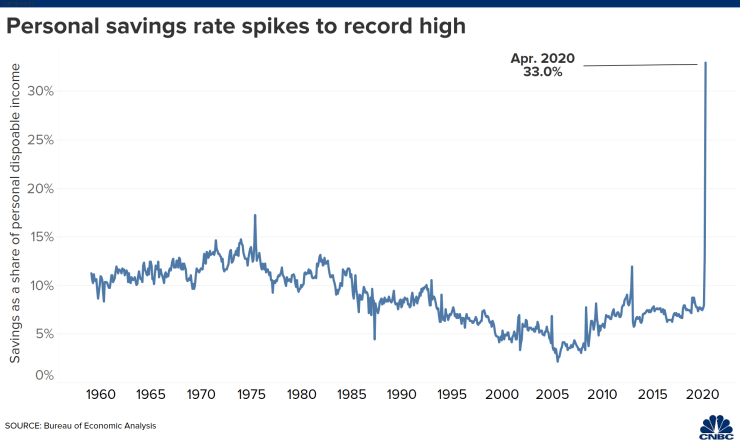
Update: there is data from U.S. showing this trajectory: “The personal savings rate hit a historic 33% in April, the U.S. Bureau of Economic Analysis said Friday…The increase in savings came as spending declined by a record 13.6% for the month.”

The coronavirus crisis has Americans hoarding more money than ever as widespread fear paralyzes consumer spending habits.

The personal savings rate hit a historic 33% in April, the U.S. Bureau of Economic Analysis said Friday. This rate — how much people save as a percentage of their disposable income — is by far the highest since the department started tracking in the 1960s. April’s mark is up from 12.7% in March.
Nigeria’s Addressable Core Market – The Magic “30 Million People”
Thoughts on Nigeria’s Response to Covid-19

0

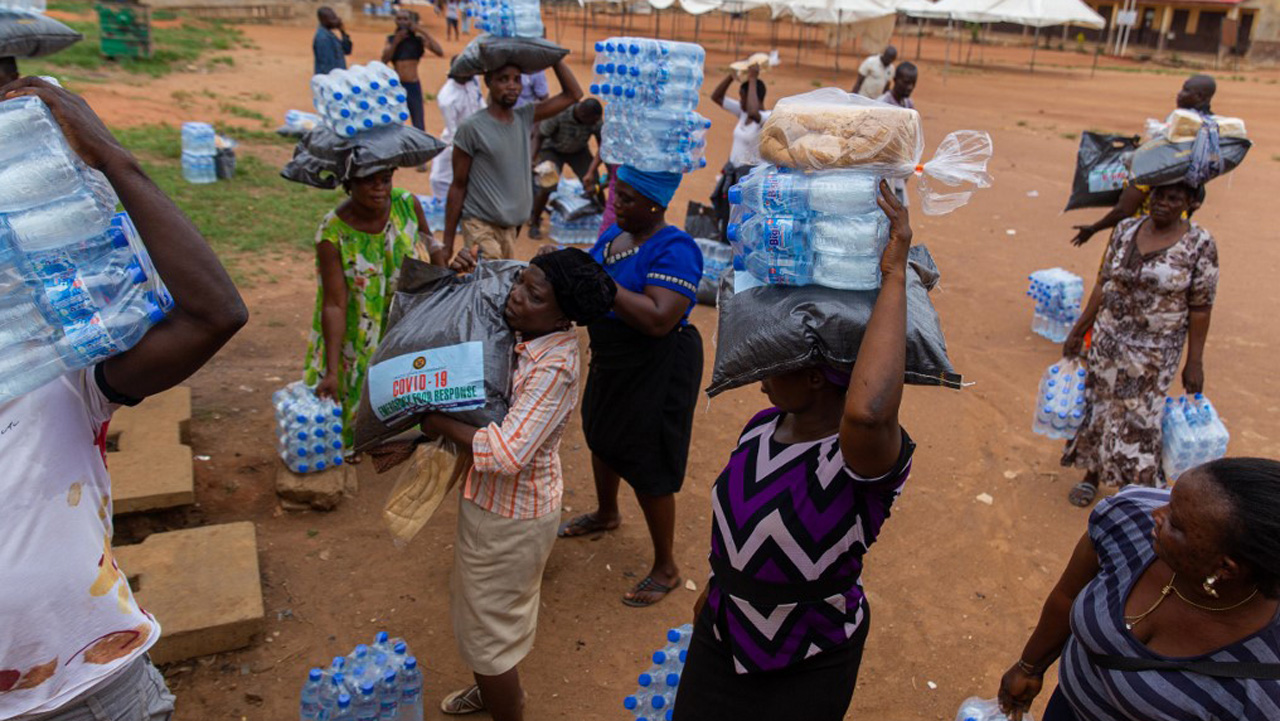
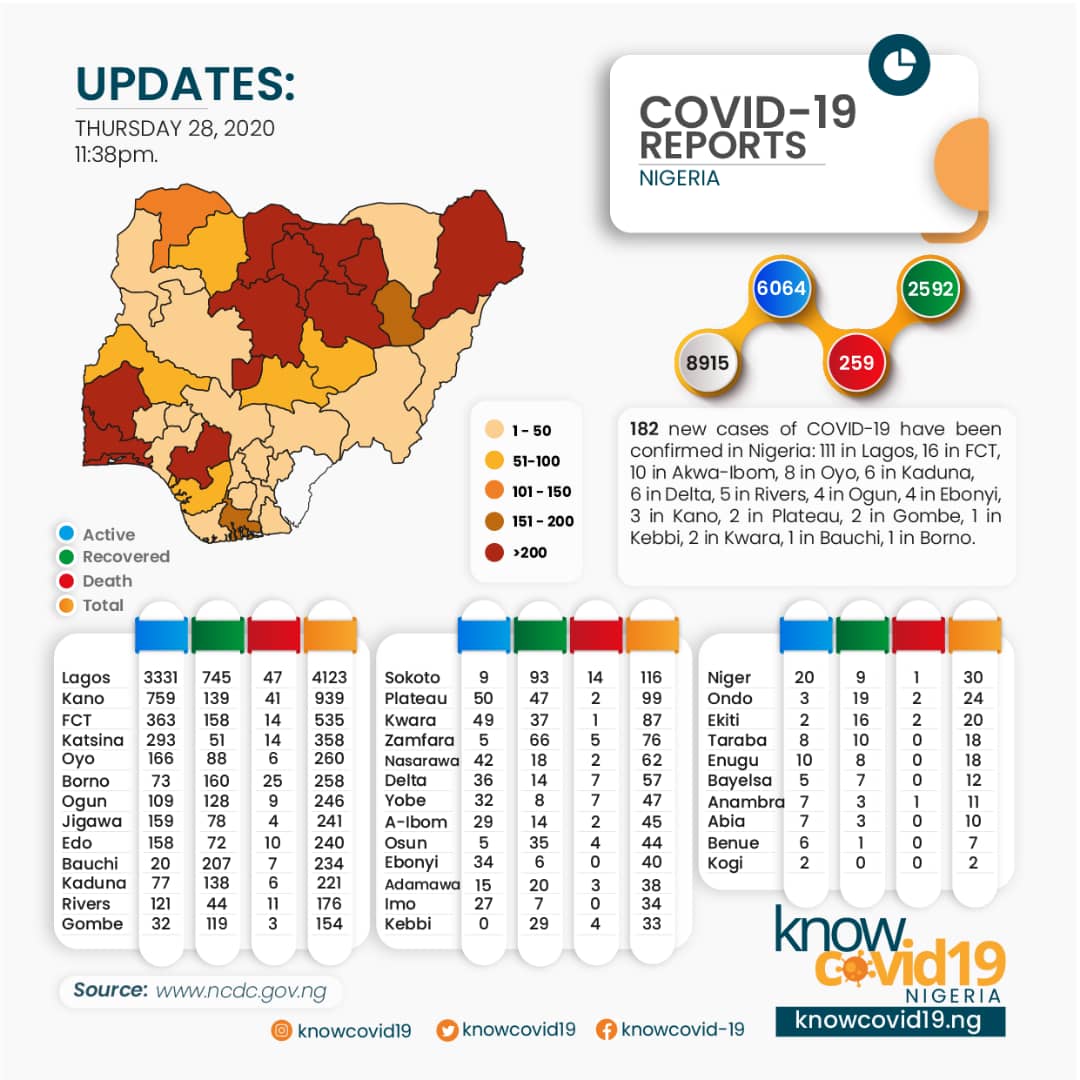
Wednesday 27 May was a significant day for children worldwide. It was the day that these gifts of God are celebrated the world over. It was a time to bring to the fore issues affecting children globally. However, the day was significant for some other thing in Nigeria. It marked the third month of Nigeria’s index case of the Coronavirus, the pandemic that has infected over 5 million people across the world and has equally killed 358,000 others. On 27th February, 2020, the virus, which originated from the Chinese city of Wuhan, sneaked into the country through an Italian man and the entire life of Nigeria has been put on hold. Since then, the cases have risen to close to 9,000 with 254 deaths. Schools have been closed. Worship centres were shut. The economy was locked down and is tilting towards a recession. Inter-state travels banned. Government acclaimed palliatives and social protection programmes were activated. All of these happened just within 3 months. A quarter of the year has gone down the drain!

The three states, FCT, Abuja; Lagos and Ogun States, which were hitherto considered the main theatre of the have experienced two phases of lockdown while other states have also been subjected to all sorts of treatment of lockdowns, either as total, partial or eased lockdown. As at today, the story has changed as some states that were not in the cast of the Coronavirus play are now playing lead roles in the Coro theatre of the absurd. At this period, almost all the 36 states of the federation are on the board, the numbers just keep popping up. All within 90 days, the economic and social flags were flying at half mast!

As part of an organization that has been helping people cope with the pandemic  by providing relevant, relatable and data-driven information, I shared a graphic image detailing the numbers of confirmed cases, recovered cases and deaths with a senior colleague. This spurred some conversation between the two of us. The nuggets in the exchange gave some insights. The two of us were just looking at the entire response management of the government at all levels and the kind of cooperation they have got from Nigerians.

My Friend: (After receiving the graphics) This is not getting any better and we are moving to total ease of lockdown (He wonders).

Me: (Asking a rhetorical question) Do we have a choice?

My Friend: (Ruminating) No choice. Things have to move on and people have to be disciplined and take responsibility for their safety. I wouldn’t be surprised if most state governments close up their isolation and ICU centres and then private hospitals take over Coronavirus treatment at exorbitant prices (Suggesting an alternative strategy).

Me: (Assessing the situation) We have not shown any discipline so far with the manner we have conducted ourselves in the lockdown. People find their ways around despite movement restriction.

My Friend: (Judging from his experience) Yes, inter-state movement restriction was a total failure. Security officers are terribly compromised. Some state governors didn’t have on ground all the things they claimed to have to combat the pandemic. (Indicting politicians and security personnel)

Me: Yes. It is about if you want to die or live, just ensure you take responsibility for either (herd immunity).

My Friend:  Exactly… I don’t see them loving the people they govern. To me, Just El-Rufai and a few others seem to be very passionate in handling the situation. Allah knows best. (Again, the politicians are indicted)

Me: It is a scale. We need to balance it. Governments will do their best. Citizens too must take responsibility as well. Or else, the effect is going to be devastating (preaching shared responsibility).

My Friend: Ooooh.. On citizens, I completely agree. At this point, individuals should at least be responsible for 70% of their own safety (urging people to be responsible). Till today, I talk with my neighbour who shares a fence with me on the phone. A cousin, with about 6 houses away from me, we have not seen for a month. My family house that is just about 9 kilometres away, I have not visited for weeks (highlighting the devastating effect of social distancing). We have to protect ourselves (justifying the need for caution).

Me: Methinks people need to see community transmission, and God forbid, some deaths before they get the damn consequences and severity of the virus (fear appeal).

My Friend: Yes, just as you said in the interview that all those putting up I-don’t- believe-attitude about Coronavirus, if they see an ambulance coming for a Covid19 patient in their neighbourhood, the reality of its existence would be done on them (justifying the reason for fear appeal).

As Nigeria counts down to the fourth month of the incursion of the virus into Nigeria and government is considering returning the national life to normalcy as expected by the people, there is a need to ensure all hands are on deck to ensure that that the need to relate socially is balanced by the need to stay alive.

Towards the Re-Introduction of Afternoon Schools into Nigerian Education System

0

It is common knowledge that COVID-19 is bringing in a lot of changes into the world. Some of these changes are disruptive, while others are regressive. Among the regressive changes is the re-introduction of Afternoon-School in Nigeria.

“Afternoon-School” was in existence during my primary and secondary school days. I could remember back then in Awka when St. Mary’s Primary School had both morning and afternoon schools, while daytime and night schools existed in Udoka Primary School (St. Patrick) Awka. In those days, afternoon schools were usually attended by house helps and children that have to stay back at home in order to take care of their younger ones until their siblings/mothers/other helps that went to morning schools/businesses come back. It was more like performing division of labour, where some children stay home to do morning shift, while others come back in the afternoon to continue with the duties. Night schools were, however, attended by adults that wished to continue with their education.

For reasons unknown to me, both Afternoon and Night schools were fizzled out of our education system. But the afternoon school is making a comeback into our education system in a grand style, thanks to COVID-19. However, it is not yet certain if this will happen.

The hint that schools in Nigeria will adopt the morning and afternoon “shift” was given by the Minister of State for Education, Emeka Nwajiuba, on Wednesday 27th May, 2020, during a briefing of the Presidential Task Force on COVID-19. He hinted this while addressing the issue of reopening of schools in the country. He noted that the Ministry of Education is still setting up some guidelines for reopening of schools, but that it is still uncertain on when schools will resume. However, he mentioned that the ministry is considering schools operating morning and afternoon shifts so that classes will be decongested. This, he said, will help the students to observe social distancing rules.

As the ministry is setting up guidelines and considering re-introduction of afternoon schools, they should retrace their steps to find out why the afternoon schools were stopped in the first place. If they were discouraged as a result of manpower or poor performance of the students, they may have to bear these in mind when enforcing the implementation of their guidelines.

However, they may also need to put the following into consideration as they carry out their researches:

  • Time and Duration of Classes

I know that the best time for learning to take place is in the morning, when the brain is still rested and unburdened by the day’s activities. This being said, there is every possibility that the children that attend schools in the afternoon shift may have difficulties concentrating on their lessons. For this, it will be better if schools consider running for 4 hours on each shift. Maybe morning shift should be 8am to 12pm, while afternoon school starts from 12pm and ends by 4pm. That way, the students in the morning shift will dismiss before they are fatigued and the afternoon session will still be captured before the heat from the sun turns classes and other learning environments uncomfortable.

  • Recruitment of More Teachers

There is no way the same set of teachers can handle morning and afternoon schools. People may debate that these teachers have been handling classes for 8 hours per day before COVID-19 and can therefore manage these two sets of schools in a day. Well, those in the school system know that academic activities become less tasking after break. By this time, students and their teachers take things slowly and easily until school dismissal. So if it is insisted that the same teachers should man both morning and afternoon sessions, trust me they will not do their work well. If you ask me, I’ll say that those coming for afternoon schools will lose a lot because their teachers will be tired by then. For this, school proprietors, ministry of education and state education commissions should consider bringing in more manpower to make this a success. They can go for part-time staff if bringing in full-time ones is unattainable.

  • Segmenting Classes

It may be difficult for schools to decide on which student comes for morning session and who comes for afternoon one. If parents are asked to decide, a lot of them will go for morning sessions because it is more convenient for them, unless there is an incentive attached to afternoon sessions. For this, it will be better if those setting up guidelines consider how classes should be segmented. If I were asked, I will suggest that certain classes come in the morning while the remaining ones come in the afternoon. For instance, Primary 1 to 3 can come in the morning, while Primary 4 to 6 come in the afternoon. The students can be spread out to the empty classrooms during each session.

As mentioned earlier, the Ministry of Education is still working on the guidelines that will ensure that schools are safe for the children when they resume their academic activities. We applaud their efforts towards securing the lives of teachers and students, and we enjoin them to do whatever that is within their powers to make sure that all schools comply with the guidelines. They should however remember to carry parents along in their decision making.

Trump Signs Executive Order Against Social Media Platforms

0

On Thursday, the US president Donald trump fulfilled his threat to “do something about social media” by signing executive order to that effect.

Trump had threatened to silence social media platforms for what he claimed are “stifling free speech” and silencing conservatives. “This will be a Big Day for Social Media” he tweeted a few hours before he signed the executive order.

The motive behind the order has centered on the events of Tuesday, when Twitter fact-checked him following his tweets calling mail-in voting fraud. Twitter attached a link under the tweet to lead readers to more information about mail-in voting. That didn’t go down well with Trump who considered it an act of censorship and threatened to shut down social media platforms.

Hours before he signed the executive order, Trump said the move was to “defend free speech from one of the greatest dangers it has faced in American history.”

He said that social media monopoly has enabled unchecked power to censor all forms of communication.

“A small handful of social media monopolies controls a vast portion of all public and private communications in the United States. They have had unchecked power to censor, restrict, edit, shape, hide, alter, virtually any form of communication between private citizens and large public audiences,” he said.

The order was based on the communication Decency Act section 230, which exempts social media platforms from liability for contents put out by users. Part of the Act says that social media platforms can only be exempt if they “act in good faith.” Trump signed the executive order on the argument that they have not.

“In a country that has long cherished the freedom of expression, we cannot allow a limited number of online platforms to hand-pick the speech that Americans may access and convey on the internet. This practice is fundamentally un-American and anti-democratic. When large, powerful social media companies censor opinions with which they disagree, they exercise a dangerous power,” the order said.

The order says that social media platforms have been “invoking inconsistent, irrational, and groundless justifications to censor or otherwise punish Americans’ speech here at home.”

The draft order means that watchdogs like the Commerce Department and the Federal Communications Commission (FCC) could now reinterpret to “act on good faith” and allow the Federal Trade Commission (FTC) to make room for users to report bias online. According to the order, the National telecommunication and Information Administration will need to file a petition for rulemaking with the FCC in 60 days.

When there is an allegation of anti-conservative bias, the order directs the justice department to consult with state attorneys general. If it established that the “good faith” principle under section 230 has been violated, federal agencies will be banned from advertising on the responsible platform. As part of the order, the FTC will be required to report on complaints of bias collected by the White House and commence legal action against the social media platform as soon as wrongdoing has been established.

Legal experts across the left and right wings said it may be unconstitutional because it risks infringing on the first amendment rights of private companies and it also attempts to circumvent the two other branches of government.

Others believe it’s Trump’s way of getting back to those who disagree with him. Democratic Senator, Ron Wyden of Oregon, who introduced the Decency Act back in 1996, said Trump is trying to steal court power for his own gain.

“Trump is trying to steal for himself the power of the courts and Congress to rewrite decades of settled law. He decides what is legal based on his interest,” he said.

Trump is known for being very critical about the tech industry, and the Tuesday events appear to have offered him an opportunity to escalate it. Social media platforms have been at the center of “bias practice” controversy following allegations by the right wing that the left are being favored and conservative voices are being suppressed.

Facebook had on Tuesday condemned Twitter’s decision to fact-check Trump. CEO Mark Zuckerberg said in an interview with CNBC that social media platforms shouldn’t be “acting as an arbiter of truth.”

In response, Twitter CEO, Jack Dorsey said the social media platform has done nothing out of place, and would continue to point out incorrect or disputed information.

“Fact Check: there is someone ultimately accountable for our actions as a company, and that’s me,” Jack wrote on Thursday. “We’ll continue to point out incorrect or disputed information about elections globally. And we will admit to and own any mistakes will make.

“This does not make us an “arbiter of truth.” Our intention is to connect the dots of conflicting statements and show the information in dispute so people can judge for themselves. More transparency from us is critical so folks can clearly see the why behind our actions.”

Despite the different view Zuckerberg has about the fact-check, Facebook joined Google in condemning Trump’s executive order. The companies said the decision will hurt the digital economy and the internet at large.

“By exposing companies to potential liability for everything that billions of people around the world say, this would penalize companies that choose to allow controversial speech and encourage platforms to censor anything that might offend anyone,” Facebook spokesman Andy Stone said in a statement.

Google’s spokeswoman Riva Sciuto said: “Our platforms have empowered a wide range of people and organizations from across the political spectrum, giving them a voice and new ways to reach their audiences. Undermining Section 230 in this way would hurt America’s economy and its global leadership on internet freedom.”

However, Twitter appears undeterred by Trump’s move. It said on Thursday that the order “is a reactionary and politicized approach to landmark law.” On Friday, Twitter placed a notice of violation of rule on Trump’s tweet, but allowed the tweet because it was made in public interest.

Trump tweeted that he is sending the national guard to Minnesota where there is rioting over the killing of an African-American man, George Floyd. Part of the tweet reads: “Any difficulty and we will assume control but, when the looting starts, the shooting starts.” Twitter policy prohibits promotion of violence of any form.

The controversy that started with a tweet has escalated the existing tension between the tech industry and the White House. But Donald Trump acknowledged it will not be easy because he knows; “it’s going to be challenged in court.”

The African Continental Free Trade Area: What’s In It for Africa and Its Major Trade Partners?

4

While global trends continue to move from integration towards heightened protectionism, and retaliatory trade measures, African countries improved their intra-regional trade levels and deepened their regional integration by collectively launching the African Continental Free Trade Area (AfCFTA). The AfCFTA seeks to deepen Africa’s market integration at regional and continental levels; boost intra-Africa trade; promote regional and continental value chains; and hopefully deliver Africa’s rejuvenation.

Based on its basic goals, the AfCFTA deal is to reduce heavy tariffs that have been slowing the intra-Africa trade speed and shall unlock many opportunities on the continent, redesign the architectural framework of Africa’s economic systems and hopefully anchor the modern Africa that African citizens want. Nevertheless, the success of the implementation of the AfCFTA agreement depends not only on documents signed in a conference room but rather on the functions of elements beyond African countries borders such as transparency and clear rules of play. How Africa as a continent can take advantage of the huge market opportunities and Africa’s demographic dividend to boost intra-Africa trade remain the big question needed to be answered. 

The signing of the AfCFTA has made solid progress in strengthening Africa’s regional integration, given much credit to Africa’s salvation, and is expected to be officially launched in July 2020. The successful launch of the AfCFTA will be an epoch-making event and a big step in promoting multilateralism on the African continent. Despite the rise of protectionism and unilateralism, why are African countries choosing to increase inter-connectivity between them? With Africa’s fragmented markets and a large number of countries, the best option to guarantee Africa’s rejuvenation would be strengthening their integration rather than promoting protectionism or unilateralism. Given the rising sentiment of anti-globalization, protectionism and unilateralism around the world, the AfCFTA aims to boost global trade facilitation and liberalization, and inject new impetus to promoting open world economy. 2018 estimates from Brookings Institution indicate that with the actual operationalization of the AfCFTA, the African continent is likely to become a US$ 3.4 trillion economic trade zone. 

At present, Africa ranks behind other regions in terms of its overall level of regional trade volume. Despite African countries’ cultural affinity and geographic proximity, it is unfortunate that between 2015 to 2017, only about 17% of trade was conducted among African countries, largely due to Africa’s intra-trade barriers, Africa’s fragmented market, poor transport and telecommunication connectivity. Furthermore, African countries remain keen on sheltering their internal markets from external influence, while Asia intra-continental trade, especially within the Association of South-East Asian Nations (ASEAN) is estimated up to 59%, North America by 37%, Latin America by 20%, and European Union by 69%. 

What’s in it for Africa’s major trade partners?

African countries have signed many trade agreements with western developed countries as well as developing countries. Despite all the promises that lies behind the AfCFTA, what’s in it for Africa’s major economic partners? The AfCFTA agreement will help forge closer economic ties between Africa and its economic partners. In fact, the AfCFTA will improve the relations between Africa and its external trade partners, so as to guarantee a Win-Win situation, by creating a bigger market for itself and for its trade partners. On one hand, the AfCFTA will effectively reduce the costs of imports, especially those from Europe and Asia. On the other hand, the deal will create a huge market for foreign investors, improve the business environment and attract more FDI, reduce barriers to foreign investment, so as lay a solid foundation for foreign enterprises to invest in African countries. 

China has been Africa’s biggest trading partner for more than a decade, with an accumulated investment for over US$ 200 billion by 2019. China’s President Xi Jinping in his congratulatory message to the 33rd Ordinary Session of the Assembly of African Heads of States and Governments pointed out that under the guidance of the African Union, African countries have actively explored development paths suited to their own conditions and realities, congratulated African countries for their collective efforts that they made in the pursuit of their unity and self-improvement. President Xi also noted that the China-Africa relationship is currently at its best history, despite many critics and allegations over the China-Africa friendship. The 2018 Beijing Summit of the Forum on China-Africa Cooperation (FOCAC) led to a new wave in developing the China-Africa friendship, with the implementation of its results injecting new vigor into their practical cooperation in various fields, notably the “eight major initiatives” plus the “ten China-Africa cooperation plans”, both backed by US$ 60 billions of financial support, additional to the same amount that was pledged in the FOCAC Summit in South Africa back in 2015. For China, the AfCFTA will inject new vitality into upgrading China-Africa bilateral trade cooperation. 

For the USA, it will be a chance for Washington to renew its engagements in Africa, and re-address the post-AGOA agenda as a single entity. With the launch of the AfCFTA, Washington will have access to a larger and integrated market, and have the opportunity to work with emerging economies like Brazil, India, Russia, which are already active on the African continent. It will also be a way for the US to work closely with the African Union in tackling terrorism in Africa. With the AfCFTA, the potential of the African market will be further realized, which will deepen and intensify USA-Africa cooperation in industrial and trade capacities. 

What Africa should do to ensure the success implementation of the AfCFTA?

– Reduction of tariff and Non-Tariff barriers: In Africa, tariffs between countries are higher than anywhere else in the world. In 2017, the United Nations Conference on Trade and Development (UNCTAD) reported that among developed countries, tariffs on tradable goods and services are at 1.2% more or less, which are very low compared to the average tariffs on tradable goods and services among African countries which stand at around 9%. Let alone high tariffs, African countries use Non-Tariff Barriers (NTBs) among them as part of their political or economic strategy. Unfortunately, existing high tariffs in Africa help some African countries to trade more with Europe and the United States at the expense of each other. Over 60 to 70% of total African trade is with countries that are thousands of miles away from the continent. Compared to the rest of the world, this is unfortunate to say the least.

– Establish a blockchain technology: The blockchain technology is among important things that African countries have to establish in order to guarantee the success of the AfCFTA. The establishment of the blockchain technology will ensure that no African or local industrialist or manufacturer colludes with European countries, America or even China to breach the rules of origin by bringing or import finished products from Western or Asian markets and package them as indigenous manufactured leading to the creation of dumping grounds for smuggled products. For instance, China has many companies already producing products on the continent. If the blockchain technology is not established before July, it will be hard for African country to differentiate what products are Africa’s made or imported from China, which may also enjoy free-tariff and hurt Africa’s local producers. The AfCFTA Secretariat, which is already operational in Ghana, should consider the adoption or set up the blockchain technology before the full implementation of the Pan-African Economic market in July 2020 to prevent inter-Africa illegal trade practices that could result in litigation, or even worse, the withdraw of membership by some members. At present, some Africa’s Regional Economic Communities are already having a hard time to maintain low-tariff on their respective borders. Some cases are already been seen where countries have threatened to leave one bloc to another. So, it is for Africa’s interest to consider establish a blockchain technology to put an end to that threat.