On Tuesday, the Nigerian House of Representatives approved the $22.7 billion loan request made by President Muhammadu Buhari. This is coming a few weeks after the Nigerian government secured a $3.4 billion COVID-19 assistance fund from the International Monetary Fund (IMF).
The senate had on Tuesday approved a $5.5 billion loan request made by Buhari, as his administration continues to look for funds to implement the revised 2020 budget.
According to the letter that accompanied the loan request, part of the loan will be sourced from Multilateral and Bilateral Institutions: $3,400,000,000 from the IMF, $1.5 billion from the World Bank. The Senate is also seeking $500 million from the African Development Bank (AfDB), and the federal government, $113 million from the Islamic Development Bank.
Every one of the borrowing plans is tied to the funding of the revised budget.
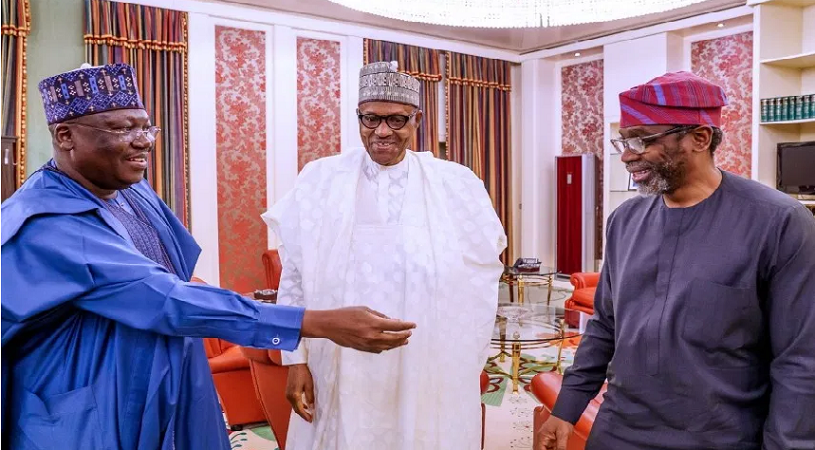
The $22.7 billion was approved by the Senate in March, but was rejected by the House due to the controversy surrounding it. The speaker of the House, Hon. Femi Gbajabiamila said the loan was not approved then because the southeast was excluded from the infrastructural projects that Buhari said the large part of the loan will be spent on.
“I know there has been a lot of agitation about the southeast not benefiting from the loan,” Gbajabiamila said in March. “It is one of the reasons we haven’t considered the loan in the House,” he said then.
The House handed the loan’s consideration to its committee on aids, loans and debt management, and in over two months, the committee submitted their report approving the loan.
In May, both the upper and lower chambers of the National Assembly unanimously approved the N850 billion loan proposal by the federal government. The federal government said the loan will be sourced domestically to augment the revised budget. This will put Nigerian public debt to N31.57 trillion.
While it is obvious that Nigeria needs as much money as she can get now, owing to the economic havoc that COVID-19 pandemic is wreaking on the country, the challenge has always been if the borrowed fund will be judiciously used.
In the revised budget, the national assembly complex renovation was reduced to N27.7bn (25.1%) decrease. The allocation for primary healthcare in the 774 Local Government Areas in Nigeria is reduced from N44.4bn to N25bn, more than (42.5%) decrease. The Universal Basic Education fund was also reduced significantly from N111.7bn to N51.1bn, more than (54.2%). The 2020 budget as originally passed stood at N10.51 trillion. The downsized budget as published by the Ministry of Finance is N1.5 trillion, but only N80.35 billion was actually cut from the budget, according to data published by Dataphyte.
Analysis of the budget’s downsizing shows that the federal government has ignored critical areas of the economy to favor others that the country can do without. The recurrent expenditure was increased by N85.55 billion, (from N4.84 trillion to N4.93 trillion). The construction of the National Assembly Library (NLIDS) received N2 billion while the health, education and agricultural sectors took a cut.
The revised budget was based on N360/$1 foreign exchange and $25 per a barrel crude oil benchmark. The decision of the federal government to increase funding for these projects at the expense of most important sectors has, however, attracted outrage. The Center for Anti-Corruption and Open Leadership (CACOL) said the FG’s decision to cut down the funds for education and healthcare is unfortunate.
“Why should we waste N27 billion on a building that is not showing any sign of distress?” asked the executive chairman of CACOL, Debo Adeniran. “It is a misplaced priority and a total waste. The National Assembly doesn’t need repainting let alone renovation.
“Nigeria is the poverty capital in the world despite being one of the most endowed countries. It is misplaced priorities that brought us to this sorry state we found ourselves. Nigerians are dying from treatable and preventable diseases and the government thinks it is right to slash the health budget while maintaining the N27 billion for renovation? It’s a shame,” he said.
The federal government has applied for these loans on the promise that it would be used to contain the strains of coronavirus pandemic in Nigeria. The healthcare sector is of primary concern, education and agricultural sectors are also paramount as the government is preaching its desire to diversify the economy. Many have expected that the revised budget would be streamlined toward these critical areas, and could not hide their disappointment at the turn of events.
“Cutting on health budget in the midst of pandemic is heartlessness at its peak. Approving 27 billion for renovation of the National Assembly building amidst that same pandemic is inhuman and gross. Wicked leaders! Anti-people government,” Adentunji Adediwura wrote on Twitter.
As the development stirs more controversy, the Socio-Economic Rights & Accountability Project (SERAP), has taken the matter to the UN. In a statement issued on Wednesday, the anti-corruption group called the federal government’s decision “unjustified, disproportionate and discriminatory,” adding that it should be immediately reversed.
“we have asked three UN special rapporteurs to put pressure on President Buhari and the National Assembly to immediately reverse the unjustified, disproportionate and discriminatory budget cuts to education & healthcare, and stop them from spending N27bn to renovate NASS complex,” the statement said.
As condemnation trail the development, the federal government and the National Assembly backtracked. They claim the fund allocated for the National Assembly Complex renovation is N9 billion, not the N27 billion being circulated in the media. But many have refused to believe it, saying that the government cannot be trusted to speak the truth.
The refutation is supposed to calm the nerves of Nigerians who have been irked to livid by the development, if not that they want the renovation of the National Assembly complex out of projects considered by the federal government, as there are more important things to do with the borrowed fund. Given the present economic and health crisis, N9 billion is still considered a large sum.
In 2016, president Buhari had sent a $30 billion loan to the eight senate headed by Bukola Saraki. The majority of the senators rejected it as there was no explanation on how the fund will be used. Consequently, Buhari repeatedly hinted on the refusal of the senate to approve his loan request as the reason he couldn’t fulfill many of campaign promises, since revenue generation was low due to dwindling oil prices.
After the 2019 general elections, members of the All Progressive Congress (APC) won a majority of the seats in both the upper and lower houses of the National Assembly. It was seen as a political development that changed the tides in favor of the federal government.
The National Assembly, hence, was believed to be a tool in the hands of Buhari, with many calling it “rubber stamp” to signify their inability to question the president on anything.
The relationship between the two arms of the government has been cordial, but it is believed to be on a “rob my back I rob yours” basis. The National Assembly’s incessant approval of loan requests by the federal government, and the latter’s eagerness to yield to its yearning, has been seen as evidence of quid pro quo.
The noise and argument that followed the $22.7 billion loan request in April, appears to have died a natural death. Not even a member of the House from the southeast and South-south caucasus, who fiercely opposed the loan proposal then based on the exclusion of the southeast, could lift up a voice against it now.
Many believe that the status quo of recurrent expenditure and constituency projects has been maintained during the downsizing of the budget because it’s part of the deal between the legislative and the executive arms of the government. And every project can be sacrificed in the interest of their “give and take” relationship.
Like this:
Like Loading...