DD
MM
YYYY

PAGES

DD
MM
YYYY

spot_img

PAGES

Home Blog Page 6325

The Nigerian Retail Scene: The Need for More “Malls” in The Face of E-Commerce

2

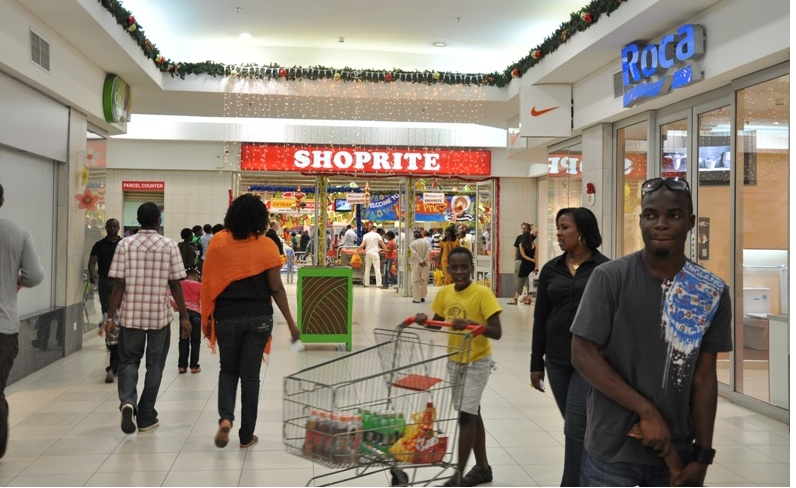
The past decade has seen the increasing emergence of large American-styled malls in Nigeria’s populous cities. Investors have been attracted by the promise of Nigeria’s large population, a growing middle-class, and high level of urbanization.[1] Providing an all-in-one convenience centre has changed the shopping culture and experience of shoppers, making the mall-going culture popular in Nigeria.[2] This change may be challenged by e-commerce, but not anytime soon because Nigerians like touch and feel experience that offline retail channels offer.[3]

Nigeria is home to some of the largest shopping malls on the continent, with similar facilities to malls in Europe, the Middle East, and North America. These malls include those owned by foreign investors such as Shoprite, which is one of the most popular in the country and indigenous retailers such as Justrite, Addide, Goodies, Park ‘n’ Shop, Ebeano, Blenco, Bestsavers, Roban Stores, and Everyday Group among others that are changing the shopping experience in Nigeria.

Before the emergence of malls, retail business was mostly carried out from lock-up shops, open markets, small shopping centres, and kiosks. Now, this has metamorphosed over time as developers of shopping malls are leveraging on the increasing population, the changes in consumers’ lifestyles, and advancement in technology to provide experiences for consumers.[4]

Globally, the retail industry is also experiencing some rapid shifts in consumer preferences as it relates to taste, behaviour and expectations, given the rapid pace of technological advances and social transformation. E-commerce is having an increasingly significant impact on brick-and-mortar stores. For example, online retail sales in 2019 was estimated to be 13% of total retail sales globally.

In the US alone, more than 57,000 stores closed between 2007 and 2017 due to changing consumer needs, and more than 5,800 more store closures were announced in 2019.[5] This trend is being referred to as a “retail apocalypse”, and is crippling traditional shopping malls. Major retail stores such as Victoria’s Secret, JCPenney and Gap, have closed numerous locations within the last two years. Some have filed for bankruptcy such as Forever 21 – a judge approved Forever 21 Inc.’s bankruptcy, and an $81 million opening bid for its assets on February 4, 2020.[6] BusinessInsider recently reported that malls across the US are trying to survive the retail apocalypse by investing heavily in rides, indoor ski parks, and other entertainment options to lure in customers no longer interested in just shopping.[7]

In Nigeria, however, different factors ranging from logistical issues to lack of trust are the major factors derailing the growth of e-commerce compared to offline retail channels like malls. In spite of convenience being one of the benefits of e-commerce platforms, Nigerian shoppers still want the ‘touch and feel’ effect before making payment for goods. There is also the instant gratification factor, rather than waiting for days to get your purchase. In Nigeria, a social factor that increases traffic in malls is the opportunity shoppers have to take selfies with friends and families, and post them online for their social media audience as well as admirers. Additionally, people visit physical stores especially malls, just to window shop or as a form of relaxation.

The theory is that the growth of online shopping will reduce the shopping activities taking place in brick-and-mortar stores. But the fact remains that Nigerian shoppers still want to see, feel, and try on products before making a purchase.

What does this mean for Nigerian retailers?

With e-commerce still at its infancy stage in Nigeria, as can be seen by the difficulties being experienced by online retail players such as Konga, Jumia, etc, the good news is that brick-and-mortar is still the winning business model in Nigeria, when it comes to retail. However, the economic situation of the country has greatly diminished the purchasing power of the average buyer.

Between 2014 – 2018, Nigeria’s population grew consistently at a rate of 3%, while the Gross Domestic Product (GDP) has declined at an average rate of -7% over the same period. The resultant effect is that Nigeria’s GDP per capita has been on the decline at a rate of -10%.[8] Operators of businesses in Nigeria need to be efficient in their service/product delivery and effective in their sales due to various reasons ranging from an average economic growth rate of 2%[9] in the last 2 years, a World Bank prediction of a GDP growth rate of 2.1% in 2020, speculations on the possible devaluation of the Naira, and decrease in the country’s foreign reserves.

Nevertheless, to be a winner in the Nigerian retail space, the following must be considered:

Rapid business expansion

Physical evidence is still very relevant in this economy despite the popular chant for e-commerce. However, the siting and configuration of such structures should be different from the norm. The gigantic American-styled malls are no longer effective as they require large land mass, leading to their being sited away from residential clusters, therefore making it inconvenient for the average buyer to access easily.

To win, rapid expansion through purposefully built mini malls is the way to go. This is simply the establishment of mall-like structures in residential areas that are built to purpose with less land mass, but similar offerings. What this does is position the venture as the destination of choice, as a mall’s main advantage is an “all-in-one” experience centre. This approach will lead to sustained patronage levels, as the malls become convenient shopping centres, as opposed to out-of-town sight-seeing destinations.

Customer-centric model

Business as usual doesn’t work anymore. Customers have become more enlightened about product prices and alternatives. Businesses must move from a transactional relationship to establishing an emotional connection with customers. To achieve this, data is key. The mining and analysis of available store data, from purchase behaviours to identifying psychographic patterns will lead to more effective managerial decisions and precision of business initiatives.

High operational efficiency

A major advantage of shopping in malls for consumers is low prices and great deals. However, this doesn’t appear to be the case in majority of our malls, as goods are priced above market prices. The reason for this price difference varies from expensive rent, to taxes and operational inefficiencies. Efficiency can be achieved by reducing waste, wait-time and general administrative hiccups. This modification will create room for more margins, leading to increased profitability after all business obligations are met.

People and culture

It goes without saying that people make organizations. It has become more important for business owners to dictate the culture of their brand and be conscientious in the training of their employees. The employee is the brand people experience before purchasing a product or service.  This is more critical for shop owners and mall administrators, as the culmination of experiences from point of entry, to purchase, and then point of exit is critical, as it determines repeat purchase rate, goodwill, and recommendation.

Global trends are most likely to come home to us in Nigeria. We have seen this happen in multiple industries, at different times. Nevertheless, I reckon that we have at least 10 years before we experience a retail apocalypse, as the foundation of a successful e-commerce industry is built on good infrastructure, which we still significantly lack in Nigeria.

References

[1] (Quartz Africa, 2017)

Quartz Africa, 2017. Quartz Africa. [Online]
Available at: https://qz.com/africa/1075301/nigerian-retail-looks-past-shoprite-led-malls-to-bet-on-nigerias-middle-class/
[Accessed 2020].

[2][4] (The Nation, 2019)

The Nation, 2019. The Nation. [Online]
Available at: https://thenationonlineng.net/shopping-malls-threaten-conventional-shops/
[Accessed 2020].

[3] (Awosanya, 2018)

Awosanya, Y., 2018. Why brick-and-mortar stores will remain a key channel for eCommerce in Nigeria. [Online]
Available at: https://techpoint.africa/2018/05/24/why-brick-and-mortar-ecommerce/
[Accessed 5 March 2020].

[5][7] (BusinessInsider, 2020)

BusinessInsider, 2020. Business Insider. [Online]
Available at: 1. pulse.ng/bi/strategy/malls-across-the-us-are-trying-to-survive-the-retail-apocalypse-by-adding-rides/x68p0r4
[Accessed January 2020].

[6] (The Wall Street Journal , 2020)

The Wall Street Journal , 2020. WSJ. [Online]
Available at: https://www.wsj.com/articles/forever-21-bankruptcy-sale-dashes-creditor-hopes-11580863720
[Accessed 2020].

[8] (Focus-Africa, 2020)

Focus-Africa, 2020. Focus-Africa. [Online]
Available at: https://www.focus-economics.com/countries/nigeria
[Accessed February 2020].

[9] (WorldBank, 2019)

WorldBank, 2019. WorldBank. [Online]
Available at: https://www.worldbank.org/en/country/nigeria/overview
[Accessed 2020].
The Nigeria’s U-Turn on Deregulation of Petroleum Products

2
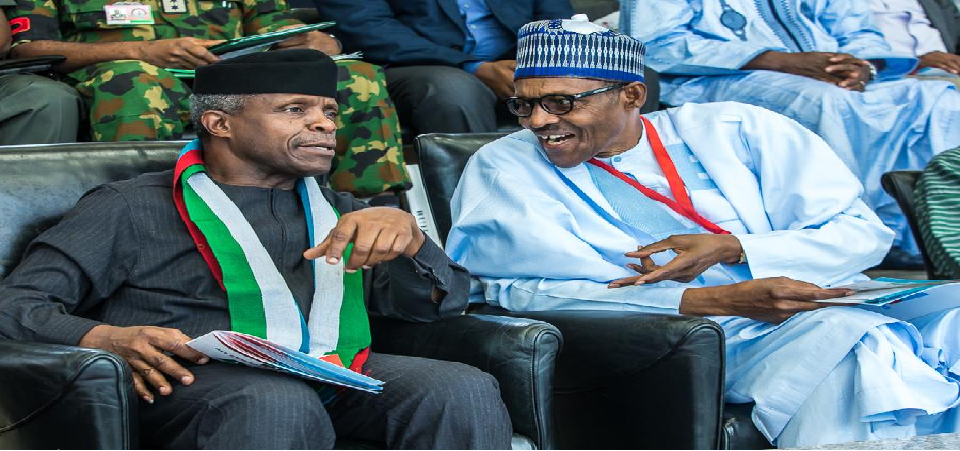
President and Vice President of Nigeria

When it was announced that Nigeria would fully deregulate its downstream petroleum sector, I wrote: ‘“You need to see to believe… Yes, I do not believe this policy or initiative…” Partly, the agency that put the press release was the agency that was created to regulate the sector. In that press release, the Executive Secretary of  Petroleum Products Pricing Regulatory Agency (PPPRA), Abdulkadir Saidu, did not say he was resigning or disbanding/downsizing the agency. So, how can petrol prices be unregulated when the regulator is still fully operational? Of course, even fully deregulated markets have regulators (example, NCC for telecoms). Yet, at least PPPRA would have noted how many people it was firing for reduced activities. That did not happen, and many of us did not believe the government in the long-term.

Just as expected, indeed the PPPRA is not going out of business. It has clarified that nothing has really changed. No full deregulation!

The Petroleum Products Pricing Regulatory Agency (PPPRA) has made a U-turn on its decision to allow marketers to fix petroleum products prices as indicated by market forces. The Regulatory Agency had a few days ago published a document containing the government’s decision to partially deregulate the downstream sector.

On Saturday, the PPPRA said it would not allow petroleum products marketers to fix prices, although its role will be to advise and recommend prices that will serve as a guide to marketers.

The statement signed by the Executive Secretary of PPPRA, Abdulkadir Saidu, confirmed that the Nigerian government has deregulated the market, but added that it does not excuse the role of the Agency as the Regulator.

“Suffice to say that in a deregulated market, the role of a Regulator in monitoring and regulating activities in the sector cannot be over-emphasized,” he said.

That is the Nigerian problem: interests. How do you expect a big man or woman to disarm in Nigeria? This is why a national leader shapes the destinies of nations. Many do know the right thing to do but cannot because of self-interests. So, you have to make the calls for them!

This agency has shown that even though it may still be useful to provide guidance on a full deregulated market, it may not have to run at 100% current capacity. Yes, less than 30% of the current manpower may be needed for the post-deregulation regime. But for that to happen, it means the Executive Secretary will reduce this agency budget which will be like a poison pill. That does not happen in Nigeria. And because of that, no deregulation as self-interests will always win.

PPPRA Turnaround: In Fear of Job Loss, Agency Says Petroleum Pump Price Must Be Regulated

0

The Petroleum Products Pricing Regulatory Agency (PPPRA) has made a U-turn on its decision to allow marketers to fix petroleum products prices as indicated by market forces. The Regulatory Agency had a few days ago published a document containing the government’s decision to partially deregulate the downstream sector.

On Saturday, the PPPRA said it would not allow petroleum products marketers to fix prices, although its role will be to advise and recommend prices that will serve as a guide to marketers.

The statement signed by the Executive Secretary of PPPRA, Abdulkadir Saidu, confirmed that the Nigerian government has deregulated the market, but added that it does not excuse the role of the Agency as the Regulator.

“Suffice to say that in a deregulated market, the role of a Regulator in monitoring and regulating activities in the sector cannot be over-emphasized,” he said.

He added that the ‘Market-Based Pricing Regime for Premium Motor Spirit (PMS) Regulations, 2020,’ published on June 4, does not empower marketers to fix prices. He said that marketers should rely on the guidance of the Agency that will keep monitoring the market realities and offer advice based on the facts.

Abdulkadir said that the PPPRA will monitor market trends and advise the Nigerian National Petroleum Corporation (NNPC), and marketers on the monthly market-based guiding price, and will determine the retail price at which petroleum products shall be sold nationwide.

He said, “It would be recalled that the removal of Premium Motor Spirit (PMS) price cap and implementation of a market-based pricing regime was first announced by the Honorable Minister of State for Petroleum Resources, Chief Timipre Sylva, in March 2020. This was followed by PPPRA’s publication announcing the Regulation on the market-based pricing regime, thus creating a legal framework for the policy.

“The Honorable Minister had earlier stated that the Federal Government will continue to monitor the price of petroleum products and advice on monthly guiding prices that guarantee reasonable returns to operators while ensuring consumers pay appropriate prices in line with market reality and are not overcharged.

“The Honorable Minister in his statement further stressed that the government’s role in a deregulated economy was to provide, through the operation of the Petroleum Products Pricing Regulatory Agency, a pricing mechanism to create a market-driven price regime.

“For the avoidance of doubt, it is instructive to state that no private individual or group has the mandate to fix prices of petroleum products. However, the statutory regulatory body is saddled with the responsibility of advising guiding prices.”

In the document released on June 4 by PPPRA, it was stated clearly that marketers of petroleum products would be allowed to fix prices as determined by market forces. Therefore, the turnaround of the Agency seems to be indicating ulterior intention.

On Saturday, after the decision of the federal government to deregulate the downstream sector made the news, Nigerians started advocating the disbandment of the PPPRA. Many said that the Agency’s sole reason for existence is to regulate pricing for petroleum products, and should be dissolved as the price is no longer regulated.

“The job of PPPRA is to regulate the price of petroleum products. As the price of petrol will no longer be regulated, PPPRA is no longer needed. Scrap it now!,” said Dr. Joe Abah, former Director General of BPSR.

It believed that the calls to scrap the Agency have instigated fear among its members, due to job insecurity, and they are putting up a disclaimer to part of the information contained in the document it released earlier to save their job.

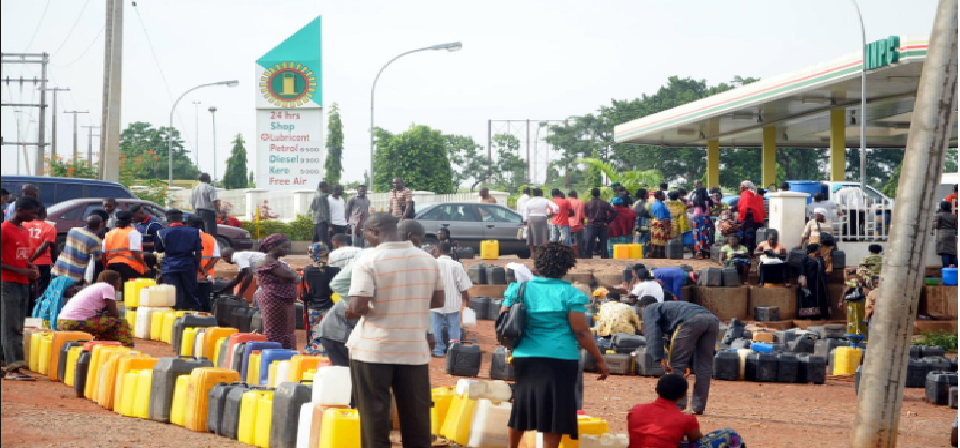
Moreover, it was noted that the Regulatory Agency was unable to effect uniform pump prices in the country before the PMS subsidy was removed, as there were notable differences in prices of petroleum products in some parts of the north, the Southeast and some South-western states.

At a time when the Nigerian economy is going through strains due to COVID-19 pandemic, and the government has been advised to cut its spending by, among other things, minimizing ministries and agencies, Nigerians are calling on the federal government to scrap the PPPRA as soon as possible.

European Governments Force Google to Introduce “Choice Menu”

0
The US is after Google also

As the Justice Department continues with its antitrust investigation on Google, focusing on the search giants’ dominance in the online advertising industry, the European counterpart has compelled some changes that will set regulatory precedent.

Phone users in Europe have, for the first time in many years, been presented with a menu option that allows them to choose other search companies as their default search engines. The choice menu has become a feature of new Android phones and devices running on Google software.

In 2018, the European authorities ruled that Google abused its dominance in smartphone software and gave itself undue advantage over competitors. Based on the ruling, the search giant is trying to make amends by developing new devices with new features that allow users to use search choices other than Google. But that has brewed more trouble for the Silicon giants.

The attention of the United States Justice Department has been drawn to it, and it appears ready to get Google to do the same in the US. The Justice Department is reportedly preparing a big antitrust battle with Google this summer. It is said to be one of the biggest monopoly actions taken by the United States in years.

Google has been a company of interest in Europe and the United States over the years. Since last year, the Justice Department and state attorneys generals have been investigating the company’s web practices, especially on web search and ads. Google has a huge influence when it comes to the internet. It controls about 90% of online searches and receives one-third of every dollar spent on online ads according to New York Times.

The call to break Google up over its dominance as it tends to muzzle competition has been voluminous for years, and it appears the European governments have opened a chance for the Department of Justice (DOJ) to pursue a legal challenge against the company’s influence.

But experts believe that following Europe’s line of action will do Google no harm.

“It doesn’t seem like too much of an imposition on Google’s business model, while opening the floodgates to competition a bit. The fact that Europe has gone first gives the D.O.J a benefit to see how it’s working,” said Michael Carrier, a law professor at Rutgers University Law School.

In 2018, Google was fined a record €4.34 billion with a demand that it stops its anti-competitive practices. Though the company is appealing the ruling, altering power of default to allow other companies on devices using its operating system seems like a win for Europe.

Google’s search accounts for almost 100 percent of Android smartphones and the company is paying Apple billions of dollars to be the default search choice on iphones.

In 2001, the US government and Microsoft ended their long fought antitrust battle on the decision requiring the company to alter some of its default software to allow users to switch to applications of their choice. That included allowing users of the Microsoft Windows to use browsers other than explorer.

In 2006, Google told antitrust officials that Microsoft should give Internet Explorer users a choice of another default search engine when starting the browser. And that set a precedent that has come to hunt Google right now.

But it is not the first time Google is getting caught in the controversy of monopoly. In 2017, the company and the Russian Federal Antimonopoly Service agreed, as part of settlement, that it will update its chrome browser in Android phones so that users can have choice of using other search engines as default.

Though Google has agreed to alter its default software to accommodate other companies, its terms and conditions have become a challenge that many have found unacceptable. The internet giant is limiting the number of non-Google search engines to three in any country. It is also forcing interested companies to participate in quarterly auctions to decide how much they will pay to be featured.

Gabriel Weinberg, chief executive of DuckDuckGo, said even though he sees the preference menu as a good way to increase competition, Google’s tactic is unfair to small businesses and consumers: “pay-to-play auction is bad consumers (and competition), Google knows how to work the system and consumers lose in the end,” he said.

For now, the big players in the game appear not interested in the auction, and that leaves Google and small companies like DuckDuckGo in the play. And it’s not clear if European governments are going to do something about the pattern the company has employed to administer the choice menu.

Understand How To Grow Your Business In U.S. And Establish Business in America

0

Dawn Malotane-Lindsey, a South African who now lives in the U.S., runs a family company Vari-Tek LLC. In Tekedia Mini-MBA, Dawn will share knowledge and experiences on how to prepare for doing business with American companies and for establishing business in the U.S. for African immigrants.

Join Dawn, the President of Vari-Tek LLC and an immigrant like most of us, in our program, as she educates on how to find that opportunity in beautiful America.

America is a fascinating country. The first dozen people I hired for my firm came from free U.S. support (yes, excess scholarship money while in school) and when I finished, the U.S. Government through USAID wrote me a cheque. It was magical because I spoke just for 7 minutes for them to fund Zenvus.

Come over and let us co-learn and co-share experiences to advance the mission; REGISTER.

https://www.tekedia.com/mini-mba-2/