DD
MM
YYYY

PAGES

DD
MM
YYYY

spot_img

PAGES

Home Blog Page 6331

A Trump’s Huge Military Playbook

2

I am from Ugwunta (“the small hill”) in Ovim, Abia state. Our tribe is the ancestral warriors of the Ovim kingdom. The Obi Ovum, the traditional head of Ovim, comes from the Ugwunta tribe. (Ovum was the original name, but the English colonists renamed it Ovim in the district documents). Ugwunta hosts the Anwurinwi – the war dance. Whenever a war breaks, the Ikoro sings, putting the community on highest alert, and then men will rush to beat the war dance. The Anwurinwi is powerful – hearing the sound will turn simple men into human warriors. They can climb palm trees with bare hands, and raze down houses in minutes. The sound pulsates the mind, pushing humans to overcome fear. Yes, men can walk through fire!

Obi Ovum lives on a hill. That is strategic because to protect the castle (‘his throne”), a moat is needed. The moat is the hill – no enemy in ancestral Igbo land could get to the hill easily as the Ugwunta warriors had an edge: from the hill they could see many neighboring communities many miles away. So, before the enemies could reach Ovim, they would do an ambush! Legends have it that Ovim never lost a war!

That takes me to the United States which has been exposed to supply chain risks on high end microchips. The two best chip factories in the world are in Taiwan (TSMC) and South Korea (Samsung Electronics) – and both are near China. TSMC is the largest contract manufacturer of integrated circuits in the world. Should a war break between the U.S. and China, those factories will be strategic targets since U.S. companies, and by extension its military, need those factories to make some of their best precision electronic parts. The factories in the U.S., including the ones maintained by Intel, a non-contract semiconductor chip manufacturer, across many metrics cannot match what  TSMC and Samsung have put together.

As Trump was trying to curtail Huawei, it was also working to manage the biggest supply chain risks for the U.S. military. If the U.S. cannot have access to make the most advanced chips during wars, the U.S. will struggle in any confrontation with China.

Then on chip manufacturing, while we hail TSMC, Globalfoundries and Samsung Electronics, all of them depend on semiconductor tools supplied by American companies. Without those companies, these companies cannot operate.

So, to cripple Huawei, the U.S. recently said that no American semiconductor machinery  can be used by any semiconductor foundry that does business with Huawei. Magically, nearly all foundries in the world became affected; TSMC is rumored to have dropped Huawei. If Huawei cannot get a foundry to help on its chip fabrication, it has a big challenge. At the moment, it does  not have the capacity to build these factories without relying on American machinery and equipment. This is Huawei’s biggest test! With this ban, it is now an asymmetric warfare and I expect a surrender even as the UK plans to wean itself off of Huawei by 2023, on 5G.

So what is the game plan? Get TSMC which seems to be the only company in the world that can build foundries which can serve thousands of chip designers, not just its own home IC designers as we have with Intel, to build a plant in the U.S. With this, even if war breaks, U.S. chip designers will have access to make chips which can be deployed in fighter jets, satellites, and anything used in modern warfare.

On Friday, Taiwan Semiconductor Manufacturing Co (TSMC) announced that it will build a $12 billion semiconductor plant in the United States. The announcement came amidst growing tension between China and the US that is threatening to disrupt its Asia-based supply chain.

TSMC said the project will commence in 2021, and will have the capacity to employ 1,600 workers as the factory focuses on the production of the latest in semiconductor technology, the 5-nanometer chips.

“This project is of critical, strategic importance to a vibrant and competitive U.S. semiconductor ecosystem that enables leading U.S. companies to fabricate their cutting-edge semiconductor products within the United States and benefit from the proximity of a world-class semiconductor foundry and ecosystem,” TSMC said in a statement.

For securing this supply chain, Trump has a huge supply chain legacy, militarily. This is important because China, unlike U.S,. is actually building a modern factory of its own: Semiconductor Manufacturing International Corporation (SMIC). SMIC could have tilted the balance towards Asia more, implying that the best chips can only be manufactured in that region. Possibly, when TSMC finishes its factory, in the U.S., a balance will emerge.
TSMC to Build a $12 Billion Semiconductor Factory in U.S.

The Dangote Book Debate – Keep It Going

0

Good people, I am liking this debate on Dangote. What again can I ask for? It means my subject generates interests and that is what authors want. Keep debating. Last week I was accused of throwing Dangote under the bus and this week it is that I am celebrating him. No issues. You have all the rights to challenge my thesis. And you have the rights to challenge others also.

But do not make it a personal matter by insulting people. If you do that, you will scare people in this community; I do not want that to happen. Just make your point with respect and decency, and even if you do not agree, focus on the points and not the person. Let us extend this debate till June 22 when the book launches. Thank you.

Of course, you need to buy the book first.

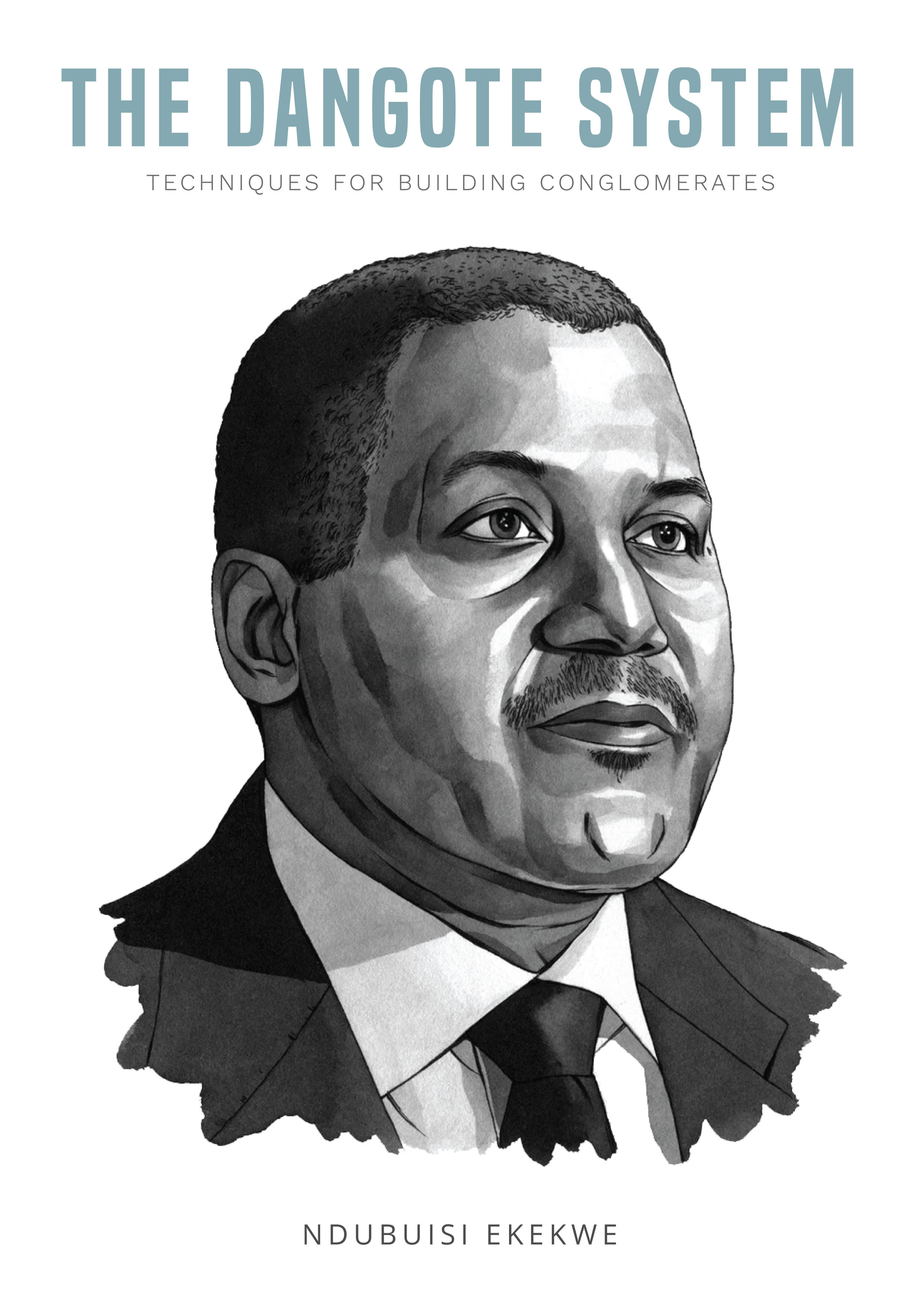
This book arrives June 22, 2020, the day we will begin a new class of Tekedia Mini-MBA. Our participants will have access to its audio and text contents as complementary. The Dangote System is a mega case study for our second edition of Tekedia Mini-MBA (register here).

Comments on LinkedIn Feed

Comment: Prof made it clear months ago that he is not writing a biography, but diving into the strategies of Africa’s most powerful business man. That’s what I’m interested in, not some claims (unsubstantiated?) about his monopolistic tendencies. Dangote has clearly lost in some areas, and won in many others. Let’s learn about that.

My Response: Thank you. I do not defend Dangote. I report what I see about his business. But it would not be based on gossips and rumors. Like all conglomerates – from GE to Amazon to Carlos’s empire in Mexico, citizens pay taxes to conglomerates. Nigerians have to pay tax (good forex, etc) to Dangote Group because that is how conglomerates operate. I called that the Conglomerate Tax. Amazon puts cities to compete on who can give it the highest tax breaks! America has hundreds of them (Boeing gets $100m from WA state yearly as free money). Dangote’s problem is that he is alone . I hope to share what the strategy is, hoping that a 20-year old girl or boy will dream so that we can have many Dangotes.


Facebook Shops: Pivoting in Pandemic

0

We all know what will happen, it is either businesses adapt or get disputed and phase out. It either as an employee that has been affected by this pandemic, adapts or gets disrupted and phases out too.

 Whichever way, the fact remains that the pandemic has created trends that can be maximized to unlock market value this time. In my article on how to create a business model around trends, I pointed out some of the trending opportunities recommended by the World Economic Forum. One of such trends and market opportunities is online shopping.

There are trends that have come to be part of the economic pattern. They have come to shape the world in ways we thought will happen in the next decades. These trends are very good to build sustainable business models around.

Of course, entrepreneurs and innovators have risen up to build some impressive innovations around some of these trends. Some have pivoted their business models towards where the value is converging in order to fix market frictions.

 My interest in this article is to analyse one of such pivots that is around online shopping. According to Techcrunch Mark Zuckerberg said in a live session that “I do think we’re going to continue living more of our lives online and doing more business online.”

The Facebook shop riding on the wave of the Facebook business model. This article will help you to know how pivoting around trends can be effective for an already existing business. Follow me.

Facebook Shop Leveraging on Facebook Existing Infrastructure.

When it comes to pivoting in business, it is easier and more effective for an established business than a startup due to established business’ infrastructure and resources. Here are the facebook infrastructures that the facebook shop will ride on;

 The Facebook User Base:

According to Statista there are  2.6 billion monthly active users as of the first quarter of 2020, Facebook is the biggest social network worldwide. When we come to the subject of data, Google and Facebook are the leaders.

While Google is leading, Facebook occupies the second position. With 2.6bn active users on facebook, the two sided customers for the facebook shop is already a settled issue. So, the product will thrive based on the already existing market.

 Facebook Group:

The above monthly user base of facebook are grouped into facebook groups based on interest and niches. So, with the existence of millions of facebook groups on Facebook, where people engage on a particular subject of interest, it becomes very easy to target them based on specific products on the Facebook Shop.

Facebook groups are created for a community of people with a common interest. But, mostly, people discuss business related topics. How they can better increase their source of livelihood and how they can learn and earn. So, some organised Facebook groups are very important to facebook because they help in Facebook data analysis .

Facebook Pages:

The facebook page serves two general purposes which are; one, there are influential individuals that have fans and create pages to influence their fans. Two, there are business pages which are dedicated to people that own business, mainly small businesses and startups.

One of such pages on facebook is Strive Masiyiwa page that has a fan base of 5.1million followers. This page is for the purpose of entrepreneurial and business mentorship.

That means Facebook already has data of  some businesses with the help of the Facebook page. So, it will become convenient for business pages to be converted into shops.

 Facebook Marketing.

One of the ways users of Facebook who run business maximise the platform is through facebook advertisement or promotion. These could be in the form of normal organic content marketing and sponsored ads.

With this, facebook is already associated with business marketing, sales and brand visibility. Adding Facebook Shop to this will make the platform to have comprehensive tools for businesses that use the facebook platform for promotional activities.

 Hence, Facebook Shop is here to ride on the success of the Facebook business model. But, how does it unlock value for the stakeholders of Facebook. It does in two ways;

  •   Helping to Digitize Businesses:

 This has become a need in this period as people have resorted to shopping online. With your goods or products on Facebook Shop, your customers can order and you make deliveries without physical contact.

  •  Adding Revenue Models to Facebook Business Model:

With this product on facebook, the revenue generation capacity of Facebook will increase. Then, this will help the company to maximize profit and create wealth for shareholders.

 In the next analysis, we shall consider how Facebook shops make money.

When we know that “the times are a changin”, then we’ll learn to adjust our plans as the times change.

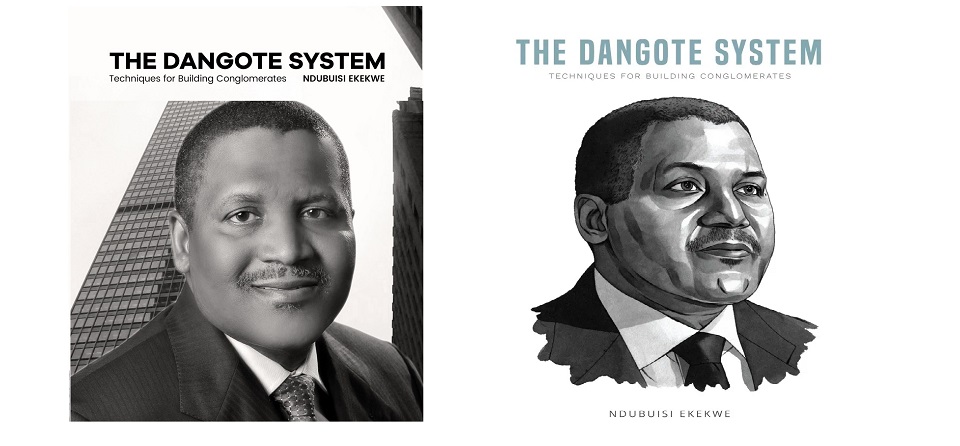
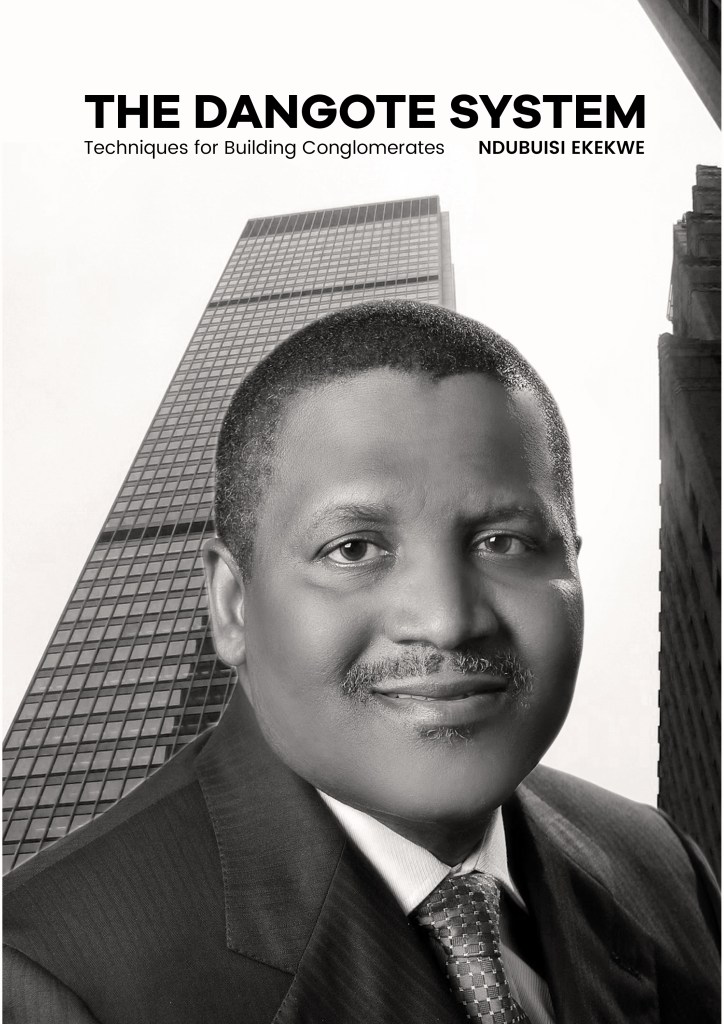
The Dangote System – A New Book From Ndubuisi Ekekwe

0

His generation’s most impactful business-leader. How did a trader plot to become the most powerful businessman in African commerce? How did a man turn a $3,000 loan  into the most advanced industrialized conglomerate in Africa? The Dangote System: out June 22, 2020 exclusively to Tekedia Mini-MBA edition 2 participants. Register to join them.


Free for all Mini-MBA edition 2 participants

The “High 5s”: A strategic vision and results that are transforming Africa

0

For the past ten years, Africa has recorded some of the world’s strongest rates of economic growth. At the same time, many African economies continue to function at well below their full potential. Structural transformation is needed to create more jobs, reduce poverty and accomplish sustainable development objectives.

The African Development Bank’s (www.AfDB.org) High 5 priority areas are intended to support African countries’ achievement of the SDGS. They are: Feed Africa; Light up Africa; Industrialise Africa; Integrate Africa; and Improve the Quality of Life for the people of Africa. 

Atta Abdul, Fatima-Zahra, Shuaibu, and Daniel are the faces of a continent that is being transformed. By betting on Africa’s youth, the Bank is banking on the future to make the continent a land of progress, prosperity and hope.

Feed Africa

Since 2015, 74 million Africans have benefited from improved agricultural technologies through the Bank’s efforts to support increased food security on the continent.

In western Mauritania, for example, the Brakna-Ouest irrigation infrastructure improvement project, supported by the Bank in the amount of $12 million, enabled 1 500 farming and livestock-producing families to return to cultivating their fields.

“We come from a farming and livestock-producing family and we grew up in that environment. Our harvest was very poor. We wanted to move somewhere else,” explains Atta Abdul Seck, a project beneficiary in Louboudou in western Mauritania. “As a farmer’s son,  what I liked most when I returned was being able to continue farming. Farming is in my blood,” he says proudly.

Light up Africa

Without electricity, agriculture cannot effectively meet the growing challenge of food security in Africa. The Bank has made investment in energy a priority. Since 2016, it has mobilised $12 billion for its “Light Up Africa” strategic priority. Through this investment, 13.4 million people have gained access to electricity.

Morocco has made significant progress in widening access to electricity. In just the past twenty years, the electricity system has expanded to cover almost the entire country. The national rural electrification program, supported by the Bank with 155 million euros, has connected nearly 12.8 million Moroccans to the national power grid.

In Dar El Aïn, a village twenty kilometres from Marrakesh, the arrival of electricity has opened new doors for the women of the “Al Amal” cooperative. They use electricity to process their wheat into couscous or create other barley or wheat-based products. “The cooperative processes local crops into added-value products. Now, with electricity, the women are much more efficient, and their products are of better quality. It creates hope,” says Fatima-Zahra, a thirty-year-old member.

Industrialise Africa

As part of the Bank’s “Industrialise Africa” priority, 9 million people have gained access to private financing. In Nigeria, for instance, where more than 70 percent of the population depends on agriculture, fluctuating harvests have significant repercussions on yields, income and food security.

One solution is fertilizer, particularly if locally produced. The Bank provided $100 million to support construction of a modern fertilizer plant in Port Harcourt.

Shuaibu Yusuf, a farmer in his thirties who live near Port Harcourt, has experienced the impact of this project in his daily life. “When I used this fertilizer, I saw the difference. My harvest increased by more than 40 percent. I can feed myself, pay for my children’s education, and even their medical expenses,” he says. “I’m going to encourage my children, my neighbours and members of my community to increase their farming activities so we can all progress together,” Shuaibu continues.

Integrate Africa

To derive more benefit from industrialisation, Africa must become better integrated in terms of trade and markets. Through integration, African countries can gain access to larger markets and thereby increase incomes for millions of residents through new opportunities.

Since 2015, 69 million people have benefited from the Bank’s support for new transport infrastructure that has advanced integration. Gaps in the primary transport corridors have been filled, links between countries have been strengthened, and intra-African trade has been revitalised.

A good example of this is The Nairobi-Addis-Ababa corridor, which received$670 million in Bank financing and which has enhanced the potential for trade and job growth in Ethiopia and Kenya.

Daniel Yatta, a forty-year-old Kenyan lorry driver, has been transporting goods between Nairobi and Addis-Ababa for 15 years, and has seen the new road’s impact on his business. “Back in the day, it would take more than two weeks to drive between Addis and Nairobi,” he says. The new road has made his life much easier. “With the new road, the trip takes only a few days. With 30 tonnes of freight, it only takes about 24 hours to drive to Addis!” he continues.

Improve the quality of life for the people of Africa

An important part of improving living conditions is providing better access to essential services such as health, water and sanitation. Since 2015, Bank-supported projects have given 43 million people access to water and sanitation.

SOURCE: African Development Bank Group (AfDB)