
DD
MM
YYYY

PAGES

DD
MM
YYYY

spot_img

PAGES

Home Blog Page 6340

Why Nigeria Is Not Yet Ripe For Online Schools

1

I came across a post, where someone blamed the government for not finding a way to ensure that children continued with their formal education despite the pandemic. The person insinuated that the government’s laissez-faire attitude towards education during this pandemic shows how education is not valued in Nigeria. He further stated that other countries have found ways of keeping children’s academic activities running smoothly and so our government should follow suit.

Of course the only way to send children back to school at this time in history is through the internet. Alternatively, we can try the “radio schools” programme that is happening right now in Enugu State. But, unfortunately, Nigeria is not ready for online teaching. As for teaching through the radio, that is the joke of the century.

It should be noted that some private school owners have considered engaging their students through online tutorials but a lot of factors are hindering their plans. Many entrepreneurs that recently kicked-off something close to an online school are actually targeting secondary school students, especially those that are about to write their WAEC. Some of them may be succeeding, anyway, but their impacts are yet to be felt.

For the many that have considered engaging their students through online teaching and learning, the factors hindering the execution of their plans include cost of data, lack of access to computers, unstable power supply, poor economy, lack of technical know-how, lack of interest, and unsuitable methodology.

  • Cost of Data

Mobile data is very expensive in Nigeria. To be able to participate in these classes, both the students and their teachers will need to subscribe to a data plan. If the classes require that video and audio files should be used, it then means that these people will spend a lot of money during a 30-minute or one hour class. When you check how much that will be spent on data alone in a week, you will be discouraged.

  • Access to Computer

When many people talk about online classes I feel the urge to ask them how the children will gain access to computers for their learning. Some may tell you that the children should use their parents’ own, but they forgot that it’s not all the parents that own computers. The parents that have usually use theirs for business transactions, which they wouldn’t want their children to jeopardise. Even the option of mobile phones may not work here because most children don’t own phones until they’re through with secondary school.

  1. Unstable Power Supply

Of course going into this problem is unnecessary. Every Nigerian knows what NEPA (aka Disco) does to the system. So you can imagine paying for online classes for your children, providing laptops or desktops for them, connecting the computer to the internet, loading up data, and then running generators on top of everything. The thought of this alone is enough to shut down the plan.

  • Poor Economy

Poverty and unstable power supply are two monsters that have found fertile soils in Nigeria. Actually, poverty seems to be more powerful and can bring about the birth of other minor monsters. Coming to online teaching and learning, children from poor and working class homes cannot afford to register and partake in these classes. It will also be hard for them to obtain the logistics needed for the classes. So if the government gives a go ahead order for online tutorials for primary and secondary schools, children from these social classes will lose out.

  • Lack of Technical Know-How

Children in urban areas may be able to operate computers but I can’t say that for those in rural areas. Apart from the students, some teachers are also not computer literate. Even if these people know how to boot and shut down a computer, how many of them know how to navigate through the lesson platform to be able to access their class activities? It is true that practice makes perfect but this is something that may require some training before it kicks off. However, it is necessary that schools use this period to realise how important computer practice lessons are so that when schools reopen, they can teach these children practical computer operations.

  • Lack of Interest

As the saying goes, you can take a horse to the stream but you can’t force it to drink. There are certain things about physical classrooms that virtual ones don’t have. For instance, companionship, friendship and team spirit these children have built over the years as classmates in physical classrooms cannot be found in virtual ones. Truth is that most at times, these students go to school because it provides them with the opportunity to meet and relate with their friends. This opportunity is lacking in virtual classrooms. The result here is that these students easily feel bored with lesson activities when they face their computers.

  • Unsuitable Methodology

My children’s school online tutorial was designed so that parents and guardians attend online classes with the children. They expect parents and guardians to be there to monitor and explain the lesson contents to their children. It automatically made parents home lesson tutors except that this time, parents will obtain their materials from the school’s online classes. This method may be favourable for children that have private tutors (which is not advisable in this period) and/or less busy literate parents. But for those whose parents are illiterates and/or busy, this method won’t work.

Like I told one of my neighbours, we shouldn’t worry so much about our young children going back to school; they will definitely pick up from where they stopped before the COVID-19 lockdown. Maybe we need to bond with them more during this pandemic before they go back to their 7 to 5 academic routine. As for older children, especially those that will soon sit for their SSCE, parents should provide them with books and other educational materials that they will study and acquire knowledge. Those that can afford online tutorials should go ahead with that. But let it be known that Nigeria is not yet ripe for online schools.

The Shameful Social Media Fight Between Two Federal Nigerian Agencies Over Office Space

1

On Sunday, the Nigerian social media space suddenly went sizzling with some noise of mortifying fight between two Nigerian federal agencies.

It started when Sahara Reporters made a report alleging that the Minister of Communication and Digital Economy, Dr. Isa Pantimi, ordered gunmen to chase the staff of Nigerians in Diaspora Commission (NIDCOM) out of office. The report was based on the complaint of the Director General of the Commission, Hon. Abike Dabiri-Erewa, who said that the NIDCOM does no longer have a space to work from.

She said: “In one year, we don’t have an office. The office we got was given to us by NCC but we were actually driven away by the honourable minister of communication and digital economy, Mr. Isa Pantami, within two days, they drove us out with guns and what happened? The place was given to us by NCC.

“You know we all help each other, NCC as an agency of government, said there is a place you can use to settle in, and just as we settled in, I was in Ethiopia when I got a call. I thought that it was a joke. I came back from Ethiopia on Thursday, this happened on Tuesday, by Friday when I went to the office, guns, armed men had taken over the place. I thought it was a joke, but here is the thing, I’m a government employee, so is he. It’s a government issue.”

An hour after the news went out, the Minister of Communication, Dr. Pantami responded, calling the story a lie. He fiercely refuted sending armed men the way of the NIDCOM staff.

In a quick reaction, Sahara Reporters shared a video where the DG of Diaspora Commission was recorded confirming the story. Again, Dr. Pantami came tenaciously refuting it. He called it “a fat lie,” adding that the Nigerian Communication Commission has “faulted her lies on social media.”

That ignited an inferno of argument. The response that came from the NIDCOM DG reveals underlying issues in the fracas. It was a combination of mockery and slamming that only added embers to the controversy. She said the Minister of Communication is a notorious misogynist whose “disrespect for women is legendary.”

To prove how truthful her side of the story is; she shared the video of the incident which shows members of the Diaspora Commission being asked to vacate the office of the Nigeria Communication Commission (NCC).

At this point, there had been enormous efforts by many who were attracted by the commotion to quell it.

“Oya, Abike, tell him sorry. Pantami, you too, tell her sorry. Oya you both should go outside and play. Don’t fight again. Twitter has settled your dispute,” Chinedu Okeke wrote on Twitter.

While a horde among those who the noise of the altercation attracted chose a side to support in the unfortunate tweet-fight, the Nigerian Communication Commission threw in the towel with a statement that explains how it all started and why the principal officers of the government decided to settle their grudge with a bout in the public.

In a statement titled: Diaspora Commission Not Sent Packing from Digital Economy Complex, signed by Dr. Henry Nkemadu, the NCC’s director of public affairs, the Commission said the decision stopping the staff of NiDCOM from using its complex was only a security measure.

“The Board and Management of the NCC took a decision to ensure that every activity in the building was in line with the Federal Government’s digital agenda.

“Incidentally, after the offer of the office spaces to the Diaspora Commission, the Director General (DG), Mrs. Abike Dabiri-Erewa had not visited the Complex to take possession of any of the offices and also the Commission had not started using any of these spaces as offices.

“As is usual in ensuring security and accountability before, during and after presidential visits, the building had to be cleared to allow for only known and identifiable persons to have access within the Complex.

“Therefore the Honourable Minister of the Federal Ministry of Communications and Digital Economy, Dr. Isa Ali Ibrahim Pantami could not have sent armed men to drive the staff of the Diaspora Commission out of the Communications and Digital Economy Complex,” the statement said partly.

The Diaspora Commission responded with its own statement that refutes the claims of the NCC. It said the Commission issued a 48 hours marching order to its staff.

“On the 9th of February, the staff were given one week by the Hon. Minister of Communications and Digital Economy, Dr. Ali Pantami, to pack out but within 48 hours of the said quit notice, they were forcefully evicted by security operatives attached to the complex on the orders of the Minister on February 11,” the statement said.

While there is no clear winner yet, the reaction of Nigerians who watched interestingly as the quarrel escalated has been of disappointment, reprimand and support for the party of their choice.

“Abike is playing the gender card when she should hold her heads high like Oyo Ita who challenged Abba Kyari. This rudderless government that Abike is defending everyday has come to biter her. Pantami has never been an Honest person. His antecedents are here for all to see,” a Twitter user wrote.

Others think that the office of the Diaspora Commission is duplicated and therefore should not raise alarms over office space to the point of embarrassing public fights with the minister of communications.

“The commission (NIDCOM) is a duplication of the functions of the MFA and our diplomatic missions,” Mark Amaza said. “Nonetheless, it’s embarrassing to see this kind of public spat between top govt. officials.”

While it is clearly a show of shame, many believe that two federal agencies fighting on social media is also a result of poor leadership.

“That’s what happens when the president does not even know what is happening in his administration. She resorted to Twitter because the president is so far aloof. That was the same thing that happened between the former madam Oyo and Abba Kyari,” a Twitter user wrote.

It is believed that the federal government acted irresponsibly by creating an agency like the NIDCOM, (that has been proactive to the plights of Nigerians in Diaspora), without provision for office space.

The full statement of NCC.

Diaspora Commission Not Sent Packing from Digital Economy Complex, Says NCC.

The attention of the Nigerian Communications Commission (NCC) has been drawn to a video
making the rounds on social media alleging that the Nigerians in Diaspora Commission
(NiDCOM) was ignominiously thrown out of the NCC building. It is, therefore, important that the general public is acquiesced with what really transpired with regard to the incident leading to the evacuation of the Diaspora Commission from the NCC building.

Following the completion of the NCC building at Mbora, Abuja designated as NCC Annex and the
acute shortage of accommodation space for the staff of the Commission in the NCC Head Office
at Maitama, Abuja, the Board of the Commission directed the decongestion of the Head Office
Building.

Some of the Departments of the NCC had started moving to the new Office Complex of Five (5) Floors when discussions were held between the NCC and the Diaspora Commission to enable the Diaspora Commission also to utilise any free offices within the Complex. The fifth floor allocated to them had to be used to accommodate other Departments from the NCC Headquarters to ease the congestion.

NCC’s offer to house NiDCOM was predicated on the long held position of the NCC that agencies of Government will achieve more through strategic collaboration, partnership, synergy and sharing to the extent allowed by relevant laws. During this period, the NCC secured approval for the Commissioning of the Office Complex by the President, His Excellency Muhammadu Buhari and the launching of four important projects of the NCC and the renamed Federal Ministry of Communications and Digital Economy (FMC&DE).

The projects include the launching and unveiling of the Nigerian National Broadband Plan 2020 –
2025; commissioning of the Communications and Digital Economy Complex; launching of the Emergency Communications Centre and Toll-Free number 112; and the flag-off of the Digital Innovation and Entrepreneurship Training. These important projects were a culmination of extensive collaboration between NCC and the other Parastatals of the FMC&DE and fittingly the Complex was renamed the COMMUNICATIONS AND DIGITAL ECONOMY COMPLEX in tandem with the new drive of the Federal Government towards a digital economy.

The NCC has not withdrawn the offer but had hiccups arising from the preparation for the visit of
President Muhammadu Buhari to inaugurate the Communications and Digital Economy Complex
and launch other projects relating to the mandate of government. The Board and Management of the NCC took a decision to ensure that every activity in the building was in line with the Federal Government’s digital agenda.

Incidentally, after the offer of the office spaces to the Diaspora Commission, the Director General
(DG), Mrs. Abike Dabiri-Erewa had not visited the Complex to take possession of any of the
offices and also the Commission had not started using any of these spaces as offices. As is usual in ensuring security and accountability before, during and after presidential visits, the building had to be cleared to allow for only known and identifiable persons to have access within the Complex.

Therefore the Honourable Minister of the Federal Ministry of Communications and Digital
Economy, Dr. Isa Ali Ibrahim Pantami could not have sent armed men to drive the staff of the
Diaspora Commission out of the Communications and Digital Economy Complex. At this time, only NCC Staff were accredited to have access within this premises as required by the security officials. All the properties belonging to the Diaspora Commission are safely warehoused in some of the Offices in the Complex.

This is contrary to the position of the DG of NDC that the removal of her Commission from the
building was punitive. This is not the correct position and we agree with her that there are always
challenges in every human activity but the unforeseen challenges that arose in this case are not
different but require understanding of all concerned.

SIGNED:
Dr. Henry Nkemadu
Director, Public Affairs
Nigerian Communications Commission

Of Covid-19, Time Zones and the Virtual World of Meeting, Training and Education

0

It is common to hear the world has become a global village. It is a saying that captures the nearness that people experience when dealing with each other, especially leveraging on platforms that advanced technology and the internet has provided for social, economic and educational interactions. This chance to be a globalized citizen has been magnified with the Coronavirus pandemic. The offline world seemed to have to shut down. However, the online world has gone abuzz with people getting things that appear difficult offline done via virtual platforms. Major areas of the physical world that have enjoyed the virtual support included meetings, trainings, interviews, seminars and conferences. So, people across the world and situated in different regions of the globe are surmounting the barrier of the physical distance by going online.Online has become a choice destination for people and organizations.

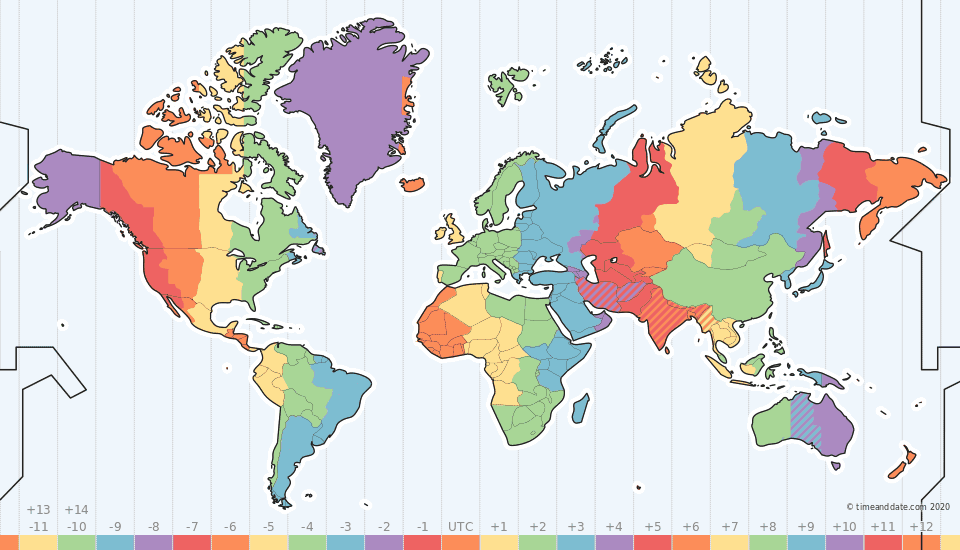
One factor that has also gained prominence in this crisis period is time zone. A time zone is a region of the globe that observes a uniform standard time for legal, commercial and social purposes. Time zones have the tendency to follow the boundaries of countries and their subdivisions instead of strictly following longitude because it is convenient for areas in close commercial or other communication to keep the same time. It is therefore appropriate when a person gets registered or invited  for an international training or meeting, the time zone for such is first established to avoid late participation or complete missing of the meeting.

Time zones appear a complex concept. As it is, there are more than 24 time zones. As a matter of fact, it is said that if each time zone were 1 hour apart, there would be 24 in the world. The International Date Line has reportedly created 3 more time zones with several others with 30 or 45 minutes apart. There is a Coordinated Universal Time (UCT) and other time zones that are a direct offset of the UCT. It is common to see abbreviations attached to stipulated time for such events that are likely to hold in different countries of the world. Those abbreviations should be paid attention to., Or else, chances are that such events would be missed. This is not only on the side of the attendees of a programme alone. Organizers of events that anticipate international participation need to take cognizance of the time zone. This gives them the benefit to fix a time that would be convenient for all. From the common GMT (Greenwich Mean Time), it is commonplace now to see abbreviations such as EST (Eastern Standard Time); EAT (East African Time);  WAT (West African Time); CAT (Central African Time);  ADT (Atlantic Day Time) or SAST ( South African Standard Time). Some of these could be confusing.

Despite the proliferation of these time zones and the confusion they are likely to generate, people can easily find their way around the complexity of the time zones by making use of time zone converters. These are websites that assist users to convert time from one zone to the other. They can easily be found through the Google Search Engine. They give the time equivalent, explain time differences and other features that could assist users in understanding the region of the world they intend to interact with. When you get that invite with a venue fixed for Zoom or Google Meet, check the date and most importantly the time to avoid stories that touch. Many have lost opportunities due to time differences around the world.

The Biggest Risk To Airbnb And Uber

2

The biggest risk to Airbnb will happen when its hosts lose confidence in its business model. That is also the same thing for Uber. Not many people will return back to Uber  after these months as drivers. This is emerging as a major risk to the aggregation business model: demoralized ecosystem partners. Convincing these partners when the pandemic is over, that the business model is resilient enough for those secondary investments, like buying houses (or cars) and putting them into the Airbnb platform (or Uber), will be another challenge for these firms. Many Airbnb hosts are already listing their properties for sale!

Towards an improving supply-demand equilibrium, with positive continuum of network effects, orchestrated through a near-zero marginal cost, anchored on modern technologies, Airbnb cannot afford to see these suppliers give up on its platform. The problem now is not a competitor causing havoc, but simply a platform collapsing from within. Airbnb must WIN itself to thrive again.

Amy Offield always dreamed of running a vacation rental in Galveston, Texas. Five years ago, she and her husband Chris got their wish and bought a house there minutes away from the beach. They immediately began restoring the property, which she named the “Blue Skies Beach Bungalow,” adding vintage items as well as retro and bright-colored decor.

But as coronavirus spread across the United States in March, Offield, who has been a full-time Airbnb host for nearly two years, started seeing a wave of cancellations. When Galveston temporarily shut down short-term rentals as part of its stay-at-home order, Offield switched her Airbnb to a 30-day stay, the minimum required to be considered a long-term listing. She didn’t get a single reservation, and her beach bungalow has stood empty for two months

Comment: Professor Ndubuisi, could perception innovation bring something to the table that’s able to regain the trust of exiting partners in this scenario?

My Response: Perception demand is a higher dimension of meeting the needs of markets. Airbnb hosts have one need: make money via their properties. Airbnb has to fix that friction for them. The challenge for Airbnb is that creating a force (product/service force) which has to overcome that frictional force (which hosts are experiencing) is something outside its control since it is only when guests return to book can it create its force.

Simply to answer you, Airbnb cannot regain trust because it does not control demand (the guests), and without that, the frictional force (within hosts) will remain larger than force its products can exert. Yes, it has a problem, leaving hosts unhappy!

Small physics there.


An Introduction, Benefits And Risks of Owning Stocks

5
The stock market is a very competitive and risk driven business. The term Stocks and Shares are vague to most people and as such they don’t have even the tiny glimpse on how these equities operate.

When people hear the term ‘Stock’, they are puzzled. So what is Stock? A Stock of a corporation is all of the shares into which ownership of the corporation is divided. In American English, the shares are collectively known as “stock”. A single share of the stock represents fractional ownership of the corporation in proportion to the total number of shares.

A stock (also known as “shares” or “equity”) is a type of security that signifies proportionate ownership in the issuing corporation. This entitles the stockholder to that proportion of the corporation’s assets and earnings. (Investopia Aug 16, 2019)

Stocks are bought and sold predominantly on stock exchanges, though there can be private sales as well, and are the foundation of nearly every portfolio. These transactions have to conform to government regulations which are meant to protect investors from fraudulent practices. Historically, they have outperformed most other investments over the long run. These investments can be purchased from most online stock brokers. Stock investment differs greatly from various investments.

How to Understand Stocks

Stocks emanate when Corporations (businesses) issue (sell) stock to raise funds to operate their businesses. The holder of stock (a shareholder) then buys a piece of the corporation and has a claim to a part of its assets and earnings.

In other words, a shareholder is now an owner of the company issuing the stock (s). Ownership is therefore determined by the number of shares a person owns relative to the number of outstanding shares. For example, if a company has 1,000 shares of stock outstanding and one person owns 100 shares, that person would own and have claim to 10% of the company’s assets and earnings (paid annually—first quarter, second quarter, etc).

It is important to know that ‘Stock holders’ do not own the corporations issuing them the stocks; they own the outstanding shares issued by the corporations. But corporations are a special type of organization because the law treats them as legal persons. In other words, corporations file taxes, can borrow, can own property, can be sued, etc. The idea that a corporation is a “person” means that the corporation owns its own assets. A corporate office full of chairs and tables belong to the corporation, and not to the shareholders.

Corporate property is legally separated from the property of shareholders, which limits the liability of both the corporation and the shareholder. If the corporation goes bankrupt, a judge may order all of its assets sold?, but your personal assets are not at risk. The court cannot even force you to sell your shares, although the value of your shares will have fallen drastically. Likewise, if a major shareholder goes bankrupt, she cannot sell the company’s assets to pay off the creditors.

Benefits of Owning Stocks

  1. Voting Right: Owning outstanding stocks gives you the right to vote in shareholder meetings, receive dividends (which are the company’s profits) if and when they are distributed, and it gives you the right to sell your shares to somebody else.
  2. Grow Money: One of the primary benefits of investing in the stock market is the chance to grow your money. Over time, the stock market tends to rise in value, though the prices of individual stocks rise and fall daily. Investments in stable companies that are able to grow tend to make profits for investors.
  3. Easy Purchase: The stock market makes it easy to buy shares of companies. You can purchase them through a broker, a financial planner, or online. Once you’ve set up an account, you can buy stocks in minutes. Some online brokers such as Bamboo, gives unrestricted access to over 3,000 stocks listed on the Nigerian stock exchange and U.S. stock exchanges, right from your mobile phone or computer (more on this, will be featured in the Part 2 of understanding the stock market article).
  4. Make money in two ways: Most investors intend to buy low and then sell high. They invest in fast-growing companies that appreciate value. That’s attractive to both day traders and buy-and-hold investors. The first group hopes to take advantage of short-term trends, while the latter expect to see the company’s earnings and stock price grow over time. They both believe their stock-picking skills allow them to outperform the market. Other investors prefer a regular stream of cash. They purchase stocks of companies that pay dividends. Those companies grow at a moderate rate.
  5. Sell off Easily: The stock market allows you to sell your stock at any time. Economists use the term “liquid” to mean you can turn your shares into cash quickly and with low transaction costs. That’s important if you suddenly need your money in a hurry. Since prices are volatile, you run the risk of being forced to take a loss.

The stock market is pretty large and if you’re not careful major terms could confuse you. However, it is a lucrative aspect of diversifying your wealth portfolio, if you are smart and have the patience associated with the stock market.

The Risks of Owning Stocks

The stock market is a very competitive and risk driven business. The term Stocks and Shares shouldn’t be new to most people and as such you should have even a tiny glimpse on how these equities operate in case of its crashing.

The Dark Times of Stocks

There used to be people who invested in local bank stocks years ago and till date they never saw any result of their investment. It’s no joke, it’s the reality. Trading and investing in stocks is amazing, I must really confess. It makes you feel powerful and at the top of the world (if the stocks are performing good). But when the unknown comes knocking on your door, you’ll be forced to open—oh, yes because it’s the unknown. Banks have been known to crash businesses the same (even giant publicly traded corporations), so why get your hopes up that nothing would happen to your precious stocks?

Don’t be deceived, anything can happen, besides—Change they say is constant. The financial crisis of 2007– 2008, also known as the global financial crisis and the 2008 financial crisis, was a severe worldwide economic crisis considered by many economists to have been the most serious financial crisis since the Great Depression of the 1930s, to which it is often compared. Why? It was a massive disaster to countries, businesses and large organizations. You really don’t want me to go back in time to relate my experiences those years, right? If you insist, tag me on Twitter and I’ll make a short thread.

What caused the 2007 financial crisis? It was the breakdown of trust that occurred between banks the year before the 2008 financial crisis. It was caused by the subprime mortgage crisis, which itself was caused by the unregulated use of derivatives. Despite these efforts, the financial crisis still led to the Great Recession. Tragic, Tragic indeed!

Just like the financial crisis ripped banks, stocks, bonds and etc., apart so does Stock Investment happen too, when fore-cast margins are not realized. So what are the cons (disadvantages) of trading and investing in those precious lovely stocks of yours? Pay rapt attention!

The Risks of Stock Trading and Investment

To start with honestly, the global stock market is volatile to changes at the global and local level. This follows that you should ideally be well-versed with the various pros and cons of investing in the trading market prior to proceeding with it. Also, considering the alarm-able fact that inflation has an eroding effect on individuals’ incomes, it is imperative that wise investment decisions are stacked up in order to counter such abrasion. However, on the positive side, whether you are a seasoned or maiden investor, the stock market is a good place to make your money grow.

  1. Profit Margin Brokerage: To be frank , every time an investor decides to buy or sell shares, they will have to shell out a certain proportion as brokerage fees to the broker. This, in turn, can jeopardize profitability. While investing in the stock market has its own advantages and disadvantages, it’s important to stay patient and invest for the long haul to maximize returns.
  2. Market Price Fluctuation: The market price of any equity share has a wide variation – let’s face the fact. It is always very difficult to book profits from the market. On the contrary, there are equal chances of painful losses.
  3. Risk at a High: Equity share investment is a risky investment as compared to any other investment like debts etc. The money is invested based on the faith an investor has in the company. There is no collateral security attached with it. So you can understand that if you fall, you fall out.
  4. Control is Limited: An equity investor is a small investor in the company, therefore, it is hardly possible to impact the decision of the company using the voting rights. Recall in the previous edition of this post?, It is important to know that ‘Stock holders’ do not own the corporations issuing them the stocks; they own the outstanding shares issued by the corporations. But corporations are a special type of organization because the law treats them as legal persons. In other words, corporations file taxes, can borrow, can own property, can be sued, etc. The idea that a corporation is a “person” means that the corporation owns its own assets. A corporate office full of chairs and tables belong to the corporation, and not to the shareholders.
  5. Investment of Time: Many folks I talk to about investing in the stock market feel that is like playing a lottery or bet. Listen?, Investing in the stock market is not like playing the lottery. You need to perform research and investment analysis to find potentially profitable stock. For many individuals, investing in the stock market is a time-consuming, complex task. Even after you find a stock to buy, you must monitor the movement of the stock’s price. Although many investors implement a long-term buy and hold strategy, it is important to know when to exit a stock position if it turns out to be a bad investment choice.

What Is The Future?

Oh, I understand that you’re scared, well you better be – but don’t be. After all they say ‘No guts, no glory’. For ‘potential’ stock market investors, they should always be aware that there is no guaranteed return on their investment.

Advantages of using your personal money to invest in the stock market include the potential return on investment and ownership stake in a company. Thus, it is essential to do a diligent study and in-depth research into one of the most critical aspects of business ventures – Stock Trading!