DD
MM
YYYY

PAGES

DD
MM
YYYY

spot_img

PAGES

Home Blog Page 6341

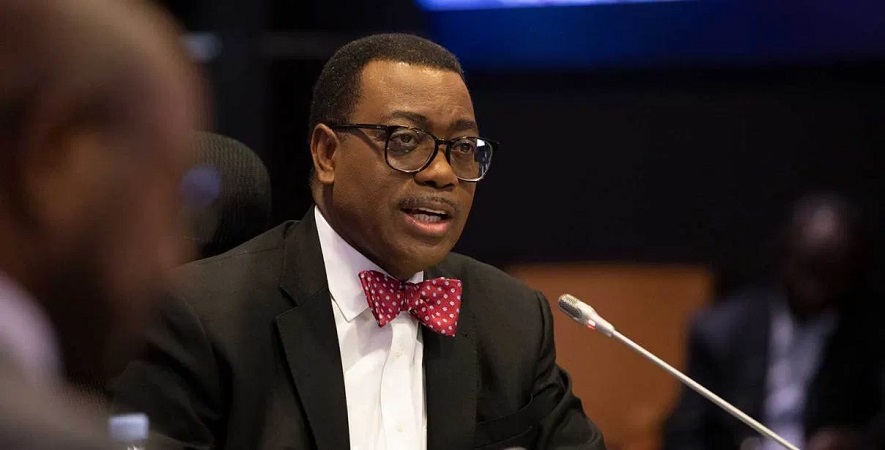
Akinwumi Adesina, AfDB President, Responds To The Allegations

19

Akinwumi Adesina, the President of the African Development Bank (AfDB), has responded (dated April 8, 2020) to the allegations against him courtesy of Premium Times. Read below…

Allegation No. 1

Not provided

Allegation No. 2: Appointment of Mrs Chinelo ANOHU-AMAZU

ADESINA: Ms Chinelo Anohu-AMAZU was recruited through a globally advertised, open and competitive recruitment process. The search process was carried out by a top notch external recruitment firm, Russell Reynolds of the UK. She was one of two top candidates (both women) recommended to me as President to consider for appointment by the panel. But, I can state categorically that the allegations made against her are untrue and defamatory.

Allegation No 3: Appointment and promotions of Martin FREGENE

ADESINA: Mr Fregene is NOT my brother-in-law. There is no evidence he is. Second, Mr Fregene is a world-class geneticist, internationally renowned for his work on plant genetics of cassava, and who worked earlier at CIAT, Colombia, one of the CGIAR centres, and subsequently as Director at the Danforth Plant Science Centre (probably the second largest private agricultural research centres in the United States).

He returned from the diaspora to Nigeria to work as Chief Technical Advisor when I was Minister of Agriculture in Nigeria. He was hired as a consultant by the Bank Vice President for Agriculture, Human and Social Development, Jennifer Blake, to support her in the development of the Bank’s Feed Africa strategy. I approved the recommended hire which was entirely within my power to do.

Allegation No. 4: Mismanagement of the TAAT programme

ADESINA: Allegations against me concerning the TAAT are belied by objective and solid facts demonstrating no violation by me of the Code of Conduct.

TAAT is an initiative of the Bank developed to help take agricultural technologies to the scale of millions of farmers across Africa.

Although some staff made some mistakes in the procurement process, this is being investigated by the Bank and no findings have been made yet. There was no impropriety.

The president does not get involved in contractual issues in the Bank, except in cases involving matters that may affect the image, reputation and interests of the Bank.

Allegation No. 5: Appointments and promotions of Mrs Maria MULUNDI

ADESINA: Ms Maria Mulindi worked with me prior to joining the Bank. She was part of my transition management team as I prepared to take office at the Bank following my election as President, and she very ably led all engagements with the Bank with my transition team. All Presidents of the Bank are allowed to bring in and appoint their own Chief of Staff and advisers, to help them to implement their mandate.

Allegation No 6: Direct contracting and appointment of Victor OLADOKUN

ADESINA: We went to the university together and have been very close friends since then. There is nothing in the Bank rules that says that being a friend of anyone in the Bank who gets recruited at the Bank is against Bank rules.

Allegation No. 7: Contracting of Kapil KAPOOR

ADESINA: The African Development Bank, under my chairmanship of the Multilateral Development Banks (MDBs) Heads, was tasked to help further develop my proposal to the group on how we can work collectively to leverage global institutional investors to invest in infrastructure and other sectors.

Kapil Kapoor, who was previously the Director of Strategy and Policies of the Bank, prior to his appointment as the Director General for Southern Africa, had been leading this work working closely with all other MDBs.

Kapil was essentially doing this work on top of his regular work as Director General. He retired from the Bank at the end of August 2019.

Allegation No. 8: Appointment of Emmanuel EZINWA:

ADESINA: The allegation that “A Nigerian, Mr EZINWA was found guilty of sexually harassing a colleague during his probation period; and despite his misconduct, (I) requested that Mr. EZINWA’s contract be confirmed, thus forcing the HR Director, Mrs Frauke HARNISCHFEGER resign is false.

The truth is that I do not know Mr EZINWA and have never met him in the Bank. The President does not get involved in any staff appraisals except for Vice Presidents and direct reports.

The then HR Director, Mr. David Ssegawa, evaluated the staff and there was nothing about sexual harassment.

Mrs Frauke HARNISCHFEGER was not the HR Director in 2018. The HR Director in 2018 was Mr David Ssegawa, who evaluated the staff and recommended the staff, as per the standard procedures of the Bank, to the President. Ms HARNISCHFEGER joined the Bank in 2019, one year after a confirmation recommendation made by the predecessor HR Director.

Allegation No 9: Preferential treatment for Nigeria and Nigerians

ADESINA: I did not introduce an organisational chart with a Nigeria Country Directorate. The decision to open a Nigeria Country Directorate was taken by the Board of Directors under my predecessor, the former President of the Bank, Donald Kaberuka.

Allegation No 10: Awards received by the President and costs borne by the Bank

ADESINA: I received the World Food Prize ($250,000) and the Sunhak Peace Prize ($500,000) in recognition of a life of accomplishments in the field of agriculture. Although they were individual prizes, they brought great credit and prestige to the AfDB.

I brought further credit to myself and the Bank by donating these two cash awards for the establishment of the World Hunger Fighters Foundation, a foundation that has garnered contributions from others and now funds the Borlaug Adesina Fellows Fellowship for young African Agribusiness Innovators.

The expenses of the World Food Prize event, including musical entertainment (musical groups from Nigeria and the Glee Club from Purdue University (my alma mater) were defrayed by the World Food Prize Foundation.

Allegation 11: Settlements for staff separations

ADESINA: The allegation that somehow the former Chief Economist, Mr Celestine Monga, departed the Bank with improper payments is false. The Chief Economist was not dismissed. Contract non-renewal is not dismissal of staff.

Allegation 12: Resignation of Mr David SSEGAWA

ADESINA: Mr Ssegawa was the HR Director. It is not true that I, as President, allowed him to resign when there was an investigation. There was absolutely no investigation of David Ssegawa when he resigned, nor was one contemplated.

Allegation No 13: Resignation of Mr Michel-Cyr DJIENA-WEMBOU

ADESINA: The allegation that I allowed the country manager to resign when he was under investigation for corruption is false. The President does not run country offices. They are under a Director General and overall oversight of a Vice President.

Allegation No. 14: Appointment of Mr Charles LUFUMPA as acting VP and Chief Economist

ADESINA: The allegations against me over the appointment of Charles Lufumpa as Acting Vice President and Chief Economist are patently false. My conclusion after careful review of the case of Charles Lufumpa is that the investigations conducted were very faulty and cannot prove the allegations made against him. My review also showed a well-orchestrated effort to make Mr Lufumpa a scapegoat for failures of others to do their job.

Allegation No. 15: Disregard of rules concerning leave of absence of VPs or travel of management.

ADESINA: The President does not monitor or manage time off for staff as that’s done by the Human Resources. The truth is the Vice President had personal medical issues that he had to get attended to (his private life must be respected) that required him to be away for extended periods, as needed, and he travelled with full knowledge of the department of health of the Bank which was monitoring him while away on medical reasons.

Allegation No 16: Political lobbying of Heads of State

ADESINA: It is alleged that as President I basically bribed and corrupted the 16 African Heads of State and governments in the ECOWAS region to support my candidacy for re-election.

The allegation essentially impugns the integrity, leadership and honesty of 16 African presidents and ECOWAS. This is a fanciful and baseless allegation.

Summary

In summary, every single one of the 16 allegations against me in the Disclosure remains unsubstantiated. I have not violated the Code of Conduct. The Ethics Committee should so find and dismiss the matter.


To Prevent COVID-19 And Other Related Diseases, Market Men and Women Need To Be Enlightened On Food Safety Practices – Tomisin Adefare

0

Tomisin Adefare is a young lady who is passionate about development. She has a first degree in Agricultural Economics and Extension from the Osun State University, Osogbo. She is currently on a Master’s programme in Agricultural Extension and Rural Development at the University of Ibadan. She recently organized a sensitization programme for market men and women in two selected markets in Ibadan on COVID 19  preventive measures, food security and safety practices. She had a chat with Rasheed Adebiyi on her passion for development, food security and hygiene. The excerpts are here.

Tekedia: What informed your recent effort at engaging issues around COVID 19 and food security?

Tomisin Adefare: I believe an individual can make a difference. Our collective effort can make an immeasurable impact in the lives of many people. It is everybody’s social responsibility to ensure the virus doesn’t spread among the people and that food security is not affected.

Tekedia: How do you feel being part of those engaging the Pandemic in a productive manner?

Tomisin Adefare : I feel fulfilled making an impact in my community. It makes me want to do more. As a student of Development, I cannot resist the urge to contribute my own quota in the fight against the Coronavirus which is threatening an area I have huge interest in- food security. Health is important to ensuring food security. When the farmers are healthy, they would be able to farm and supply the markets with the needed food items. The market users too need to be healthy to ensure the chain of distribution does not break. This is why I embarked on the sensitization on the preventive measures of the virus and at the same time also enlighten the market users on the need to maintain food safety practices.

Tekedia: Tell us more on these programmes?

Tomisin Adefare : The sensitization was done on food safety and preventive measures of COVID 19. Sometimes ago, I was at the market for a market survey and part of my survey was to see how food is being packaged, processed and sold. I discovered the way the food was being handled wasn’t hygienic enough. I discovered some food items were exposed to flies and to some animals like goats and sheep. I remembered vividly about the time the goat and sheep were busy eating the cassava flakes that were put outside by a seller, it was a passerby that called her attention to it that she had to chase the animals away. After which she removed a small portion from the side the animals were eating from, poured it away and then continued selling to the customers that came after then. I was so sad and as a Development Practitioner, that triggered me to make plans towards sensitizing them on food safety.Bodija and Sango Oju Irin Markets were chosen for the sensitization because this is where the bulk of the food people in Ibadan metropolis eat comes from. Also, due to the outbreak of COVD 19, there was a need to sensitize them on preventive measures to prevent transmission of the virus in the market place. Because this will have a negative impact on food security in the society and this could lead to hunger, starvation to death and malnutrition.

Tekedia: What was your experience like talking to people at the grassroots?

Tomisin Adefare : I discovered that the majority of the market users didn’t believe COVID 19 exists and they were of the opinion that it could only affect the rich people. We made them understand that the virus is not a respecter of any person as it affects the children, the old, the rich and the poor. We discovered a minority of them had heard about Covid 19 from friends but still aren’t taking it serious.  After the sensitization, the market users understood how to wash hands properly, the importance of social distancing. They even demonstrated social distancing before we left the markets. We saw them maintaining some distance from their co-sellers at the market.  They had a change of mindset about it as they were a bit scared of the consequences if someone that contracted the disease is not properly taken care of.

Tekedia: As a result of your being on the street, what advice do you have for government on the fight against COVID 19

Tomisin Adefare: Sensitization is never enough and as they keep hearing the importance and purpose, they will begin to stick to it and act properly. Lockdowns may be the best solution to curtail the spread but it pays for most developed countries where about 80 percent of the population is in the formal sector and they could work from home. But in a country like Nigeria where about 65 percent of the people especially in the rural areas are in the informal sector, lockdown without adequate support or a relief fund can as well lead to casualties. As non-governmental organizations and the private institutions are doing their best in creating awareness and sensitizing people on the need to take preventive measures, government shouldn’t relent by creating more awareness for people especially those living in the rural areas, they should provide more protective materials for the people or by subsidizing the amount they purchase it. The  National Agency for Food and Drug Control should enforce food safety among the market users so as to prevent eating contaminated food to prevent diseases such as Lassa fever as the number of people dying from it keeps increasing day by day.

Ndubuisi Ekekwe To Speak in Standard Bank’s Event Tomorrow

0

Lord Polonius: “What do you read, my lord?”. 

Hamlet: “Words, words, words”.

Today, Hamlet would have answered “Data, data, data’ in business.

From Samuel Taylor Coleridge’s “The Rime of the Ancient Mariner”, we got this line: “Water, water everywhere, Nor any drop to drink”. Tomorrow, I will discuss data, going back to the ancient Greek philosophers on the purpose, and meaning of natural philosophy, and how data offers a new dawn in the financial sector. 

Chinua Achebe would write, “An adult does not sit and watch while the she-goat suffers the pain of childbirth tied to a post”, the key is executing on data, not just having data.

This is a non public event by Standard Bank Group, South Africa.

Nigeria’s GDP Grew by 1.87% in Q1 2020

1
LAGOS, NIGERIA - JULY 15: A general view of congested traffic in central Lagos on July 15, 2008 in Lagos, Nigeria. (Photo by Dan Kitwood/Getty Images)

Against the backdrop of global economic strains resulting from COVID-19 pandemic, Nigeria’s Gross Domestic Product (GDP), grew by 1.87% Year on Year (YoY) in real terms, according to the data published by the Nigerian Bureau of Statistics (NBS).

The performance recorded in Q1 2020, represents a drop of -0.23% points compared to Q1 2019 and -0.68% points compared to Q4 2019, reflecting the earliest effects of the disruption, particularly on the non-oil economy. Quarter on quarter, real GDP growth was -14.27% compared to 5.59% recorded in the Q4 2019.

The oil sector performance stood at average daily production of 2.07 million barrels per day (mbpd). The production level was higher than the 1.99mbpd recorded in the same quarter of 2019 by 0.08mbpd and the fourth quarter of 2019 by 0.06mbpd.

There was a record of real growth rate of 5.06% yoy in the Q1 2020, indicating an increase of 6.51% points relative to the rate recorded in the corresponding quarter of 2019. However, there was -1.30% points decrease compared to Q4 2019 which was 6.36%. Quarter-on-quarter, the oil sector recorded a growth rate of 11.30% in Q1 2020.

Consequently, the non-oil sector added 1.55% growth in real terms in Q1 2020. That’s -0.93% points slower compared to the same quarter in 2019, and -072% slower than the Q4 of 2019.

The non-oil sector was sparked mainly by telecommunications, finance, agriculture, mining and quarrying and construction. The non-oil sector contributed 90.50% to the nation’s GDP in Q1 2020, in real terms, compared to 90.78% of the same quarter in the preceding year, and 92.68% in the Q4. Road transport, quarrying, accommodation, real estate and food services recorded the lowest performance.

In the mining and quarrying sector, which consists of crude petroleum and natural gas, coal mining, metal ore and other minerals, there was a nominal growth of -10.57% yoy in Q1 2020. While metal ore recorded the highest growth rate of all sub-activities at 8.72%, followed by crude petroleum and natural gas activity which stood at -10.20%, it was crude petroleum and natural gas that contributed most to the sector with 99.51% growth in the Q1 2020.

The mining and quarrying sector grew in real terms by 4.58% yoy, compared to the same quarter of 2019, the Q1 2020 was higher by 5.95% points but lower by -1.49% points when compared to Q4 2019. The quarter on quarter growth recorded stood at 9.36%. The total contribution of mining and quarrying to the real GDP was 9.54% for Q1 2020.

In the agricultural sector, there was a 22.47% yoy growth in nominal terms in the Q1 2020, indicating a decline of -0.11% points from the same quarter in 2019. The sector recorded an increase of 8.66% points when compared to the 13.80% growth rate of Q4 2019. Crop production accounted for 90.54% of overall nominal growth in the sector. Quarter on quarter growth stood at -19.58% in Q1 2020. The agricultural sector contributed 20.88% to nominal GDP in the Q1 of 2020.

The agricultural sector grew by 2.20% year on year in the first quarter of 2020, in real terms, indicating a -0.97% points compared to the same quarter in 2019. On a quarter on quarter basis, the real agriculture sector growth was -27.81%. The sector made 21.96% contribution to overall GDP in real terms in Q1 2020.

Information and communication sector’s growth stood at 8.94% in nominal terms yoy, a -2.51% points decrease from the rate of 11.45% recorded in the same quarter of 2019, and -0.93% points lower than the rate recorded in the preceding quarter. There was a -7.20% quarter on quarter growth in the first quarter of 2020.

The information and communication sector contributed 10.31% to total nominal GDP in the Q1 2020, lower than the rate of 10.60% recorded in the same quarter of 2019. In the first quarter of 2020, the information and communications sector recorded a growth rate of 7.65% in real terms, yoy. Compared to the same period of the preceding year, there’s a decrease of -1.84% points. Quarter on quarter growth stood at -8.02% in real terms. The sector contributed 14.07% to total real GDP in Q1 2020.

The increase recorded in most of the sectors contributed to the 1.87% GDP growth, but compared to the preceding year, the Q1 2020 has underperformed, mainly, due to the decline in oil price and events that the year 2020 was ushered in with.

With this scorecard, the second quarter of the year will undoubtedly yield negative growth due to the impact of the coronavirus crisis. The International Monetary Fund (IMF)  said Nigeria should brace up for its worst recession.

When Your Company Goes WFH, Your Leverageable Value Drops

5

If your company introduces a Work from Home (WFH) policy, do not just blindly rejoice. I just finished reading a paper by a big U.S. bank economist who is advising its customers that (1) WFH will help them expand their talent pool (2) Reduce wage growth for their workers over time (3) Solidify an employer-market, arbitraging best talent and lower cost.

As companies like Twitter, Facebook, Amazon, Microsoft, and Zillow embrace this redesign, do not think it is because they want you to have extra sleep by keeping you at home over jumping into early morning traffic. This is the fact: Covid-19 has forced a huge global experiment, pushing companies around the world to pilot something many would not have done. And the results came out largely just fine.

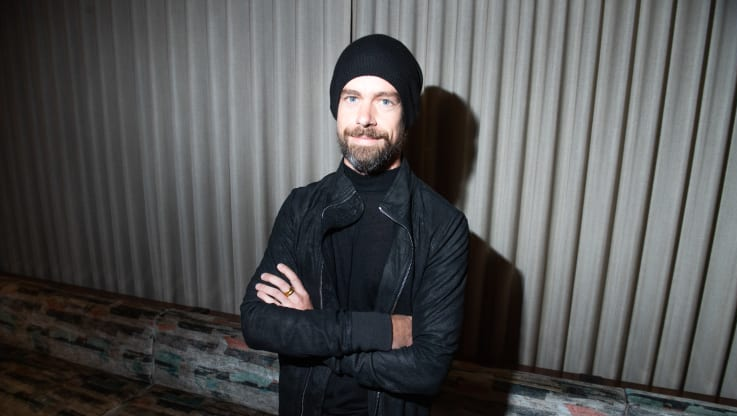
Both of Jack Dorsey’s companies will now allow employees to work from home permanently.

San Francisco-based Square said Monday it would let people work remotely, even after regional shelter-in-place orders end. The news came a week after Twitter, also run by Dorsey, announced its employees would have the same option.

“We want employees to be able to work where they feel most creative and productive,” a Square spokesperson told CNBC. “Over the past several weeks, we’ve learned a lot about what it takes for people to effectively
Be aware that WFH will offer a new domain of competition where talent sources will be both local and global at the same time.  Simply, talent becomes unbounded and unconstrained, making it possible that plug-and-play can happen at scale. Yes, if you are in San Francisco, earning $8,000 per month, you can be replaced with someone in Nairobi, earning $2,000, and the company will justify it as adopting a new way of work philosophy. But deep behind is a clear value-creation for employers, through reduction of the cost of labour!
“We can get talent anywhere. There’s a lot of folks out there that do not want to move to San Francisco. They feel comfortable working in a much smaller office or just home.” CEO of Twitter, Jack Dorsey
It is arbitraging the best, lowest cost workers globally, pushing workers on the edge downward trend. While some workers will lose, some will benefit. A positive impact on workers is the new Andela policy to adopt WFH for experienced software developers.

ICT created value for companies through improved productivity. The internet has done the same. But there is a key difference: the web does create value but it is also great on destroying and shifting value. If you make a phone call with Whatsapp from Lagos to New York and spend one hour, you may be spending about $1 via equivalent broadband cost. 

But if you have called direct via MTN, a telecom company, you may be off by $40. Yet, the $39 you have saved is not going to Whatsapp which remains free. So, for companies the value has been destroyed, not transferred between. This trajectory cuts across industries making it possible that you can innovate, and yet not earn any income from it; you just end up destroying value for everyone!

The WFH is a new technology app: it would destroy value for some workers (others will benefit) and help employers save while improving overall efficiency through a more talented workforce! It is basic economics, whenever supply increases, other things being equal, price drops. If WFH increases talent for companies, expect wages to drop for workers in some expensive regions of the world! If you live in those regions, you must ensure you can bring more value to avoid displacement. And understand where you stand in this dislocation.