DD
MM
YYYY

PAGES

DD
MM
YYYY

spot_img

PAGES

Home Blog Page 6348

How Osun Intends to Advance Its Green Economy

0

In 2019, a report indicates that Nigerian green economy worth $250 billion with the possibility of the sector playing critical roles in employment generation and eventual economic growth across the country. Several organisations and experts have discussed and still pointing out the significance of the green economy, which comprises low carbon, resource efficient and socially inclusive businesses including various opportunities in agriculture.

According to the United Nations Environmental Programme, “in a green economy, growth in employment and income are driven by public and private investment into such economic activities, infrastructure and assets that allow reduced carbon emissions and pollution, enhanced energy and resource efficiency, and prevention of the loss of biodiversity and ecosystem services.”

Having seen inherent opportunities in green economy, state governments and the federal government have been investing in it in the last few years. Every year, the state and federal governments are spending a certain percent of their budgetary allocation on agriculture and sustainable environment, especially through flood mitigation and other activities on climate change control. In its 2020 budget, Osun state wants to spend N2,363,716,760.00 (3.82 per cent) on agriculture.

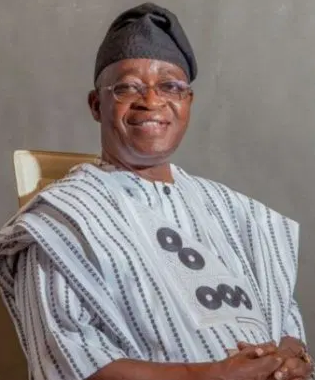
Prior to the allocation, Governor Gboyega Oyetola hinted that the state is “largely an agrarian economy with fertile and expansive landmass, we are your most- suitable location for agricultural investment. With a Land Bank in operation and our avowed commitment to making Osun the main hub of agriculture in South West Nigeria, we seek your partnership to further open up this sector via investment on large scale crop production, beef chain development, establishment of seed companies and partnership to develop farming services in the areas of quality seedling supply, farming equipment leasing, as well as development of financial and extension services to farmers, among others.”

In his efforts and patterns of engaging citizens and residents in the state, Governor Oyetola reiterates his readiness to advance the state through green economy. Monitoring the engagement on a social networking platform, our analyst reports that Governor Oyetola intends to use the sector as the bedrock of driving economic development and growth in the state because emergence of the next oil money will evolve from agricultural and farming activities. Governor Oyetola states that his administration will empower 5764 farmers in the state to grow up cassava, cotton and also engage in fish farming, with support from the Central Bank of Nigeria.

The expectation of the governor and his administration is that this effort and others such as open up of 12 local councils for aggressive farming through designated 2,000 hectares of land, training of about 1,000 farmers in specialised farming, distribution of improved seedlings, pesticides and herbicides would help in reducing poverty curve further in the state, most especially among the vulnerable households.

Meanwhile, since few days ago that Governor Oyetola disclosed his intent about the green economy, various reactions have continued to trail the intent. Majority of people want the processes that will be used for the selection farmers and other beneficiaries to be transparent. “I don’t know how government is going to drive the systems to identify true farmers and prevent fake farmers from benefiting from the programmes,” one of the governor’s followers on the social networking platform said.

“Almost every government came with idea of empowering farmers but always end up in failure, but I pray this Oyetola own will not fail because there is no recognized farmers Union in place rights now in Osun state,” another person pointed out.

Editor’s Note: Musa Ahmed provides background information for this report. 
Finance Minister Confesses; Nigeria “Will Go into Recession”

4
Finance Minister, Nigeria

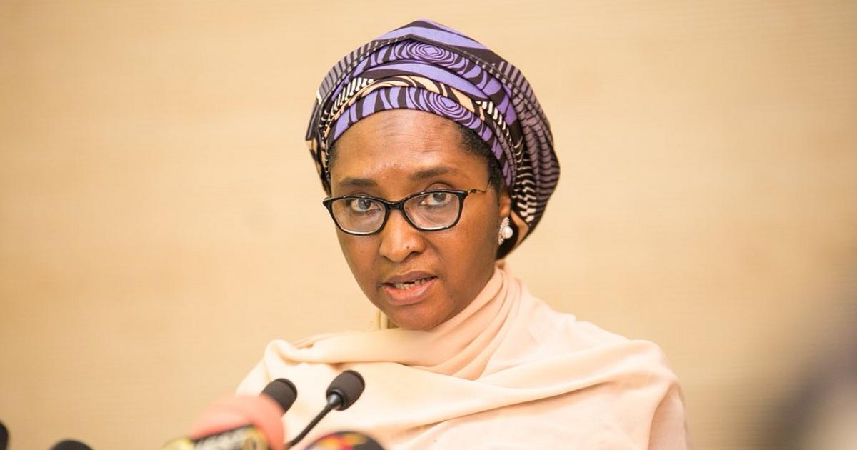
In a defying acknowledgement on Thursday, the Finance Minister, Mrs. Zainab Ahmed told journalists that Nigeria’s economy will definitely fall into recession. She made the statement based on Nigeria’s Bureau of Statistics (NBS)’ assessment that the economy will go into recession at an average of -4.4 percent.

Mrs. Ahmed who addressed the press after the National Executive Council (NEC) meeting said there is hope though that the impact could be reduced through stimulus packages.

“The National Bureau of Statistics has made an assessment. So, it is the NBS assessment that Nigeria will go into recession measuring at an average of -4.4%. But with the work that the Economic Accessibility Committee is doing bringing stimulus packages, we believe that we can reduce the impact of that recession.

“And if we applied all that have been proposed and we are able to implement it, we may end up with a recession that is -0.4 percent. In any case, we will go into recession, but what we are trying to do is to make sure that it is shallow so that we will quickly come out of it come 2021,” she said.

In late 2019, the Nigerian government was struggling to maintain stable growth after it recovered from a severe recession that threatened its budget funding and sent the country on a borrowing spree. As Nigeria set on the path of recovery early this year, the COVID-19 pandemic came with a sweeping force that collapsed the gains derived from the little surge in crude oil price.

The oil based GDP plummeted following the global crash of crude oil as the coronavirus crisis shut commercial activities around the world.

Nigeria depends on crude oil for 90 percent of its Gross Domestic Product (GDP). The remaining 10 percent comes from businesses that were shut down in a bid to contain the spread of coronavirus pandemic. So, it’s been an economy on standstill, whilst there’s a lot of financial responsibility to shoulder.

As other nations around the world inject billions of dollars in stimulus packages into their economies to save it from recession or total crumble, Nigeria was hoping to borrow. The Excess Crude Account (ECA) has been depleted before the global health crisis, leaving Nigeria broke with borrowing as the only choice to upset the deficiencies emanating from the health crisis.

Though the Central Bank has rolled out a couple of stimulus packages like the Credit Targeted Facility, it is not enough to alleviate the impact of the scourge on businesses. Many businesses like (aviation) are still on lockdown and interstate activities remain restricted, aggravating the country’s economic turmoil.

With the only hope of sustainability lying in the ability of other countries around the world opening their economies to spur demand for oil, Nigeria appears to be standing on a cliff.

To make things worse, the number of coronavirus cases is increasing in Nigeria and the rest of the world, creating economic and health battles the country is not fit to wage. The partial reopening of the economy is deemed premature by health professionals, but the government seemed to have been forced to choose it as a lesser evil.

“This is a very difficult time because the challenges we have now are double. There is health challenge, there is an economic challenge,” said Mrs. Ahmed. “Even as are addressing the current health challenge, we still have to look at how we can support the economy so that the economy does not fall into a depression.”

Government’s continuous promises to support the economy would have offered hope of sustainability if not that there is no fund to implement efficient stimulus packages.

Former vice president Atiku Abubakar, alongside others has advocated cutting the cost of governance as one of the ways Nigeria can get out of her COVID-19 ordeal. He advised that the presidential fleet should be sold while others have urged the lawmakers to slash their bonuses which are regarded as the most expensive in the world. But the federal appears unwilling to tread that path.

The borrowed $3.4 billion from the International Monetary Fund (IMF) is apparently insignificant to the size of the economic and health challenge facing Nigeria right now. The federal government is counting on COVID-19 donations and special funds to implement the amended budget, and provide the needed stimulus packages to boost the economy. With the rebound of the oil market uncertain, Nigeria will not only go into recession, it may go into depression.

How to Find and Buy the Correct Battery for Your Laptop

0

Laptops are very advanced nowadays. They are a lot more powerful than smartphones, tablets and desktop computers. There are many advantages of having and using a laptop and today almost anyone has one. Laptops are portable machines so you can use them everywhere you go. But because they are portable, they require a good battery to enable them to operate longer. Batteries are vulnerable and drain fast. They have their expiration dates and working hours, so as soon as they hit them it is time for you to search for a new battery. If you start to notice that your laptop is not operating at its best and the performance is significantly reduced, you should consider getting a new battery. Remember that not all replacement batteries are good for your laptop. Inserting a wrong battery can do more harm than help to your computer. 

Choosing a Proper Replacement Battery

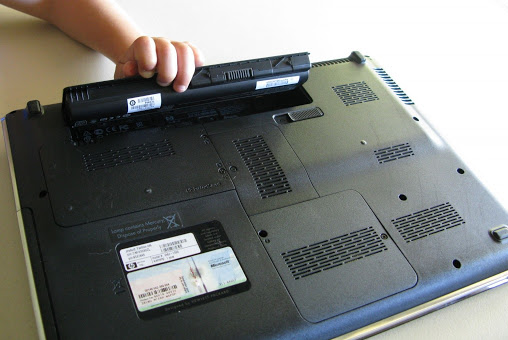
  • The first thing you should do is to find the exact model and brand of your laptop. When you know the exact model and brand, start searching for the proper battery. Only look for those batteries that are made for the brand you are using. You can easily find the model name of your laptop at the back of it or inside the compartment where the battery is stored. Unplug and shut down the computer first and then look for the model number of your laptop computer. 
  • Online you can find many great things regarding technology. For example, at https://www.soluno.com/ you can find some pretty useful information regarding phone systems. Online you can also search for the exact battery model number of your computer. In case you cannot see it or find it on your laptop, just go on the Internet and find the information about that. All you have to do is just enter the brand name of your computer and the name of the model, and you will be presented with results regarding suitable batteries. This is the best and fastest way of finding the required information. 
  • Check other important information and verify certain things before purchasing the replacement battery. Take a closer look at the information and photos of batteries that are sold online. Compare if they are completely identical to the original battery in your laptop. If you notice something is off then you should probably avoid buying it online as it might not be good for your laptop.

These were some pointers for you to pay attention to when you are searching for the correct battery for your laptop computer. This advice should help you find the correct battery in the fastest time possible. It is advisable to buy batteries from reputable sellers and not from random sellers online. It does not matter if you buy it online or in a physical store as long as the seller is a reputable seller of laptop batteries. Hopefully, you will find the information useful and soon get a suitable battery for your laptop

Learn to INNOVATE with me

0

Learn to INNOVATE with me – and please bring your village along. It is an excursion into the mechanics of market systems. It would be career-shaping. Same level as in my 3rd year in secondary school, when I raised my hand and told my teacher, “I enjoyed this integrated science class on electricity. I will go into science in SSI and later study electrical engineering in the university”. You will remember great moments because you came along. COME here.

The New Challenge in Nigeria’s Electricity Distribution

0

The controversy surrounding the Nigerian power sector continues to take turns. On Tuesday, the Senate asked the Federal Government to review the privatization policy of the power sector. The upper house of the national assembly said the current arrangement of the power sector needs to be redesigned as it lacks efficiency and the structure that would provide constant power supply to Nigeria.

The senate president said that if things continue the way they are, Nigerians will not be able to enjoy stable power supply in 10 years.

The motion which was moved by Senator Gabriel Suswam was largely backed by members of the red chamber. The power sector recovery plan has been a subject of discussion in the national assembly that its end seems far from near.

Lawan said the Discos have shown incapability to supply Nigerians with constant electricity, and therefore should not be allowed to continue to run the electricity business in their current capacity.

“We gave power to them, (GenCos and DisCos) and they still come to the public to ask for funds. I think it’s time for Nigeria to consider reversing the privatization of the power sector or they should just cancel the entire privatization process completely. If we leave it, we may not have power in another 10 years.

“The privatization of the power sector has so far, not been successful. We expected efficiency and effectiveness in the power supply. The DisCos have no capacity to supply us power. The GenCos have challenges too. It is not a good commentary that we should continue to give them money. They’re private businesses. We need to review this privatization.

“Our committee needs to investigate trillions spent. That’s a lot of money. Try to find out what has happened so far. Government needs to look at this whole thing. There is lack of capital, lack of investment. We feel very bad because we have no electricity and the country is suffering,” Lawan said.

This is the second time in the year that the senate is calling for review of the privatization policy of DisCos. In February, the senate president said the underperformance of the power sector can no longer be tolerated as it keeps deteriorating on the daily. He said the distribution policy of the power sector should be reviewed if not the entire sector.

The major reason for this call by the senate was found in the statement of the power Minister, Sale Mamman, in February. He said that the distribution companies can only transmit a fraction of generated power, which leaves many of the end-users in darkness.

Mamman said that out of the 13,000 megawatts capacity of power, the DisCos can only distribute about 4,500, and only 3,000 megawatts get to consumers. In view of the situation, he backed the call to review the entire process that brought in the present companies. “Companies that are incapable of running the distributors should give way to whoever that is ready to come and invest he said,” he said.

But in reaction, the Nigeria Electricity Regulatory Commission (NERC) warned the lawmakers against revisiting the privatization policy. The acting Chairman, Dr. Anthony Akah, said the Nigerian government may not have the funds to buy back the utilities and may be acting in contravention of the agreement binding the owners of the distribution companies and the federal government, and it will send a bad signal to investors.

Akah, however, acknowledged that the DisCos have fallen short of the electricity transmission level they signed to deliver. He said they are working to up their game.

“The Commission has identified that the remittance by the electricity distribution companies’ level is too and it is totally unacceptable to us. The Commission would soon introduce regulatory mechanism to redress this remittance abnormality,” he said.

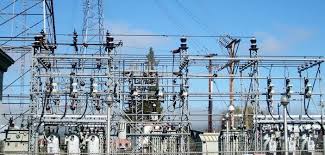
It’s been three months now and the story remains the same. Nigeria has invested over N1 trillion in the power sector with little to show for it. Electricity distribution can only reach about 60% of Nigerian households, and it is not constant.

Before now, the problem had largely centered on power generation. But as power generation increases, it shifts to distribution. The inability of the distribution companies to transmit electricity according to the generation capacity of the GenCos has introduced a new challenge to the power sector.

On Tuesday, the Minister of Power announced that the director of Transition Company of Nigeria (TCN), Usman Mohammed has been sacked. The development followed a series of controversies that have trailed the Company, undermining the power sector reform goals.

Unfortunately, the story sounds the same from the past despite huge resources that have been channeled to the power sector, and there appears to be a little hope for stable power supply for now.