DD
MM
YYYY

PAGES

DD
MM
YYYY

spot_img

PAGES

Home Blog Page 6349

The Governor’s Mistake [Video]

4

A governor waives most small business taxes in his state, and attacks the core principle of taxation, Nigerians rejoice – he is fighting for the masses. Yes, why should we pay taxes when there is no government in our lives? Every respectable company in Nigeria runs a local government operation, providing its water via borehole, electricity via generator and security via private security guards. Government is invisible! We know those things – Nigeria is not working. Yet, what will make Nigeria work is not killing taxation but by demonstrating that taxes can work for the people, and then using that construct to stimulate them to pay more. Until Nigeria can get people to understand that taxation is part of being a citizen, we have no future.

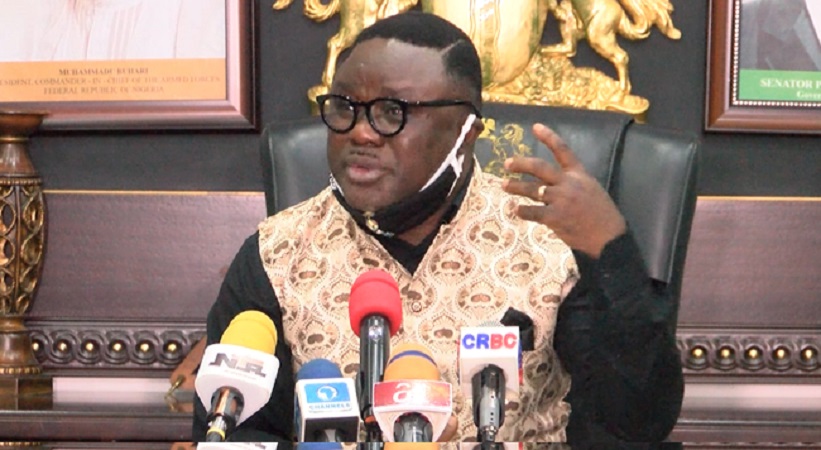
Yes, many  have shared the clip of the Governor of Cross River state, Ben Ayade, who waived most taxes in his state. While his post Covid-19 tax waivers are commendable, his broad statement should not be celebrated blindly. He attacked the tax system, making a case that governors should not make. For Nigeria to rise, governors have to find ways to deepen their tax bases, and then use the resources judiciously. Like I noted in the Platform, people willingly pay taxes when taxes are working in their lives! But that does not mean we have to give them excuses not to pay. Why? The promises of all politicians are taxes of the citizens. When that tax is not available, nations fade.

I respect His Excellency but his argument is flawed. Tax should not be based on scale of business but profit, as contained in the Nigerian tax ordinances. People should pay taxes as that builds a system we all depend on – affordable public schools, at least. If you are in any government university or polytechnic and paying less than N300,000, thank tax payers for that possibility when private schools continue to hit new heights on fees and tuition. 

You tax a man that makes N30,000 as a teacher while the man who owns 20 goats selling two every market day does not pay tax. Mr. Governor, in his thesis, where farmers should not be taxed will be comfortable with that. The construct  is that only those that have formal employment should pay taxes in Nigeria even though some of them are still very poor! Yes, the farmers, carpenters, cab drivers, etc are not paying, but that does not mean that is normal. We have to work hard to change that even if they have to pay N50 in a year provided that was based on their profits. Government does not need to have directly helped in your farming before it can have the rights to tax the profits from your farming.
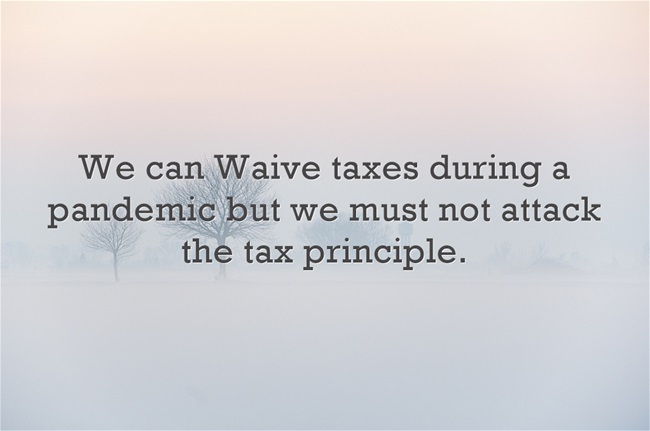
Governor is a politician but his state will not advance on this muddling tax policy. He can suspend tax payment during a pandemic. That is fair, but making collection of tax to be seen as an evil system is recklessness.

 What Mr Governor needs is a tax collection system which follows the law: find an efficient way to tax profit whether from a big or small company. Linda Ikeji blog was rumored to be making hundreds of millions of naira  at a time. She probably had less than three staff. Many said no tax was paid. But if you check her revenue, she could have made more money than most insurance companies in Nigeria – most report less than one billion naira in revenue, yearly. Yet, they are hit with tax while those small profitable entities pay nothing.

This is my formula – prepare the minds of people that paying tax is part of being a citizen. Do not attack the tax system. Sure, you can suspend or waive during a pandemic but taxation is not evil. For more than twenty years, Nigeria has been working hard to re-orient the citizens on the necessity of paying taxes. We cannot make heroes out of those who now think asking people to pay taxes is a bad policy.

Yes, a governor should not send a different message. I will hope our leaders make that point because Nigeria’s problems of tomorrow will be anchored on our ability to pay taxes. More so, a state governor has limited control of taxation in Nigeria. The statement from the governor could make the work of federal tax collectors harder, as the citizens will see all of them as agents of the state, which the governor had mandated not to collect taxes. Practically, a governor cannot dictate most things on taxation in Nigeria. The man who sells acres of land and pays no VAT, and the man who sells dozens of cows and pays no VAT should not be given tools for excuses.

I commend Mr. Governor for waiving taxes during this hard time. We need the small businesses to thrive, for tomorrow. But taxation is not bad and no governor should preach that message. Our challenge is this: tax collection remains sub-optimal and governors like Ben Ayade should improve that system in Nigeria.

I COMMEND the tax waiver.
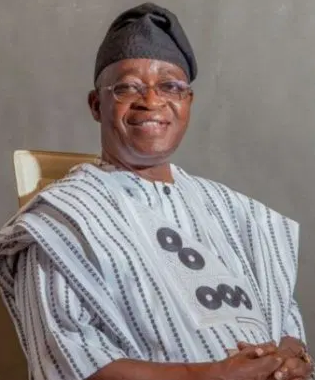
 

How Osun Intends to Advance Its Green Economy

0

In 2019, a report indicates that Nigerian green economy worth $250 billion with the possibility of the sector playing critical roles in employment generation and eventual economic growth across the country. Several organisations and experts have discussed and still pointing out the significance of the green economy, which comprises low carbon, resource efficient and socially inclusive businesses including various opportunities in agriculture.

According to the United Nations Environmental Programme, “in a green economy, growth in employment and income are driven by public and private investment into such economic activities, infrastructure and assets that allow reduced carbon emissions and pollution, enhanced energy and resource efficiency, and prevention of the loss of biodiversity and ecosystem services.”

Having seen inherent opportunities in green economy, state governments and the federal government have been investing in it in the last few years. Every year, the state and federal governments are spending a certain percent of their budgetary allocation on agriculture and sustainable environment, especially through flood mitigation and other activities on climate change control. In its 2020 budget, Osun state wants to spend N2,363,716,760.00 (3.82 per cent) on agriculture.

Prior to the allocation, Governor Gboyega Oyetola hinted that the state is “largely an agrarian economy with fertile and expansive landmass, we are your most- suitable location for agricultural investment. With a Land Bank in operation and our avowed commitment to making Osun the main hub of agriculture in South West Nigeria, we seek your partnership to further open up this sector via investment on large scale crop production, beef chain development, establishment of seed companies and partnership to develop farming services in the areas of quality seedling supply, farming equipment leasing, as well as development of financial and extension services to farmers, among others.”

In his efforts and patterns of engaging citizens and residents in the state, Governor Oyetola reiterates his readiness to advance the state through green economy. Monitoring the engagement on a social networking platform, our analyst reports that Governor Oyetola intends to use the sector as the bedrock of driving economic development and growth in the state because emergence of the next oil money will evolve from agricultural and farming activities. Governor Oyetola states that his administration will empower 5764 farmers in the state to grow up cassava, cotton and also engage in fish farming, with support from the Central Bank of Nigeria.

The expectation of the governor and his administration is that this effort and others such as open up of 12 local councils for aggressive farming through designated 2,000 hectares of land, training of about 1,000 farmers in specialised farming, distribution of improved seedlings, pesticides and herbicides would help in reducing poverty curve further in the state, most especially among the vulnerable households.

Meanwhile, since few days ago that Governor Oyetola disclosed his intent about the green economy, various reactions have continued to trail the intent. Majority of people want the processes that will be used for the selection farmers and other beneficiaries to be transparent. “I don’t know how government is going to drive the systems to identify true farmers and prevent fake farmers from benefiting from the programmes,” one of the governor’s followers on the social networking platform said.

“Almost every government came with idea of empowering farmers but always end up in failure, but I pray this Oyetola own will not fail because there is no recognized farmers Union in place rights now in Osun state,” another person pointed out.

Editor’s Note: Musa Ahmed provides background information for this report. 

Finance Minister Confesses; Nigeria “Will Go into Recession”

4
Finance Minister, Nigeria

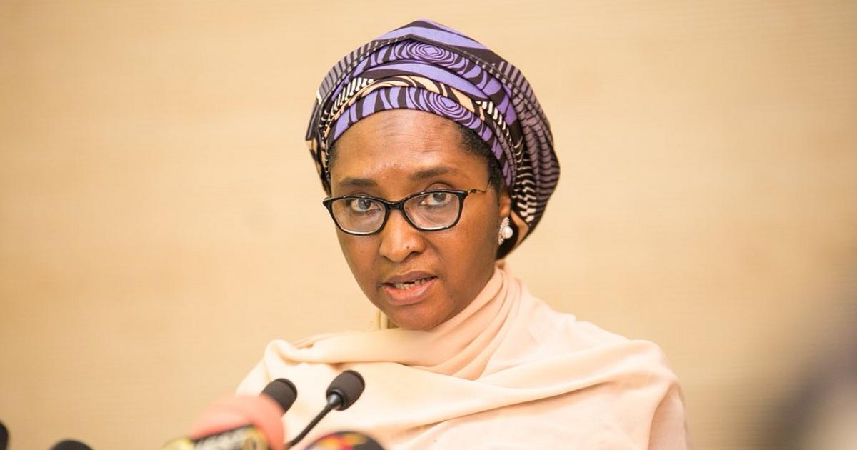
In a defying acknowledgement on Thursday, the Finance Minister, Mrs. Zainab Ahmed told journalists that Nigeria’s economy will definitely fall into recession. She made the statement based on Nigeria’s Bureau of Statistics (NBS)’ assessment that the economy will go into recession at an average of -4.4 percent.

Mrs. Ahmed who addressed the press after the National Executive Council (NEC) meeting said there is hope though that the impact could be reduced through stimulus packages.

“The National Bureau of Statistics has made an assessment. So, it is the NBS assessment that Nigeria will go into recession measuring at an average of -4.4%. But with the work that the Economic Accessibility Committee is doing bringing stimulus packages, we believe that we can reduce the impact of that recession.

“And if we applied all that have been proposed and we are able to implement it, we may end up with a recession that is -0.4 percent. In any case, we will go into recession, but what we are trying to do is to make sure that it is shallow so that we will quickly come out of it come 2021,” she said.

In late 2019, the Nigerian government was struggling to maintain stable growth after it recovered from a severe recession that threatened its budget funding and sent the country on a borrowing spree. As Nigeria set on the path of recovery early this year, the COVID-19 pandemic came with a sweeping force that collapsed the gains derived from the little surge in crude oil price.

The oil based GDP plummeted following the global crash of crude oil as the coronavirus crisis shut commercial activities around the world.

Nigeria depends on crude oil for 90 percent of its Gross Domestic Product (GDP). The remaining 10 percent comes from businesses that were shut down in a bid to contain the spread of coronavirus pandemic. So, it’s been an economy on standstill, whilst there’s a lot of financial responsibility to shoulder.

As other nations around the world inject billions of dollars in stimulus packages into their economies to save it from recession or total crumble, Nigeria was hoping to borrow. The Excess Crude Account (ECA) has been depleted before the global health crisis, leaving Nigeria broke with borrowing as the only choice to upset the deficiencies emanating from the health crisis.

Though the Central Bank has rolled out a couple of stimulus packages like the Credit Targeted Facility, it is not enough to alleviate the impact of the scourge on businesses. Many businesses like (aviation) are still on lockdown and interstate activities remain restricted, aggravating the country’s economic turmoil.

With the only hope of sustainability lying in the ability of other countries around the world opening their economies to spur demand for oil, Nigeria appears to be standing on a cliff.

To make things worse, the number of coronavirus cases is increasing in Nigeria and the rest of the world, creating economic and health battles the country is not fit to wage. The partial reopening of the economy is deemed premature by health professionals, but the government seemed to have been forced to choose it as a lesser evil.

“This is a very difficult time because the challenges we have now are double. There is health challenge, there is an economic challenge,” said Mrs. Ahmed. “Even as are addressing the current health challenge, we still have to look at how we can support the economy so that the economy does not fall into a depression.”

Government’s continuous promises to support the economy would have offered hope of sustainability if not that there is no fund to implement efficient stimulus packages.

Former vice president Atiku Abubakar, alongside others has advocated cutting the cost of governance as one of the ways Nigeria can get out of her COVID-19 ordeal. He advised that the presidential fleet should be sold while others have urged the lawmakers to slash their bonuses which are regarded as the most expensive in the world. But the federal appears unwilling to tread that path.

The borrowed $3.4 billion from the International Monetary Fund (IMF) is apparently insignificant to the size of the economic and health challenge facing Nigeria right now. The federal government is counting on COVID-19 donations and special funds to implement the amended budget, and provide the needed stimulus packages to boost the economy. With the rebound of the oil market uncertain, Nigeria will not only go into recession, it may go into depression.

How to Find and Buy the Correct Battery for Your Laptop

0

Laptops are very advanced nowadays. They are a lot more powerful than smartphones, tablets and desktop computers. There are many advantages of having and using a laptop and today almost anyone has one. Laptops are portable machines so you can use them everywhere you go. But because they are portable, they require a good battery to enable them to operate longer. Batteries are vulnerable and drain fast. They have their expiration dates and working hours, so as soon as they hit them it is time for you to search for a new battery. If you start to notice that your laptop is not operating at its best and the performance is significantly reduced, you should consider getting a new battery. Remember that not all replacement batteries are good for your laptop. Inserting a wrong battery can do more harm than help to your computer. 

Choosing a Proper Replacement Battery

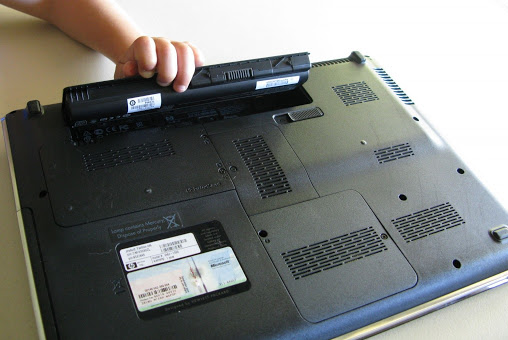
  • The first thing you should do is to find the exact model and brand of your laptop. When you know the exact model and brand, start searching for the proper battery. Only look for those batteries that are made for the brand you are using. You can easily find the model name of your laptop at the back of it or inside the compartment where the battery is stored. Unplug and shut down the computer first and then look for the model number of your laptop computer. 
  • Online you can find many great things regarding technology. For example, at https://www.soluno.com/ you can find some pretty useful information regarding phone systems. Online you can also search for the exact battery model number of your computer. In case you cannot see it or find it on your laptop, just go on the Internet and find the information about that. All you have to do is just enter the brand name of your computer and the name of the model, and you will be presented with results regarding suitable batteries. This is the best and fastest way of finding the required information. 
  • Check other important information and verify certain things before purchasing the replacement battery. Take a closer look at the information and photos of batteries that are sold online. Compare if they are completely identical to the original battery in your laptop. If you notice something is off then you should probably avoid buying it online as it might not be good for your laptop.

These were some pointers for you to pay attention to when you are searching for the correct battery for your laptop computer. This advice should help you find the correct battery in the fastest time possible. It is advisable to buy batteries from reputable sellers and not from random sellers online. It does not matter if you buy it online or in a physical store as long as the seller is a reputable seller of laptop batteries. Hopefully, you will find the information useful and soon get a suitable battery for your laptop

Learn to INNOVATE with me

0

Learn to INNOVATE with me – and please bring your village along. It is an excursion into the mechanics of market systems. It would be career-shaping. Same level as in my 3rd year in secondary school, when I raised my hand and told my teacher, “I enjoyed this integrated science class on electricity. I will go into science in SSI and later study electrical engineering in the university”. You will remember great moments because you came along. COME here.