DD
MM
YYYY

PAGES

DD
MM
YYYY

spot_img

PAGES

Home Blog Page 6356

Enterprising Muslims: Leading Muslims from Spiritual Knowledge to Sustainable Livelihood – A Book Review

0

Book: The Enterprising Muslims

Author: Mutiu Iyanda,LASISI

Publisher: Tekedia.com


A book is a treasure trove that contains nuggets. It is an avenue for a writer to propagate his philosophy or narrate an account of his experience. This captures Mutiu Iyanda Lasisi’s effort to propose a new approach to doing business the Islamic way. Iyanda marries Islamic principles with established scientific business management approach. As a research, data and business management consultant who has conducted trainings for business owners and entrepreneurs, his background reflects in the writing of the book. Having handled a number of business proposals for both local and international companies, he seems to know the terrain of business management and deploys all his management know-how in the book titled simply as Enterprising Muslims.

The book is a simple do-it-yourself piece that focuses on business development with a lens of Islamic principles and practice. The author combines so many roles at the same time. At a point in the book, he becomes an Islamic scholar providing copious textual references from both the Quran and the Hadith. At another point, he assumes the responsibility of a teacher and a knowledge management expert taking the readers through the process of establishing a data-driven, value capturing businesses built on a sustainable model solely on Islamic principles of business management. All in two modules- aided by an introduction and a strategic position- the author lays the facts bare.

The book, divided into four parts, opens with a look at Islam, Muslims and the rest of the world. The author rolls out data that could assist readers to have a clear understanding of the numbers, peculiarities and needs of a segment of the world they seek to serve in business. Certain demographic information and economic data contained in the book are capable of moving a willing person to invest in a vehicle that would cater for the needs of the Muslims both on the global stage and in Nigeria. For instance, the author quotes a statistics from Dinar Standard which puts spending by Muslim consumers on food and lifestyle at approximately $1.8 trillion in 2014. This is said to have an expectation to increase $2.6 trillion by 2020. The book establishes the need for Halal businesses run by Muslims both through data and textual references from the two guiding books of Islam.  With this, the writer has cleared the issues on why Muslims should be involved in doing businesses. However, he identifies the challenges militating against Muslim enterprises. Thus, he proceeds to the second module to address some of the identified challenges.

The second module takes the baton from the introduction by delving into the issues that affect and facilitate  Muslim entrepreneurship. Again, the chapter is rich in data. The author had sampled opinions from a class on same topic he had earlier organized before the book was published. Responses that are thematically organized yielded the existing problems and likely solutions to them. The chapter explores problems militating against Muslim entrepreneurs and some other factors that could contribute or facilitate entrepreneurship among Muslims. Identified factors in the section touches personal traits, organizational support, need to diversify or restrategize and others. However, it does not stop there. The section also highlights the risks that a Muslim entrepreneur faces in the course of establishing a business. They range from financial to knowledge, relationship to compliance and operational risks. For any reader curious to understand more, reading from the knowledge distilled in the chapter would go a long way to assist their quest for a sustainable business.

The third module delves into the meat of the book. The first section examines key business management concepts and ideas. It is here the author takes the reader into a mini-MBA class where concept and idea generation, idea refinement, value creation, value capturing and it tactics are discussed. He caps it up with a brainstorming unit for readers where they are challenged to describe how they would create and capture value for 50 business ideas! The second segment of the chapter brings in business model and its validation as well as the business model development plan. The do-it-yourself approach clearly reflects here again as readers are taken through a step-by-step process of creating a business model, validating it and developing a sustainable plan from the model. The key components of these critical framework documents are explained. The author goes further to show the expectations of funders from a business plan. The emphasis is on value creation.

The closing paragraph is just like an afterword where the author reiterates his belief that the Muslim Ummah in Nigeria could reduce the grinding rate of poverty among Muslim geographies in the country drawing from the principles of the religion. He again calls for the need to encourage members of Islamic organizations by the leadership of these organizations to go into establishing businesses based on Islamic principles.That this, however, should be done scientifically is his thesis.

Having described the content of the book so glowingly, does it mean the book has no limitation or blemishes? From my reading of the book, it has a limitation. This is inherent in its nature. It is a short book. Most of the concept and ideas discussed could be said to be introductory. The author needs to expand these concepts and demonstrate them with real life case scenarios. This would go a long way to fulfil the yearnings of both existing and  aspiring  entrepreneurs. Nevertheless, the piece is a must-read for anyone who intends to start a business. It is this that would fulfil the yearning of the author. He preaches a knowledge-driven, scientifically designed business ventures that would not only create and capture value but also be sustainable.
After a turbulent April, we can now see light at the end of Bonny

0

“At this point, we have seen a gradual easing of the situation. Those numbers of the uncommitted cargoes have gone down drastically and that’s why we see a gradual rise in prices in the last three to four days. It means that those uncleared transactions are now easing off.” Group Managing Director of Nigerian National Petroleum Corporation (NNPC), Mr Mele Kyari, 17th May 2020

“Today, I can share with you that there are over 12 stranded LNG cargoes in the market globally. It has never happened before. LNG cargoes that are stranded with no hope of being purchased because there is abrupt collapse in demand associated with the outbreak of coronavirus,” Mallam Kyari, 12th March 2020

“After ‘Black April’, the heaviest demand destruction may be behind us…” IEA Executive Director Fatih Birol tweeted. “We see early signs markets have begun the rebalancing process.”

Nigeria’s Bonny Light traded as low as $14.75 on 21st April, it has gained over 100% since then. At the weekend it gained over 10% to close at $29.84. The uptick in oil prices has fuelled the growth in the country’s Fx reserves.

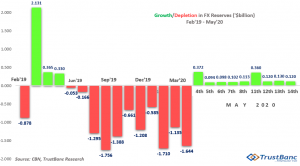
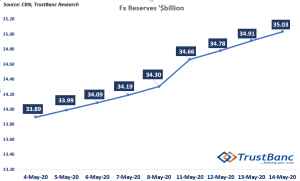
Fx reserve has added over $1.5 billion since the beginning of May following months of zero growth, raising hopes of a more stable exchange rate on the naira as soon as the CBN starts to supply dollars to the fx windows it has muted supply since March.

  • 14th May – $122.87 million
  • 13th May – $127.29 million
  • 12th May – $126.96 million
  • 11th May – $358.08 million
  • 8th May – $112.32 million
  • 7th May – $101.66 million
  • 6th May – $98.24 million
  • 5th May – $94.49 million
  • 4th May – $371.59 million

Headlines:

Nigeria Records 338 New COVID-19 Cases, Total Infections Near 6,000

Nigeria has recorded 338 new cases of the novel coronavirus, according to the Nigeria Centre for Disease Control. In a tweet on its official handle late Sunday, the NCDC said Lagos had recorded 177 new cases, while Kano posted 64 cases. Other regions with new cases include the FCT with 21, Rivers with 16, Plateau with 14, Oyo 11, Katsina nine, Jigawa and Kaduna with four each, and three cases from the trio of Abia, Bauchi, and Borno. Read more

COVID-19: President Buhari To Address the Nation On Monday

President Muhammadu Buhari will address Nigerians on Monday, even as the first phase of the gradual easing of the COVID-19 lockdown comes to an end. Mr. Aliyu made this disclosure when he appeared on Channels Television’s Sunday Politics. When asked if the PTF is thinking of taking a different direction seeing that many Nigerians have been flouting guidelines for the ease of lockdown, the task force coordinator noted that the President is the only one who can decide on whether or not the country should go ahead with the second phase of lockdown ease. Read more

Banks reject payment to foreign business partners

DEPOSIT Money Banks (DMBs) are turning down payment requests from customers seeking to pay business partners abroad with naira debit cards. Banks are asking customers paying clients abroad to do so in the currency of the beneficiary’s country, as against the previous practice where lenders debited the naira accounts of customers at the prevailing exchange rate and remitted dollar equivalent to the offshore beneficiary’s account. Read more

FG Impounds UK Aircraft for Conducting Commercial Flights

The Federal Government has impounded an aircraft owned by a British company for conducting commercial flights operation into Nigeria amid COVID-19 lockdown. This was announced on Sunday by Minister of Aviation, Hadi Sirika, via official Twitter handle @hadisirika. The Minister said the company, Flair Aviation, was given the approval to conduct humanitarian flights but was caught operating commercial flights. Read more

Report Predicts $17bn Decline in Nigerian Oil Revenue

Nigeria’s oil revenue is likely to decline by between 70 per cent and 80 per cent this year, representing between $15 billion and $17 billion, the Chief Executive Officer of Financial Derivatives Company Limited and a member of President Muhammadu Buhari’s Economic Advisory Council, Mr. Bismarck Rewane, has predicted. Rewane said this in a report he presented at the monthly Lagos Business School executive breakfast meeting for the month of May titled: “Making Hay While the Sun Has Set,” a copy of which was obtained by THISDAY at the weekend. Read more

Buhari okays suspension of deductions from states’ cash

THERE is reprieve for state governments following President Muhammadu Buhari’s approval of the suspension of deductions of loans and bailout funds from their monthly allocation. The Coronavirus pandemic has virtually destroyed the world’s economy – draining Nigeria’s oil revenue to the bottom. Read more

COVID-19: Private Sector, Labour Leaders Oppose Fresh Lockdown

As President Muhammadu Buhari addresses the nation today after 14 days of relaxation of the lockdown of the Federal Capital Territory (FCT), Lagos and Ogun states he had imposed March 30 to curb the spread of COVID-19, the organised private sector (OPS) and labour have indicated their opposition to a fresh shutdown of the economy. Read more

Asia shares follow S&P 500 higher, oil and gold jump

Asian shares were led higher by S&P 500 futures on Monday and oil prices hit a five-week peak as countries’ efforts to re-open their economies stirred hopes the world was nearer to emerging from recession. Summer weather is enticing much of the world to emerge from coronavirus lockdowns as centres of the outbreak from New York to Italy and Spain gradually lift restrictions that have kept millions cooped up for months. “The economies of Europe and the U.S. likely bottomed out in April and are slowly starting to come back to life,” wrote Barclays economist Christian Keller in a note. Read more

Alibaba’s Jack Ma resigns from SoftBank board

SoftBank Group Corp said on Monday that Alibaba co-founder Jack Ma will resign from its board, in the latest departure by a high-profile ally of CEO Masayoshi Son. The departure of Ma, who retired as Alibaba’s executive chairman in September, comes as he pulls back from formal business roles to focus on philanthropy. SoftBank will propose three new appointments to the board, including group Chief Financial Officer Yoshimoto Goto, at its annual general meeting on June 25. The number of board members will expand to 13. Read more

Oil prices hit one-month highs on output cuts, demand signs

Oil prices climbed by more than $1 a barrel on Monday, supported by output cuts and signs of gradual demand recovery amid easing coronavirus curbs, with U.S. oil showing no signs of last month’s contract expiry price rout. Brent crude LCOc1 was up $1.06, or 3.3%, at $33.56 a barrel by 0452 GMT, after touching its highest since April 13. U.S. West Texas Intermediate crude CLc1 was up $1.29, or 4.4%, at $30.72 a barrel, after rising to its highest since March 16. Read more

A month after negative oil prices, U.S. crude contract expiry looms

A month after sellers had to pay nearly $40 a barrel to get rid of U.S. oil futures, the next watershed moment looms with the expiry of the June contract on Tuesday – and so far there is little sign of a repeat of the historic plunge. The extent of the damage that the coronavirus pandemic had inflicted on the oil industry came into focus on April 20, when the U.S. benchmark WTI CLc1 contract plunged to minus $38 a barrel. Read more

Coronavirus widens climate rift between European and U.S. oil majors

Europe’s top oil and gas companies have diverted a larger share of their cash to green energy projects since the coronavirus outbreak in a bet the global health crisis will leave a long-term dent in fossil fuel demand, according to a Reuters review of company statements and interviews with executives. The plans of companies like BP (BP.L), Royal Dutch Shell (RDSa.L) and Total (TOTF.PA) are in step with the European Union’s efforts to transition to a lower-carbon economy and away from a century-old reliance on oil, and reflect the region’s widening rift with the United States where both the government and the top drillers are largely staying committed to oil and gas. Read more

Japan braces for worst postwar slump as pandemic tips economy into recession

Japan’s economy slipped into recession for the first time in 4-1/2 years in the last quarter, putting the nation on course for its deepest postwar slump as the coronavirus crisis ravages businesses and consumers. Monday’s first-quarter GDP data underlined the broadening impact of the outbreak, with exports plunging the most since the devastating March 2011 earthquake as global lockdowns and supply chain disruptions hit shipments of Japanese goods. Read more

Week 15 Session

0

This week is a Live Session and we are using it as a revision week. This week will be a revision week. This was not part of the original plan and you do not need to attend. We are adding it to ensure those used to live learning are supported. The sessions will be recorded for […]

This post is only available to members.

Status On China-Burundi Cooperation During A Pandemic

0

At present, the global spread of the Covid-19 hasn’t been effectively controlled. China and African countries are working together to fight the pandemic and have deepened their traditional friendship, which will play an important role in the world’s fight against the virus. Since China succeeded in containing the pandemic from further spreading, it has dispatched medical teams in many countries to assist local medical teams. In the last two months, China has as well sent its medical teams to several African countries who are willing to learn China’s experience with the pandemic. How can China’s cooperation with Burundi manifest during the pandemic to the benefit of the two countries? 

In all African countries, Burundi is among the few to not yet issue the lock-down policy, but has only encouraged its citizens to observe self-hygiene, wear masks, and if possible, observe the social distancing. The mitigating measures against the virus have made Burundian’s life difficult to run as usual. Despite few cases of the virus reported in Burundi, the country continues to report daily new confirmed Covid-19 cases which have increased in number since the outbreak, with a possibility of reaching a level that is likely to overwhelm the country’s health weak system.

Burundi is one of African countries that have recorded fewer cases of the virus, and the Burundian government has followed the WHO mitigation hygiene measures. So far, Burundi recorded 15 cases with the virus, 1 death, and 7 healed. Unlike other East African Community (EAC) member countries, Burundi have fewer cases of the virus.

Even if the virus hasn’t hit Burundi, the country has followed other countries’ measures to tackle the virus. For instance, Burundian government implements mandatory quarantine for 14 days for all travelers to the country, and has avoided imported cases from neighboring countries by implementing strict screening procedures at all its borders. 

Burundi has resolved to minimize cross border movement of its citizens while facilitating free movement of goods and services in the EAC region; established a surveillance system to monitor crew health and enabled contact tracing; strengthened information sharing capacity through press conferences and other channels to facilitate quick response; continued to report daily contact cases of the virus, and has the support of the EAC secretariat, which has established a mechanism to facilitate movement of surge capacity and medical countermeasures across borders to support Burundi in responding to the pandemic if need arises. In addition, Burundi is following the EAC protocol, in which the EAC board has unveiled a comprehensive Covid-19 Response Plan to reinforce measures to protect and prevent further spread of the virus within member countries.

What is China doing to support Burundi during this pandemic?

With the outbreak of the COVID-19, Burundi, like many other countries around the world, will certainly need China’s support and guidance, not only by demanding China’s medical suppliers, but also by requesting China’s medical team to monitor Burundian medical personnel on how to effectively treat patients with the virus.

Since the establishment of diplomatic relations, China and Burundi have enjoyed stable political relations, deepened and strengthened economic and trade cooperation. Burundian people are friendly to Chinese people, and the Chinese people are well respected in Burundi.

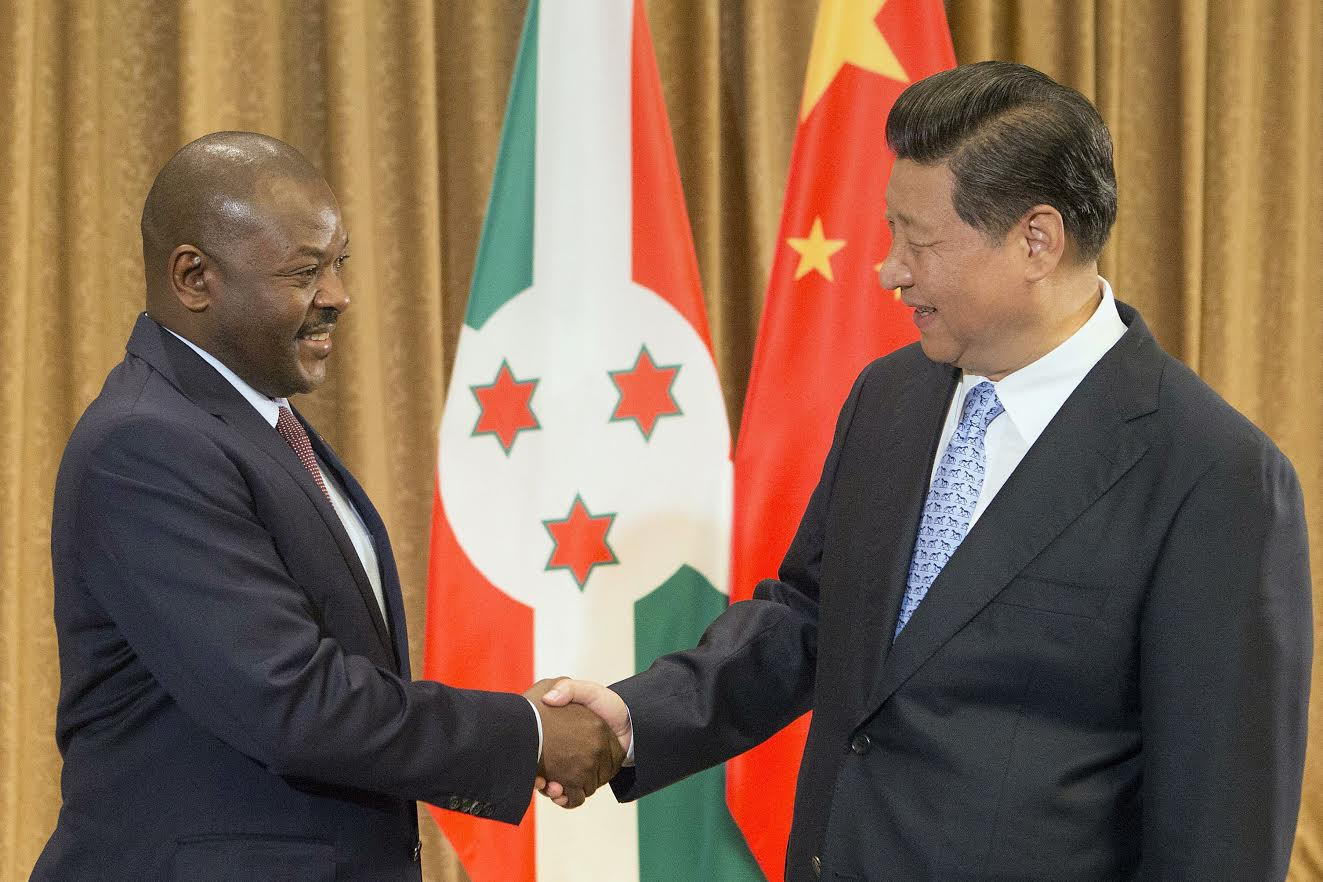
Recently, Burundi’s Ambassador to China, Mr. Martin MBAZUMUTIMA in his interview with China’s People Daily confirmed the urgent need of cooperation between Burundi and China on tackling the pandemic from spreading. Even if Burundi has recorded few cases of Covid-19, it is in its best interest to cooperate with China to effectively tackle the pandemic from further spreading. In this endeavor, Chinese medical team based in Bujumbura already started to share information and knowledge about the virus to Burundian medical personnel. 

In order to better assist the Burundian medical team in fighting the Covid-19, Chinese medical team based in Bujumbura have made full use of every weekend to participate in the Covid-19 prevention and control knowledge training, which resulted in full support of the Burundian government.

However, with the Presidential election scheduled on May 20, 2020, there is an increased risk of transmission, especially with the movement of people participating in the pre-election rallies. In order to effectively tackle the virus from further spread, Burundi needs to be well equipped with necessary supplies to contain the deadly disease and prevent any further contamination in other neighboring countries. In addition, Burundi need to be on high alert of the virus by mobilizing all available resources to achieve a broad containment of the virus.

Thanks to the Chinese medical team based in Burundi which kept training Burundian medical personnel, and raised awareness of the pandemic. Now, all Burundian medical personnel have learned basic preventive measures, improved self-protection ability, etc. To date, the 19th Chinese medical team based in Bujumbura-Burundi is working firmly with Burundian medical personnel to fight against the pandemic. However, despite China’s support, Burundi is far from reaching the necessary means to tackle the virus as its health system is weak. Here are some suggestions on how China, or Chinese medical team can support Burundi:

  • If possible, coordinate with the Burundian government and see if there is a necessity of sending an urgent Chinese medical team in Burundi to help in containing the virus;
  • Train Burundian laboratory experts by sharing knowledge about the virus, especially train them on safe sampling and safe sample transportation methods;
  • Apart from Jack Ma’s donations to all African countries, China can, if possible, support Burundi by providing more medical gears such as testing kits and respirators, as Burundi with a population of around 12 million, only have less than 100 respirators that are very needed to treat patients with the Covid-19 virus;
  • Provide information to Burundian medical personnel or any other person in the health care system to help them give best practice care;
  • Share relevant scientific knowledge with Burundi on new technologies, advances in care and treatment, behavior of the virus, diagnostics, etc.
  • If possible, the Chinese Ambassador in Burundi should organize joint sessions with Burundian officials to discuss how to effectively curb the pandemic and ways of cooperating with China.

AV/VR Will Anchor The Next Wave of Consumer Tech Startups

0

It was never a pioneer in the tech-evolutionary aspect of it. But it has developed a framework to turn consumers into customers and into fans. Apple has created fandoms across product categories, turning men and women to take a day out of work, and spend bi-monthly wages, in a severe winter morning, just to be among the first people to touch the next big thing. Most times, the main accomplishment is to tweet. “Friends, I have the latest iPhone in my hand”, and the friends will respond, “You are the real dude: way to go”. The guy had camped since 4 am under a challenging weather, losing the day’s wage, but determined to experience the immersive unboxing of the iPhone. He is a fan.

From music (iPod for Walkman) to smartphone (iPhone for Blackberry) to smartwatch (Apple Watch for Pebble), Apple has a playbook: wait for others to try, learn from their mistakes, and then arrive and change the ordinance in the market. Apple rarely goes first. That playbook has worked, profitably. In the world of Apple, the first mover advantage does not exist! Because Apple does not usually aspire to be the first.

Ladies and gentlemen, Apple is coming for virtual reality/ augmented reality. It is acquiring NextVR. Now, expect the next big thing in virtual and augmented reality. With Covid-19 pandemic ushering the world of everything virtual, VR/AR would be the expected destinations. If you are in this domain, the moment has come. Yes, the mass diffusion of this technology category will begin in the coming quarters because Apple will make this tech simple and cool.

Apple Inc.  is said to have bought virtual reality startup NextVR, for an undisclosed sum, Bloomberg reported.
NextVR provides content ranging from sports, music, and entertainment for virtual reality headsets. This also includes watching live events on VR headsets from PlayStation, HTC, Facebook Inc.’s Oculus, Google, Microsoft Corp, and others. The startup has deals with sports leagues including the National Basketball Association and entertainment networks such as Fox Sports, according to Bloomberg.The news of the acquisition comes after website 9to5Mac first reported the deal in April putting its value at $100 million.Apple has been on a buying spree this year with the purchases of Voysis, an Irish startup that focuses on voice technology, and Dark Sky, a popular weather app.Shares in Apple have rallied 37% in the past two months and were trading at $307.71 as of the close on Friday.

The Great Recession brought the sharing economy, birthing companies like Uber and Airbnb. Covid-19 will seed entities that will improve how people work remotely across industrial sectors. AV/VR is the most positioned technology, anchoring on the computational engine of cloud computing and the unbounded distribution systems of mobile internet. I see AV/AR to emerge in the consumer technology world because the solution to the post Covid-19 world will go through the fusion of meatspace and cyberspace.

Understand the classification of these technologies

The Franklin Institute explains it clearly.

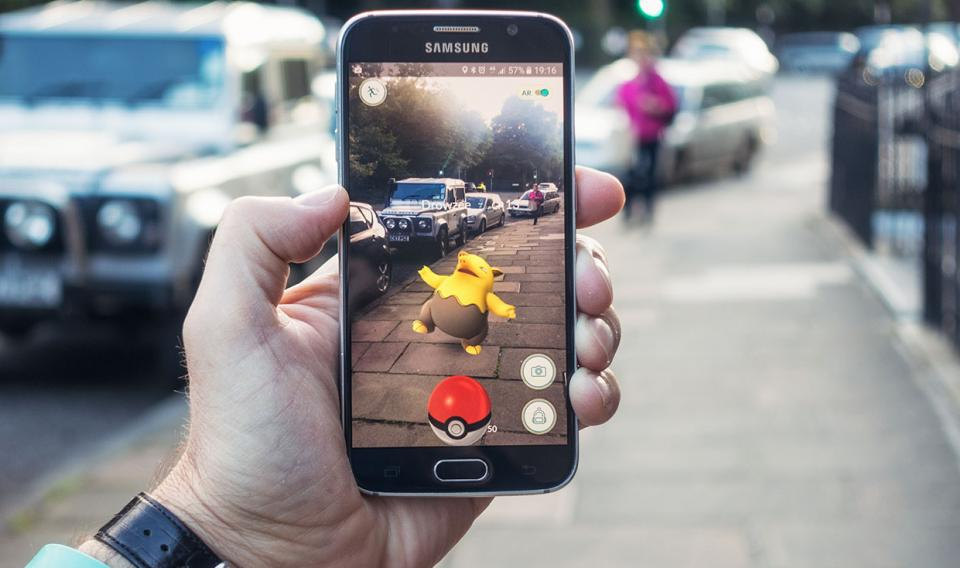
Augmented reality (AR) adds digital elements to a live view often by using the camera on a smartphone. Examples of augmented reality experiences include Snapchat lenses and the game Pokemon Go.

Virtual reality (VR) implies a complete immersion experience that shuts out the physical world. Using VR devices such as HTC Vive, Oculus Rift or Google Cardboard, users can be transported into a number of real-world and imagined environments such as the middle of a squawking penguin colony or even the back of a dragon.

In a Mixed Reality (MR) experience, which combines elements of both AR and VR, real-world and digital objects interact. Mixed reality technology is just now starting to take off with Microsoft’s HoloLens one of the most notable early mixed reality apparatuses.

Extended Reality (XR) is an umbrella term that covers all of the various technologies that enhance our senses, whether they’re providing additional information about the actual world or creating totally unreal, simulated worlds for us to experience. It includes Virtual Reality (VR), Augmented Reality (AR) and Mixed Reality (MR) technologies.