DD
MM
YYYY

PAGES

DD
MM
YYYY

spot_img

PAGES

Home Blog Page 636

Trump Administration’s $11.1bn Intel Deal Sparks Fears of U.S. Overreach in Private Industry

0

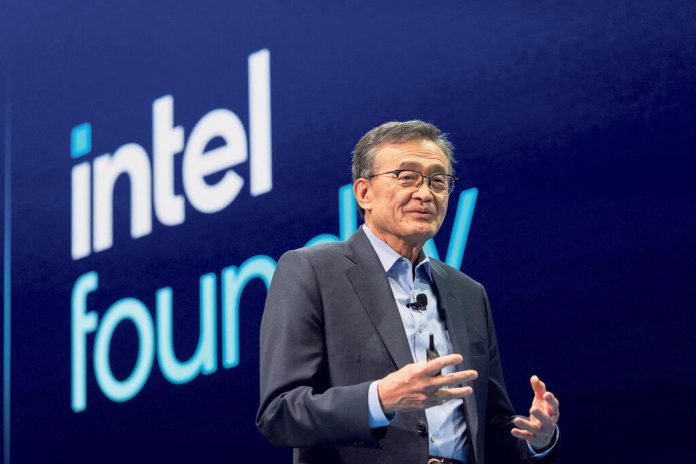
The U.S. government’s decision to take a 9.9% equity stake in Intel has rattled investors and raised concerns that President Donald Trump is ushering in a new era of direct government involvement in private corporations.

The deal, announced Friday, converts $11.1 billion in CHIPS Act grants and other government funding into stock ownership. Intel’s press release included endorsements from Microsoft, Dell, and other corporate partners praising the move as a boost for U.S. semiconductor competitiveness. But many on Wall Street said the transaction crossed a line, according to a Reuters report.

Trump himself tied the stake to pressure on Intel CEO Lip-Bu Tan, writing on social media that Tan wanted to keep his job and “ended up giving us $10 billion for the United States.”

“It sets a bad precedent if the president can just take 10% of a company by threatening the CEO,” said James McRitchie, a shareholder activist in California who owns Intel stock. “The message is: we love Trump, or we risk losing part of our company.”

Intel shares rose in the days between Trump’s public calls for Tan’s resignation and the deal announcement, jumping from $20.41 on August 6 to $24.56 on August 15. But the stock slipped 1% to close at $24.35 on Tuesday after investors began digesting the terms.

According to a securities filing, the U.S. Commerce Department will not gain board seats but can vote “as it wishes” on certain matters. It must back management’s nominees for directors and corporate proposals, but retains flexibility elsewhere. The arrangement, analysts say, could blunt activist investor campaigns but at the cost of diluting existing shareholders and reducing their voting power.

Fitch Ratings said the deal does little to improve Intel’s fundamentals, maintaining its BBB credit rating, just above junk. CEO Tan himself acknowledged Intel did not need the funding, noting that SoftBank had injected $2 billion just three days earlier.

The government’s intervention marks the third major corporate entanglement for Trump’s White House in recent months, following a “golden share” in U.S. Steel’s sale to Nippon Steel and a July stake in a mining company tied to military supply chains.

Commerce Secretary Howard Lutnick suggested defense contractors may be next.

The strategy mirrors approaches long seen abroad. Governments in Germany, Japan, South Korea, Taiwan, and Singapore all hold ownership stakes in national champions, particularly in autos. For example, the German state of Lower Saxony controls 20% of Volkswagen.

But in the U.S., critics believe, the move resembles creeping state capitalism. During the 2008–2009 financial crisis, Washington temporarily took equity in struggling firms, but Intel’s case is different—its finances remain stable.

“A government stake in an otherwise private entity potentially creates a conflict between what’s right for the company and what’s right for the country,” said Robert McCormick of the Council of Institutional Investors.

Kristin Hull, chief investment officer at Nia Impact Capital, called the development troubling: “I have more questions than confidence. The lines between where is the government and where is the private sector—we’re really blurring them here.”

Other investors warned that government stakes could distort corporate decision-making on sensitive issues such as plant locations, layoffs, or international expansion. Rich Weiss of American Century Investments said regulations would be needed to guard against insider trading and conflicts of interest.

Not all reactions were negative. One large institutional investor, speaking anonymously to Reuters, said a U.S. stake could shield Intel from activist campaigns that prioritize short-term returns. Still, the investor cautioned, “If this becomes a tool that’s more widespread, we’ll have to ask why capital markets aren’t providing financing and why government pressure is.”

Treasury Secretary Scott Bessent said Wednesday that a stake in Nvidia, the world’s most valuable semiconductor firm, is “not on the table,” but he left open the possibility of future investments in industries such as shipbuilding.

“Could there be other industries where that we’re reshaping, something like ship building? Sure, there could be things like that,” Bessent said.

Intel now finds itself at the center of an experiment without precedent in modern U.S. industrial policy: a healthy private company with the federal government as one of its largest shareholders, raising both the hopes of greater national semiconductor strength and the fears of blurred boundaries between the state and the market.

Nvidia reports $46.7bn Q2 Revenue, a 56% increase year-over-year, As AI Demand Soars

0

Nvidia, the world’s most valuable company, delivered another quarter of blistering growth, underscoring its unrivaled dominance in the artificial intelligence hardware market even as it confronts intensifying geopolitical headwinds in China.

The company reported $46.7 billion in revenue for the second quarter, a 56% increase year-over-year, driven primarily by its AI-dominated data center division. Net income also surged, climbing 59% to $26.4 billion, cementing Nvidia’s position as the most profitable semiconductor firm in history.

The heart of Nvidia’s earnings story lies in its data center business, which accounted for $41.1 billion of total revenue. Demand for graphics processing units (GPUs), indispensable for training and running large AI models, continues to accelerate across the globe.

Much of that strength was fueled by the company’s new Blackwell architecture, which alone generated $27 billion in sales during the quarter. Branded as the most powerful AI platform on the market, Blackwell has quickly become the chip of choice for tech firms racing to build and deploy generative AI systems.

“Blackwell is the AI platform the world has been waiting for,” declared CEO Jensen Huang in his earnings statement. “The AI race is on, and Blackwell is the platform at its center.”

Nvidia highlighted its role in supporting OpenAI’s gpt-oss models, unveiled earlier this month, pointing to a feat of computing muscle: processing 1.5 million tokens per second on a single Nvidia Blackwell GB200 NVL72 rack-scale system. That performance exemplifies the exponential leaps Nvidia has engineered, setting the pace in a market where rivals like AMD and Intel have struggled to keep up.

The China Dilemma

Nvidia has continued to face roadblocks in China, historically one of its most important growth markets, despite its triumphs in AI. The company disclosed that it sold no China-focused H20 chips to customers in the country during the quarter. Instead, it reported a $650 million sale of H20 units to a customer outside China.

The challenges stem from a complicated mix of U.S. export controls and China’s domestic policy push to reduce dependence on American hardware. While Washington under previous administrations had imposed sweeping restrictions on advanced chip sales to Beijing, the geopolitical terrain has shifted significantly under President Trump.

In a strikingly unconventional arrangement, Nvidia is now technically permitted to sell some downgraded GPUs to Chinese buyers under a new deal that requires the chipmaker to pay a 15% export tax to the U.S. Treasury.

Even with that opening, the company’s CFO, Colette Kress, noted in the earnings call that shipments remain on hold.

“While a select number of our China-based customers have received licenses over the past few weeks, we have not shipped any H20 devices based on those licenses,” Kress said.

The uncertainty stems from the fact that the tax arrangement has not been formalized in U.S. federal regulation, leaving firms in limbo.

Meanwhile, Beijing has discouraged its companies from using Nvidia chips altogether, pushing them instead toward local alternatives. Earlier this month, reports surfaced that Nvidia had halted production of the H20 chip, a development linked to mounting pressure from Chinese authorities.

The tug-of-war over Nvidia’s chips is a defining flashpoint in the broader U.S.-China tech rivalry. Washington sees GPUs as critical to AI supremacy and national security, while Beijing has accelerated its efforts to build domestic champions such as Huawei and Biren. Nvidia finds itself caught in the middle of a geopolitical contest that could reshape the global semiconductor supply chain.

Despite the cloud of uncertainty over China, Nvidia’s outlook for the next quarter remains bullish. The company forecast $54 billion in revenue for Q3, plus or minus 2%, excluding any potential H20 shipments to China. In other words, Nvidia is assuming the worst-case scenario in China and still projecting record-breaking sales.

For investors, Nvidia thriving amid uncertainties in one of its biggest markets guarantees its bullish future. Its GPUs are the backbone of the AI revolution, powering everything from ChatGPT-like models to autonomous driving platforms. But its international reach is constrained by political decisions beyond its control.

However, the company’s trajectory is believed to be a highlight of two realities. First, the AI boom is still in its early innings, and Nvidia sits squarely at the center. Second, the geopolitical fragmentation of the tech industry is real, and Nvidia’s future growth will depend as much on Washington and Beijing as on silicon innovation.

Effective Spend Management in SMEs – Tekedia Mini-MBA

0

In the evolving African business landscape, effective spend management for SMEs is not merely about fiscal austerity; it is a strategic crucible for survival and growth. Like a tree optimizing nutrient intake, a firm must channel its limited financial resources to fortify its core and expand its canopy.

Traditional approaches, which often view expenditure as a fixed liability, are insufficient for the demands of the modern knowledge economy. The most agile SMEs are those that leverage a robust digital ecosystem to gain real-time visibility into their cash flow.

The future of spend management lies in shifting the paradigm from cost-cutting to value creation. Instead of merely trying to reduce operational overhead, SMEs must ask a more fundamental question: which expenditures are building enduring capabilities and competitive advantage within our ecosystem?

This requires embracing data analytics to categorize spending, identifying opportunities for automation, and ensuring that every Naira contributes to the firm’s innovation engine. This is how resilient firms are built, not through fear of spending, but through the wisdom of investment.

Join us at Tekedia Mini-MBA as Nigeria’s leading spend management company educates on how enterprises can execute an effective spend management protocol.

Thur, Aug 28 | 7pm-8pm WAT | Effective Spend Management in SMEs – Yemi Olulana, CEO of Flex Finance | Zoom link https://school.tekedia.com/course/mmba18/

How Stakeholders Can Successfully Implement CBN’s POS Geo-Tagging Policy

0

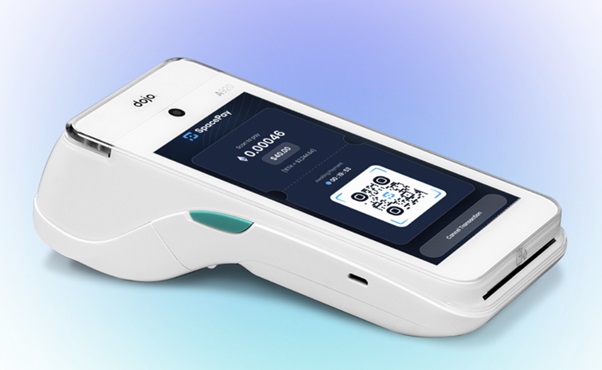
The Central Bank of Nigeria’s (CBN) directive on the geo-tagging of Point of Sale (POS) terminals marks a new phase in the evolution of Nigeria’s digital payments ecosystem. The rule requires all POS devices to be tied to specific physical locations and restricted to operate within a 10-meter radius of their registered sites. The policy aims at reducing fraud, improving monitoring, and enhancing public confidence in the system.

While the goal is commendable, successful implementation requires more than compliance for its own sake. Each stakeholder must understand the steps they need to take and the opportunities that lie within them. In this piece, our analyst presents a process-driven roadmap designed to help stakeholders adapt and even thrive under the new framework.

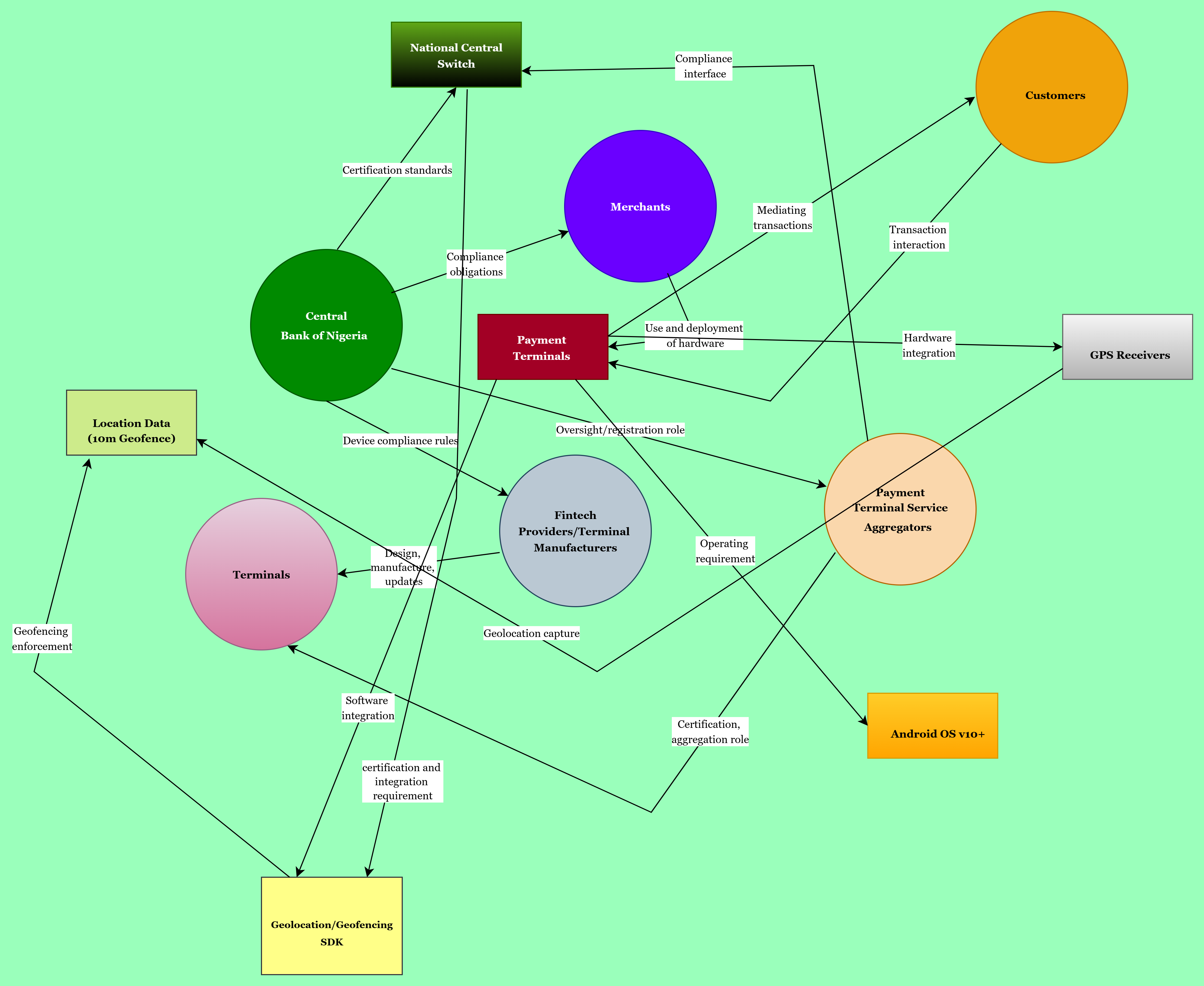
Exhibit: Network of actors towards successful implementation of geo-tagging POS policy

Source: CBN, 2025; Infoprations Analysis, 2025

Step 1: Build a Shared Understanding

The first step toward successful implementation is clarity. CBN must publish easy-to-understand policy briefs that explain the purpose, scope, and compliance requirements of the geo-tagging rule. Aggregators should organize workshops and digital sessions to help fintech companies and merchants interpret the regulations.

Fintech providers and terminal manufacturers need to examine the technical requirements closely, while merchants should begin by identifying the POS terminals in their possession and confirming the addresses where they are currently deployed. When all actors start with a common understanding of what the policy means, confusion is minimized and implementation becomes smoother.

Step 2: Map and Audit POS Deployments

Accurate data is the foundation of compliance. Aggregators must create a reliable registry of every POS terminal, capturing both device details and deployment addresses. Merchants should cooperate by submitting information about the locations where their devices operate, while fintech providers can make the process easier by building audit features into merchant dashboards.

This step is critical for identifying terminals that are frequently moved between locations, such as those used by mobile merchants in rural markets. Addressing such cases early helps prevent penalties and ensures smoother adaptation to the new rule.

Step 3: Upgrade Devices and Integrate Technology

Once the audit is complete, stakeholders must turn to the technical side of compliance. Many older POS terminals lack the software and hardware capabilities to enforce a 10-meter restriction. Fintech providers and manufacturers should therefore upgrade devices to run on Android OS version 10 or higher, integrating approved geolocation software development kits that ensure accurate GPS monitoring.

Technology partners such as GPS and SDK developers have a key role to play here. They must provide lightweight, efficient solutions that work reliably even in regions with weak connectivity. Aggregators should only approve terminals that meet certification standards to ensure long-term compliance.

Step 4: Train and Support Merchants

Policies often fail when frontline actors are left behind. Merchants, who depend on POS transactions for daily income, need training and support to manage the transition. Aggregators should roll out simple guides and helplines to help merchants troubleshoot issues and understand how the 10-meter restriction works.

Merchants themselves should begin adjusting business strategies to focus on fixed-location usage and communicate transparently with customers about possible disruptions. Fintech providers can support this effort by offering responsive customer service dedicated to compliance-related challenges.

Step 5: Monitor, Report, and Adjust

Compliance is not a one-time exercise but a continuous process. Aggregators should build dashboards that monitor terminal activity in real time, flagging irregularities such as relocation attempts. CBN and the National Central Switch can strengthen oversight by requiring monthly reports and sharing data insights across the ecosystem.

Merchants should also report persistent device failures or connectivity issues promptly. This collaborative monitoring ensures that the policy remains effective while reducing unintended service disruptions.

Step 6: Turn Compliance into Opportunity

Stakeholders must look beyond the rule as a burden and see it as an opportunity. CBN can promote compliant merchants and aggregators as trusted partners, setting higher benchmarks for credibility. Fintech providers can position “compliance-ready” POS devices as premium solutions for secure and reliable payments. Merchants can use certification as a way to attract customers who value safety and transparency in financial transactions. When compliance becomes a competitive advantage, the industry moves from resistance to innovation.

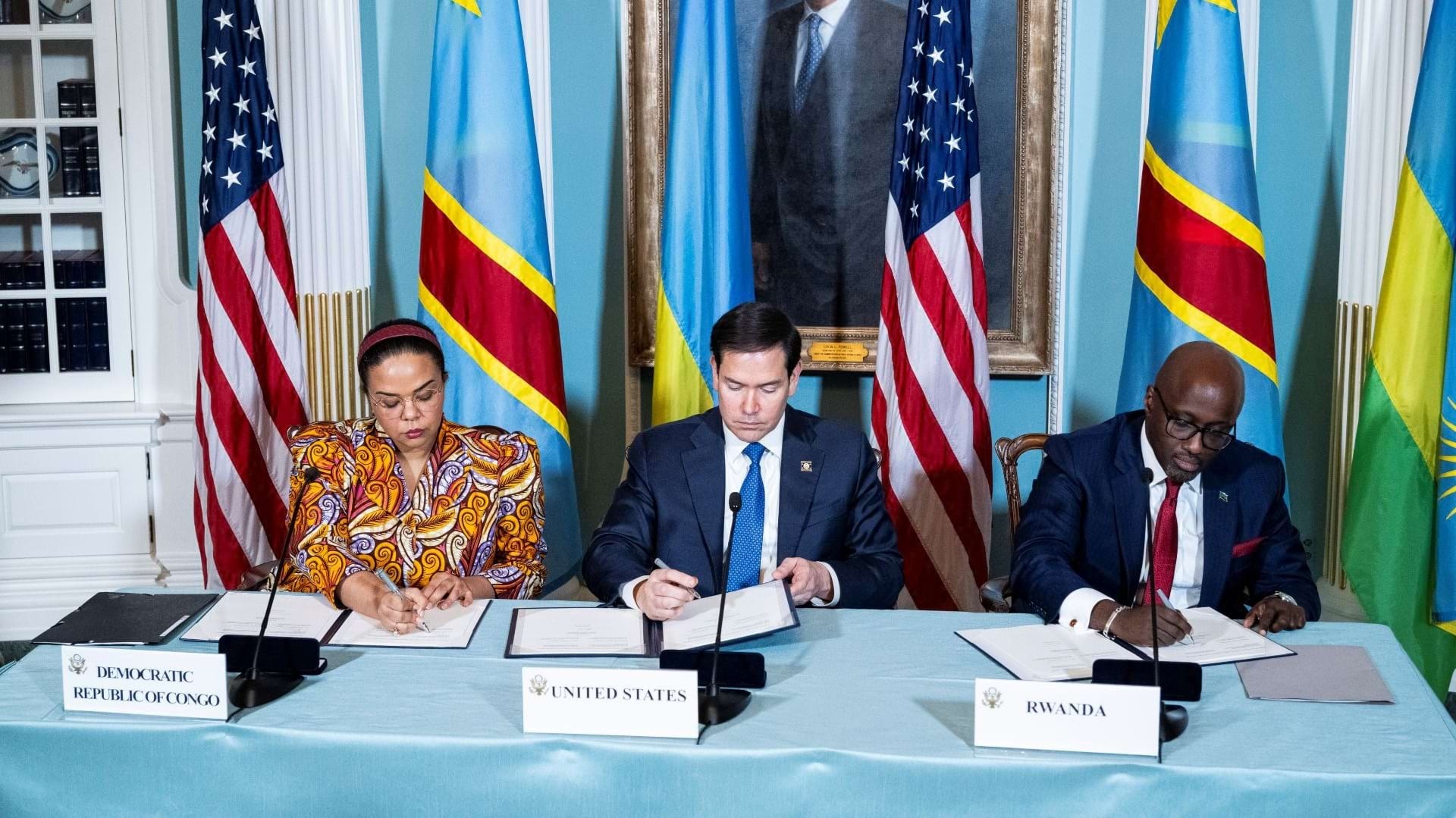
United States –Democratic Republic of Congo Minerals Deal and Implications for China

0

Dr. Kaze Armel, Associate Researcher, Xiangtan University, School of Law, China-Africa Research Institute

Fang Gaoyang, Master Student, Xiangtan University, School of Law

In a surprising move, the government of the Democratic Republic of Congo, Africa’s richest country by mineral deposits, has given the United States an offer to access its critical minerals in exchange for security. DRC is giving the US access to its Banana deep sea port and a possibility of the US having its military bases in the country. This move is driven by a complex interplay of geopolitical, economic, and security motivations, reflecting the DRC’s strategic positioning in a world increasingly reliant on critical minerals. With an estimated mineral wealth of $24 trillion, including the world’s largest reserves of cobalt, substantial copper deposits, and other key resources like lithium and tantalum, the DRC holds a pivotal role in global supply chains for advanced technologies, particularly those underpinning the green energy transition and defence industries.

The government of DRC led by President Felix Tshisekedi has increasingly come under immense pressure from the rebels that continues to gain territory; unmasking incapacity of the state to secure its borders and citizens. For over three decades, the eastern provinces, notably North and South Kivu, have been plagued by armed conflict involving more than 100 rebel groups, with the M23 movement emerging as a particularly formidable threat. In 2025 alone, the M23, allegedly supported by Rwanda, has caused thousands of deaths and displaced millions, capturing key mining hubs like Walikala and Goma. The Congolese government, under President Félix Tshisekedi, has struggled to contain this insurgency with its own forces and limited foreign aid, including an ineffective UN peacekeeping presence (MONUSCO). The DRC’s proposal to the US reflects a desperate bid for decisive military support (training, equipment, and potentially direct intervention), to stabilize the region and reclaim control over its territory and resources. The US, with its history of military engagement and influence in countering regional aggression is seen as a capable partner to tip the scales against the rebels.

Economically, the DRC seeks to diversify its partnerships and reduce its overwhelming reliance on China, which dominates its mining sector. Chinese companies own or co-own 15 of the DRC’s 19 cobalt operations, controlling roughly 70% of global cobalt supply, a critical component in batteries and military technologies. This dominance stems from a decades-long strategy, including the 2008 Sycamines deal, where China secured mineral access in exchange for infrastructure investments—though the DRC later criticized this arrangement for delivering far less than. Renegotiations in 2024 yielded a $7 billion revised deal, but dissatisfaction persists over transparency, equitable benefits, and China’s tolerance for operating in unstable, corruption-prone environments. By offering the US exclusive mineral access, the DRC aims to dilute China’s economic grip, attract Western investment, and leverage competition to negotiate better terms for its resources, aligning with Tshisekedi’s goal of fostering a more balanced economic landscape.

President Tshisekedi also sees US President Donald Trump as a transactional leader who could easily buy into the idea of investing into DRC mineral resources – a longstanding flashpoint in the ongoing geopolitical rivalry between the US and China. American policy makers accuse China of obtaining an upper hand in exploitation of DRC’s mineral resources. Given the precedent set in Ukraine where Trump has literally arm-twisted President Volodymyr Zelenskyy into a mineral deal with US for security guarantees in the conflict with Russia, Tshisekedi hopes for a node from Washington. The race for critical minerals is becoming more intense with leading political voices in US like Tesla owner Elon Musk having the eye and ear of President Trump – a factor that could jolt US into the DRC offer.

The third motivation for DRC to offer its natural resources to US for security is the apparent failure of the ongoing mediation and peace processes aimed at stemming the tide of conflict in Eastern DRC. On March 18, 2025, leaders of Rwanda and DRC met in Qatar and agreed to a cease fire in the Eastern DRC. Rwanda is believed to be strong supporter of the M23.  The rebels announced a day later that the talks between President Felix and Rwanda’s Paul Kagame wouldn’t impeded their appetite for more Congolese territory. Furthermore, Angola has announced its decision to end its mediation efforts in the ongoing conflict involving the M23 rebels, the Democratic Republic of Congo and Rwanda. These developments have left little room for the DRC government to envision a possible future of peace and stability, creating much political pressure on President Tshisekedi to source for alternative paths to stability.

Furthermore, the success of the rebels is largely attributed to their capability to control mineral rich regions and use extra-state systems to extract the resources and sell to the international markets, including in the US and the European Union. Rwanda, accused of funding and arming the M23, is Africa’s largest gold exporter, despite having no known deposits of the commodity that would give it such as edge. Illegal exploitation of the DRC’s resources has been blamed for funding the rebels, thereby perpetuating a cycle of conflict-for-minerals with complicit countries like Rwanda attracting censures by the United Nations, the US and EU countries.

More importantly, through the deal, the DRC aims to harness its mineral wealth for domestic growth. The promise of US security assistance could stabilize mineral-rich regions like Lualaba and Haut-Katanga, where cobalt and copper deposits are concentrated, enabling the government to redirect revenues toward infrastructure, jobs, and poverty alleviation in one of the world’s poorest nations. The proposal includes joint mineral stockpiles and port projects, hinting at a vision for long-term economic partnership rather than mere extraction. This aligns with Tshisekedi’s rhetoric of using mineral resources to transform the DRC, reducing the appeal of rebellion by addressing underlying grievances like unemployment and lack of services.

Will US and European companies step in?

Offering DRC minerals in exchange for security by the US is something that will certainly get the attention of the Donald Trump. The US leader’s transactional nature and the desire to consolidate American power both at home and abroad, under the Make America Great Again (MAGA) movement led Tshisekedi to believe that time is ripe to broker a peace-for-minerals deal with Washington. At the heart of it, the offer is certainly alluring. The DRC is home to 60% of the world’s Coltan reserves; and up to 70% of the world’s cobalt production – all pointing to the lead position of the country in terms of critical minerals endowment. Similarly, the US has long decried China’s strong presence in DRC’s mineral sector where Beijing currently has a controlling stake in the exploration of the resources. In putting forward the offer to Trump administration, the DRC seeks to incentivize the US to prioritize its stability, potentially elevating its status on the international stage. For the DRC, aligning with the US could also counterbalance Rwanda’s regional influence and pressure the international community to address the conflict more decisively.

However, American companies have largely been absent in the DRC minerals exploitation space. The US has instead been relying on some European companies and merchants who sell the DRC minerals in the international markets. However, the increasingly visibility of China in DRC and other African countries has seen successive US leaders, including Barack Obama and Joe Biden initiate attempts to compete with China in the continent.

In the sunset days of his presidency, Joe Biden visited Angola, where he met regional leaders including President and host, João Lourenço; DRC President, Félix Tshisekedi; Zambian President Hakainde Hichilema and Tanzania Vice President Philip Mpango. The choice of Angola was critical given that it is the epicentre of a massive rail infrastructure project backed by the US and western allies to counter China’s connectivity headways in the continent. The Lobito Corridor, has become synonymous with Biden administration and is increasingly viewed as an important success of his administration in geopolitical chessboard in Africa, with the eye on China. Biden pledged US$ 600 million for the Lobito Corridor Project, bringing US total investment commitments in the corridor so far to US$ 4 billion. The G7 countries, EU and banks in Africa are expected to raise US$ 2 billion into the project.

The project remains the largest train development initiative supported by the US outside America and aims to refurbish 2,000 kilometres of train lines terminating in the mineral-rich areas of Democratic Republic of Congo and Zambia. The regions contain large deposits of cobalt, copper and other critical minerals used in manufacture of batteries for electric vehicles, electronic devices and other clean energy technologies. Implementing the corridor was primed to give the US and allies opportunity to cart away critical minerals from the central Africa region, including from DRC in a westerly manner – a stark contrast to what Washington sees as China’s use of the Belt and Road Initiative to transport minerals to China through the easterly route.

What would DRC-US minerals deal mean for China?

If the US-DRC deal is implemented, China’s near-monopoly over the DRC’s mining sector would face a significant challenge. Currently, Chinese firms like CMOC Group control the majority of cobalt and copper production, with 80% of DRC output shipped to China for processing. Exclusive US access to key deposits, coupled with operational control for American companies, could divert a substantial share of these resources westward. For instance, cobalt exports—vital for US tech and defence industries—might shift from Chinese refineries to US-led supply chains, potentially reducing China’s global market share from 70% to a lower figure, depending on the scale of US investment. This would weaken Beijing’s stranglehold on critical minerals, a strategic concern for the US amid rising geopolitical tensions between the two leading global powers.

Secondly, the entry of US companies would introduce competition, pressuring Chinese firms to improve their terms with the DRC. The DRC might leverage US interest to extract more value from Chinese partners by demanding higher royalties, better infrastructure commitments, or reduced environmental damage.

How Should China prepare for operations in DRC going forward?

China has traditionally paired its mining investments with military assistance, training Congolese forces and protecting its assets in the east. A US military presence will be a direct threat to Beijing. In order to avert this eventuality, China should deepen its economic ties with the DRC government by offering enhanced infrastructure investments, favourable loan terms, or technical assistance. This could reinforce the DRC’s reliance on Chinese partnerships, making it less appealing to pivot fully toward the US.

Secondly, China should play the long game. It took decades of investments by Chinese companies in DRC to achieve the level of dominance and visibility it enjoys today. The DRC request to the Trump administration remains aspirational. It is not clear if President Trump will buy into the idea and whether he will be in a position to marshal enough resources to see the desired investments come to life in DRC. Although Trumps aggressive budget cuts might put some dollars at his disposal, it remains to be seen if he will have the staying power actually push US companies and European allies to invest in DRC.  The US has been long on rhetoric regarding China’s growing economic and political influence in Africa without corresponding policies and resources that can match Beijing in the continent.

China should also consider strengthening the terms of current mining contracts involving Chinese companies to ensure long term stability. Equally important is for Beijing to increase joint ventures with Congolese firms to enhance local stake in Chinese projects while building processing facilities in the DRC to add value and create local jobs, reducing reliance on raw exports.

Even if the DRC offer is not taken up by the Trump administration, it is emblematic of the restlessness of the DRC government regarding how to secure long term stability, security and prosperity of the country. China must act pre-emptively to consolidate its position in the DRC through diplomacy, economic incentives, and strategic diversification. By reinforcing its role as a dependable partner and countering US influence, China can mitigate risks from an actual US-DRC minerals-for-security deal.