DD
MM
YYYY

PAGES

DD
MM
YYYY

spot_img

PAGES

Home Blog Page 6366

Re-engineering Your Career Now Can Make The Difference

0

Each day presents itself with unique opportunities and challenges. But I would rather prefer to accept both the good and the bad and move on with life, than leave with regrets. Failure is an absolute part of and path in success. But there is more to life than we can see except for our experiences.  Hmm! Today I read a vivacious text written some days ago by Ginikanwa Mgba-Okolo (1 of 135 staff laid off by the software engineering talent company, Andela) on how she was made redundant by her employee. Although emotional she began her conversations appreciating her previous employer rather than lashing out. Although this break came to her with mixed feelings, she was positive about the situation and remained grateful for the opportunity. Why? She believes she is now an asset of global “worth”. Few persons may have this spirit of optimism. A chunk of the text left her pitching herself to prospective employers. It is really a difficult time to receive such news but life happens.

Prof. Ndubuisi Ekekwe in his brief submission has confirmed the constant downsizing by Andela. to be a “positive bold step” as “Africa cannot rise on the strength of pure outsourcing as the US. and Western Europe will use AI, robotics, and improved software systems to bring disintermediation.” Why? “Because our developers are not within that domain at the moment.” These are valid reasons given by Prof. Ndubuisi Ekekwe. From prime observations, very few engineers seem to be affected by the recent layoffs but other departments. At least Ginikanwa’s submission validates this point. Notwithstanding this was an unexpected mass exodus that was ominous especially in the face of the coronavirus dilemma. A major issue calling for such a hasty exodus seems like a contraction in the organization’s client base. I believe several organizations are still battling and causing a similar challenge.

While Andela’s response could be interpreted in several tones, the company is not alone in this game. Just last week Access bank planned to sack over 75-percent as a result of the negative impact of the coronavirus pandemic. The implications were that the bank might not need the services of some of its essential workers. Fortunately, the Central Bank of Nigeria had halted the proposed lay-offs by banks and it seems the government may guarantee job security due to the pandemic. How did I wish? But I wish indeed!

However, these concerns are not exclusive to banks but to other organizations across the sectors. Some organizations have not planned to layoff but will certainly cut salaries or even implement furloughs due to the disruptions emanating from the global economic difficulties. I do not blame the organizations, because businesses everywhere are facing challenges – including a sharp decline in customer demand, high exchange rates, limited international trade, substantial regulatory adjustments, supply chain disruptions, unemployment, economic downturn, vague projections, and amplified uncertainties.

Whatever be the case, the realities are apparent, the pandemic has left negative impressions on world economies and organizations precisely. And massive unemployment is inevitable just as new opportunities are too. How will employers and employees survive during and after the pandemic? This is the big question. Take a pause and think about it. What will the workplace look like afterward? There will certainly be an unforeseen shift and declining demand for jobs and career pursuits. With the gradual and continuous loss of jobs globally, it is only wise to figure out what career will thrive and be prepared to be the best “fit”. We cannot overemphasize the imminent massive unemployment but we can focus on how employees should prepare to even out?

A good strategy would be reengineering or doctoring careers – setting goals and finding solutions to global problems. If there is one thing that has come out of this lockdown period is the fact that digital is the way to go. Since the lockdown, employers and employees have readapted their operations to be flexible. We see employees working remotely and several people catching up with assignments and meetings via Zoom. People now have more control over their schedule, with more time dedicated to other areas of life. Flexibility has become the new normal, so it is time to learn new things and connect with people and callings that you have been spellbound by but had no time for. Try getting new skills especially digital skills, apprise or/and upgrade your resume, LinkedIn profile, and other professional links. That way you are jump-starting your career.

The pandemic is intended to leave people with new skills (assuming you acquired one) and will create millions of opportunities too, so prepare yourself for it. If you have just lost your job, this is an opportunity to change your way of thinking. Your objective may not be to work for a Fortune 500 company but to start your own business which may have been your life dream. Whatever is your gift, skill, or strength can be an opportunity that would change your life if you take action this time.

Consequently, economic predictions reveal that essential services or jobs predominantly in the outsourcing sector will not necessarily be business as usual. This means that organizations that cannot afford to pay salaries will have no option than to retrench workers. But here is a possibility, before it happens, it is not too early or too late to hit the reset button and reinvent your career. Doubtlessly, the workspace is changing and only “the most experienced and talented” will “win”. Position yourself to be relevant in the new normal for future jobs. Or be an employer yourself (not as easy as it sounds) – that way the rest will be history.

The Politicization of the Almajiri Predicament

0

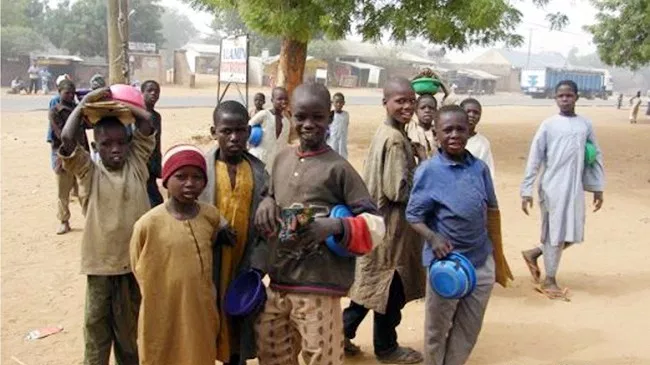
The decision of the Northern States Governors’ Forum to end the almajiri’s system of education is a welcome development. In an interview with Channels TV, Kaduna state’s governor, Nasir El-Rufai stated that the Northern state governors have begun the repatriation of the almajiris to their home states while each state government will return them to their parents and back to school. He further noted that he has reviewed a law that will formally prohibit such a system in Kaduna State. 

While it’s a laudable effort from the NSGF, why did it take so long for political stakeholders in the North to abolish the incongruous educational system even after the plethora of facts have been provided to prove that the Tsangaya system is obsolete?

The political blogger Jon Schwarz, states that “the people who control institutions care first and foremost about their power within the institution rather than the power of the institution itself.” Political Will to solve an acute societal problem is strong when the lives of the stakeholders in government are at risk. Succinctly, the move to ditch the almajiri system was born out of self-preservation and mortal fear of the COVID-19 virus. Out of the 169 almajiri children returned to Kaduna from Kano, 65 of them have been tested positive for Coronavirus. That’s a scary 38.5% and it makes the almajiris potential carrier of this novel virus that is no respecter of societal status. Hence, the move by the Northern elites to cancel the region’s out of date educational system.

The almajiris wouldn’t have become potential demography of infection for coronavirus if the Northern power elites had taken advantage of the Universal Basic Education Act of 2004 which makes free basic education compulsory for six years with minimum three years of junior secondary schooling, or the Child Rights Act that states that a Nigerian child must be in school up to the high school level. In contrast, successful Northern governors have looted the UBE funds.

However, it is pertinent to focus on the present and plan for the future but the same people that have vowed to end the Tsangaya system are already playing the game of calumny and political shenanigans with the almajiris’ predicament. The political stakeholders in the North must accept that ending the region’s archaic educational system must go beyond mitigating the spread of the coronavirus through the almajiris and making mere political statements, but rather, the integration of the almajiris into the modern academic system is a powerful strategy for straightening the region’s socio-economic development.

In the end, coronavirus is just another bleak period in the history of humanity, the virus will pass and everything might come back to the way it was. The effects of the pandemic will necessitate a national economic plan that will require ingenuity as well as compromise, how would Northern political leaders solve the problems of 10 million children who are already at a disadvantage in a rapidly changing global world?

Chinua Achebe’s interview by Wole Soyinka (1964) [Video]

12

His book – Things Fall Apart – was a recruiting tool to get kids to transition from primary to secondary school. Day by Day Book 6, a book for primary 6 pupils, had a story about Nwoye, Ekwefi, Ezinma and Okonkwo. Mr. Chigbu, our teacher, began the story, culled from Things Fall Apart, and every kid wanted more. Then, the story ended, and the next day, the teacher came with the principal, ”If you want to know the complete story, you have to sign up for a common entrance exam for secondary school”. Magically, everyone wanted to stay in school to know the concluding story in Things Fall Apart. Chinua Achebe had a huge influence.

In this interview (dated 1964), Wole Soyinka interviews Chinua Achebe. The eloquence, and the excellence in this interview, of these two legends should remind everyone of us the trajectory Nigeria was going before the punctuation!


Infrastructure, The Bailout Nigeria Needs

0

Times are indeed hard for businesses, but no, we [Tetramanor] do not need a financial bailout. What we need is an infrastructure bailout.

That is not to say the real estate and construction industries have not been hard hit by the current COVID-19 pandemic. Indeed, we have. We had to completely suspend construction at our ongoing project – TM Meadows at Ebute-Metta – for about 5 weeks, and we now are operating at skeletal capacity in accordance with the Lagos state guidelines. Delayed delivery of projects impact sales inflows, the cost of carrying loans, and most importantly, the daily workers (over a hundred on our site) who have to be laid off when work grinds to a halt. Still, the industry can manage – COVID-19 is not our greatest problem.

I’ve been reading the Residential Development Handbook (ULI series) in preparation for a new project we’re about to embark on at Ikoyi. And of course, the book had many recommendations about things to look for before choosing a site. Being a book written in/for the US, it naturally had a lot to say about ensuring there was adequate provisions for power, treated water supply, road network etc. considering that these are basic for that market. But that set me thinking: What was my cost of providing these infrastructures for which government was responsible?

Figure 1 – TM Meadows at Ebute-Metta, Lagos Mainland

I have provided a breakdown below showing actual and projected costs at TM Meadows (a 40-unit estate) for infrastructure items we would not have had to spend money on, or at least spent drastically less on, if they had been provided as expected by our dear government. Note: The cost of connecting to the water mains (cost yet to be determined), connecting to PHCN (N13m) and construction of a sewage treatment plant (N12m) have not been included as these are considered to be normal costs.

  • Power (three generators, transformer, diesel tank, ATS, valuable space etc.) – N55m
  • Water (industrial borehole, surface tank, stanchion, overhead tank, treatment plant) – N30m
  • Road (complete revamp of external roads and drainages leading to the estate) – N20m
  • Local taxes (omo-onile aka Area Boys, security agencies etc.) – N12m and counting

The total expenditure on these avoidable infrastructure items comes to about N105million, and if we should add ‘local taxes’ paid to secure the safety of our workers and ensure that work goes on in peace, it comes to approximately N120million. This is painful; it’s causing me palpitations as I think about it.

“One hundred and twenty million (N120m) is the infrastructure tax paid by Tetramanor…”

One hundred and twenty million (N120m) is the infrastructure tax paid by Tetramanor at TM Meadows, our 40-unit estate at Ebute-Metta on the Lagos Mainland. But make no mistakes, these costs would not be borne by us. Using a simple average, that is about N3million extra that each of our subscriber has to pay or has paid to live in that estate, despite the fact that taxes are being paid to government by these people already. Put another way, the total project cost for the estate is about N1.2billion, hence a full 10% of the cost at a minimum should have been avoidable. That means each subscriber would already pay a 10% non-accountable tax for owning the property, before paying fresh taxes to government.

Considering the serious dearth of affordable housing in Nigeria, it is imperative that this infrastructure tax burden on real estate developers be addressed. COVID-19 has not and will not cost us [Tetramanor] N120million. However, having to serve as a proxy government taxes us about 5 – 15% of the cost of every project we embark on depending on the size and this is about the same for every developer out there. We developers do need a bailout, but not one of cash distribution. We need a drastic rollout of critical infrastructure so we can continue doing what we do best. Don’t give us money, just build roads and provide power, then watch us build the economy.

While this was not the purpose of the article, I can’t help but ask: What can be done about it? Considering the dire straits in which Nigeria happens to be in right now, it would be quite naïve to make such blanket pronouncements as ‘government should build infrastructure immediately’ and ‘government should give developers cashback’ and other statements of the sort. Yet, we need solutions – without accounting for the completely obsolete budget assumptions, the ~N500 billion allocated to transportation, power and works in the 2020 budget isn’t going to make a dent even if fully implemented. I’ve had to ask myself what I would do with respect to infrastructure should I be the president right now. Truly, there are no easy answers, but here’s what I would do.

Figure 2 – Nigeria’s 2020 Budget (Original)

One, I would drastically borrow more – billions and billions of dollars – and pump the funds into infrastructure. Internally generated revenue isn’t going to cut it fast enough. Yes, I know Nigeria is already seriously indebted (about N27.4trillion as at Dec 2019. The hope here is that critical infrastructure – power and transportation networks (roads, rails) especially – would drastically spur development, manufacturing, agriculture and real estate, which in turn would generate income and attract capital.

Two, Public-Private Partnerships (PPP) – that favour capital – and deregulations would become the order of the day. Honestly, I simply don’t see how the government alone can drive the infrastructure revolution on its own. The funds controlled by private enterprises far outweigh that of our broke government that can hardly pay salaries. It’s high time we bring those funds to bear – in building & managing roads especially. And to bring it fast enough, the terms have to be favourable to the owners of capital. Sure, individuals would have to pay more, but the price would ultimately be worth it. As for the power industry, the government has tried enough; after 60 years of failure, it’s time to hands off the price controls and stifling policies. To bring it home, how much would I be willing to pay in tolls and increased power costs to avoid N120m in capital expenditures on one single project?

Three, I would give the tax agencies ALL the powers they need to drastically widen the tax net in any way possible – carrot and/or stick, whichever works best. This crap about not paying taxes need to stop. The talk about government providing adequate amenities before collecting taxes is naïve and rhetorical. Nigerians, we need to pay this money (tax), or soon we won’t have a country anymore. When the government spends about 60% of its revenue paying interest on loans and can hardly pay salaries, infrastructure would naturally take the back burner. According to FIRS, Nigeria earned N5.26trillion in tax revenues in 2019 at a tax-to-GDP ratio of about 6%. Now, assuming a tax-to-GDP ratio of 10%, which is much less than the 17% average for Africa, that brings government tax revenues to about N8.8trillion or N13trillion at 15%! That’s real gold there and as it grows, the bulk of it should be pumped towards infrastructure and paying down our public debt.

Anyway, this is a good place to stop – my point is made. We real estate developers and citizens in general, pay a heavy infrastructure tax daily and we need a bailout soon.


John Beecroft

MD/CEO, Tetramanor Ltd


On the Suspension and Investigation of 5G networks by the Nigerian Senate

0
Figure 6.1: Satellites for 5G [31]

As of the 10th May, Nigeria has confirmed 4151 positive cases from Covid 19 and sadly recorded 128 fatalities. As part of measures to curtail the spread of the virus, schools and other educational institutions have been shut. Educational instructors have been advised to adopt online education, television, radio etc., to instruct and transfer knowledge to students.

Workers who are able to work remotely have been constantly advised to do so, whilst avoiding the need to commute to work places. Courts have also delivered hearings virtually and this was celebrated as a milestone for the Nigerian judiciary to finally embrace the use of communication technologies. Even Governmental officials were not left behind, as we witnessed officials holding virtual meetings to discuss and implement policies on how to flatten the curve.

A common thread through these measures is that they all seem to rely on the use of information and communication technologies to meet their objectives. In fact, telcos recorded a significant increase in the number of data revenues; MTN recorded a 59% increase in data revenue in Q1 2020.

Ironically, on the 5th May 2020, the Senate directed its technical committee to conduct a thorough investigation to determine the status of 5G networks in Nigeria as well as health implications of such deployment in Nigeria. The sponsor of the motion, Senator Uche Ekwunife, suggested that Switzerland had placed an indefinite moratorium on the use of 5G networks.

Now, the increasing use of broadband networks for online education, virtual hearings, virtual and remote meetings etc., means that there will be a surge in the demand for bandwidth and 5G no doubt holds the promise to meeting this exponential bandwidth demand. As may you have noticed during the lockdown, the quality of the networks was significantly reduced, as a way of meeting the increased demand. In fact, In the EU, the likes of Youtube, Netflix, Google etc., were directed to reduce the bitrate of videos as a way of meeting the increased network traffic demand.

Currently, Nigeria has not deployed 5G networks and to the best of my knowledge, I’m not sure telcos are looking to deploy the network anytime soon. This is as a result of the huge cost of deploying such networks (billions of dollars) as well as the need to make significant return on the investments on the current deployment of 4G networks. Please see for an estimated year of 5G deployment in Nigeria, without Governmental delays.

Yes, Switzerland halted the deployment of 5G networks over radiation concerns and set up a task force to investigate the health concerns. But recent news indicates that the Swiss Government has decided to okay the current standards as well as emission standards of 5G networks, as the task force was unable to agree to a joint recommendation on relaxing the current.

To end, there is nothing wrong with investigations of the health impact of 5G networks; I just hope that technical professionals would be allowed to conduct such investigations as well as use science to guide the Senate in making informed policies, so we don’t end up with a stalemate. Governmental delays and interference within the telecoms sector could be damning.

Going forward, I think that lawmakers should be updated on emerging technologies like 5G so that they would be pre-informed on issues related to the development and deployment of such technologies within the country so it does not appear as if we are waiting to jump on the next bandwagon.