DD
MM
YYYY

PAGES

DD
MM
YYYY

spot_img

PAGES

Home Blog Page 6366

The Brookfield’s $5 Billion Retail Bailout

1

How do you become a legend? You do uncommon things. Yes, a Canadian fund has a $5 billion war chest to help struggling retailers (there are many of them, and most are filing bankruptcy – J.Crew, Neiman Marcus, etc).  You can call it UnGovernment Retail Bailout. Money men and women in Africa should study that playbook – there are many companies they can help, and in the process, they will build a superb asset base that appears in the radar once in decades.

Cash is going to  remain king because even the U.S. government which showed signs that it could convert paycheck loans into grants has made it clear that all loans must be repaid. And with the available government loans  prioritizing agriculture, retailers cannot thank Brookfield enough.

Canadian investment group Brookfield Asset Management, one of the largest operators of U.S. shopping malls, is launching a $5 billion rescue fund for retailers that need extra capital to weather the coronavirus pandemic. Thousands of stores have been shut since mid-March, with two major retailers — J.Crew and Neiman Marcus — filing for Chapter 11 bankruptcy protection this week. Brookfield said its retail revitalization program will focus on taking non controlling stakes in retailers. The capital will be sourced from Brookfield’s balance sheet and investment strategies.

Time for Africa’s Private Equity firms to rise – and save severely wounded companies.

Why Herbal Remedies for COVID-19 are on Trials

0

In the previous analysis, we noted that beyond the business leaders and social supports from the non-governmental organisations and individuals, drug manufactures have also swung into action, researching and producing drugs that would cure the virus. Medicago, Airway Therapeutics, Tiziana Life Sciences, OyaGen, BeyondSpring, Altimmune, Inovio Pharmaceuticals and Beijing Advaccine Biotechnology Company, Algernon Pharmaceuticals, University of British Columbia and APEIRON Biologics, Moderna and Vaccine Research Center, MIGAL Research Institute, Tonix Pharmaceuticals, Innovation Pharmaceuticals, Clover Biopharmaceuticals, Vaxart, Applied DNA Sciences and Takis Biotech are some of the companies at forefront of this initiative.

Meanwhile, the current piece intends to examine some issues around the production and use of herbs for the treatment of the virus.  It is a known fact that Africans and other people in developing continents usually apply herbs for the treatment of various diseases when modern medicines or medical attentions are not readily available. This has been further verified by a recent study which indicates that 80% of Africans use some form of traditional herbal medicines. This use has never been peculiar to pandemic period alone. Africans and others in low income countries have always had the course to use varied plants (prepared as concoction) in their domain for health purposes despite warning from medical experts.

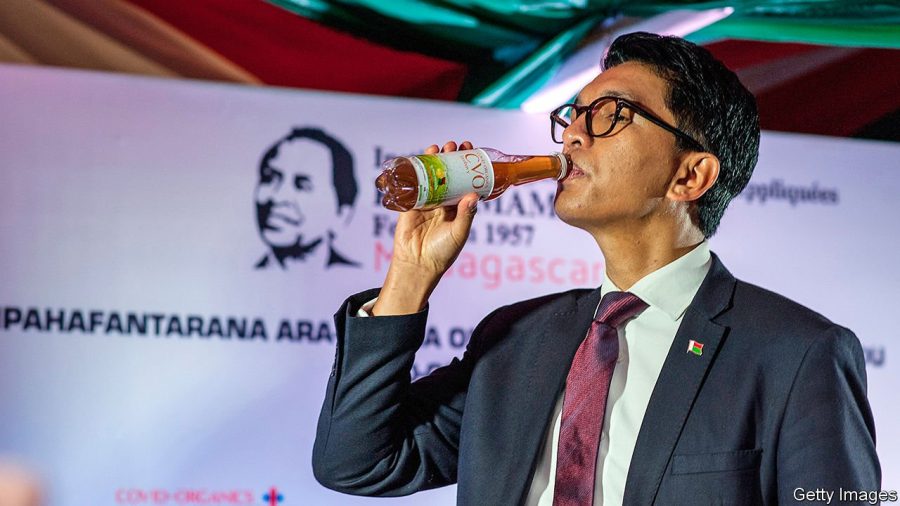
The argument has been that the herbs (or concoctions) are not proven scientifically. The recent announcement of Covid-Organics by Madagascar, a southern African country, and significant interest shown in the herb by a number of countries in Africa ignites the debate on the efficacy of herbs. According to a source, “Covid-Organics is produced from artemisia, a plant with proven efficacy against malaria, and other indigenous herbs.”

A check shows that the plant being used by Madagascar was imported into the country in the 1970s from China to treat malaria. Though, the Covid-Organics is being consumed by people in the country, President Rajoelina said “clinical trials are under way in Madagascar to produce a form that can be injected into the body.”

Apart from Madagascar, a report indicates that a traditional ruler in south-west Nigeria, in partnership with a local traditional medicine company, is working towards a herbal remedy for the treatment of the virus that has infected million and killed thousands of people. The report further indicates that the proposed remedy “is based on a mix of bitter leaves, neem leaves and seeds, sulphur, black pepper and cloves that are traditionally used in Yorùbáland as powerful antioxidants to flush the system of harmful viruses.”

In spite of the believe that herbal medicine has played a substantial role in combating infectious diseases in Africa for years, there are fears that African leaders could spread the virus through quackery, especially with the promotion of unverified drugs or medicines. To further understand public position on the issue, Knowcovid-19 Nigeria recently analysed the views of Nigerians on social media and discovered that 80% of 501 sampled citizens were not happy. This does not mean that people should use any suggested herbal remedy that has not been proved scientifically.

Our analyst observes that governments and individuals with the intent of producing or already manufacturing possible herb-driven drugs should be open for scientific screening and trials. This is imperative considering the fact that a number of herbal remedies for disease treatment, lack measurements among other issues that could result in severe damage of users’ body or leading additional health issues.

Give Loyalty Rewards and Gifts To Clients, Partners and Friends – Tekedia Mini-MBA

0

Give an important loyalty reward: offer knowledge, offer Tekedia Mini-MBA. How do you help that special customer if not to help him/her acquire more knowledge for his business? Add Tekedia Mini-MBA – and reward the most important partners with Tekedia Mini-MBA gifts.

And how do you help those your SME clients? They bank with you. They insure with you. They buy from you. You see what they need – and you want them to help. Send them to Tekedia Mini-MBA. We will transform them to become growth champions and better operators.

Tekedia Mini-MBA >> accelerate & advance, unbounded.

REGISTER Here today.

“Sir, I am overjoyed. I just received a promotion. On Thursday, I sent to my CEO a Covid-19 Continuity Plan, using the template you made available in Tekedia mini-MBA class. Early today, management asked me to present it via video. Ten minutes ago, I received an email from Head Admin that management wants me to execute that template, and they also promoted me. I am also getting a refund for my personal investment on this training. I want to say thank you to all the faculty for this service.”

  • A participant received funding after using ideas from our session on fundraising.

“I discarded my business plan and used the Week 1 business canvas on the Challenge Assignment. Today, I am happy to share that less is indeed better: we received $25,000 from an investor. I want to thank all the faculty especially Mr. Azeez Lawal. His course on Fundraising with African sense is the best ever. I also thank you for a statement in one of the class videos, “Your customer can be your investor. Believe this… the best investors are customers”. This investor is a customer and we will begin by serving his company even though we are a separate company.”

https://www.tekedia.com/mini-mba-2/

Beyond Salary Cuts and Dismissals, Companies need to Upskill their Workforce

0

COVID-19, the unexpected, rapid and worldwide spread virus, has changed the world drastically. We are in a crisis that has forced workplace closures, disrupted supply chains and lowered productivity. This crisis differs from others in many facets, and it brings significant uncertainty about its impact on people’s lives and livelihood. Infection, cut the supply of labour. Social distancing restricts mobility, with more severe effects on sectors that rely on human interaction (such as hospitality, tourism, entertainment, travel, and education). Emerging markets and developing economies, face more challenges, with reversals in capital flows, currency pressures, a plunge in commodity price, while coping with a weak health and social system.

Based on the assumption that the pandemic and necessary containment, peaks in the second quarter for most countries, and recedes in the second half of the year, the International Monetary Fund (IMF) has projected the global economy will contract sharply by 3%. This is an outcome that is far worse than the 2009 Great Recession. Both the advanced economies and emerging market and developing economies are in recession. While global growth is expected to rebound to 5.8 percent in 2021, “the cumulative loss to global GDP over 2020 and 2021 from the pandemic crisis could be around 9 trillion dollars, greater than the economies of Japan and Germany, combined”.
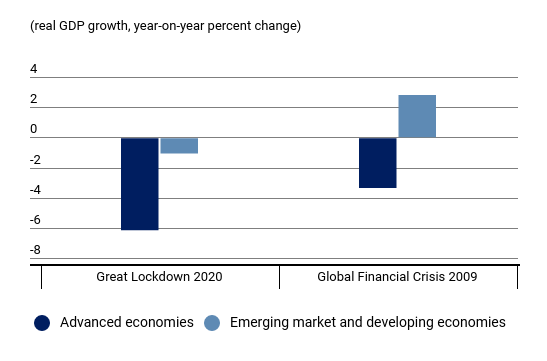
Source: IMF

The impact of this would vary depending on the sector, financial capabilities, and management decisions of the company.  As it is, with other recessions, certain businesses will permanently shut down, while some will struggle and some will come out as a winner. Also, some jobs will be lost, while there will be demand for certain talents and some sort of job reshuffling. Already, companies are responding with several restructuring and prudent measures, in order to remain in business. This includes compensation, restructuring, deferment of increment or promotion, axing temporary employees, furlough leave, retrenchment, shutdown of operations and many more. While these are pretty good measures, companies need to do more on competency mapping of their employees, and explore the possibility of reskilling and upskilling their workforce, in order for the company, to emerge stronger from the COVID-19 crisis. What is the risk profile of your workforce? Which roles are business-critical? And what skills/talents are needed to scale through?

No doubt, this crisis has forced many businesses to change the way they operate. There is a huge shift towards remote work, in order to reduce human-to-human contact and potential coronavirus infections. Even before the crisis, rapidly evolving technologies and modern ways of working were already disrupting jobs and reshaping the skills employees need to perform them. This crisis has further fast-tracked this journey. While you may expect remote work to fade, as the containment phase of the crisis increases, there is enough evidence to suggest that this trend will continue, as the use of technology, has never been felt more.

Thus, workers need to figure out how they can adapt rapidly to this dynamic landscape and the demands of the “distance economy”. Companies need to develop a talent strategy that develops employees’ digital capabilities, and well as their adaptability and resilience.  Knowing fully well, it is difficult for companies to be resilient, if their employees are not, business leaders must pay special attention to this.

For example, the healthcare system in the UK has seen years of digital evolution, compressed into weeks by this crisis. In 2019, less than 1 percent of medical appointments took place remotely. Fast forward, to 2020, doctors now access 100 percent of patients through online and telephone, with only 7 percent proceeding to face-to-face consultations, according to BBC analysis. This massive shift implies that health workers must learn how to effectively and safely conduct remote diagnosis.

As mentioned earlier, companies need to conduct a workforce analysis and competency mapping, to identify critical value drivers and talents that are necessary for the survival of your business model. What are the roles of these value drivers and how will their daily operations change as a result of value shift? What shifts in activities, behaviour, and skills are needed?

Subsequently, you need to build employees’ skills that will be crucial to driving value in your adjusted business model and enable you to respond well to changes. Expand the ability of your employees to operate remotely, while strengthening their social and emotional skills, to ensure that professional engagement is kept, despite the distance. If transiting to a more tech and data driven model, then, there will be a need for your employees to understand how to employ digital tools such as data analytics, machine learning to improve their productivity.

This is not the time to slash employee-training budgets. According to the U.S Training Report, before, during and after the Great Recession, revealed that there was a significant drop in the training expenditures in 2009 and 2010, followed by a boost in 2011 (surpassing the 2007 level), and then a drop to 2008 levels in 2012. This data tells us that if companies cut their investment in training now, it is only a delayed investment. And delay may be more costly, since the current crisis will require a substantial skill shift than the financial crisis of 2008.
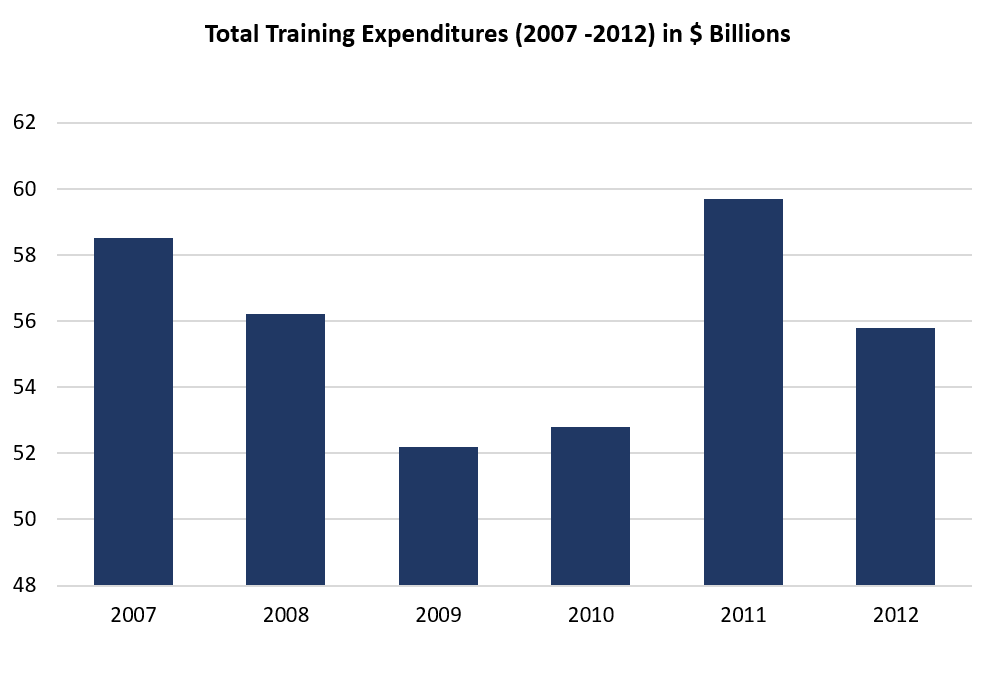
Source:  US Training report

We may not be able to control what is happening to our world today, but we can control how it will affect us. As I noted in this piece, the coronavirus pandemic is accelerating us towards a new normal, that was already on-going  through automation, artificial intelligence and digitalization. And it is imperative that business leaders understand that the survival of their business hinges on the performance, resilience and adaptability of their workforce.  Salary cuts and disengagements might be a good short-term response, but may not be sufficient alone, for companies to come out strong in the long term. Building your workforce to adapt must be your topmost priority, to ensure that your adjusted business model is successful. Don’t delay this. Start now, experiment quickly and iterate.

How to Build Business Models Around Trends

0

Money does not finish from an economy. I mean the Central Bank does not withdraw the money supply from the economy.

 This is what always happens. Money moves to where there are trends. The reason why some people are richer than others is because money always moves toward them.

 That’s how my entrepreneurial friends were debating over the issue of money and trends a few days ago.

 I told them that money and trends have the same direction. That means, money goes to where the need is highest and the value is highest.

 This is what the coronavirus pandemic has caused to the economy. We see how money dried up from certain businesses and moves towards some businesses based on trends. 

As I already analysed this for Zoom and Amazon, how they record high demand and patronage in this period.

 According to Techcrunch, Airbnb and Uber had laid off some of their employees due to the disruption caused by this pandemic. 

The shared economy and the aggregation business model had been badly affected by these trends.

 My interest in this analysis is to see how we could maximize trends by building business models around them. 

But, what are the trends of this pandemic?

 Trends Formation During this Coronavirus Pandemic

The World Economic Forum pointed out the rising market opportunities during this pandemic based on the trends. Trends are essential because they increase the value of a particular activity and increase focus on them.

Here are the trends I have observed that we could leverage on as we build new business models;

  • Essentials Trend:

This automatically became a trend as the government ordered the shutdown of non essential businesses. So, essential businesses are needed to sustain lives this time. Without them people will die at this critical time either from hunger or other essential factors.

  • Remote Working Trend:

While lockdown and social distancing have been some of the health measures to contain the pandemic this period, it has brought a new trend to business.

 The trend formed is remote working. Workers, especially digital businesses, need to keep working and  stay in touch virtually.

 So, products around remote work have been thriving in this period. Some products that support remote work are already recording success.

  • Shopping and Delivery Trend:

It has become known that digital businesses can not be Locked down because it’s virtually operated. 

As more people are staying at home and movement is limited, purchasing will be done online. So, ecommerce and delivery tend to thrive in this period. 

When you order online and make payment online, this will be delivered to your location through their logistic system.

  • Online Entertainment Trend:

It will become very boring for people and celebrities to be at home for more than one month without clubbing, going to shows, hosting events and other entertainment activities. 

So, the option is online entertainment that has almost a similar experience like offline entertainment.

  • Online Learning Trend:

Physical educational system has also been disrupted by this pandemic. 

Students have to resort to online learning in order to continue their education. So, there is a rise in online learning more than ever.

 Caution to be taken In Building Business Models Around These Trends.

These are some of the business opportunities entrepreneurs can explore at this time. While building new business model around these trend, ensure you pay attention to these;

  •  Short Lifespan Trends Factor:

There are trends created by this pandemic that will be short lived. They have few months when they will no longer be useful in the market. 

Some good examples are, hand sanitisers business, nose mask business, drug delivery business and other essential focused businesses.

An entrepreneur should be careful in developing a model around those trends as they have short lifespan.

  • Sustainable Trends Factor:

There are trends created by this pandemic that will change the way things are being done in businesses, workplace and economic activities. 

Some of the examples are, remote working, online learning, online entertainment, adoption of digital payment and shopping etc.

 Many companies will reduce their workforce and also adopt remote working for some staff that could work from home.

 As we learn to develop new business models to explore the opportunities presented by these pandemic, we must know that trends will also change. 

The times are really ‘ a changin’