DD
MM
YYYY

PAGES

DD
MM
YYYY

spot_img

PAGES

Home Blog Page 6367

Pros and Cons of Reopening Religious Worshiping Houses in Nigeria

1

Whether churches, mosques and other religious houses should be reopened for worship is a sensitive topic that sparks off debate ever since the beginning of the lockdown. This is made more sensitive because Nigerians are too religious. It is then left to ask if churches, mosques, temples and other religious houses should be left closed until the country is considered safe enough for the citizens to attend large gatherings.

Speaking of large gatherings reminds one of the arguments tabled by Bishop David Oyedepo of Living Faith Church Worldwide, aka Winners Chapel International. Bishop Oyedepo accused the government of a malicious attitude towards churches. He said that it is suspicious for the government to reopen markets and allow hospitals to work while churches are closed down. He also claimed that churches are healing places, which provides better positive results than hospitals.

Whatever arguments Bishop Oyedepo’s statement may draw out, it will be good if we look at it critically. But then, this article is not to critique his statement and opinions, but to bring to light the pros and cons of reopening churches. However, it will be good if Bishop Oyedepo understands that the government did not only ban churches from gathering; mosques are also affected.

Pros of Reopening Religious Worshipping Houses

Though people are afraid of the spread of COVID-19 that may result from large gatherings, such as the ones seen in religious worships, it will be good to know the benefits of those gatherings to the people. Apart from offering opportunities for people to gather, pray, and receive miracles, these houses give rooms for:

  • Mental, Emotional and Psychological Wellbeing

A woman said at the beginning of the lockdown that she needed to go to church more during this period than in any other time. From what I gathered, she was afraid of her life and that of her family, especially as she listened to all the fake news and information about COVID-19 that were circulated through the internet. She believed the virus is a sign of “end-time” and so the one place she will want to be when “rapture” comes is in the church. But alas, the church’s door was closed to her.

The truth is that religious gatherings, preaching and other activities that take place in these houses give their worshippers hope. A lot of people attend churches to find succour. Some go there because they hoped to get help, and I am not talking about material help here. So like Bishop Oyedepo said, worshipping together also heals. And right now, Nigerians need to heal; not from COVID-19 but from its devastating emotional, mental and psychological effects.

  • Stability

People have already developed the habit of attending religious services on a weekly or daily basis. This habit has been a life-long one for many people. They already have it in their routine that on this day of the week, they have to dress up, go to this house, stay with other worshippers and pray together. This normal routine changed since April 1, 2020 and it has thrown a lot of people into confusion. They felt incomplete because they stayed at home on the days they were to go out, doing almost nothing. Reopening worshipping houses will, therefore, help in returning stability and normalcy to the lives of many Nigerians. They will no longer feel as if they are in a period of war.

  • Sharing Palliatives

The best way to reach out to the needy in a society is through religious houses. They always know members and non-members that come to them for financial help (at least churches do that). This could explain why Peter Obi, the former governor of Anambra State and PDP Vice Presidential candidate, decided to donate his COVID-19 palliatives through religious organisations and hospitals. He already knew that these people will not keep to themselves what is meant for the needy. Keeping these houses open will also encourage members that wish to help the poor to do so. Government can also consider sharing the 20k palliatives through these organisations instead of using the controversial ways they do so now.

Cons of Reopening Religious Houses

There are reasons why these houses should not be reopened, until religious leaders provide a guarantee that they will do whatever they can to ensure that their parishioners are not endangered. Apart from the insinuation of many Nigerians concerning the reasons behind the demands for reopening of religious houses, here are major problems I foresee:

  • Social Distancing Issue

Someone said churches can actually ensure social distancing by demanding that a fewer number of people sit in a pew. This might sound wonderful but it can only work in churches with large buildings or few parishioners. This problem also applies to mosques that are usually overcrowded.

  • Time and Duration

Some religious organisations are in positions to choose the time of service suitable to them. This means they can decide to fix as many services as possible in order to observe the social distancing guide. However, Islam does not give its faithful that right to choose. This means that mosques will always remain crowded because all the Muslims around must gather at a particular time to pray. This poses a problem because it will discourage social distancing.

Another thing worth noting here is the duration of service. It is not that staying a few minutes or a few hours around a COVID-19 carrier makes a difference, but the shorter the stay the better. However, most religious services last more than 3 hours and the faithful are expected not to complain. It is then left for these organisations to make necessary adjustments to their services and then see what next to do.

  • Faster Spread of COVID-19

A doctor once explained on Twitter that it is easier for COVID-19 to spread in an enclosed place than in an open space. This, as he explained, is because in an open space, there is a possibility that the wind will blow the virus away and scatter it in minute quantities so that it might not have contact with all the people around. But in an enclosed place, if a positive person sneezes or speaks, the virus is not sparing anybody around him/her. If the fan is blowing, the virus will spread even to a wider radius. The doctor claims that this is why people that attended board meetings with positive patients are easily infected. This is the major problem religious houses will face. This alone makes it very risky for these houses to be reopened.

Most of us need the succour and stability provided by worshipping and praying together. We know it will be good for us to go back to our normal lives. But then, considering that it is unsafe out there makes one wonder if religious houses should be reopened or not. It is, however, left for these religious leaders to convince the government that they can manage situations if given the opportunity.

Investors ‘raking in billions’ as coronavirus infections surge in Nigeria

0

Today, Nigeria’s equity market extended its gaining streak to nine consecutive trading days as the All-Share Index (ASI) appreciated by 0.87% to close at 24,354.25 points as against 24,143.37 points recorded at the close of trading on Wednesday, this brings the year-to-date loss of the Market to 9.27%.

Today’s gain makes it the longest winning streak Investors have had all year. Investors have now raked in over N980 billion in the last nine days alone. Over the same period, Nigeria’s Covid-19 infections have surged by over 220%. Clearly, risk seekers are in deviant of the economic threats posed by increasing Covid-19 infections and they are getting rewarded for it.

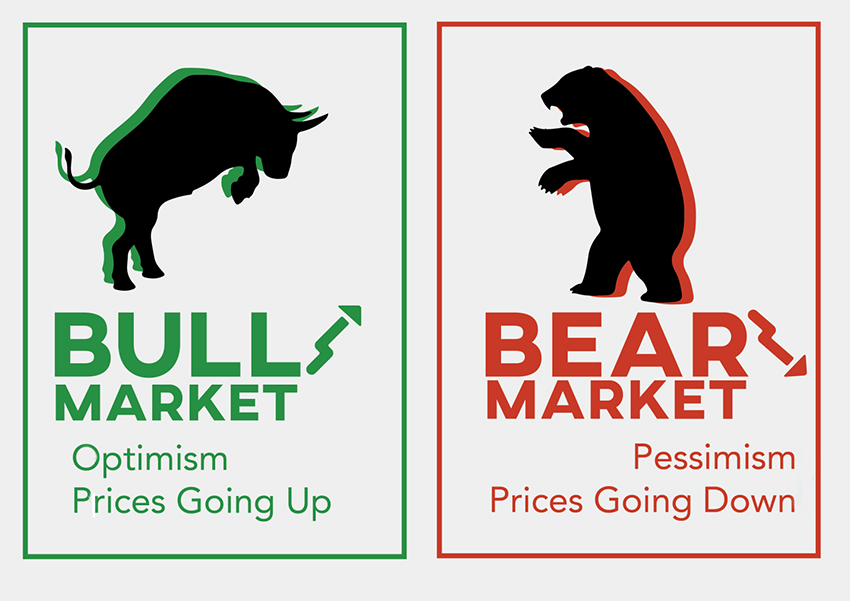
Despite the profit-taking in the shares of Banks today, Investors renewed their interest in other companies as the Bulls and Bears equal their positions on the performance table, 20 losers and 20 gainers. Also, since FG eased its lockdown order, we have noticed a sustained increase in volume and value of shares traded.

The Market Capitalization of listed equities also appreciated by 0.87% to close at N12.69 trillion as against N12.58 trillion recorded at the close of trading on Wednesday. With the year-start capitalisation of N12.95 trillion, Investors are now 2% shy of recovering all they have lost this year.

If you are not an ‘unrepentant risk seeker’, please don’t go near the equities market. Leave your investments in the money market where you are sure of capital preservation with some decent returns.

Fx Market Update:

The official interbank market rate of the Naira remained unchanged today at $/N361.00. However, the sustained FX liquidity squeeze at the I & E Fx window worsened sentiments today as the Naira closed weaker by 0.49% (N1.88) with a price of $/N386.38.

Investment Insights: By the way, one of the major factors responsible for the sustained gains recorded in the stock market is because of the Fx liquidity squeeze in the Investors’ & Exporters’ (I & E) Fx window. The I & E Fx window is one of the platforms established by CBN, through which Foreign Portfolio Investors can buy dollars to repatriate the gains they have made trading equities in Naira.

Since the lockdown, CBN has muted supply of dollars to that window, as a result, these Investors are trapped in Nigeria and left with no reason to sell their shares since there are no Fx to repatriate their funds. No sales from foreign investors mean minimal sell pressure on the equities market, as far as equities are concerned, the lesser the selling pressure the higher the possibility that the market will gain consistently and this is what we have seen play out in the equities market since the early days of the lockdown.

In this Covid-19 era, equities are too risky as an investment option except if you are the type that loves risk, over a period of two years you surely will be better for it but if you are averse to risk, please stay clear of the Market.

If you seek risk for higher returns, click on the link https://bit.ly/2XrvIf9 to open a stockbroking/share purchase account and trade within 24 hours.

If you don’t like risk but you want to enjoy a decent return that will keep you in the fight against inflation, click to subscribe to our money market fund https://lnkd.in/eJCNsxR

Stay home and stay safe, let your money do the work.

Covid-19 Pauses Stakeholder Capitalism

1

It is looking really like the old: companies, especially public traded companies, are using workers to balance their books and offset their struggles. Over the last few years, we have read of new lexicons like Stakeholder Capitalism (not the typical Shareholder Capitalism), which came into the business world with a huge flash. Stakeholder capitalism posits that companies must make decisions to balance their fiduciary responsibilities with workers’ welfare, environmental protection, community sustenance, etc. Simply, “Stakeholder capitalism is a system in which corporations are oriented to serve the interests of all their stakeholders. Among the key stakeholders are customers, suppliers, employees, shareholders and local communities”. But it seems that it is all talk.

As the coronavirus pandemic squeezes global industry, companies are increasingly debating whether they pay shareholder dividends or staff salaries. Often, The Washington Post writes, workers are “the first to lose, even as shareholders continue to collect.” With profit margins shrinking, those at the helm must decide who sacrifices the most. Layoffs, executives argue, support a company’s “long-term health.” But critics say that sending millions of dollars to shareholders while axing staff belies the mantra from executives regarding “their concern for employees’ welfare during the coronavirus crisis.”

How do you fire hundreds of workers, and yet in the same earnings call promise to pay dividends?: “Similarly, Levi Strauss announced April 7 that the company would stop paying store workers, and about 4,000 are now on furlough. On the same day, the company announced that it was returning $32 million to shareholders.”

Yet, the same firm was a vanguard of  this new movement. My point is simple: do not pretend, just be real, and do not sign papers you do not believe in. But making your workers feel like they are special, only to kick them out when small heat comes, may not help your long-term mission and reputation. Follow the barons and be frank: no one is special here, it is old century capitalism, and if you expect any special treatment, just go, because in this company, there is no work-life balance, and what matters is how shareholders feel! That way, they would not be expecting vapor promises.

COVID-19 App and the Danger in Kogi State

0

The sudden rise of COVID-19 confirmed positive cases in Kano is still on our minds. We blamed the government for their neglect and the citizens for not obeying the social distancing order. But the truth remains that people died as a result of that neglect, or should I say “purposeful neglect”. The problem here is that it looks like Kogi State is towing the line of Kano State.

Some weeks ago, it was revealed that the Kogi State government battled COVID-19 with the aid of an app – a self-assessment app. This app uses the NCDC checklist for suspected and high-risked cases to test people. According to the recent interview of the State’s commissioner for information, Mr. Fanwo, the app is developed by the state government and is already subscribed by about 200,000 Kogites. How they collect data is that the subscribers fill the questionnaire on the app and from the information provided, the health workers will then decide if the subscriber is at risk of contracting the infection or not. If the subscriber is a suspected case, the health workers will then trace his house for further interrogation.

Well, this app of a thing sounds good, in one part, and dangerous in the other.

But before looking at the dangerous part of using this app, let us remember that Kogi State is yet to record any COVID-19 positive cases. The government would have been applauded for safe-guarding their citizens if not for a lot of things happening around the country presently.

If you would recall, the NCDC chairman, Chikwe Ihekweazu, raised an alarm some weeks ago that it is impossible to say that COVID-19 is not in every state of the federation. He called out on the state governments, whose duties it was to collect samples from suspected cases, to buckle up. He noted that the states without records are obviously neglecting their duties.

Recently, Ihekweazu accused states without records of COVID-19 positive cases, Kogi and Cross Rivers precisely, of sending an unsatisfactory number of samples. This accusation seems to spark off the anger of Kogi State governor, Yahaya Bello, who claims that the state is being put under pressure to declare positive cases that are non-existent. He further alleged that there is an ongoing plan to “import” COVID-19 patients into the state. This allegation may sound hilarious, but if you look deep into it you will see reasons presented by the governor that will exonerate him when Kano repeats itself in Kogi.

However, attention is drawn to Kogi State by two other groups – the doctors and the journalists.

The NMA, Kogi State chapter, has expressed their concern and dismay over the Kogi State government’s refusal to collect samples from COVID-19 suspected cases for the test. This information came some hours after the governor claims that his state is about to be sabotaged. This then makes it obvious that there are several unconfirmed cases of COVID-19 in Kogi and that the government decided to look the other way for reasons best known to them.

The journalists, as mentioned earlier, also drew the attention of Nigerians to the happenings in Kogi State. An investigative journalist, Fisayo Soyombo, claims that he has reliable sources that told him that several suspected cases of COVID-19 have been reported in FMC, Lokoja, and that some of them have died. He claims that efforts to get the state ministry of health to collect samples of these patients proved abortive and as a result, the dead ones were buried while their contacts roamed the streets, spreading the virus, even to health workers.

One may then wonder why the Kogi State government neglects the citizens and puts the health of the whole nation at risk. Your guess is as good as mine. However, Soyombo claims that the state is broke and could not even provide an isolation centre.

Coming back to the app, the commissioner for information claims that all the cases tracked with the help of the app proved negative. He also claims that nobody died from the disease in the state. He wasn’t specific on how they found out that those suspected cases and deaths were negative. But what Kogi State government should remember is this:

  1. There are people with the virus that are asymptomatic. These people will still sound negative in the app’s questionnaire.
  2. A lot of positive cases, that know they are positive, avoid health workers until it is too late. We hear about those that ran away before their test results were released, and those that ran out of isolation centres. If these people are not tracked down and tested by force, well, no one will know about them.
  3. There are many people in Nigeria that do not know how to make use of electronic questionnaires. I am not talking about the uneducated and those in the rural areas this time, but the literate ones in the city. This may be the reason why only 200,000 people have subscribed to the app.
  4. It is possible that this questionnaire is not well monitored. I mean, who checks and assesses the data input in the questionnaire? If it is an automated one that marks green for negative and red for positive or suspected cases, well, it won’t work. Some things need personal human touches.

The truth is that the thought of Kogi and their ways of handling COVID-19 is scary. The state is close to the FCT and it witnesses a lot of traffic from the FCT. It is almost impossible to believe that Nasarawa, Niger and Kaduna states that also bordered the FCT have confirmed positive cases, while Kogi does not. Like I said, it is “almost impossible”.

However, what is happening in Kano today will not be part of Kogi tomorrow.

Embrace Technology, But Not At The Expense Of User Experience

0

I don’t know how to drive a manual car, or better still, I’ve never tried to drive a manual car, do I drive automatic? Yes, but manual I don’t, it’s not like I don’t want to learn (I really don’t want to learn), it’s just that most car manufacturers these days don’t build their cars with manual gear transmissions. What that means is that in 80–90 percent of cases, if you see a manual transmission car, it’s probably an old car model that the manufacturer has probably stopped producing, and in some cases is already giving the owner performance issues. I don’t think I want to drive that kind of car.

When the purpose of a thing is not known, abuse is inevitable, and I mean this literally, If you really don’t know why you should do something, you’re likely going to misuse it, and that’s the thing about technology.

Technology makes life easier. When my parents were dating, they sent themselves letters, and the post office may deliver in a day or two, today you can send, “Letters” today, get it read today, and get feedback today, oh and did I forget to add that all that could happen in an hour, thirty minutes if you can type fast. Technology changes everything, technology makes life easier.

Technology makes life easier, but from a business point of view, the real question isn’t whether technology makes life easier, because we all agree with that (if you don’t, then you should have waited for this article to get to the newspapers rather than reading it here on the internet), the real question is who does technology make life easier for? The customer or the business?. Now I know it’s easy to say both, and I’m guessing that’s what a good majority of people reading this would say, but let’s take a step back and actually analyze that. So back to the manual and automatic car example, the shift from manual to automatic gear transmissions was made possible by technology (to which I remain forever grateful), and that technology elevated the user experience. Yes I know that some people enjoyed and still do enjoy the experience of driving a manual car, but automatic gear transmissions have made life easier, less stressful and have largely lowered the barrier to entry for drivers. That’s an example of technology that made life easier for both people, and probably automakers too.

Another example; Our Telco operators in Nigeria are lovely, they got so tired of listening to Nigerians complain about everything from bad network to running out of airtime too quickly, to other unnecessary complaints that in some cases didn’t make sense, that they introduced self-service options on their customer care lines. The idea was simple; instead of addressing our customer care representatives, you can now address our Voice enabled Chatbot operators on our customer care lines, who can help you solve your problems with minimal human contact required. That’s the problem; minimal human contact, we all want human contact, I don’t want to talk to a preprogrammed chatbot when I call customer care, I want to talk to a real person, a real person like me.

So I devised a strategy, I literally have the exact numbers I press when I call my network providers customer care lines to get me to speak to a real person on the other side of the phone. That to me, is an example of technology serving the business alone, and not the customer. There was a time one of my network providers had two customer care lines; one only interacted with a preprogrammed voice enabled chatbot, while the other allowed you to talk to a real person. The problem was, the second one, the one you’d probably go straight to if you needed to call customer care, would cost you #30 per call, they were literally charging you to get help. Whoever thought that was a good business strategy must have been deluded. Thank God they’ve stopped that now.

When you embrace technology, you must seriously consider your user experience. If a technological advancement doesn’t promote your user experience, then it’s really of no use to you. Ignore all the buzzwords and whatnot, if it doesn’t make things easier for your customers in a way that’s affordable to you, then you don’t need it, or at least not yet.

So if Transsion holdings (Parent company of Tecno, Infinix and Itel), were to decide today to make all their phones capable of performing some high level blockchain processes by introducing some high performance processors in their devices, we would say they were embracing technology, but when the introduction of that technology boosts the MRP (Manufacturers Recommended Price) for that product and 80-90% of your target market finds no value in that feature, do we still call that Innovation? Definitely not, Innovation isn’t embracing technology, it’s embracing technology that solves a human problem, and makes life easier.

Embrace technology, but not at the expense of your User Experience.

Here’s how;

Embrace Design

Design is actually the language of Innovation, all innovative companies embrace the power of design, whether its Nike, Apple, Airbnb, you name it, at the heart of their process is design and a designers approach to solving problems and tackling issues. Why? Because design is a people oriented process. Design doesn’t elevate the technology above the user, in fact it does the exact opposite, it elevates the user above the technology, why? Because your user experience is really your competitive advantage. That’s why someone would drive kilometers away from home just to patronize a hair salon that will probably charge him more than those around where he lives, he isn’t dull, it’s the experience at that salon that keeps him coming back. Most people that buy an iPhone usually don’t go back to using Android phones later on, why? It’s the experience. If you have ever driven a good BMW, you would pray to God you don’t have to drive another Toyota, why? The experience (not that Toyota doesn’t make some nice cars, but you get the point).

Your User Experience is really your competitive advantage. This is how Design helps you create Innovation.

Empathy

At the root of design is true empathy, understanding your user, understanding their context of use, not assuming they would like a product or find it fascinating, but really going out to talk to them to find out if they would. If you’re a business leader reading this, you’re fully well aware that you cannot just “Assume” your way to the success of your business, you need data, you need to really understand how your users think, what would work for them, what they would find appalling, what would ring a bell, and what would definitely turn them off. You can’t assume any of these things, it’s like running into the jungle blindfolded, the question isn’t whether you will get eaten or not, the question is when you will get eaten.

Empathy is about asking questions, but not just asking questions, but asking the right questions. You don’t ask your user if a product is good, you find out how they FEEL about the product, and how it addresses the specific pain point they’re EMPLOYING it to solve.

The only Nigerian Fintech app I use is Barter by Flutterwave, there are so many other Fintech apps out there, but the truth is I don’t need an app to help me transfer money, pay bills or buy Airtime, my bank does that pretty well, the major reason I use Barter is because i have access to Dollar cards that i can use to pay for services from companies like Facebook, Netflix, Amazon. That’s the real selling point to me, that’s the JOB I employ the app for. If they removed that service from their app, I wouldn’t have a need for it anymore, I would probably end up FIRING the App, by removing it from my phone (you get the point).

Problem Definition.

When you begin to empathize and seek to understand your users, you are likely going to begin to observe patterns. These patterns would begin to inform your decisions and help you to see the problem for what it really is. It helps you simplify the problem and define it in more clear and straightforward terms.

Ideation

The best, or one of my favorite parts of the design process is the ideation part. The true beauty of Design is that everyone has a sit on the table. In most corporate decision-making processes, Executives or Senior leadership just makes decisions based on the data available to them, and Even though this isn’t always wrong, companies that do so are actually missing out on the valuable insights and ideas that are available to them by letting employees take central stage here, employees who are in the trenches, interacting with the users, and/or building the solution itself.

The design ideation process employs a multidisciplinary approach, people from various teams, and diverse backgrounds are allowed to brainstorm solutions, and all give valuable insights based on their area of specialization to come up with a feasible solution. So we have the people from engineering who are actually going to build the solution telling you what is and isn’t possible, customer care operators telling you what they’ve observed users complain about, Marketing, Design, and even senior leadership making sure everything aligns with the company’s goals and objectives.

The ideation process draws upon the insights, and experiences of a diverse range of stakeholders to generate the most preferred solutions.

Prototyping/Testing.

The Design process is an iterative process. After the solutions in the ideation stage are documented and properly outlined, the next thing to do is to build prototypes of your intended solutions, and test it with real users to get real time feedback on what they think of the solution. The design process doesn’t rush to scale solutions, but makes sure they align with user goals before scaling them. If they don’t, the process returns back to the step deemed to be the source of the misalignment, whether it is the empathy, problem definition, ideation, or even prototyping step.

The solution goes through the pipe again, and is tested with users to get feedback. It is however important to test solutions with users that fit your ideal customer profile, and not just random users.

Conclusion

At the heart of any successful business is the prioritization of their User experience. The real value of technology to the business is elevating user experience. One of the ways to elevate your user experience is to become more design driven and design oriented as a business.

And at the heart of any company that is innovative is a design culture.

Remember, Innovation isn’t embracing technology, it’s embracing technology that solves a human problem, and makes life easier.