Recently, states in Northern parts of Nigeria began the expulsion and ban of the Almajiri System of Education. This is a welcome idea considering the fact that the almajiris have truly become threats and menace to the society. However, one couldn’t help but wonder why the governors had to wait so long to abolish this unsuitable and harmful education system.
When COVID-19 found its way into Nigeria, one of the issues raised by people was the disaster that will befall the country if the virus finds its way to Northern Nigeria. The reason behind their concern was that the almajiris are exposed and will definitely pick up the infection. If this happens, it will be hard to track down their contacts since they roam around freely. The worst is that no one may even know when they are sick or what they are suffering from. For this, COVID-19 will definitely find fertile ground in the almajiris and in Northern Nigeria as a whole.
But the Northern Governors’ Forum saw the risk posed by this group of young children that were victims of an outdated tradition and decided to act immediately. They began the ‘repatriation’ of these adult-children to their various countries, states and local governments. News has it that the numbers ‘arrested’ and ‘deported’ run in thousands but that is not surprising considering that a lot of almajiris roam the streets of the Northern states in Nigeria.
The evacuation of the almajiris has, however, exposed some hidden issues.
The Almajiris have Identity: The way these almajiris behave in the North will make you think they have no identity. They are treated like animals and they treat others like one too. They manage to go scot free when they perpetuate evil and the law enforcers look the other way telling you they can’t do anything because almajiris are difficult to trace. From what I gathered while in the North, these boys have no identity because no one knows where they come from. But with the directives from the state governors, miraculously these boys have states of origin, local governments of origin and known PARENTS. Are these law enforcement authorities lying to us before or did they develop fictitious identities for the almajiris?
Some Almajiris are Non-Nigerians: It is a common knowledge that Nigerian borders are porous but it is shocking to hear that parents move their children across the border to become an almajiri. From the report given by Guardian Nigeria of 23 April, 2020, the almajiris are evacuated to Katsina, Kaduna, Jigawa, Yobe, Bauchi, Zamfara, Gombe, Nasarawa states and then, the Niger Republic. This calls attention to the fact that the so-called border closure exercise to fight smuggling and COVID-19 may not be effective after all.
Who Received Them: These almajiris were moved in their numbers and dumped at the mercy of the state governments. This, like my people will say about a public goat starving to death, shows that these boys were dumped to molest the inhabitants of the areas where they are stationed because no one will take care of them. The reason this is insinuated is that most of these people left their states of origin and wandered into places where they are not known. This means that it will be very difficult to trace their parents, who obviously live in the very interior parts of the states (that is if those boys know their states of origin). In other words, until the parents of these boys are located and they are claimed, if at all that will happen, they are on their own.
Plan to Discourage a Comeback: Of course the Northern Governors’ Forum decided that the Almajiri Education System has been outlawed, but they didn’t state how they will follow that up. They made mention of engaging the Minister of Agriculture so that farmers in the country could benefit from COVID-19 palliatives. But that will not provide the solution to the almajiri menace considering that outdated religious practice, and not poverty, is the chief cause of the problem. Until measures are taken to completely eradicate this human abuse in the name of the education system, almajiris are going to refill the streets of Kano and other Northern states in no time.
Almajiri could be Handled: The way every concerned authority ignored calls to abolish Almajiri System made it look like it is not abolishable. The first thing people are told when they ask why those children have not been sent to their parents is that if you touch them, they will start an uncontrollable riot and destroy lives and properties. But when COVID-19 that knows no one came, these authorities realised that these boys will be their undoing and immediately sent them packing. Funny enough, they didn’t start an uncontrollable riot. This brings back my first question, “What were the Northern governors waiting for all these while to abolish the Almajiri System?”
Whatever their reasons are, they should be applauded for the efforts they made towards sanitising their states. However, they need to supervise the return of those boys to their and ensure that they (the parents) didn’t release them back into the system again. If so isn’t done, I fear to say that all the efforts of the Northern governors towards eradicating Almajiri System will be a waste.
In July 2017, Iwrote why Uber and Lyft will merge. I had put the date as 2022. On LinkedIn, the call was challenged: many believed that antitrust/competition regulators would not allow that. Of course, I gave a reason: these pairs battled until they went to parties – Elance/Odesk (now UpWork), Groupon / LivingSocial, Sirius / XM, Rover / DogVacay, and DraftKings/FanDuel. I did not see any core strategic advantage in Uber and Lyft that would keep them profitably sustainable, as they battled each other, destroying value in the process.
In this piece, I explain why Uber and Lyft will merge. The trajectories both are following show that they will have challenges with Lyft gaining on Uber, but the overall industry cooling. As soon as that happens, their margins, if they have any, will collapse. Once that happens, they will begin to talk of merger, with each other. Government will see their struggles, and will dismiss any anti-trust concern gone. The result: it will bless their union. Uber is today’s Category-King, but its past behaviors have slowed it down, offering a window for Lyft to catch-up. As they become peer-competitors and rivalries, they will destroy the sector. Similar rivalries have ended together: Elance/Odesk (now UpWork), Groupon / LivingSocial, Sirius / XM and Rover / DogVacay. Please add DraftKings and FanDuel in the list; I predict they will merge also despite any FCC ruling, at the moment. They will struggle, owing to wounds they inflict on each other, in coming years, and will be saved via merger.
But while I was waiting for 2022, Covid-19 will bring that merger forward. Uber is about firing 20% of its staff (about 5,400) after Lyft cut 17% (about 1,000 jobs). Unfortunately, the job cuts do nothing to the core problem: the construct of sharing economy was built on saving money, and improving flexibility, but owning assets now is a safety & security matter.
Imagine not having a car to take a family member to a clinic when the police are busy, and no Uber is available. That day, you will look stupid because in life, you do not just buy only things you need, you also build redundancies for safety, just as they do in electronics design.
Ladies and gentlemen, Uber and Lyft will merge before 2021 ends.
The coronavirus pandemic has brought many an industry to its knees, one of them being the “sharing economy.” The likes of Uber and Lyft have taken a massive hit as Americans hunker down without a need for ride-hailing services. Lyft, per CNBC, is cutting roughly 1,000 jobs, or 17% of its total workforce, while Uber is considering similar action. In addition, Airbnb hosts lost $1.5 billion in bookings in mid-March, per recent market data, and Axios argues the pandemic will require the big players in the shared economy to “recalibrate” how they envision the future.
The sun is rising again in Nigeria as the government begins to plot a way to reopen the economy. It is going to become a really strategically nuanced call with pockets of coronavirus hotspots springing across the nation. This is the playbook:
Banks and government offices are allowed to resume operations starting from May 4, 8:00 a.m. and 2:00 p.m
Construction, manufacturing sectors, as well as food processing companies, will be allowed to open from Monday
Restaurants and schools will remain closed until further notice; home delivery allowed
Communal sports, concert, social parties and movie theatres remain suspended
Neighbourhood markets are allowed
The reopening process will span a total of 6 weeks broken into 3 tranches of 2 weeks each.
Lagos state has a more detailed plan from this blueprint from the Presidency; read the statement below. As we #Plan2Reopen, here are four things to consider with one question: how do I make this business run a little, if not fully, online? You need to consider digitization, semi-automation, remote work and rapid migration to cloud. Let me wish everyone a great reopening!
Hybridized Supply Chain: Flexible, adaptive, global and local, at the same time.
Remote Everything: The web will run the world across sectors.
Digitization and Cloud Migration: The pace will accelerate.
Semi-automation: Disintermediation of humans will accelerate
Personally, I will vote PRESENT as I am not sure it is safe to reopen. But yet, staying home in Nigeria is another disease. The government has the data to make the call.
Dear Lagosians,
It has become imperative for me to address you again today, following the culmination of the second phase of the Lockdown on Lagos, Ogun and the FCT, and the Nationwide Address by President Muhammadu Buhari yesterday.
It is now my duty to share a broader framework for the implementation of the President’s directives here in Lagos State.
But before I do that, let me reiterate some of these directives, as outlined by the President in his address:
a. There will be an overnight curfew from 8pm to 6am, except for essential services. This means that from the hours of 8pm to 6am we expect all Lagosians to stay in their homes.
b. Furthermore, there is a ban on interstate travel at this time. This means that no persons will be allowed in or out of Lagos until further notice, except for those delivering essential goods and services. And by this, we mean food items, petroleum products, newspapers, and essential manufactured goods.
c. According to the President, “Partial and controlled interstate movement of goods and services will be allowed for the movement of goods and services from producers to consumers.”
Lagos State will be very strict in the implementation of this directive. As a first step, I am directing that vehicles carrying food and agricultural produce into Lagos from any part of the country cannot have more than 7 passengers on board. The same applies when these vehicles are leaving the state.
5. We are compelled to issue this directive because we have in recent weeks seen attempts to conceal people in trucks and other vehicles carrying essential items, with the aim of sneaking them into or out of the State.
MEDICAL UPDATE
Dear Lagosians, before I fully outline the guidelines for the easing of the Lockdown in Lagos State, let me officially update you on the medical situation. Our State continues to be the epicentre of #COVID19 in Nigeria. The total number of confirmed cases in our State as at midnight April 28, 2020 is 844.
One Hundred and Forty-Three (143) persons have been treated and discharged, and I am pleased to announce that today alone, we are discharging 49 people, of whom there are 48 Nigerians and 1 Foreigner – a Greek national. Of these there are 28 females and 21 males. Sadly, we have lost 19 people, and we currently have 682 active cases.
8. I have been on the phone with our medical personnel who contracted the Coronavirus; I spoke with all of them earlier today; and I am pleased to say that they are all doing very well and in very high spirits. We are all looking forward to their discharge very soon.
Our medical workers will continue to be top priority for us at this time, and we will continue to make available all the resources they require, in terms of Hazard Allowances, Covid Allowances, Personal Protective Equipment, psycho-social support, and others.
We are continuing our active case finding in communities across Lagos State. So far, we have covered over 1.5million households; and we are also continuing to scale-up our Isolation and Treatment capacity. The Isolation Center at Gbagada opens tomorrow, and we are currently working on building three additional Isolation Centers in the state.
Also ongoing are our relief package distribution efforts, with the kind support of private organisations and civil society groups.
We are encouraging businesses in Lagos to commence the production of face masks, as we roll out a new campaign to Mask Up Lagos. This is an opportunity for our people, especially the youth, to display their creativity and artistic flair, and project the cultural spirit of Lagos State to the world.
I will now go on to share details of how the Presidential Directives on the gradual easing of the Lockdown in Lagos State will be implemented and enforced.
PUBLIC SERVICE
Our public officers in the entire unified public service from grade levels 1-12 are to remain and work from home; unless otherwise directed by their Accounting Officers.
For those on Grade Levels 13 and above, Accounting Officers will carry out a Needs Assessment of critical staff, identify essential officers and draw up a Flexible Work Roster in compliance with Social Distancing principles. The Head of Service will provide further details via a circular.
None of these directives applies to essential service providers. These people are expected to continue working as frontline workers, whose services are deeply appreciated.
MALLS/STORES/MARKETS
All open markets and stores will be allowed to open daily from 9am till 3pm on selected days. Everyone attending these markets and stores will be mandated to observe precautionary measures of social distancing and very high levels of personal and hand hygiene.
Malls will be allowed to open with the proviso that stores in the malls maintain a 60% occupancy capacity within the stores; while also ensuring that a 2-meter social distancing is maintained between every person and the next, in the store.
Hand sanitizers and/or wash basins must be provided at all entry points, and temperature checks must be carried out.
EATERIES AND RESTAURANTS
Eateries and restaurants will be allowed to open daily between 9am and 3pm, but only take-out and delivery services will be permitted. In-dining services are not allowed.
All food handlers and staff of eateries are expected to have gone through exhaustive health checks and must also practise high levels of personal and hand hygiene in serving members of the public.
Food handlers are also mandated to wear masks and hand gloves at all times; particularly during the preparation and serving of the food.
Hand sanitizers and/or wash basins must be provided at all entry points, and temperature checks must be carried out periodically throughout the period they are open for business.
HEALTHCARE
All medical establishments will continue to open, and maintain a high index of suspicion for Covid-19. All suspected cases of Covid-19 must be immediately reported to the State Helpline: 08000-267662.
EDUCATION
All Schools and Institutions at primary, secondary and tertiary levels remain physically closed. Students are expected to continue learning on the alternative online and media channels announced by the various institutions of learning.
RELIGIOUS ORGANISATIONS
All places of worship (both formal and informal) are to remain closed from any form of congregational services or assemblage, until further notice.
Our Muslim brothers and sisters taking part in the Ramadan Fast must observe all meals and prayers within their homes. In line with the pronouncement of the Nigerian Supreme Council for Islamic Affairs (NSCIA), no gatherings are allowed for Iftar, Suhur, and
Tarawih; and the conduct of Tafsir is also suspended.
Because the process of ablution involves touching the face, it is essential to ensure that the hands are clean.
Ablution should, therefore, be preceded by the washing of hands with soap.
TRANSPORTATION
The capacity of our public transportation system to reduce the risk of contagion will also be strengthened by a number of proactive measures we intend to take.
These are as follows:
a. All commuters are mandated to wear face masks at all times, sanitize with alcohol-based sanitizer or wash their hands with soap and running water before and after every trip.
b. All transport operators/companies are expected to sanitize their vehicles, parks and garages regularly and continuously at least before and after every trip.
c. All Transport Operators/Companies are expected to have at the entrance of the respective parks hand washing equipment with running water; and deploy temperature readers to test every passenger before boarding.
d. All operators are expected to have alcohol-based sanitizers in their vehicles for drivers, conductors and passengers.
e. All motor parks and garages must avoid overcrowding. Social distancing is required for passengers queuing up to board buses.
f. All buses should be loaded to a maximum of 60% of full capacity. This means that if a bus normally takes 10 people at full capacity, during this period, no more than 6 persons can be allowed to board at any point in time.
g. No standing allowed in all BRT and LBSL bus operations. All air- conditioning systems in public transport systems must be switched off.
h. All Operators, i.e. Drivers and Conductors, are mandated to always wear face masks and hand gloves while in transit and dispose of same appropriately.
All of these guidelines as outlined – face masks, regular disinfection, hand-washing equipment, temperature checks, and 60% maximum capacity – shall equally apply to Water Transport Operations.
In addition, from May 4, 2020, Water Transport Operations will be restricted to the period between 6am and 6pm daily, until further notice.
Commercial Motorcycles, popularly known as Okadas, are to suspend their operations statewide, except for those motorcycles used for courier and logistics purposes. Tricycles (Kekes) operating in unrestricted areas, must not carry more than two passengers per trip and must ensure appropriate social distancing is maintained between passengers.
OFFICES AND BUSINESSES
From May 4, 2020, businesses are allowed to operate within a framework that we call a “Controlled Easing Phase”. Let it be clear that this is not a full reopening of the economy. It is a gradual and controlled easing of the lockdown. We will continue to monitor the public health situation; the economic impact of the lockdown and always adjust our responses accordingly.
Companies that choose to operate within this Controlled Easing Phase are to operate between 9am and 3pm; and are also directed to operate at a maximum of 60% of their staff capacity.
Let me, however, say this: as many of us that can continue to work online and remotely from the office, please let us do so. Online and Work-from-Home arrangements are highly encouraged to continue as much as is practicable.
We understand the important roles Banks and Financial Institutions play in our economy, and for this reason they are highly encouraged to open their branches and offer their full complement of services to the general public. They are however to observe the operational working hours of 9am to 3pm. Very important for me to mention is that these Banks are also to ensure regular cleaning and decontamination of the various ATM machines.
For those institutions operating within the Controlled Easing Phase, certain measures and directives must be strictly adhered to. These are:
a. All buildings are to ensure a 2-meter distancing measure is maintained in all common areas; and at all service and customer facing desks.
b. All buildings are to maintain a 60% occupancy limit in all office rooms within the building; and no more than 50% of the elevator capacity in any building shall be utilized.
c. Businesses/Companies are encouraged to make adequate arrangement for the transportation of their staff to their places of work to reduce the risk of contagion and exposure while traveling on public transportation.
d. Companies transporting their staff to work in their private transportation arrangements shall be expected to strictly adhere to the principles of social distancing; as well as enjoin their staff to practise very high levels of hand and personal hygiene.
e. Hand sanitizers and/or wash basins must be made available at all entry points, and temperature checks must be carried out upon entry into the work premises.
Whistleblowers are encouraged to report companies which flout these directives. Our whistleblower channels will be duly communicated to the public. Whistleblowers are guaranteed full protection; their identities will be kept strictly confidential.
ENTERTAINMENT CENTERS
All entertainment centers such as event centers, cinemas, arcades, bars, casinos, day clubs, nightclubs and beaches will remain closed till further notice.
PARKS, POOLS, SPAS, GYMS AND SALONS
Swimming Pools, Gyms, Barber-shops, Spas, Beauty Salons, and all Public Parks, including those in private and residential estates, will continue to remain closed for another two weeks in the instance; at which point we will review and advise on the permissible opening date for these establishments. Residents’ Associations should please enjoin their members as well as operators of businesses within their association to adhere to these directives.
ELDERLY
All elderly persons, as well as all persons with underlying or pre-existing health conditions, are encouraged to stay indoors as much as is practicable; and request the assistance of those not in the vulnerable or elderly category to procure essential items needed.
FUNERALS
As I announced in my last address, funerals are permitted and encouraged with strict adherence to the published directives. I would like to thank the people who have complied or are in the process of complying. I would once again reiterate the approved guidelines for organizing and attending funerals:
a. Size of gathering should not exceed 20 people, including the officiating religious leaders.
b. Physical distancing must be maintained.
c. All guests must leave for their homes after the funeral; accompanying parties or receptions are not permitted.
IMPLEMENTATION COMMITTEE
Tomorrow, Thursday April 30, I will inaugurate a Committee comprising representatives of the National Union of Road Transport Workers (NURTW), Road Transport Employers Association of Nigeria (RTEAN), Private Transport Operators, Nigeria Employers’
Consultative Association (NECA), Manufacturers
Association of Nigeria (MAN), and the Lagos State Ministry of Commerce & Industry; Ministry of Finance and Ministry of Economic Planning and Budget.
This Committee will be charged with the responsibility of communicating, to their members, this framework I have outlined above, on the controlled easing of the Lockdown, so that we all fully understand what is expected from us. We are mindful of the fact that the success of the implementation will be determined by how well it is communicated to all the Stakeholders, and this Committee will play a critical role in this regard.
CONCLUSION
As I close, let me specially thank everyone who has donated to the Lagos State Covid-19 response, by way of cash, medical equipment and other essential materials. Your generosity is greatly appreciated. From Friday, May 1st, the Lagos State Government will be acknowledging all of you our worthy partners, in newspaper advertisements that will outline all that we have received, in the spirit of full transparency and accountability.
Let us continue to remember that we are in unprecedented times; which call for unprecedented responses. We will have to adjust and adapt our behavior in ways that will be painful and uncomfortable, including maximizing the use of the tools of technology at our disposal. This also places upon us a duty to support the most psychologically vulnerable among us, which includes parents taking the time to explain to their children what is going on, in a way that they can understand.
We must all see these forced adjustments as a small price to pay to guarantee victory for humanity over a deadly and unrelenting enemy.
Thank you.
Babajide Sanwo-Olu Governor of Lagos State
April 29, 2020
Good People, remember to request for complimentary access to any of our Cybersecurity certificate courses in Facyber if you have registered for the second edition of Tekedia mini-MBA. We welcome you to our community. Some updates begin tomorrow: higher quality images and additional videos. Team will phase it all to avoid a disruption to our school partners who use Facyber to supplement their programs.
The board of the International Monetary Fund (IMF) has approved the sum of $3.4 billion as emergency assistance to Nigeria’s fight against coronavirus. The development was confirmed in a tweet sent by the IMF on Tuesday.
The fund was facilitated through the Rapid Financing Instrument (RFI) to help curtail Nigeria’s dwindling international reserve according to a statement by IMF.
“The IMF financial support will help limit the decline in international reserves and provide financing to the budget for targeted and temporary spending increases aimed at containing and mitigating the economic impact of the pandemic and of the sharp fall in international oil prices,” the statement said.
The International Monetary body had earlier granted debt relief to 25 countries which Nigeria wasn’t part of, while the African giant has been desperately looking for funds to cushion the economic effects of coronavirus.
As part of its support, the IMF promised to be on standby and provide policy support to Nigeria when needed.
Mr. Mitsuhiro Furusawa, Deputy Managing Director and Acting Chair of the Executive Board said the shocks from plunging oil price have created a large vacuum for the country’s 2020 external financing, making the need for financial assistance inevitable.
“The COVID-19 outbreak – magnified by the sharp fall in international oil prices and reduced global demand for oil products – is severely impacting economic activity in Nigeria. These shocks have created large external and financing needs for 2020. Additional declines in oil prices and more protracted containment measures would seriously affect the real and financial sectors and strain the country’s financing.
“The authorities’ immediate actions to respond to the crisis are welcome. The short-term focus on fiscal accommodation would allow for higher health spending and help alleviate the impact of the crisis on households and businesses. Steps taken toward a more unified and flexible exchange rate are also important and unification of the exchange rate should be expedited.
“Once the COVID-19 crisis passes, the focus should remain on medium-term macroeconomic stability, with revenue-based fiscal consolidation essential to keep Nigeria’s debt sustainable and create fiscal space for priority spending. Implementation of the reform priorities under the Economic Recovery Growth Plan, particularly on power and governance, remains crucial to boost growth over the medium term.
“The emergency financing under the RFI will provide much needed liquidity support to respond to the urgent BOP needs. Additional assistance from development partners will be required to support the government’s efforts and close large financing gap. The implementation of proper governance arrangements-including through the publication and independent audit of crisis-mitigating spending and procurement processes – is crucial to ensure emergency funds are used for intended purposes,” he said.
While it is obvious that Nigeria, like other countries affected by the coronavirus crisis, needs as much money as it can get, the concern of Nigerians has been how the governments are going to use the fund. Governments’ lack of accountability in handling finances has created doubt that the assistance fund will be judiciously used.
Moreover, the cost of governance is believed to be so high that it will end up taking the largest part of the fund if it is not minimized. Nigerian lawmakers had reconvened on Monday to approve the loan request; a rapid response many believe should be applauded, if not that it is believed to be more of protecting their own interest than that of the people.
The government has been adamant to the calls to cut salaries of the lawmakers which takes a huge sum of the national budget. With the oil market in crisis, recurrent expenditure will be funded by loans as other means of revenue generation fall woefully short.
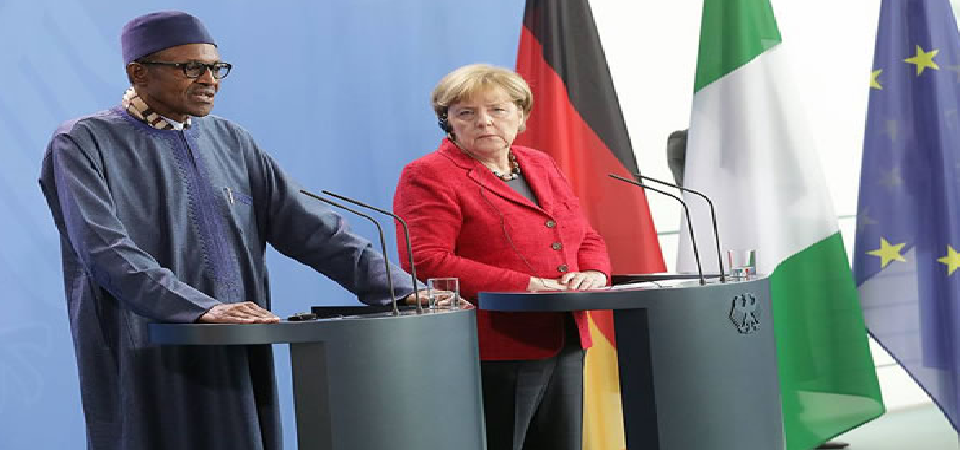
Meanwhile, the German Government has approved a 22.4 million euros (N8.9 billion) debt relief for Nigeria.
In a statement issued on Tuesday, the European economic powerhouse said the decision has been made in support of the fight against coronavirus.
“In 2020, the German treasury relieves Nigeria of debt repayments amounting to 22.4 million euros. This comes in addition to Germany’s to the COVID-19 response on a global level and the support provided by the European Union to partner countries in Africa worth 3.25 billion euros.
“Clearly, the current crisis goes beyond national and even continental borders and can only be fought effectively in a cooperative way. We need more international cooperation, not less,” German Foreign Minister, Heiko Maas said.
It could be recalled that earlier in April, former Nigerian president Olusegun Obasanjo, and the former Minister of Finance, Ngozi Okonjo-Iweala were making a case for debt relief for African countries, to help the continent survive the brute spikes of the global health crisis.
The German government said it is pushing the G20 members and the Paris Club to grant African countries debt relief as part of a global effort to contain the plague.